Sunday, September 13, 2026
Home Blog Page 2

How to Evaluate Award-Show Fashion: Critical Analysis Framework for Red Carpet Looks

0

Think award-show fashion is just personal taste?
Here’s the thing: the best takes aren’t just gut reactions, they’re built on nine clear pillars like silhouette, fit, fabric, construction, color, context, cultural messaging, risk taking, and how something reads on camera.
This post gives a simple, repeatable framework so you can turn “I liked it” into a sharp, evidence-based take.
Whether you’re a critic, stylist, or gossip friend, you’ll walk away able to explain exactly why a look worked or flopped.

Core Framework for Evaluating Award‑Show Fashion

EV_04p-dXAG5DNuJyCyXrA

Fashion critics and red carpet watchers who know what they’re doing don’t just react. They use a system. It’s not about gut feelings or what looked pretty in the moment. It starts with the basics—silhouette, fit, fabric, how something’s built—then pulls in the bigger stuff like color theory, cultural weight, how risky the choice was, and whether it actually worked on camera. Put it all together and you’ve got a full picture, whether you’re looking at a first timer’s gown at a small ceremony or a legacy brand’s statement piece at the Oscars.

EV_04p-dXAG5DNuJyCyXrA

Each part measures something different. Silhouette is the overall shape and how much space it takes up. Color is about palette choices and what feeling they give off. Fit checks if the tailoring’s tight and the proportions make sense. Construction looks at the actual craft, seams to internal bones. Styling is how accessories, hair, makeup, and shoes come together. Context asks if the look fits the event, the moment, and the person wearing it. Cultural messaging decodes what’s being said—sustainability signals, political nods, throwback references. Risk taking weighs how bold it is against whether it actually landed. Performance tracks movement, how it photographs, and if it holds up under lights and lenses for hours.

You’ve got nine pillars:

Silhouette — shape, lines, visual punch
Color — palette, harmony, contrast, mood
Fit — tailoring, proportions, how it sits on the body
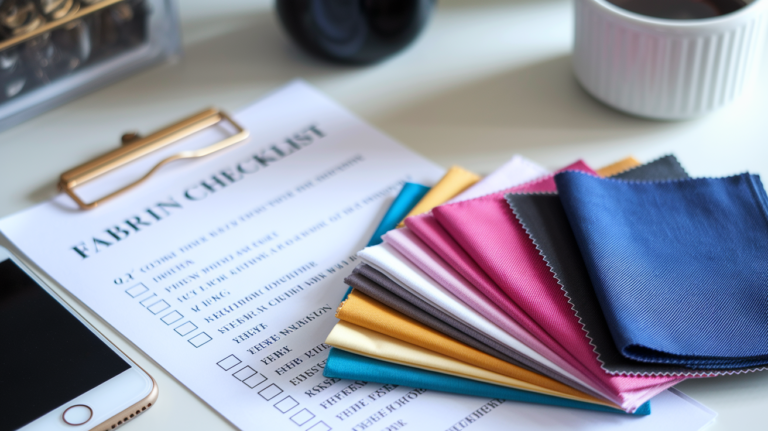
Construction — seam work, internal structure, couture tricks, fabric finish
Styling — accessories, hair, makeup, shoes, how it all works together
Context — does it fit the event, the trends, the designer’s story
Cultural messaging — what themes or signals are baked in
Risk taking — how daring it is, how well it’s executed
Performance — movement, drape, camera translation, durability

These don’t work alone. A perfect silhouette falls apart if the construction’s messy or the styling feels random. A wild experimental piece gets respect when the fit and fabric are flawless. Context matters too. An avant garde look that kills at an indie film festival might feel totally wrong at a formal gala. When you score each piece separately and then pull it all together, you can back up your take and readers get why something worked or bombed.

Pros & Cons of Using a Structured Fashion Evaluation System

EV_04p-dXAG5DNuJyCyXrA-1

A formal system brings consistency. It keeps things fair and clear. It stops you from just blurting out hot takes, cuts down on bias, and makes it easier to compare looks across events, seasons, designers. For stylists, editors, buyers, repeatable standards mean your assessments actually hold up when someone questions them. For fans and commentators, it turns “I liked it” into something you can actually explain.

But there are limits. It can flatten artistry into a checklist. It might punish bold, weird choices that don’t fit neat boxes. And it assumes everyone agrees on what “good” even means—one critic’s “risk taking” is another person’s “unwearable mess.” Personal taste, cultural background, and the wearer’s specific story still count. No rubric replaces human judgment completely.

Pro: You get repeatable assessments that cut down personal bias
Pro: You can pinpoint exactly what worked and what didn’t
Pro: Side by side comparisons get way easier and fairer
Con: Artistic or experimental work can get squashed into rigid categories
Con: Emotional resonance or personal storytelling that doesn’t fit technical boxes might get missed
Con: You need shared definitions—”good fit” or “smart risk” can mean totally different things

A structured approach works best when the stakes are high and people expect rigor. Award show roundups, trend forecasts, buyer decks, editorial rankings. It’s less useful when the goal is pure expression, celebration, or exploratory writing. In those cases, use the framework as guardrails, not gates. Let the pillars be checkpoints. Let the specific context of the wearer and the moment shape what you say.

What Is Silhouette Analysis

bTOzt4ocXVuREw1oH-rsOw-1

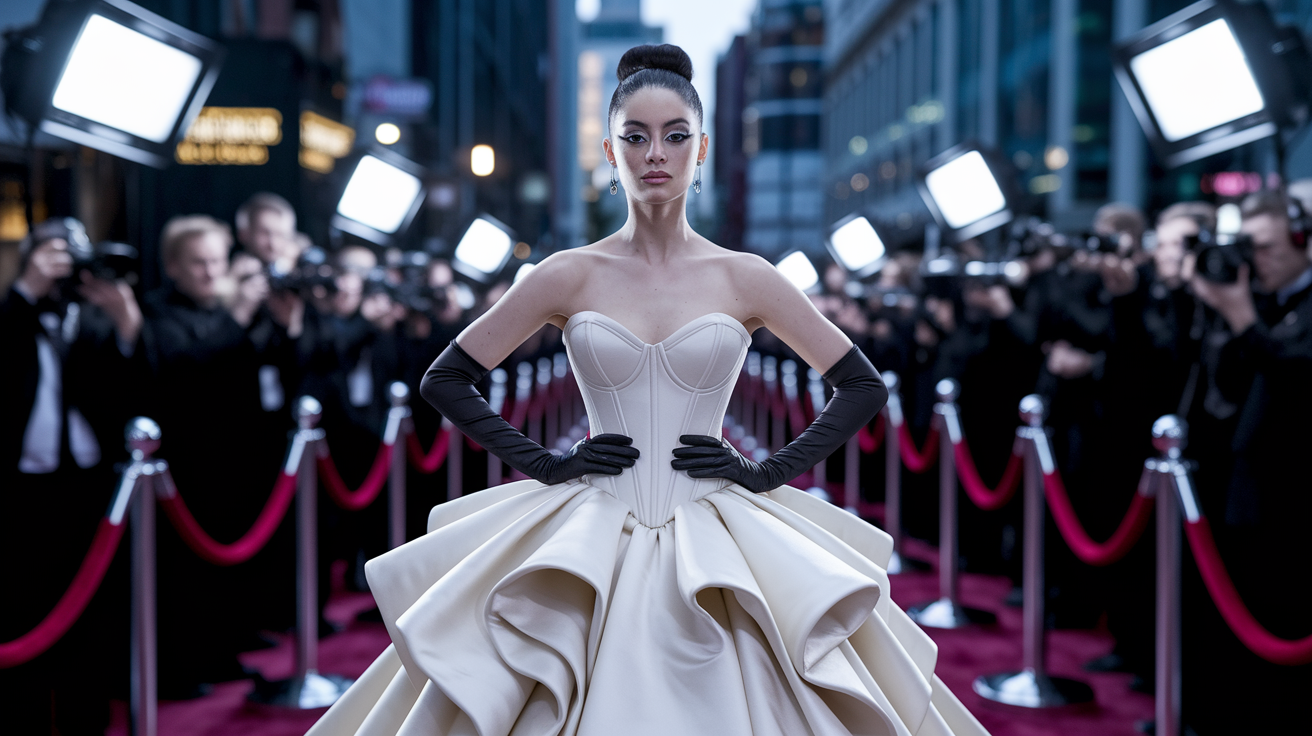
Silhouette analysis looks at the overall shape and structure of a garment. It’s the outline you see when you step back and strip away color, fabric, detail. It’s the first impression a red carpet look gives and usually the thing people remember. Iconic award show moments—a sculpted column gown, a huge ball skirt, a sharp tailored suit—get defined by silhouette first. Everything else is second.

Strong silhouettes rely on choices. Where volume lives, how lines travel from shoulder to hem, whether the shape plays up or balances the wearer’s frame. A well done silhouette grabs attention without swallowing the person inside it, photographs well from every angle, and keeps its shape through hours of sitting, standing, posing.

Red carpet silhouettes usually fall into five types:

Column/sheath — straight lines, no volume, makes you look taller
A line/fit and flare — fitted top, gradual flare from waist down, works on almost anyone
Ball gown/full skirt — big volume below the waist, high drama, princess or editorial energy
Architectural/sculptural — geometric shapes, structured pieces, avant garde construction
Deconstructed/asymmetric — intentional imbalance, unexpected angles, modern edge

Critics check if the silhouette fits the wearer’s body, matches the event’s vibe, and photographs clean. A tall lean frame can pull off a dramatic sculptural shape that might drown someone petite. A casual awards show at someone’s house calls for different proportions than a televised gala. And a silhouette that looks amazing in person can flatten or twist on camera if the lines aren’t crisp and the structure isn’t locked in. The best red carpet silhouettes balance boldness with balance, newness with wearability, drama with real world movement.

What Is Fabric & Construction Evaluation

H-Z48HvV9-vpgH7n_E50w

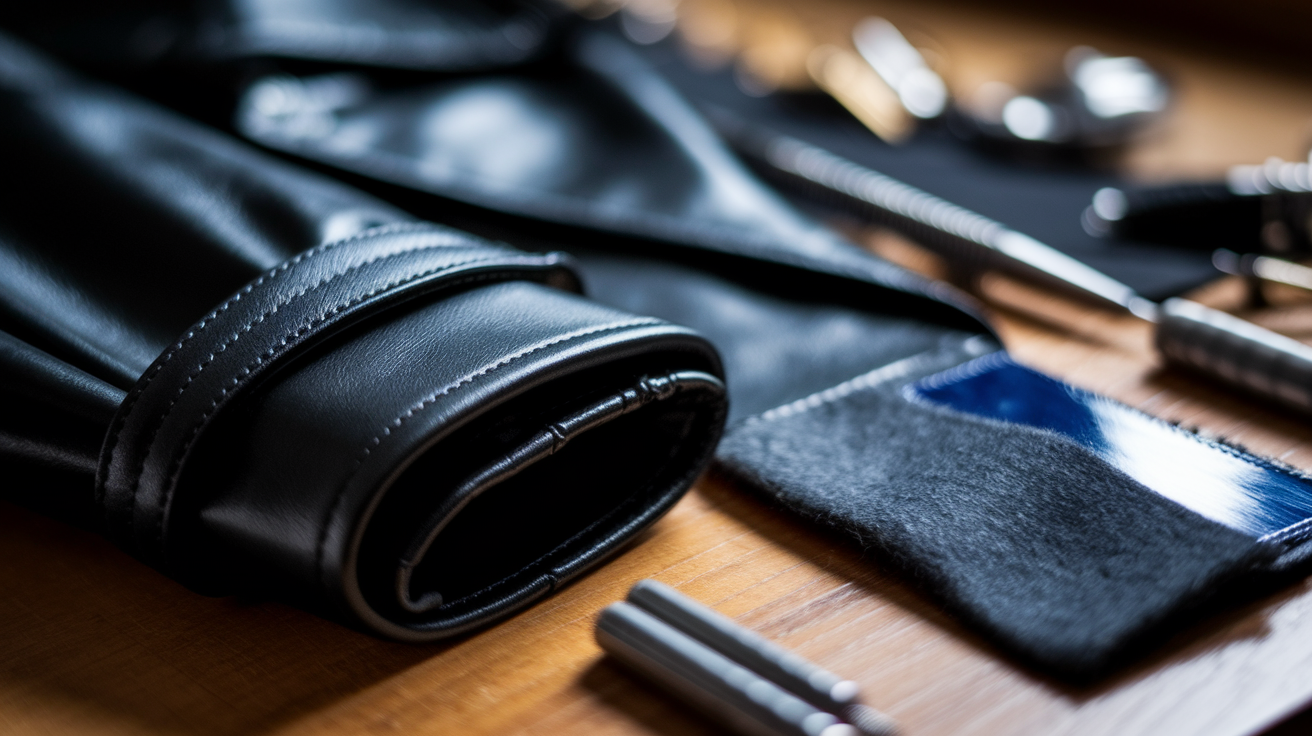
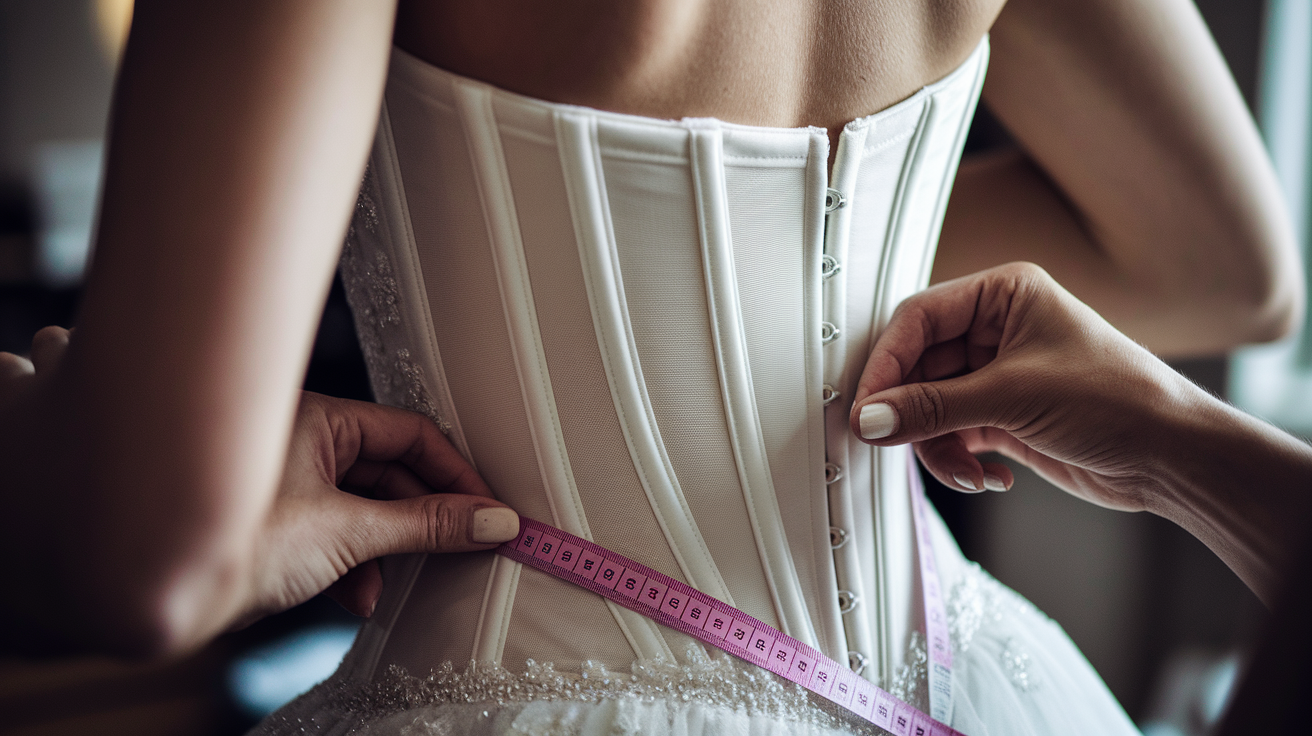
Construction quality is the technical craft behind a garment. How it’s put together, finished, supported inside. It’s what separates a gown that moves like water from one that bunches, sags, or pulls. Couture houses spend hundreds of hours on hand sewn finishes, internal boning, structured underlayers, and perfect seam work because those invisible details decide how a piece behaves under red carpet pressure.

EV_04p-dXAG5DNuJyCyXrA-1

Six construction elements shape quality:

Seam finishing — clean inside seams, no raw edges, solid stitching
Boning and internal structure — corsetry, stays, reinforcement that holds shape
Tailoring precision — dart placement, alignment, symmetry
Fabric choice and drape — how material moves, falls, responds to the body
Lining and underlayers — smooth foundation, no show through, comfort
Structural support — hidden stuff like interfacing, weights, anchor points that keep the silhouette intact

Movement reveals construction instantly. A well built gown drapes smoothly when the wearer walks, sits, turns. It doesn’t gape at the neckline, ride up at the waist, or wrinkle across the bodice. Under camera flashes, seams stay invisible, fabric holds shape, embellishments don’t shift or pull. Bad construction shows as puckering, sagging, visible boning, awkward bunching at stress spots—underarm, waist, hips, hem.

Couture differs from ready to wear in technique and time. A couture piece might include hand applied beading, custom dyed fabrics, multiple fittings, construction methods that can’t scale. Ready to wear uses industrial techniques—machine stitching, standardized patterns, limited customization—that still deliver quality but with tighter limits and less room for personalization. At award shows, both can look perfect. But couture usually gives you better movement, fit, and staying power under extended wear and serious scrutiny.

What Is Fit & Proportion Assessment

406qV6KgXcqUedfDLJUx9w

Fit measures how precisely a garment hugs the wearer’s body. Proportion evaluates the visual balance between garment parts and the wearer’s frame. Fit is technical—darts, seam placement, fabric tension. Proportion is visual—how sleeve length plays against skirt volume, whether a neckline flatters face shape, if waist placement makes legs look longer or shorter.

Good fit follows natural shape without squeezing or leaving gaps. It lets you move, keeps clean lines when you sit or lift your arm, avoids gaping, pulling, or extra fabric pooling. Bad tailoring is one of the top red carpet complaints because even a stunning design crashes when the fit’s off by an inch.

Signs of good fit and typical problems:

Good fit: bodice sits smooth on the torso, no pulling or gaping
Good fit: waistline lands at the natural waist or wherever the design intends
Good fit: sleeves and armholes give full range of motion without strain
Good fit: hemline hangs even, doesn’t drag or lift unevenly
Good fit: proportions feel balanced, no single piece overpowers the look
Fit issue: visible pulling lines shooting from stress points (bust, waist, hips)
Fit issue: gaping neckline or back showing undergarments
Fit issue: sleeves or pant legs too short or too long for the frame
Fit issue: bunching or extra fabric at waist, shoulders, inseam
Fit issue: asymmetric hemline that looks accidental instead of planned

Proportional harmony goes past the garment. Accessories, hairstyle, shoe height all shift visual balance. A voluminous gown pairs best with minimal jewelry and a sleek updo to avoid clutter. A streamlined sheath can carry bold statement earrings and textured hair. High heels lengthen the leg line and change proportions, so hemline and waist placement need to account for added height. When fit and proportion sync, the whole look feels smooth, intentional, effortless. Even when the construction and styling took hours.

How to Apply the Award Show Fashion Analysis Framework

bTOzt4ocXVuREw1oH-rsOw

How to Assess Technical Elements

Start with the foundation: silhouette, fit, construction. Check silhouette first by stepping back and naming the overall shape—column, A line, ball gown, sculptural, deconstructed. Does the silhouette grab attention, fit the wearer’s frame, hold its form under red carpet conditions? Next, move to fit by looking at how the garment sits on the body at key stress points—shoulders, bust, waist, hips, hemline. Watch for pulling, gaping, bunching, extra fabric. Then assess construction by hunting for quality signs: clean seam finishing, internal structure, tailoring precision, how the garment moves and drapes when the wearer walks or poses.

This sequence mirrors how pros work through a look. Silhouette delivers the first hit. Fit decides if that hit lands clean. Construction makes sure the look can take scrutiny from every angle and all night long. Score each part separately before you combine them. Note where one thing makes up for another—a daring silhouette can offset small fit issues if construction is locked.

How to Evaluate Styling & Color

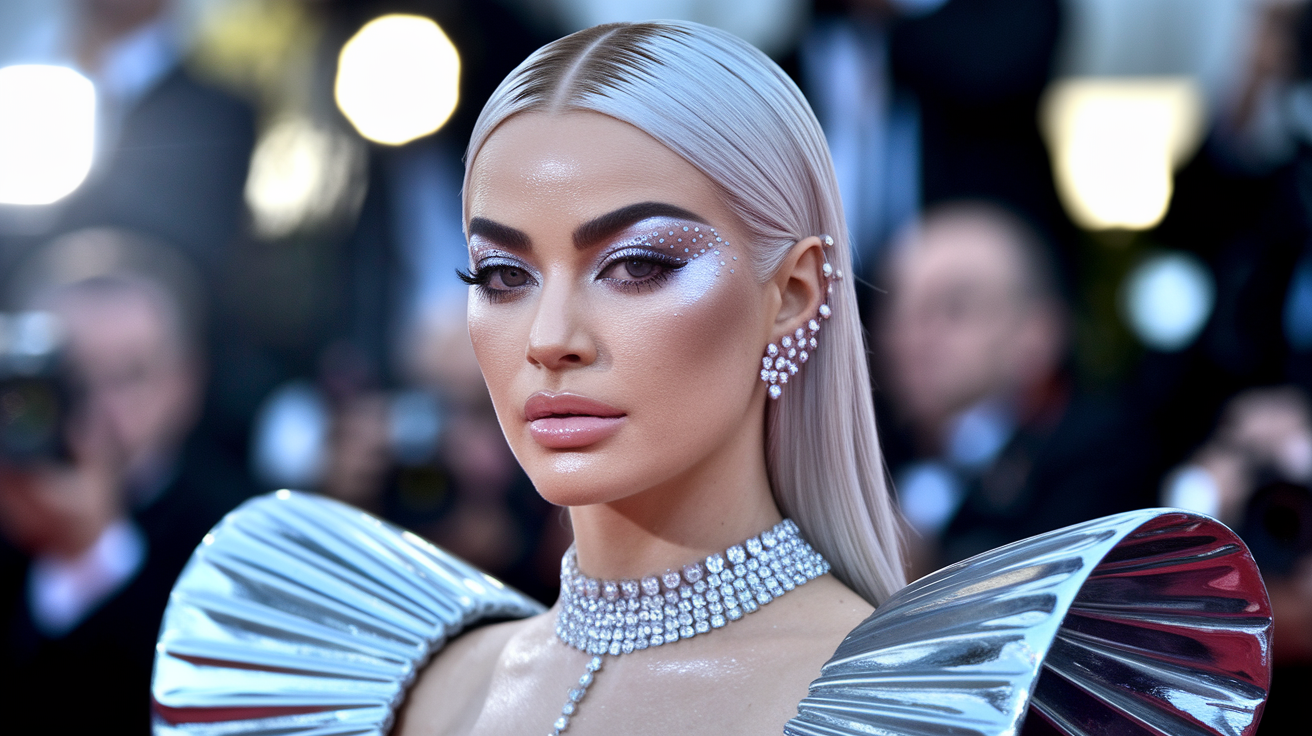
Once technical stuff is handled, move to aesthetic and coordinating pieces. Check color by looking at palette choice, harmony, emotional punch. Does the color flatter skin tone, hair, makeup? Does it pop on the red carpet or disappear? Is the palette cohesive or intentionally clashing? Then judge styling by treating accessories, hair, makeup, shoes as one unit. Are jewelry and shoes proportionate to the garment’s visual weight? Does the hairstyle work with the neckline and silhouette? Is makeup balanced with the formality and mood of the look?

Color theory and styling coordination split competent looks from memorable ones. A smart palette can lift a simple silhouette. Clashing colors or too many accessories can wreck even couture construction. Use red carpet photos to check how color translates under flash and stage lighting. Some colors that look rich in person flatten on camera. Metallics or high contrast palettes usually photograph stronger than pastels or muted tones.

How to Consider Context & Cultural Meaning

Context asks three questions: Does the look fit the event? Does it match current trends and the designer’s rep? Does it carry cultural, political, or thematic weight? Event fit covers formality, venue, audience. An architectural gown works at a big televised ceremony but might feel too grand for an intimate industry thing. Trend relevance checks if the look feels current, references a runway moment, or positions the wearer as a fashion leader. Designer significance considers whether the piece comes from an emerging talent, an established house, or a debut collection. How does that context shape the story?

Cultural messaging decodes embedded signals. A black gown during a collective protest moment carries weight past looks. Sustainable fabric choices or socially conscious designer partnerships communicate values. Historical references—a silhouette recalling a past era, embellishments nodding to heritage craft—add layers. Critics who skip context miss half the story, especially at award shows where fashion operates as both art and communication.

How to Judge Risk Taking

Risk taking looks at innovation level, creative daring, execution quality. High risk looks push boundaries—unexpected silhouettes, experimental fabrics, avant garde construction, bold color or pattern choices. The real question is whether the risk works. Does the innovation feel planned and well done, or does it read as gimmick or bad judgment? Does the wearer own the look with confidence, or does body language suggest discomfort?

Successful risk taking balances boldness with technical sharpness. An architectural gown with unconventional structure earns credibility when construction is flawless and fit is perfect. A deconstructed look in clashing prints works when styling and proportion are deliberate. Failed risks show up as ill fitting experimental pieces, ideas that look better in theory, or choices that feel disconnected from the event or the wearer’s public image. Score risk separately from traditional standards, then decide if the creative ambition justifies any technical trade offs.

Comparison of Evaluation Pillars

nEwzQQSwVrGvMSiG1ZSNiQ

Different pillars emphasize different things. Trade offs between them shape red carpet critique. Technical perfection might clash with creative risk taking—a flawlessly tailored column gown scores high on fit and construction but may feel safe next to a daring sculptural piece with small execution flaws. Contextual relevance can beat traditional standards when a look carries strong cultural messaging or fits the event’s tone perfectly, even if color or styling choices wouldn’t work on their own.

Pillar Primary Focus Common Weaknesses
Silhouette Overall shape, architectural presence, visual impact Can overwhelm wearer if not balanced; may flatten on camera
Fit & Proportion Tailoring precision, body to garment alignment, visual balance Small fit issues get magnified under camera; hard to fix day of
Construction Craftsmanship, seam quality, internal structure, durability Invisible to casual viewers; time heavy and costly to perfect
Color & Styling Palette harmony, accessory coordination, photographic translation Subjective taste; trends shift fast; lighting changes perception
Risk Taking & Cultural Messaging Innovation, creative daring, embedded themes, socio political cues Polarizing; needs strong execution; meaning can get misread

Getting these trade offs helps critics weight each pillar based on the event and the look’s goals. A debut designer’s first big red carpet moment might focus on construction and fit to build credibility. An established star might lean into risk taking and cultural messaging because their technical baseline is already proven. A televised ceremony favors photographic performance and silhouette impact. An intimate industry gathering rewards craftsmanship and contextual storytelling. No single pillar runs every situation. Good critique balances all nine and shifts emphasis to match the moment.

How to Use This Framework in Real World Red Carpet Critique

dRMketUYWmarptj1tZbEYw

Using the framework turns gut reactions into structured analysis you can defend. Start by gathering visual proof—red carpet photos from multiple angles, video of the wearer moving and posing, close ups of fabric, construction details, accessories. Then work through the pillars in order, noting strengths and weaknesses for each. Document specific things—”bodice pulls across bust,” “hemline drags on right side,” “color flatters under flash but dulls in natural light”—so your conclusions are backed up and repeatable.

Step by step:

Collect assets: red carpet photos, video, designer credits, event context
Assess silhouette: name the shape category, check architectural presence and balance
Check fit and proportion: look at stress points, proportional harmony, tailoring precision
Evaluate construction: hunt for seam quality, internal structure, movement and drape
Analyze color and styling: judge palette, accessory coordination, photographic translation
Consider context: event fit, trend relevance, designer significance
Decode cultural messaging: spot embedded themes, socio political cues, historical references
Score risk taking: measure innovation level, execution quality, wearer confidence
Synthesize and rank: combine scores or notes into one judgment; compare across looks

Adapt the system to your needs. If you’re writing a quick “best dressed” list, focus on silhouette, color, photographic performance. If you’re prepping a trend forecast or buyer presentation, weight construction, fit, contextual relevance harder. If you’re critiquing for a fashion engaged audience, include cultural messaging and risk assessment to add depth. The framework’s power is flexibility. It works as a full nine pillar evaluation or a streamlined three point checklist. It scales from one standout look to an entire award show slate of 16 finalists or more.

Final Words

We mapped a practical nine-pillar system for award-show fashion analysis, including silhouette, color, fit, construction, styling, context, cultural messaging, risk-taking, and performance. You also got step-by-step guidance and a quick look at pros and cons.

The guide breaks down silhouette, fabric and construction, and fit so you can spot technical quality as easily as a styling choice. Comparison notes show when to favor creativity over technical perfection.

Use this how to evaluate award-show fashion: an analysis framework as your quick checklist when watching red carpets. Try it at the next big event. You might be surprised how much clearer and more fun critique becomes.

FAQ

Q: What is the 3-3-3 rule in fashion?

A: The 3-3-3 rule in fashion is a simple styling guideline advising balance across three elements—typically three colors, three textures, and three focal points—to create cohesive, layered outfits.

Q: How to critique a fashion show?

A: To critique a fashion show, evaluate concept and storytelling, then judge silhouettes, construction, styling, pacing, casting, music, and how the collection reads as a cohesive whole.

Q: What is the 70 30 rule in fashion?

A: The 70 30 rule in fashion divides an outfit into about 70% base or neutral pieces and 30% statement pieces or accent colors, creating visual balance while letting a focal element pop.

Q: What is the 7 rule in fashion?

A: The 7 rule in fashion generally means using seven components—layers, textures, colors, or accessories—to craft complex, intentional outfits; its exact meaning varies by stylist and context.
Johnny Depp and Amber Heard Trial: What Actually Happened

0

Did a newspaper op-ed really cost Johnny Depp his career, or was it a messy public fight that hid a deeper truth?
What followed was a six-week civil defamation trial in Fairfax County starting April 12, 2022, centered on Amber Heard’s December 2018 Washington Post op-ed and Depp’s $50 million lawsuit, while she countersued for $100 million.
This guide cuts through the livestream chaos and social media frenzy to explain who said what, what evidence mattered, and why the verdict changed how we think about fame, abuse claims, and defamation law.

Core Explanation of the Depp–Heard Trial

swkCAB0KVcW68qgjYj3V0Q

The Johnny Depp and Amber Heard trial was a six-week civil defamation case that unfolded in Fairfax County, Virginia, starting April 12, 2022. At the center? A single piece of writing: Heard’s December 2018 op-ed in The Washington Post, where she called herself “a public figure representing domestic abuse.” She didn’t name Depp. But his legal team said the implication was obvious, and it wrecked his career and reputation. Depp filed a $50 million defamation lawsuit in March 2019, claiming the op-ed falsely painted him as an abuser and cost him major film roles, including a verbal $22.5 million deal for a sixth Pirates of the Caribbean movie.

Heard shot back with a $100 million countersuit in January 2021. She said statements from Depp’s former attorney, Adam Waldman, defamed her by calling her abuse allegations an “abuse hoax” and a “sexual violence hoax.” Her countersuit framed Depp’s lawsuit as part of a coordinated effort to discredit and silence her. Both accused the other of domestic violence. It became a he-said-she-said legal battle centered not just on whether abuse happened, but on who was telling the truth about it.

The trial turned into a global phenomenon. Millions tuned into courtroom livestreams, TikTok racked up billions of views under pro-Depp hashtags, and fierce debate erupted about credibility, gender, power, and the limits of defamation law. Court TV reported that its daytime ratings doubled during trial coverage. Here’s what made the case explode:

  • High-profile celebrities with devoted fanbases: Depp, a three-time Oscar nominee and twice-named People’s Sexiest Man Alive, brought decades of public goodwill. Heard, known for roles in Aquaman and other projects, had a smaller but vocal following.
  • Competing narratives of victimhood: Each side presented themselves as the real victim of abuse, backed by recordings, texts, photos, and witnesses.
  • Defamation law in the spotlight: The case tested whether an op-ed that never named Depp could still legally damage him, and whether public figures can reclaim reputation through the courts.
  • Social media amplification: The trial played out in real time across platforms, with memes, hot takes, and coordinated campaigns shaping public opinion faster than the jury could deliberate.
  • Cultural moment: The trial collided with ongoing debates about the #MeToo movement, false allegations, mutual abuse, and how celebrity, gender, and money influence justice.

Timeline of Their Relationship Leading to the Legal Battle

c-uFpC3TUHSRPPgOWC7vVQ

Johnny Depp and Amber Heard first met in 2009 on the set of The Rum Diary, a film that wouldn’t hit theaters until 2011. By 2012, the two had begun dating. Their relationship moved fast. Engagement rumors surfaced in 2014 after Heard was photographed wearing a diamond ring, and the couple confirmed the news publicly soon after.

In 2015, Depp and Heard married in an intimate ceremony in the Bahamas. That same year, the couple made international headlines for illegally bringing their dogs, Pistol and Boo, into Australia, where Depp was filming. Heard faced charges for unlawfully importing the animals and allegedly falsifying a document, which led to a public apology video that went viral for all the wrong reasons. The incident foreshadowed the public scrutiny that would follow the couple for years.

By May 2016, about 15 months after the wedding, Heard filed for divorce and got a temporary restraining order against Depp. Police responded to a reported phone-throwing incident at their Los Angeles penthouse, but officers testified later that Heard declined to file a report and they saw no evidence of a crime scene. In August 2016, the couple reached an extrajudicial settlement of $7 million, which Heard publicly pledged to donate to charity. Their divorce was finalized in January 2017. Key relationship and legal milestones:

  • 2009: Met on the set of The Rum Diary.
  • 2012: Began dating publicly.
  • 2014: Engagement confirmed.
  • 2015: Married in the Bahamas. Australian dog-smuggling incident occurred.
  • May 2016: Heard filed for divorce and secured a temporary restraining order.
  • August 2016: Couple settled for $7 million. Heard pledged to donate the full amount.

Allegations and Claims from Both Sides

l41k6FRyXWyQYePt3jWCRQ

Heard’s allegations centered on a pattern of physical, emotional, and sexual abuse that she said began in 2012 when Depp resumed drinking and using drugs. She testified on May 4, 2022, that the first time Depp hit her was a life-changing moment. She described multiple incidents over the course of their relationship, including a June 2013 cabin attack where she said Depp trashed the space and assaulted her, and a March 2015 three-day violent episode in Australia during which Depp’s fingertip was severed. Heard said she lived in fear and developed PTSD from intimate partner violence. A psychologist hired by Heard testified to a “high degree of serious violence” by Depp. Heard’s sister and friend Rocky Pennington testified about bruises they’d witnessed.

Depp categorically denied ever hitting any woman. He insisted he was the victim of Heard’s violence, not the perpetrator. He claimed Heard fabricated her allegations to benefit from the cultural moment of the #MeToo movement and to gain leverage in their divorce. His legal team presented audio recordings in which Heard admitted to hitting Depp and said she sometimes “loses it.” Depp testified that his fingertip injury in Australia was caused by Heard throwing a vodka bottle at him. He also pointed to testimony from his estate manager and security staff, who described incidents in which Heard allegedly threw objects and verbally berated him. A marriage counselor, Laurel Anderson, testified on April 14 that the couple engaged in what she described as “mutual abuse.”

Depp’s talent agent testified that a verbal $22.5 million deal for Pirates of the Caribbean 6 became “impossible” after the op-ed, and that it was nearly unthinkable for Depp to get a studio role post-publication. His legal team argued that Heard’s public statements, particularly the 2018 op-ed, destroyed his reputation and career. Heard’s team introduced contemporaneous texts, emails, and photos of bruises as evidence, and highlighted violent language in Depp’s own messages, including one to actor Paul Bettany in which he joked about burning and drowning Heard.

Heard’s countersuit alleged that Depp’s former lawyer, Adam Waldman, defamed her by publicly calling her allegations a “hoax” and suggesting she and her friends staged evidence. Her legal team argued that Depp orchestrated a smear campaign to silence and discredit her, using his fame, resources, and fanbase to shape public perception. Most prominent allegations from both sides:

  • Heard alleged Depp physically assaulted her multiple times beginning in 2012.
  • Heard alleged a June 2013 cabin incident involving property destruction and violence.
  • Heard alleged a March 2015 Australia incident involving sustained assault and Depp’s severed fingertip.
  • Heard alleged sexual violence, including a “cavity search” incident in May 2013.
  • Depp alleged Heard hit him and admitted to it in audio recordings.
  • Depp alleged Heard severed his fingertip by throwing a vodka bottle in Australia.
  • Depp alleged Heard fabricated abuse claims to benefit from #MeToo and divorce leverage.
  • Depp alleged Heard and her friends staged injury photos and coordinated false testimony.

Key Testimonies and Evidence

NwPSIh8ZW3ywLyPSuISV8A

The Fairfax County trial unfolded over six weeks, with each side presenting a barrage of evidence built to support their version of events. From audio clips played in open court to text messages displayed on courtroom monitors, the trial offered a rare and uncomfortable glimpse into a celebrity relationship’s most private and volatile moments.

Audio and Digital Communications

Audio recordings became some of the most damaging and widely circulated pieces of evidence. Depp’s team played clips in which Heard could be heard saying, “I was hitting you” and admitting she sometimes “loses it.” In one exchange, she told Depp, “Tell the world, Johnny, tell them, ‘I, Johnny Depp, a man, I’m a victim too of domestic violence.'” The recordings were positioned by Depp’s lawyers as proof that Heard was the aggressor and that she mocked his claims of abuse. Heard’s team countered that these clips were taken out of context from hours-long arguments and that Heard was often reacting defensively to Depp’s own aggression. Text messages were equally explosive. Depp acknowledged sending a message to actor Paul Bettany in which he wrote about burning Heard and then drowning her “to make sure she’s dead.” He described the language as “dark humor” born out of frustration, not intent.

Photos and Physical Documentation

Heard’s legal team introduced photos showing bruises on her arms and face, which she said were taken shortly after alleged incidents of violence. Her attorneys also presented images of property damage, including shattered glass and scrawled messages Depp allegedly left in blood and paint. Depp’s team challenged the authenticity and timing of these photos, suggesting they were digitally altered or staged, and pointed to conflicting metadata. One LAPD officer who responded to a May 2016 domestic call testified via bodycam footage that he saw no visible injuries on Heard six days before she filed for a temporary restraining order. Depp’s attorneys used that detail to question the credibility of her abuse timeline.

Witness Testimony from Friends and Staff

Witnesses from both camps painted starkly different pictures. Heard’s sister, Whitney Henriquez, testified that she witnessed Depp strike Heard and that she herself was present during violent altercations. Friend Rocky Pennington backed up claims of visible bruising. On Depp’s side, his longtime estate manager, security guards, and personal assistants testified that they never saw him act violently toward Heard. Some described her as the aggressor. One security guard recounted witnessing Heard spit in Depp’s face. Another testified to seeing Heard throw objects during arguments. Heard’s former assistant testified that Heard once spat in her face when she asked for a raise. A building front-desk worker gave a pre-recorded deposition that some observers noted appeared unsteady, raising questions about witness credibility and preparation.

Expert and Specialist Testimony

The battle of the experts became a centerpiece of the trial. A psychologist hired by Depp’s team, Dr. Shannon Curry, testified that Heard met diagnostic criteria for borderline personality disorder and histrionic personality disorder, conditions she said were associated with attention-seeking behavior and fear of abandonment. Heard’s team called Dr. Dawn Hughes, who testified that Heard suffered from PTSD consistent with intimate partner violence and assessed a “high degree of serious violence” perpetrated by Depp and only a “mild level” from Heard. Cross-examinations exposed disagreements between the experts and raised concerns about the extent of contact between the evaluators and each legal team. Marriage counselor Laurel Anderson testified that both parties were physically abusive toward each other, describing the dynamic as “mutual abuse,” a term that sparked debate among domestic violence advocates.

Cross-Examination Moments

Some of the trial’s most dramatic moments came during cross-examinations. Depp spent four days on the stand beginning April 19, facing intense questioning about his drug use, violent texts, and prior testimony in the UK trial. Heard’s first day of testimony on May 4 was equally tense, with Depp’s attorneys pressing her on inconsistencies between her accounts and physical evidence, donation pledges she hadn’t fulfilled, and audio in which she admitted to hitting Depp. When Depp returned to testify on May 25, he called Heard’s accusations “all false” and described them as “horrible… humiliating… ludicrous.”

Courtroom Behavior and Jury Reactions

Observers noted moments when jurors appeared to react to testimony or evidence, though their deliberations remained private. Depp was seen sketching and occasionally smirking during Heard’s testimony. Heard was photographed crying and appearing distressed during portions of Depp’s. The judge, Penny Azcarate, maintained tight control over proceedings, denying Heard’s motion to dismiss Depp’s claim on May 3 and allowing the case to move forward to the jury.

Evidence Type Impact on Trial
Audio recordings of arguments Central to Depp’s claim that Heard admitted to hitting him; Heard’s team argued context was missing
Text messages with violent language Used by Heard to show Depp’s hostility; Depp described them as “dark humor” not literal intent
Photos of bruises and property damage Supported Heard’s abuse timeline; Depp’s team questioned authenticity and staging
Bodycam footage from police response Officer testified no visible injuries on Heard; used to challenge her abuse claims
Expert psychological evaluations Dueling diagnoses (BPD/HPD vs. PTSD) shaped jury’s view of credibility and victimhood
Witness testimony from friends and staff Conflicting accounts reinforced partisan narratives; credibility became a key battleground

The Verdict and Awarded Damages

lOkQQKIDV8qxPJF6-_QiSA

On June 1, 2022, after deliberating since May 27, the seven-person jury delivered a verdict that sided overwhelmingly with Johnny Depp. The jury concluded that Heard had defamed Depp through her 2018 Washington Post op-ed, finding that the statements were false, made with actual malice, and caused measurable harm to his reputation and career. The panel awarded Depp $15 million in total damages: $10 million in compensatory damages and $5 million in punitive damages. But under Virginia law, punitive damages are capped at $350,000, bringing Depp’s enforceable award to $10.35 million.

Heard didn’t walk away empty-handed. The jury ruled in her favor on one element of her $100 million countersuit, finding that a statement made by Depp’s former attorney, Adam Waldman, defamed her when he called her abuse allegations a “hoax.” She was awarded $2 million in compensatory damages and no punitive damages. Both sides filed appeals following the verdict. Heard’s legal team cited 16 grounds for appeal in an October 11, 2022 filing, including arguments that malice wasn’t proven by “clear and convincing evidence” and disputes over jury instructions. By December 19, 2022, Heard announced that the case had been settled, though financial terms weren’t fully disclosed. What the jury decided:

  • Depp won his defamation claim tied to the op-ed’s implication he was an abuser.
  • Compensatory damages for Depp: $10 million.
  • Punitive damages for Depp: reduced from $5 million to $350,000 due to Virginia’s statutory cap.
  • Heard won one counterclaim against statements by Depp’s lawyer calling her allegations a hoax. Awarded $2 million with no punitive damages.

Aftermath and Public Impact

87liG_TUlWi0FHNi32-Fw

The Depp–Heard verdict sent shockwaves far beyond the Fairfax County courthouse. For Depp, the win represented a public vindication after years of professional setbacks, including being asked to step down from the Fantastic Beasts franchise following his loss in the 2020 UK libel trial. By August 8, 2022, less than three months after the verdict, Depp was announced as the new face of Dior’s Sauvage fragrance, signaling that major brands were willing to bet on his comeback. Still, industry analysts cautioned that a legal victory doesn’t automatically translate to box-office gold or restored A-list status.

For Heard, the trial’s outcome was both a legal defeat and a reputational crisis. With a smaller established profile than Depp and far fewer commercial endorsements to lose, she faced the dual burden of financial damages and the kind of public scorn that played out in real time across social media. Heard issued a statement post-verdict saying, “Johnny has taken enough of my voice and the right to tell my story,” a line she’d used during her May 26 testimony. She also spoke about receiving death threats throughout the trial, a claim supported by reports of coordinated online campaigns. A 2020 Bot Sentinel report had flagged dubious Twitter accounts engaging in anti-Heard activity, and investigative journalists later cited tens of millions in spending by some outlets to promote anti-Heard content.

The trial reshaped cultural conversations in several ways. Domestic violence advocates warned that the verdict and the accompanying social-media pile-on could have a chilling effect on survivors coming forward, particularly those whose abusers are wealthy, famous, or well-loved. Legal experts debated whether defamation law was being weaponized to silence accusers, or whether the case illustrated the risks of making public allegations without airtight evidence. The trial became a case study in the power of parasocial relationships, fandom, and algorithmic amplification. TikTok hashtags supporting Depp reportedly amassed nearly 3 billion views, dwarfing pro-Heard content by orders of magnitude. Five lasting impacts of the trial:

  • Defamation as a legal strategy: The case showed how public figures can use defamation suits to reclaim narrative control, raising questions about access to justice for less wealthy accusers.
  • Social media’s courtroom influence: The trial demonstrated how platforms like TikTok and Twitter can shape public opinion, jury perception, and even settlement outcomes through viral content and coordinated campaigns.
  • Backlash to #MeToo: Some observers argued the trial represented a cultural pendulum swing against the movement, with skepticism of accusers intensifying online.
  • Celebrity and credibility: The trial underscored how fame, likability, and decades of public goodwill can tip the scales in court and in public opinion, regardless of the evidence presented.
  • Mutual abuse and DARVO debates: Terms like “mutual abuse” and the DARVO framework (Deny, Attack, Reverse Victim and Offender) entered mainstream conversation, though experts remained divided on their validity and application.

Final Words

Courtroom drama boiled down to a defamation fight: Depp said Heard’s 2018 op-ed cost him his career; Heard countersued after being called a hoax. The post walks through their timeline, the competing abuse claims, the audio, photos, texts, witness moments, and the jury’s split verdict and damage awards.

For a clear wrap-up, what happened in the Johnny Depp and Amber Heard trial explained boils down to: Depp won most claims, Heard won a counterclaim, and the case pushed big conversations about defamation and evidence. It’s messy, but it moved the public debate forward.

FAQ

Q: What was the outcome of Johnny vs Amber?

A: The outcome of Johnny vs Amber was a jury ruling mostly for Depp, awarding him damages; Heard won one counterclaim over a Depp lawyer’s “hoax” comment; initial awards were $15M for Depp and $2M for Heard.

Q: What did Amber do to Johnny?

A: What Amber did to Johnny is contested: Heard alleged Depp abused her, while Depp accused Heard of fabricating claims and harming him; the jury largely found in favor of Depp’s defamation claims.

Q: Who is the real father of Amber Heard’s baby?

A: The real father of Amber Heard’s baby is not publicly confirmed; Heard said her child was born via surrogate in April 2021 and she has not named a biological father.

Celebrity Street-Style Trend Mapping: Tracking Fashion Patterns From Red Carpets to Retail

0

Forget runway shows, celebrities’ sidewalk outfits, not red carpet gowns, are the real trendsetters now.
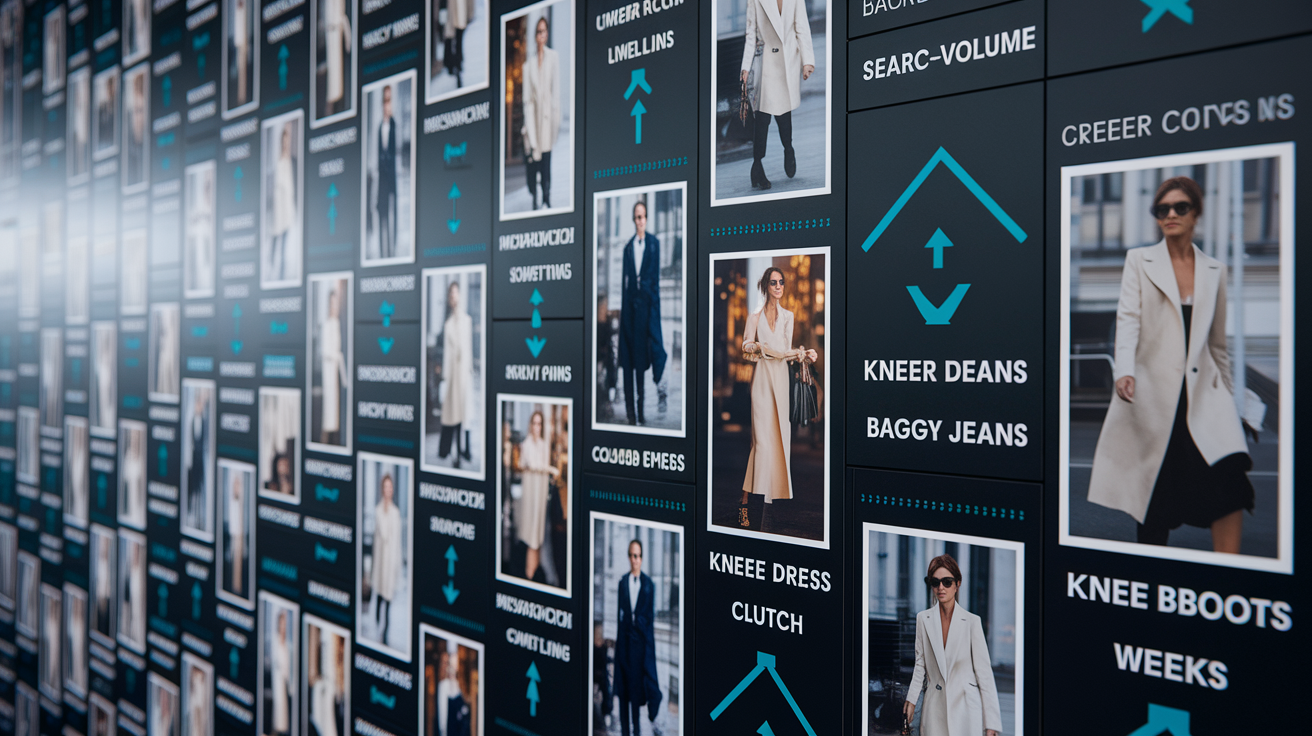
Celebrity street-style trend mapping watches what stars wear off duty, from paparazzi coffee runs and IG stories to city strolls, then spots pieces that pop up across multiple names in a four-to-twelve week window.
When the same bag, boot, or silhouette shows up on several celebs, search spikes and retailers rush to stock up.
This post explains how the tracking works, the tools pros use, and how brands and shoppers turn those patterns into smart buys and content.

How Celebrity Street‑Style Trend Mapping Works (Core Insight Delivery)

cuv2OEEpVqmnu5nZ4cPlAA

Celebrity street‑style trend mapping is basically tracking what famous people wear when they’re not on a red carpet, then figuring out which pieces are about to blow up. It’s different from runway forecasting because you’re watching real‑world outfits, the kind paparazzi catch outside coffee shops or that pop up on Instagram Stories at 2 p.m. on a Tuesday. The whole point? Spot what’s showing up over and over again across a bunch of celebrities in a four to twelve week stretch, then use that intel to stock stores, plan content, or just know what everyone’s going to be Googling next month.

Celebrities act like early adopters. They wear stuff first, and if enough of them wear the same thing within a short window, that’s when a pattern starts to form. One sheer dress on Zoë Kravitz could just be Zoë being Zoë. But when Dakota Johnson shows up in something similar three weeks later, and then two more celebrities do the same thing, you’ve got a microtrend ready to scale. Social media speeds everything up. Fans screenshot, save, search “how to get Dua Lipa’s clutch,” and suddenly you’ve got measurable spikes in search volume and actual purchases happening within days.

Here’s how the mapping workflow actually breaks down:

  1. Daily monitoring. Set up hashtag streams for #OOTD, #streetstyle, plus individual celebrity names paired with “outfit” or “style.” Follow street‑style photographers and fan pages that post updates fast.
  2. Image alerts. Use reverse image search and Google Alerts for “[celebrity name] + outfit” so you catch wire photos and editorial features. Save everything to a visual library and tag it by date and location.
  3. Tag attributes. Label each outfit by item type (blazer, boots, jeans), color (black, beige, neutral), fabric (leather, denim, sheer), occasion (daytime, evening, casual), and accessories (clutch, sneakers, sunglasses).
  4. Measure search volumes. Cross‑reference celebrity appearances with Google Trends and Pinterest Trends data for item keywords. Track week over week changes to see if momentum’s building or fading.
  5. Detect retail impact. Monitor sales velocity, search to buy conversion, and SKU level demand for categories tied to recent celebrity sightings. Note which retailers are stocking relevant items and how often things sell out.

The insights you pull from all this feed into three different forecasting horizons. Immediate trends (zero to three months) drive fast‑fashion capsules and influencer campaigns timed to what’s happening right now. Near‑term forecasts (three to nine months) guide seasonal assortment planning and editorial calendars. Seasonal predictions (nine to eighteen months) help brands decide if baggy jeans or boho dresses will carry into next year or fade out after one season.

Tools and Platforms Powering Celebrity Street‑Style Trend Mapping

TGOKRCsLWfaxUDGr9mk76A

No single tool gives you the full picture, so most people build a stack. Social listening platforms like Brandwatch, Meltwater, and Talkwalker track mentions, hashtags, and engagement across Instagram, TikTok, Twitter, and celebrity fan forums. These tools surface volume spikes when a celebrity posts an outfit or when paparazzi photos start circulating, giving you real‑time alerts that a new look is gaining traction. Google Trends and Pinterest Trends add the search layer, showing when people start hunting for “Bermuda shorts outfit ideas” or “sheer dress styling tips” days or weeks after a celebrity appearance. Lyst insights and retail best‑seller lists confirm that online searches are turning into actual purchases.

Image recognition APIs sit at the core of scalable trend mapping. These tools automatically tag garments, detect silhouettes (oversized, fitted, cropped), pull color palettes (neutral tones, bold prints, monochrome), and identify specific items (blazer, clutch, knee‑length boots, bike shorts) from thousands of street‑style photos without you having to label everything manually. Platforms like Heuritech use deep learning trained on runway and retail datasets to classify fabrics (leather, suede, denim, sheer), recognize brand logos, and calculate the percentage of sampled images containing a given attribute. So if twenty percent of celebrity street photos captured in a two week window show knee‑length boots, the system flags boots as an emerging trend candidate and ranks it against historical thresholds.

Search signals, retail velocity, and dedicated forecasting services like WGSN and Stylus close the loop between observation and prediction. SEO tools such as SEMrush and Ahrefs track keyword ranking movements and search volume changes for phrases like “baggy jeans outfit” or “boho dress styling,” showing how quickly consumer interest follows celebrity appearances. Retail analytics platforms measure sell‑through rates, conversion uplift on shoppable posts, and SKU velocity by category, validating whether a trend seen on three celebrities last month is now driving double‑digit growth in online denim sales. Predictive services combine runway to retail timelines, influencer amplification multipliers, and cohort analysis to estimate the probability that a microtrend will reach mainstream adoption within the next quarter or fade before retailers can stock inventory.

Mapping Today’s Celebrity‑Led Street‑Style Trends

2b8pBB9pXxW192S5BjKgKA

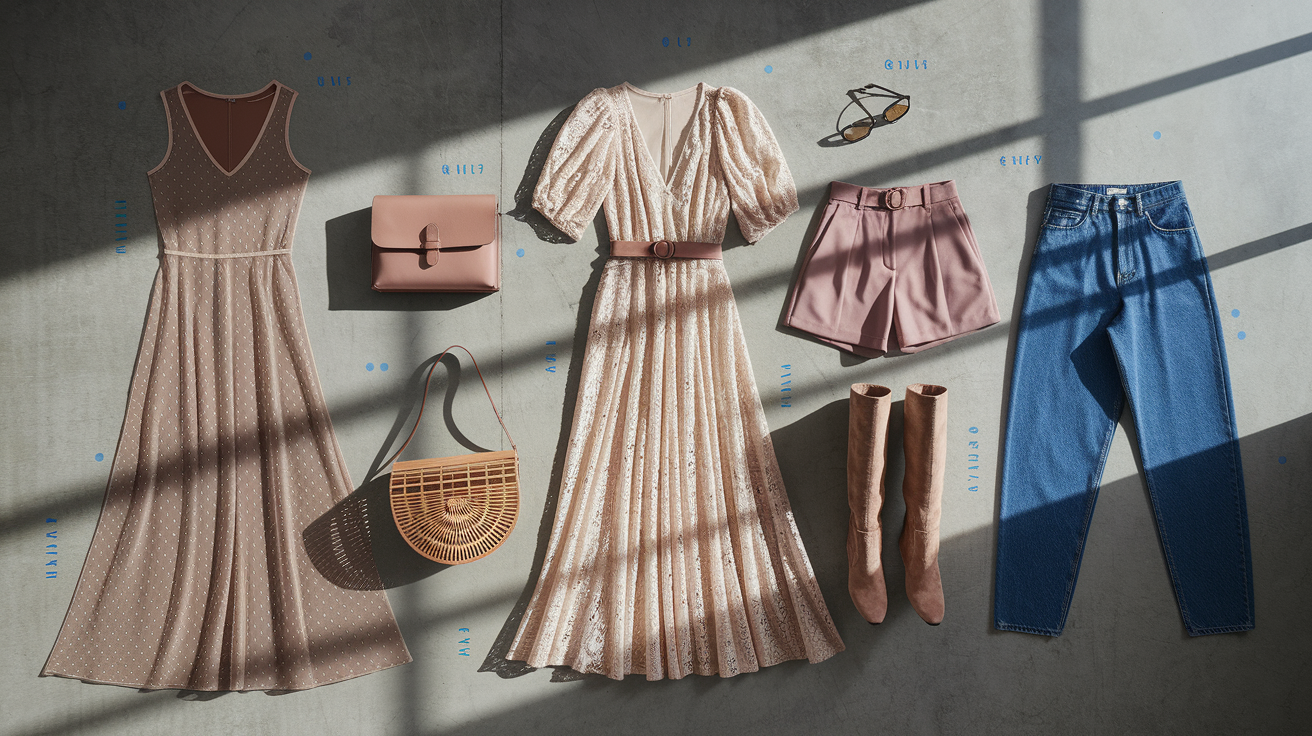
Sheer silhouettes dominated spring and summer 2024 street‑style sightings. Zoë Kravitz and Dakota Johnson pushed the look as something you could wear during the day and still look sophisticated. The trend includes mesh panels, semi‑transparent fabrics, and layered styling where you pair sheer dresses or tops with bodysuits, bralettes, or slip dresses underneath. Chunky boots and strappy sandals show up most often as footwear, balancing the delicate fabric with something grounded and textural. H&M and Zara stocked affordable sheer pieces throughout late spring, making the trend accessible beyond designer price points and stretching its lifespan into early fall layering.

The “it” clutch became the season’s go‑to minimalist leather accessory, replacing oversized totes and crossbody bags in celebrity street photos. Rihanna and Dua Lipa carried neutral‑toned clutches in beige, black, and brown across casual coffee runs and evening events. The styling centers on pairing a sleek, compact clutch with both relaxed denim looks and tailored separates, signaling versatility without trying too hard. ASOS, Mango, and thrift stores offered entry‑price options that mirrored the designer silhouette, driving search interest and sell‑through rates among younger shoppers who wanted the aesthetic without the investment‑level spend.

Boho chic dresses made a comeback through Emily Ratajkowski’s frequent appearances in flowy fabrics, lace details, and crochet panels. The trend leans heavily on thrifted and vintage finds, with oversized cardigans, denim jackets, and ankle boots used to modernize the silhouette for 2024. Woven bags and layered jewelry complete the look, creating a relaxed, festival‑ready vibe that works across spring, summer, and early fall. Thrift stores and resale platforms saw increased searches for vintage boho pieces following Ratajkowski’s posts, showing how a single celebrity’s consistent styling can revive dormant categories and drive secondary‑market demand.

Bermuda shorts got an elevated treatment when Camila Mendes and others styled tailored versions with fitted tops, blazers, and statement belts. The difference from past iterations is the high‑waisted, structured fit that reads as polished instead of gym casual, paired with heeled sandals or loafers instead of sneakers. Uniqlo and Old Navy positioned Bermudas as core warm‑weather staples, and search data showed week over week growth exceeding twenty percent during May and June, confirming the trend had momentum beyond a one‑off celebrity moment.

Knee‑length boots appeared across multiple celebrity wardrobes in leather, suede, and synthetic textures, styled with skirts, dresses, skinny jeans, and even bike shorts. The versatility made it a fall and winter anchor piece, replacing sneakers and sandals as the footwear for elevated casual looks. DSW and Target stocked budget‑friendly synthetic options that mirrored designer styles, broadening adoption and extending the trend’s reach into mid‑market retail. Co‑occurrence analysis showed knee‑length boots frequently paired with oversized blazers and neutral tones, creating a repeatable styling formula easy for people to recreate.

Baggy jeans replaced skinny denim as the relaxed bottom of choice. Jennifer Lawrence and other celebrities wore them for comfort without sacrificing style. High‑waisted cuts balanced the oversized leg, and styling typically involved fitted or cropped tops, tuck‑ins, or structured blazers to maintain proportion. Levi’s and American Eagle became the most cited affordable sources, and social media tutorials on “how to style baggy jeans” spiked alongside celebrity sightings, showing how educational content amplifies trend adoption when timed to visual proof points from trusted style icons.

Data Visualization Techniques for Street‑Style Trend Mapping

a8WfFGG2VLu_6nWxXwJ7qw

Turning raw celebrity outfit data into something you can actually use requires visual formats that show trajectory, co‑occurrence, and how trends spread geographically or demographically.

Core visualization types:

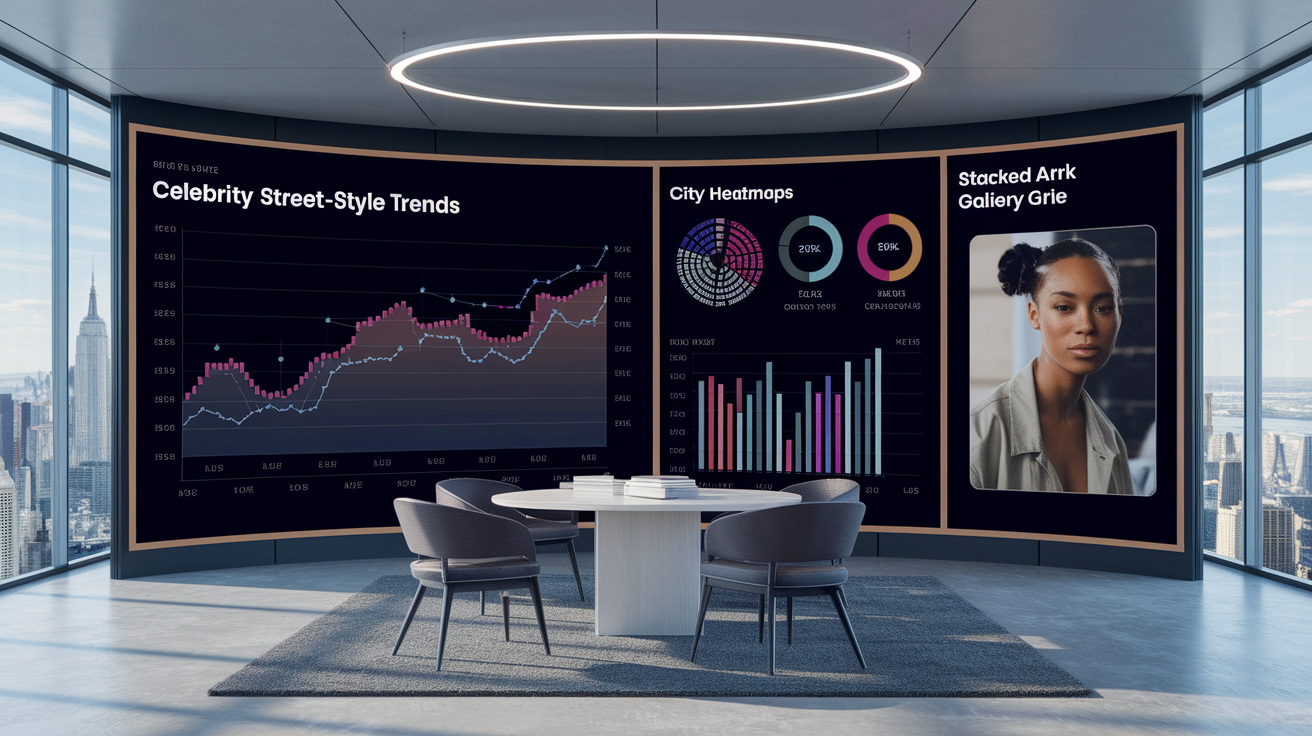
Time series line charts. Plot weekly or monthly mention volumes, search interest, or image counts for a specific garment (like knee‑length boots) with annotations marking celebrity appearance dates so you can see cause and effect timing.

Heatmaps. Display frequency of item pairings (blazer + sneakers, sheer dress + chunky boots) or geographic prevalence by city, revealing which metro areas show early adoption signals versus late followers.

Co‑occurrence network graphs. Link celebrities to items to brands in a visual web, illustrating influence pathways and showing which celebrity clusters drive overlapping trends (like Hailey Bieber and Kendall Jenner both wearing bike shorts within the same week).

Geographic diffusion maps. Show where street‑style photos are captured (New York, Los Angeles, London, Paris) and how trends spread from high‑fashion capitals to secondary markets over time.

Search interest curves work best when you overlay them with sell‑through rate data, creating a dual axis view that connects consumer curiosity to actual purchase behavior. Item frequency counts displayed as stacked area charts show category share over time, like clutches gaining share versus totes across a six month window. Image galleries tagged with metadata (date, location, celebrity, detected garments) serve as visual proof libraries that editors and merchandisers can filter by attribute, making it easy to pull examples when building trend reports or shoppable edits. Dashboards updated weekly should include filters by celebrity name, region, retailer, and trend status (emerging, peak, declining) so stakeholders can drill into the data that matters most for their planning horizon and target audience.

Seasonal and Lifecycle Mapping of Celebrity Street‑Style Trends

W1xFMDtX-6idS3l8Z2RWw

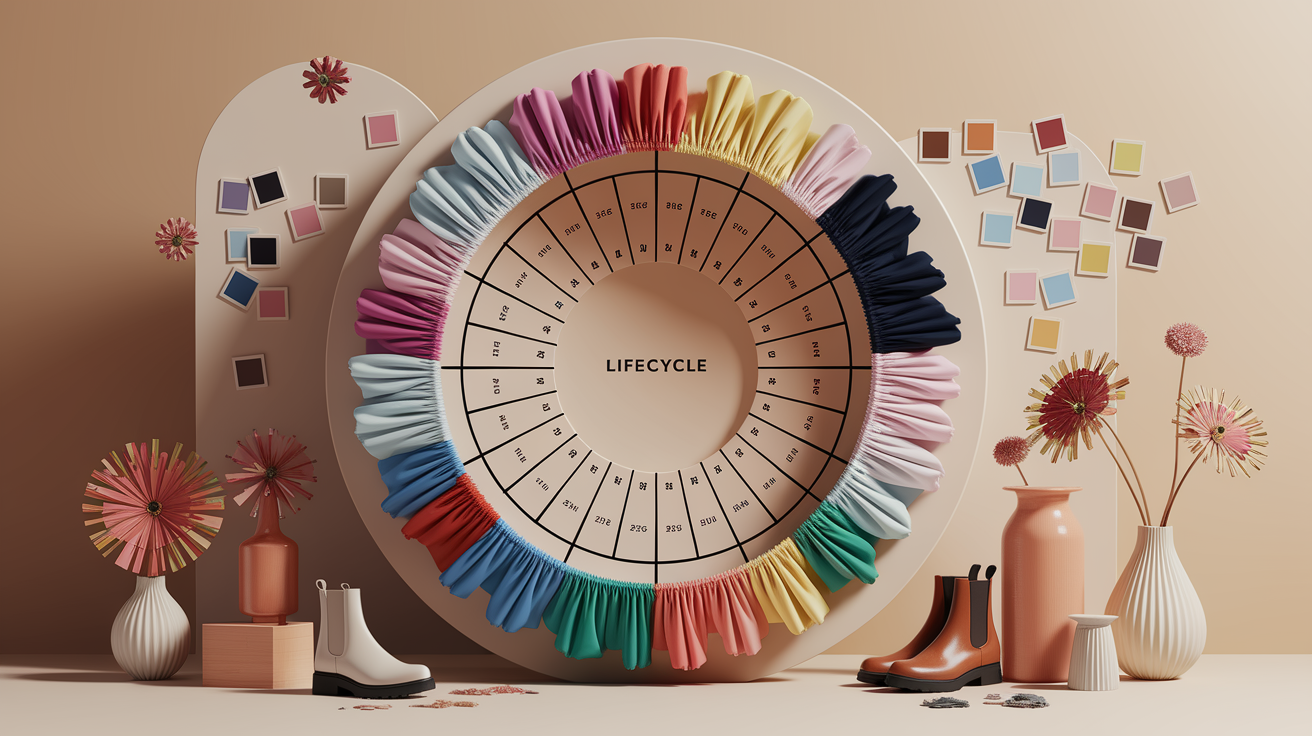
Seasonal patterns in celebrity street style follow the fashion calendar but often signal shifts weeks or months before traditional runway to retail timelines. Quarter over quarter comparisons reveal whether a trend like Bermuda shorts or sheer silhouettes is tied to warm weather months or beginning to appear in fall layering contexts. Year over year month alignment (comparing June 2023 to June 2024) isolates whether growth is cyclical (expected every summer) or represents new behavior. Fabric and color frequency tracking adds detail by measuring the percentage of sampled celebrity images showing denim versus leather, or neutral tones versus bold prints, across rolling four to twelve week windows.

Trend lifecycle phases include early stage emergence, peak adoption, plateau, and carryover or decline. Sheer silhouettes in 2024 entered early stage emergence in late winter when Zoë Kravitz and Dakota Johnson first appeared in layered mesh pieces, reached peak adoption by late spring with broader celebrity clusters adopting the look, and showed signs of plateau by midsummer when search interest stabilized instead of continuing to spike. Baggy jeans have sustained growth signals over multiple quarters, suggesting longer lifecycle potential and lower carryover risk into 2025. Retailers and forecasters use these phases to time inventory buys, with fast‑fashion players moving quickly during early stage signals and premium brands waiting for peak confirmation before committing to larger production runs.

Silhouette, fabric, and color trajectory tracking requires tagging each celebrity appearance with specific attributes and calculating share of voice over time. If oversized blazers appear in fifteen percent of all tagged celebrity street photos in March, twenty two percent in April, and eighteen percent in May, the trajectory suggests sustained interest instead of a one month spike. Tracking leather as a fabric shows whether it remains a fall winter staple or begins creeping into spring summer wardrobes through lighter treatments like perforated leather or vegan alternatives. Color palette trends like the rise of beige, brown, and neutral tones in 2024 clutch and outerwear categories become quantifiable when palette extraction tools measure RGB values and group them into trend relevant buckets, then chart those buckets’ prevalence month by month.

Tracking Celebrity Looks Through Automated Tagging and Metadata

e7VElhYZUZ-6SnW1f-Y2Kg

Automated tagging systems use image recognition models to classify garments, detect silhouettes, identify fabric textures, and extract color palettes from street‑style photos at scale. Instead of manually reviewing hundreds of images per week, you feed celebrity appearance photos into APIs that return structured data: blazer (oversized, black), jeans (baggy, high‑waisted, blue denim), sneakers (white, chunky sole), accessories (clutch, neutral leather). These attributes become searchable fields in a trend database, so you can query “show me all appearances with blazers and sneakers in the past thirty days” and instantly surface relevant examples. Natural language processing applied to Instagram captions, TikTok descriptions, and editorial photo credits extracts context keywords like “off‑duty,” “date night,” “airport style,” or brand mentions, adding behavioral and occasion layers to the raw visual data.

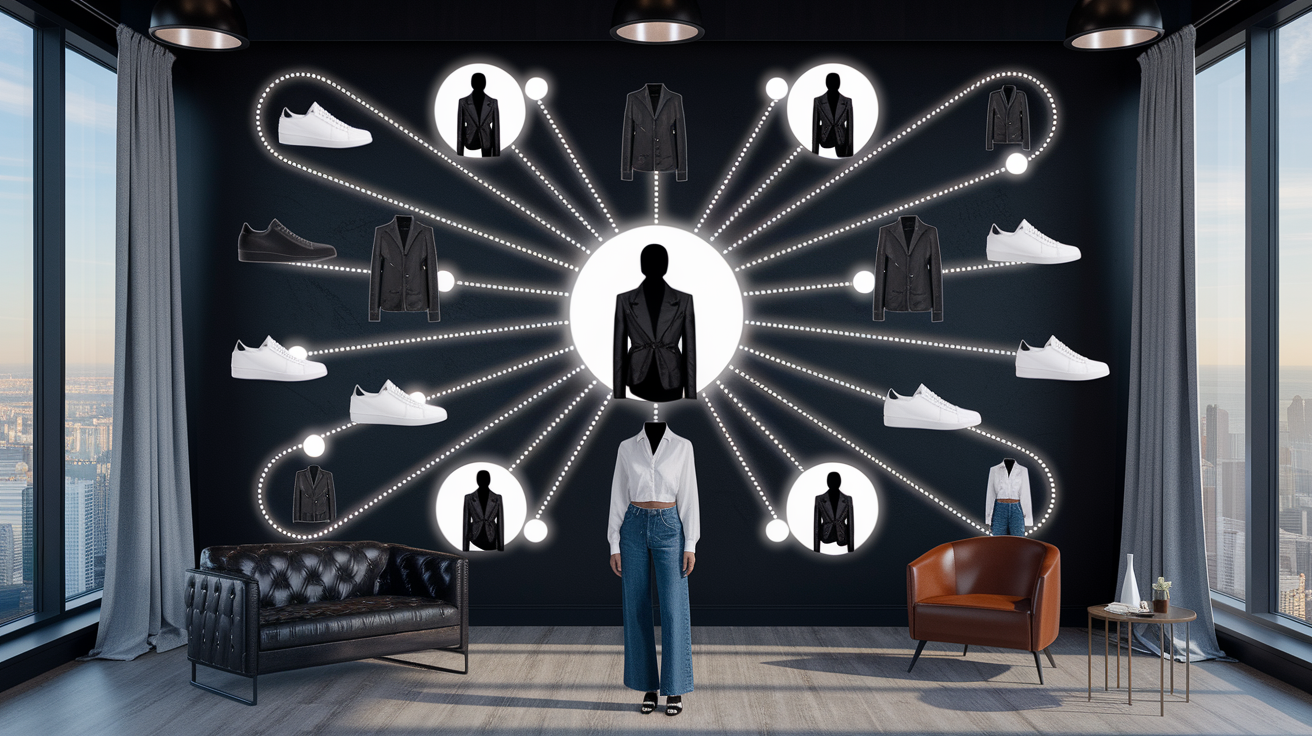
Repeated motifs emerge when automated systems flag items appearing across multiple celebrities within a tight time window. If the system detects leather outerwear in twelve celebrity posts over two weeks, bike shorts in eight posts, and white sneakers in fifteen posts, those items get higher trend scores than one‑off appearances. Co‑occurrence logic identifies pairings that show up together frequently (blazer plus white sneakers, sheer dress plus chunky boots) and ranks them by frequency, giving merchandisers and stylists ready‑made outfit formulas validated by real celebrity behavior instead of editorial guesswork.

Essential metadata fields:

Celebrity name and social handle. Links the appearance to influence metrics (follower count, engagement rate, audience demographics).

Date, time, and geo location. Enables seasonal analysis, time lag measurement, and geographic diffusion tracking.

Garment attributes. Silhouette, fabric, color, brand (if detectable), item category, occasion context.
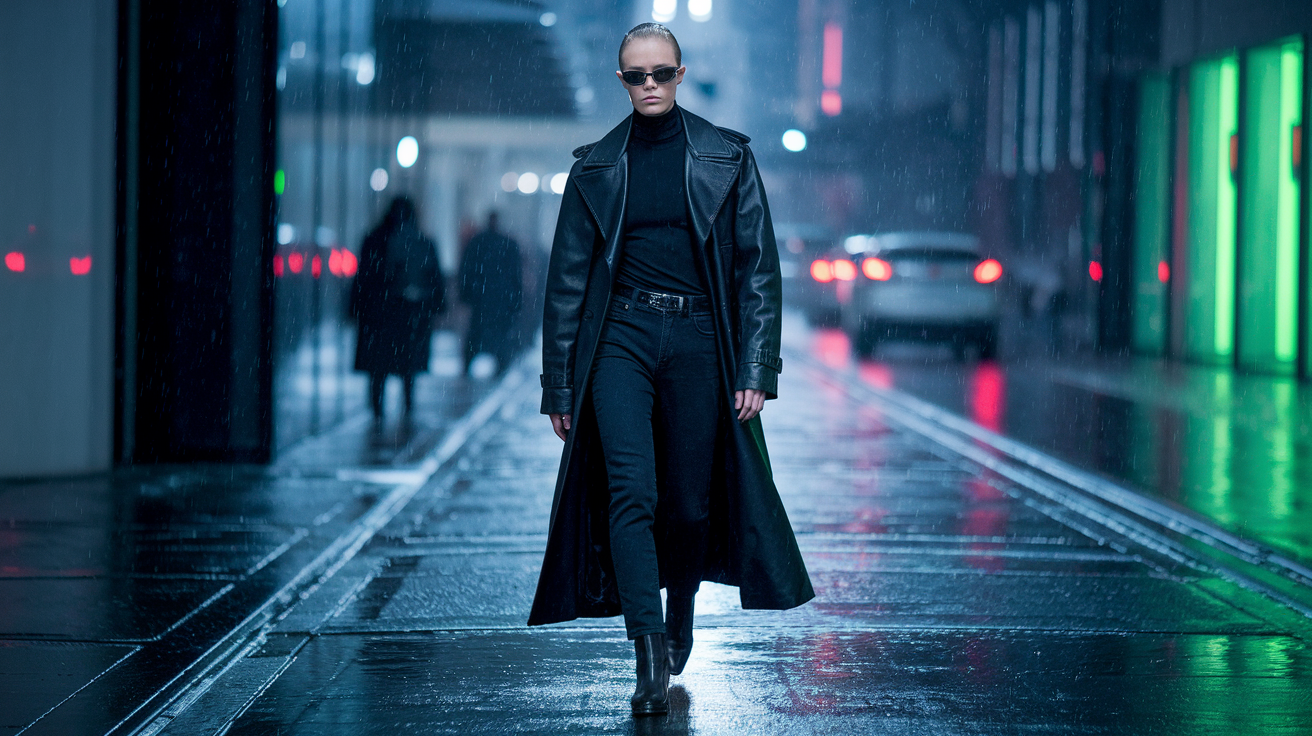
Linked retailer options. Affordable alternatives or exact product matches when available, supporting shoppable content creation and conversion tracking.

Best practice includes maintaining an image hash or unique identifier for each photo to prevent duplicate counting when the same outfit circulates across multiple platforms or gets reposted by fan accounts. Tagging accuracy improves when human reviewers spot check a sample of automated outputs weekly, correcting mislabeled items (like a trench coat misclassified as a blazer) and feeding corrections back into the model to refine future detection.

Using Celebrity Case Studies in Street‑Style Trend Mapping

WStc4nHjV9yMN5Q6XepmxQ

Mapping outfit recurrence across a small group of celebrities shows how influence networks amplify specific items and styling choices. Kendall Jenner, Hailey Bieber, and Emily Ratajkowski provide a compact case study with six documented looks showing recurring motifs: leather outerwear appears twice, oversized blazers twice, bike shorts twice, white sneakers three times, cropped tops or jumpers three times, and heels twice. Network diagrams linking these three celebrities to their shared items reveal pathways where one celebrity’s early adoption (Kendall wearing leather on leather) influences another’s styling choice weeks later (Hailey pairing a leather trench with high neck top and denim), creating a feedback loop that search algorithms and retail buyers can quantify.

Example Mapping Flow

When Kendall Jenner posts a daytime look featuring an oversized black blazer, white cropped top, high‑waisted baggy jeans, and white heels, the image typically generates immediate engagement spikes on Instagram and TikTok. Within twenty four to forty eight hours, fashion blogs and street‑style aggregators share the outfit, and Google search interest for “oversized blazer outfit” starts to climb. Trend mappers capture the original post, tag the four core items, note the date and platform, and track downstream metrics: follower saves, shares, and comments mentioning specific pieces. If Hailey Bieber appears in a similar blazer and jeans combination two weeks later, the system flags it as a co‑occurrence event, elevating the trend score for that pairing. Brand co‑occurrence follows when image recognition detects logos or editorial credits identify the blazer as Zara or the jeans as Levi’s, linking the celebrity appearance to accessible retail channels and driving search to buy conversion on those specific SKUs.

Influence network mapping also identifies when a celebrity cluster (Kendall, Hailey, Em Rata) collectively drives a trend versus when a single celebrity creates a one‑off moment. If all three wear bike shorts within a four week window, the trend gets higher confidence scoring and longer predicted lifespan than if only one celebrity wore them once. Retailers use this clustering insight to decide whether to stock a full bike shorts capsule with multiple colorways and price points or to limit inventory to a test run. Content creators schedule editorial coverage and video styling tutorials to coincide with peak cluster activity, capturing organic search traffic and social engagement when consumer interest is already primed by repeated celebrity sightings.

Converting Celebrity Street‑Style Trends Into Retail and Content Strategy

T_kjz2PfUIOY7wcXDRqJwg

Retail assortment planning starts the moment a trend passes the cluster threshold (multiple celebrities wearing the same item type within a rolling four to eight week window with measurable search volume growth). Fast‑fashion retailers launch capsule collections featuring entry‑price SKUs inspired by the celebrity looks, using automated tagging data to prioritize the most worn silhouettes, fabrics, and color palettes. If knee‑length boots appear in neutral leather across six celebrity sightings in September, a fast follow capsule might include three boot styles (black leather, tan suede, synthetic brown) at tiered price points (budget synthetic, mid‑tier leather, premium designer collaboration). Premium brands take a slower approach, waiting for sustained growth signals over eight to twelve weeks and using the trend data to inform next season design briefs instead of immediate production.

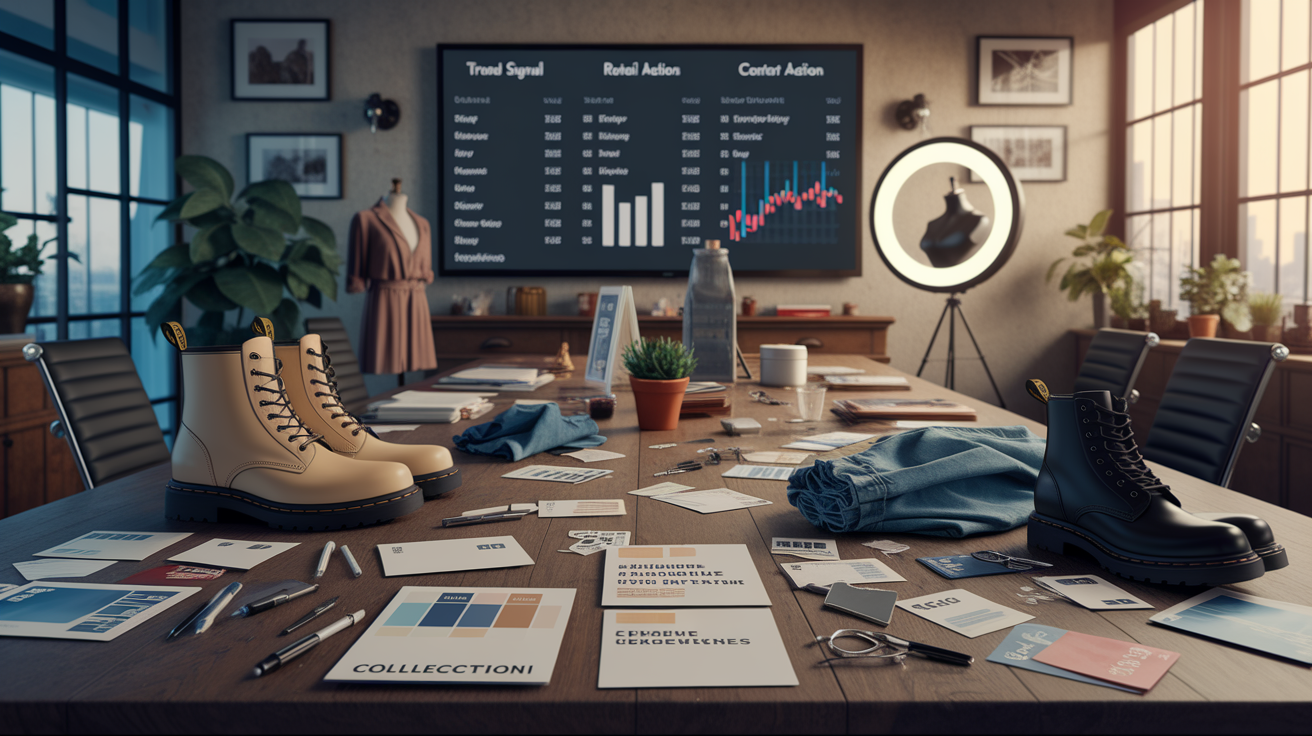
Trend Signal Retail Action Content Action
Three celebrities wear sheer dresses in two weeks Stock sheer tops and dresses; create layering bundles with bodysuits Publish “How to Style Sheer” guide; shoot video styling three ways
Search interest for “baggy jeans” up 28% week over week Increase denim SKU depth; add high‑waisted baggy fits in core washes Write SEO article targeting “baggy jeans outfit ideas”; tag celebrity examples
Bike shorts co‑occur with cropped tops in five celebrity posts Launch matching sets; seed influencers with free product for UGC Create shoppable Instagram carousel; link directly to SKUs in caption
Knee‑length boots show sustained YoY growth into fall Plan carryover inventory for next year; expand colorways and materials Schedule seasonal refresh article in Q3; update with new celebrity examples

Content strategy aligns editorial calendars and social posting schedules to celebrity trend windows. When Zoë Kravitz and Dakota Johnson both appear in sheer silhouettes within ten days, editors immediately commission a “Celebrity Sheer Styling Guide” and schedule publication within seventy two hours to capture peak search traffic. Video teams shoot quick styling reels showing three ways to wear sheer pieces, tagging affordable retailer options (H&M, Zara) and linking to shoppable product pages. SEO teams build keyword clusters around “sheer dress outfit,” “how to layer sheer tops,” and “celebrity sheer style,” making sure the content ranks for high intent search queries as people hunt for recreation tips. Weekly KPI dashboards track page views, time on page, click through rates to retailer links, and affiliate conversion, validating which celebrity driven topics generate the most engagement and revenue.

Merchandising teams use trend maps to time influencer seeding and paid partnerships. If automated tagging shows an emerging cluster around oversized blazers and the retail team has inventory arriving in three weeks, they seed micro‑influencers with early product samples two weeks before the official launch, creating organic user generated content that coincides with continued celebrity sightings. A/B testing compares conversion rates on product pages with and without celebrity‑inspired styling imagery, quantifying the lift that street‑style association provides. Forecasting horizons guide inventory commitments, with immediate trends (zero to three months) receiving lighter, test level buys and near term trends (three to nine months) justifying deeper SKU assortments and broader size and color matrices to meet anticipated demand surges.

Final Words

In the action, you learned how to spot and tag celebrity cues, set a daily capture routine, and turn those signals into visual stories and timelines. The post walked through tools, image-tagging best practices, and the five-step workflow that makes trend tracking repeatable.

Use the 0–3, 3–9, and 9–18 month windows to decide when to merch and when to wait. Keep refining the cadence, and your celebrity street-style trend mapping will keep you ahead of the next big look.

FAQ

Q: What is celebrity street-style trend mapping?

A: Celebrity street-style trend mapping is the process of tracking celebrities’ street looks to spot emerging fashion signals early, using images, hashtags, tagging, and analytics to inform forecasting, merchandising, and content planning.

Q: How do celebrities drive mainstream fashion adoption?

A: Celebrities drive mainstream fashion adoption by showing looks on social and press, creating search spikes and retailer demand that accelerate mass-market availability and solidify trend momentum.

Q: What practical workflow should I follow to map street-style trends?

A: A practical workflow is daily capture, hashtag monitoring, tagging outfit attributes, measuring search and sales signals weekly, and analyzing 4–12 week windows with quarterly seasonality checks.

Q: Which tools and platforms power celebrity street-style mapping?

A: Tools include social listening (Brandwatch, Talkwalker), trend services (WGSN, Lyst), Google and Pinterest Trends, plus visual intelligence platforms for garment classification, color extraction, and silhouette tagging.

Q: How do image recognition and NLP improve trend detection?

A: Image recognition and NLP improve trend detection by auto-tagging garments, extracting colors and silhouettes, and parsing captions for contextual keywords, enabling scalable co‑occurrence and timing analyses.

Q: What celebrity-led trends are worth tracking in 2024?

A: Current 2024 trends to track are sheer silhouettes, “it” clutches, boho dresses, Bermuda shorts, knee-length boots, and baggy jeans—each tied to celebrity exemplars and seasonal relevance.

Q: What visualizations and metrics should I use to present trend data?

A: Use time-series charts, stacked area charts, co‑occurrence heatmaps, and geographic diffusion maps; focus on search interest curves, sell-through rates, and item-frequency counts for storytelling.

Q: How do seasonal windows and lifecycle phases affect forecasting?

A: Seasonal windows and lifecycle phases affect forecasting by using 0–3 months for immediate spikes, 3–9 months for adoption and merchandising, and 9–18 months for strategic planning and maturation.

Q: What metadata and tagging best practices scale trend datasets?

A: Best practices are tagging celebrity name, date/location, garment attributes, and linked retailer options to support network mapping, search-lift analysis, and retailer impact tracking.

Q: How can brands and creators turn mapped trends into retail and content strategy?

A: Brands and creators convert mapped trends by launching fast-follow entry-price SKUs, timing inventory to celebrity clusters, producing shoppable content, and optimizing SEO around rising trend keywords.

How Celebrity PR Crises Unfold: Timeline Patterns

0

Think a single apology can erase a scandal?
Think again.
A PR crisis follows a predictable timeline, from the initial slip to the viral peak to the slow repair, and the timing of every move shapes the outcome.
This post maps those timeline patterns and shows why acting within 24 to 48 hours, keeping one clear voice, and reading the cultural room matter more than how bad the misstep looked.

Understanding the Celebrity PR Crisis Timeline

F-ykTiJfWmCioJQBSc47_Q

A celebrity PR crisis timeline tracks how a scandal blows up, peaks, and eventually calms down. It’s the roadmap from the first messy moment to the months-long cleanup afterward, and it shows why some stars bounce back fast while others can’t shake the stink. What decides the outcome isn’t always how bad the original screw-up was. It’s the timing, how consistent the messaging stays, and whether the star reads the cultural room correctly.

People look up crisis timelines because they want to know why some controversies explode overnight and why a week-late apology feels so fake. The answer’s in how modern media cycles work. News sites and social platforms run on overlapping 24-hour loops that need fresh content and instant takes. The second a celebrity messes up, the clock starts. A response in the first 24 to 48 hours can shape the whole story and keep peak damage down to about a week. Wait longer than 72 hours and you’re looking at weeks of headlines, plus the risk of new details surfacing that restart everything.

Most celebrity PR crises unfold in five stages, each with its own timing and communication headaches:

Incident (T0): The thing happens. Internal teams start gathering facts and checking with lawyers.

Exposure (0–24 hours): First reports drop, eyewitnesses post receipts, screenshots go up. Social amplification kicks in.

Viral spread (24–72 hours): Mainstream outlets pick it up. Mentions spike anywhere from 5 to 20 times normal. Sponsors and partners start internal reviews.

Investigation and disclosure (1 week): Official statements, apologies, or corrective moves get released. Sometimes secondary allegations or leaks show up here.

Aftermath and repair (1 month+): Long-term reputation work begins. Policy changes, staged comebacks. Full recovery can take 6 to 24 months.

Causes Behind How Celebrity PR Crises Escalate Over Time

Nz3WpdsWwyQsoA3_RoqLA

Crisis escalation happens when three forces collide: internal triggers, media triggers, and audience triggers. Each runs on its own clock, and when they line up, things blow up fast. Internal triggers are stuff like slow fact-finding, scattered legal advice, and no crisis plan sitting ready to go. Those gaps create a communication vacuum, and media and audiences fill it with guesses and hot takes. Media triggers fire up when outlets sense hesitation or contradiction. A partial admission after an earlier denial? Fresh headlines for days.

Audience triggers are the wild card. Social platforms reward emotional, shareable stuff, so outrage, jokes, and moral judgments spread way faster than thoughtful context. One tweet can hit millions in hours if it taps into existing debates about gender, power, privilege, accountability. When influencers and verified accounts pile on, you get secondary spikes between days 3 and 10, forcing the celebrity’s team to put out yet another statement.
Trigger Type Effect on Timeline
Internal (delayed decisions, mixed legal/PR advice) Extends exposure window; lets speculation run wild; raises risk of contradictory statements
Media (breaking news cycles, investigative follow-ups) Resets news interest every 24–48 hours; new evidence or admissions trigger fresh coverage waves
Audience (social shares, influencer commentary, memes) Amplifies volume 5–20× baseline in 48 hours; emotional framing drives viral spread; secondary spikes between days 3–10

Building an Effective PR Response Strategy Across the Crisis Timeline

DDczUQKXWdmB9nya7EFSeQ

An effective response strategy syncs up legal protection, public messaging, and stakeholder management across four critical windows. Each window’s got its own priorities and deadlines. Miss any of them and the damage compounds fast.

0–24 Hours

The first 24 hours are about internal triage and a public acknowledgment. Within the first 0 to 6 hours, pull together a rapid-response team: one designated spokesperson, legal counsel, senior decision-makers. Lock down social accounts so no one posts something rogue, and lock down all the facts you can grab—timestamps, screenshots, contracts, witness statements. Between hours 6 and 24, put out a brief public statement that says you’re aware of what’s going on and you’re committed to a transparent process. You’re not trying to explain everything. You’re just showing you’re engaged, informed, and taking it seriously. Something like: “We’re aware of the reports and reviewing the facts carefully. We’ll share a detailed update within 48 hours.”

24–72 Hours

Days two and three need a real, consistent response. Release a detailed statement that addresses the core allegation, lays out what you’re doing to fix it, and sets clear timelines. If an apology’s called for, deliver it without hedging or dancing around it. Notify key partners—sponsors, agents, platforms—before they read about it in the press. Monitor social and traditional media every hour during this window. Sentiment ratios and share volumes will peak here, and you need real-time data to adjust messaging if new allegations pop up.

Week 1

By day seven, the public expects real action or verified findings. If you promised an independent review or internal investigation, update people on where it stands and what happens next. Don’t contradict earlier messaging. Any shift from what you said before gets framed as lying and triggers another spike in coverage. If new evidence or allegations come out during this week, address them immediately instead of letting speculation fill the gap. “We’ve reviewed the additional claims and are taking the following steps…”

Month 1+

The long-term phase shifts from putting out fires to fixing your reputation. Put real corrective measures in place: policy changes, training programs, charitable initiatives, restitution. Track sentiment weekly and watch engagement across platforms. Plan staged re-engagement—controlled interviews, thoughtful public appearances, community-focused projects—but don’t try to “move on” too fast. Full recovery usually takes 6 to 24 months of steady, accountable behavior.

Six best practices that work across all windows:

Respond within 24–48 hours to shape the narrative before it hardens.

Appoint one trained spokesperson so you don’t end up with contradictory messaging.

Balance legal and public-facing language. Use narrow factual statements to protect legal interests while still showing accountability.

Monitor metrics hourly for 72 hours, then daily. Track volume, sentiment, top influencers, and headline themes.

Prepare for secondary revelations within 7–21 days. Build scenario plans for +1, +5, and +10 new claims.

Commit to staged, long-term repair with measurable milestones at months 1, 3, 6, and 12.

Strengthening Narrative Control as the Crisis Unfolds

MKvL3zHsXQuAdDe2PUXeQQ

Controlling the narrative means owning the single source of truth and adapting that message as facts come out. In the first 48 hours, your messaging priority is containment: acknowledge the incident, show you’re taking it seriously, promise transparency. Skip the detailed explanations or justifications that can get contradicted later. Between days 3 and 7, shift to clarification and accountability. Provide verified facts, correct misinformation, outline what you’re doing to fix things. After week one, the priority becomes rehabilitation: show consistent, positive behavior and invite third-party validation through audits, reviews, or community partnerships.

One spokesperson cuts the risk of mixed signals and makes sure every public statement lines up with legal strategy. Brief family members, agents, and close associates so they don’t fire off unauthorized social posts. A single off-message tweet from a loved one can restart the news cycle, like when “And That’s How We Do It” showed up hours after a high-profile on-stage incident. Hourly monitoring during the first 72 hours lets you spot the top influencers and headlines driving sentiment, so you can address emerging narratives before they harden.

Sentiment ratios should start stabilizing within 48 to 72 hours if the response is swift and consistent. If negative sentiment keeps spiking past day three, it means either new revelations, contradictory statements, or you didn’t read the cultural room right. In those cases, recalibrate messaging immediately. Add empathy, cultural humility, or corrective action instead of doubling down on a defensive posture.

Four narrative pivots that strengthen control over time:

Hour 0–24: Containment. “We’re aware and taking this seriously.”

Day 2–7: Clarification. “Here are the facts, here’s our plan.”

Week 2–4: Accountability. “We’ve made these changes and we’re still listening.”

Month 1+: Rehabilitation. “Our actions show our commitment to doing better.”

Phase Messaging Priority
0–24 hours Acknowledge awareness; commit to transparency; appoint single spokesperson
24–72 hours / Week 1 Deliver verified facts; issue apology if warranted; outline corrective steps and timelines
Weeks 2–6 / Month 1+ Demonstrate tangible action; invite third-party validation; rebuild trust through consistent behavior

Case Study Timeline Analysis of Notable Celebrity Crises

WvxB7rCzXpu_HGdsi7UgPA

Case A: Industry Exposé (October 2017)

On October 5, 2017, a major print publication dropped an investigative exposé detailing years of alleged misconduct by a high-profile industry figure. Within 48 hours, the story owned social and mainstream media. Mentions spiked more than 10× baseline, and major partners launched internal reviews. The first corporate fallout—board resignations and contract terminations—hit within 7 to 14 days. The individual’s delayed, defensive initial response stretched out peak coverage for weeks. A measured, transparent acknowledgment within 24 hours could have compressed the damage window, as other similar crises show. Instead, fragmented messaging and partial admissions over the next 10 days generated secondary spikes and dragged out legal and reputational consequences for years.

Case B: Sports Scandal (August 2012)

An investigative agency released a comprehensive doping report in August 2012, triggering immediate sponsor exits and a multi-month legal process. The athlete’s first response was a brief denial, but within 72 hours, major commercial partners paused endorsements and public sentiment flipped sharply negative. Secondary revelations—leaked testimony and additional evidence—showed up within 14 to 21 days, each one restarting the news cycle. Full institutional verdicts took months, and long-term legacy damage persists over a decade later. The timeline shows how delayed corrective action and repeated denials followed by eventual admissions multiply total coverage and drag out recovery.

Case C: Personal Scandal (November–December 2009)

Late November 2009 saw the first reports of a personal scandal involving a globally recognized athlete. Mainstream revelations accelerated through early December, and a public confession and apology cycle played out over the final weeks of the year. The individual showed up at high-profile events and issued fragmented statements across multiple days, making the crisis worse through poor same-night responses. Commercial consequences—endorsement losses and sponsor withdrawals—hit within one to three months. Full reputation repair took years of sustained, accountable behavior and community engagement.

Seven universal milestones show up across these timelines:

Day 0: Triggering incident or initial report surfaces.

0–24 hours: First wave of social amplification and eyewitness accounts.

24–72 hours: Mainstream media pickup. Sponsor and partner internal reviews begin.

Days 3–10: Secondary spikes driven by new evidence, influencer commentary, or contradictory statements.

Week 2–6: Legal maneuvers, sponsor decisions, and investigative follow-ups dominate coverage.

Month 1–3: Immediate commercial fallout (endorsement losses, contract terminations) becomes visible.

Months 6–24: Long-term reputation repair, policy changes, and legacy effects materialize. Full recovery timelines vary widely.

Long-Term Reputation Repair After a Celebrity Crisis Timeline Peaks

ZOG-RyhXVkC9U2J9lnC6vg

Full reputation recovery usually takes 6 to 24 months and needs more than silence or a single apology. Effective long-term repair combines corrective action, third-party validation, community engagement, and consistent behavior. During months one to three, put real policy changes in place—new training programs, code-of-conduct updates, restitution agreements—and announce them publicly with clear metrics. Invite independent audits or reviews to provide outside credibility, and share findings transparently. Between months three and six, start controlled re-engagement: measured interviews, thoughtful public appearances, charitable partnerships that line up with the corrective narrative.

Sponsor fallout often hits within 48 to 96 hours of the initial crisis, but rebuilding those partnerships takes months of sustained accountability. Track sentiment weekly and watch engagement across platforms to spot when public perception stabilizes. Don’t try to “move on” or claim vindication too early. Audiences reward patience and genuine change over performative gestures. By months 6 to 12, sustained positive behavior should start shifting legacy narratives, though some crises leave permanent marks that need ongoing reputation management for years.

Five key milestones for months 1 through 12:

Month 1: Launch corrective programs and announce policy changes with measurable targets.

Month 3: Publish results from independent reviews or audits. Begin controlled media re-engagement.

Month 6: Show sustained community involvement or charitable work that aligns with corrective themes.

Month 9: Measure sentiment stabilization and track partner re-engagement or new endorsement opportunities.

Month 12: Evaluate long-term legacy narratives and adjust ongoing reputation strategy as needed.

Preventing Future Celebrity PR Crisis Timelines

udzehjteWZOEZrogqfVc0A

Prevention starts long before any incident happens. Build a crisis preparedness framework that identifies the top 5 to 10 probable triggers and assigns clear escalation paths for each scenario. Map out risk categories—personal conduct, contractual disputes, social media slip-ups, legal allegations—and draft response templates that balance legal protection with public accountability. Appoint one or two trained official spokespersons and make sure they participate in quarterly or biannual media training and simulated crisis drills. Practice scripting statements under time pressure and rehearse coordinating with legal, PR, and executive teams.

Set up a rapid-response infrastructure that can activate within 24 hours: pre-approved decision trees, contact lists for key stakeholders, and monitoring dashboards that track social volume, sentiment, and top influencers in real time. Create contingency plans that lay out roles, approval workflows, and escalation triggers. Specify who authorizes public statements, who briefs partners, and who coordinates with legal counsel. Store crisis playbooks in accessible, secure locations so teams can execute under pressure without hunting for protocols or waiting for approvals.

Regular scenario planning keeps the system sharp. Run tabletop exercises that simulate emerging controversies—leaked footage, resurfaced tweets, allegations from anonymous sources—and test how fast the team can move from detection to public acknowledgment. Review and update risk maps annually or whenever major career changes happen. New projects, partnerships, or public roles often introduce new vulnerabilities.

Four proactive measures that cut crisis likelihood and severity:

Risk mapping: Identify and prioritize 5–10 probable triggers. Assign response owners and escalation timelines.

Spokesperson designation: Appoint 1–2 trained official spokespersons with media experience and legal briefing.

Media training: Run quarterly or biannual drills. Practice statement scripting, interview techniques, and crisis simulation.

Contingency plans: Draft response templates, decision trees, and escalation matrices that enable action within 24 hours.

When to Seek Professional PR and Legal Support During the Crisis Timeline

KXegocr6VR67IWsigAF6sw

Bring in professional PR and legal counsel within the first 0 to 6 hours of any serious allegation or public controversy. Early coordination makes sure public statements protect legal interests without sounding evasive or dismissive. Legal teams focus on minimizing liability, preserving evidence, and advising on admissions that could mess up future proceedings. PR professionals craft messaging that balances factual accuracy with accountability, monitors real-time sentiment, and manages stakeholder communications. The two disciplines have to work together. Legal language alone often feels cold and defensive, while PR-driven empathy without legal review can increase exposure.

You especially need immediate professional support when the crisis involves allegations of harm, contractual breaches, or regulatory scrutiny. In these cases, every public word carries legal weight, and delays or slip-ups can result in sanctions, lawsuits, or criminal consequences. External advisors also bring objectivity. Internal teams are often too close to the situation to assess damage accurately or challenge entrenched assumptions about reputation and risk.

Three warning signs that external support is urgently needed:

Allegations of harm or illegality: Any claim involving assault, discrimination, fraud, or regulatory violations needs immediate legal and PR coordination.

Contradictory internal messaging: If decision-makers disagree on facts, timelines, or appropriate response, external advisors can mediate and unify the narrative.

Rapid social or media escalation: When mentions spike 10× or more within 24 hours and sentiment turns sharply negative, professional monitoring and response strategies become essential to prevent runaway amplification.

Final Words

In the action, we tracked the fast-moving arc from first incident to long-term repair: detection, viral spikes, rapid-response windows, narrative control, and months-long recovery.

You now have a practical timeline, the triggers that fuel escalation, and step-by-step tactics for acting within the crucial 24–48 hour window.

Keep this guide handy as a reference for how celebrity PR crises unfold: a timeline analysis, because speed, clarity, and consistent messaging usually steer things back on track. Stay ready. Recovery is possible.

FAQ

Q: What is a celebrity PR crisis timeline?

A: A celebrity PR crisis timeline is the chronological map of an incident from detection to recovery, showing major attention spikes in the first 48–72 hours and recurring coverage cycles over weeks to months.

Q: What are the core stages of a crisis progression?

A: The core stages of a crisis progression are incident, exposure, viral spread, investigation and disclosure, then aftermath and repair, each shaping who controls the story and how fast it escalates.

Q: Why do scandals escalate predictably over time?

A: Scandals escalate predictably because social amplification, 24‑hour news cadence, and new evidence trigger attention spikes, while mixed messages or delays fuel speculation and repeat coverage waves.

Q: How fast should a team respond in a celebrity PR crisis?

A: A team should respond within 24–48 hours, with internal triage at 0–6 hours; acting fast shapes the narrative, while delays past 72 hours usually worsen public perception.

Q: What should happen in the 0–24 hour window?

A: In the 0–24 hour window, conduct internal triage, verify facts, and issue a short acknowledgment. Quick clarity and a single point of contact help limit early misinformation.

Q: What should happen in the 24–72 hour window?

A: In the 24–72 hour window, provide clearer details, correct inaccuracies, prepare a coordinated spokesperson statement, and monitor sentiment hourly to stabilize coverage and public reaction.

Q: How do you control the narrative while a crisis unfolds?

A: To control the narrative, name one spokesperson, maintain consistent messaging, monitor coverage closely during the first 72 hours, and pivot only when verified facts or corrective actions are ready.

Q: How long does reputation repair usually take after a crisis peaks?

A: Reputation repair usually takes six to 24 months, requiring visible corrective action, community engagement, and steady behavior; sponsor fallout often happens within the first 48–96 hours.

Q: What proactive steps prevent future celebrity PR crises?

A: To prevent future crises, map 5–10 risks, designate 1–2 spokespeople, run regular media training, keep emergency statement templates, and build an escalation matrix enabling a 24‑hour response.

Q: When should you seek professional PR and legal support during a crisis?

A: You should seek professional PR and legal support within the first 0–6 hours for serious allegations or legal exposure, coordinating factual messaging with lawyers before making public statements.

The Matrix Trench Coat Replicas and Styling

0

Think you need to raid Warner Bros. to get Neo’s trench?
You don’t.
Replicas span $80 PU bargains to $400 high-end leather pieces, with most fans landing around $150-$250 for a near-screen-accurate look.
Here’s the thing: length, collar, and concealed closures make or break the silhouette.
This post will point you to the best replica sellers, explain what construction details actually matter, and give simple styling tips so your trench reads cinematic, not costume-y.

Where to Buy The Matrix Trench Coat (Best Replicas & Prices)

q9JTHkzMUQqB25Vkz6VCFA

You want a screen-accurate Neo trench without breaking into a Warner Bros. prop vault? The replica market’s got plenty. Prices start around $80 for basic polyurethane versions and climb to $400 for high-end leather pieces with proper tailoring. Most fans land somewhere in the middle, $150 to $250, where you’ll find genuine or faux leather with the right cut, lining, and closures.

Your best bet? Specialist cosplay retailers and fan-replica shops. Search “Matrix Neo coat” or “leather duster trench” and you’ll pull up stores that actually know what makes the silhouette work: the long, straight drape, the stand collar, the way it’s supposed to move. Mainstream fashion sites sometimes carry “Matrix-inspired” trenches filed under “long leather coat” or “minimalist trench,” but watch out. A lot of generic styles don’t hit the ankle and skip the narrow lapels that make Neo’s coat instantly recognizable.

Etsy and eBay sellers list custom or vintage pieces pretty regularly. Read reviews. Ask for detailed photos. Confirm what the thing’s actually made of before you commit.

What to look for when you’re comparing listings:

Length specification. Neo’s coat hits below the knee or mid-calf. Anything shorter and you’ve lost the whole silhouette.

Material honesty. The listing should say “genuine leather,” “PU leather,” or “polyurethane” clearly. If it just says “leather-look,” you’re probably getting cheap vinyl.

Lining detail. Viscose or satin lining adds durability and keeps you comfortable. Cheap replicas skip lining completely.

Collar and closure type. You want a stand or mandarin collar and either hidden snaps or a flap-style front. Traditional double-breasted buttons aren’t screen-accurate.

Seller credentials. Established cosplay shops or verified retailers with return policies save you from sizing disasters and fabric lies.

Budget faux-leather options work fine for conventions or occasional wear, but seams and surface finish wear out faster. Genuine cowhide or lambskin replicas cost more upfront but hold their shape and age better, especially if you’re planning to wear the coat more than once.

Design Breakdown of Iconic Matrix Coats by Character

ePdCPCeLWKSc_Fv-iscE-Q

Neo’s Coat

Neo’s trench is the franchise’s visual anchor. Long, straight, utterly minimal. The coat falls to ankle or mid-calf in a draped, almost column-like silhouette with no belt, no epaulets, no fussy hardware. It’s matte black leather (or high-quality faux), tailored close through the shoulders but left loose through the body so it can swish dramatically during fight scenes. The collar’s a simple stand or low fold, never a wide lapel, and the front closure is concealed snaps or a flap system. Nothing interrupts the clean vertical line.

Paired with narrow black sunglasses and slim-cut trousers, the coat reads as futuristic and anonymous. Like a uniform for digital rebellion.

Trinity’s Coat

Trinity’s coat shares the long-length DNA but swaps Neo’s drape for a tailored, body-conscious fit. Her silhouette’s sleeker through the waist and hips, often with subtle darting or princess seams that emphasize movement without bulk. The leather tends to have a slight sheen or suppleness, and the coat frequently shows up with tactical details: zippered pockets, articulated sleeves, asymmetric closures. Things that give it a functional, combat-ready edge.

Where Neo’s coat flows, Trinity’s coat hugs and slices. It’s cut for agility, reflecting her role as the crew’s most precise fighter, and it layers seamlessly over her fitted leather pants and tops.

Morpheus’s Coat

Morpheus’s coat brings weight and gravitas. It’s constructed from heavier leather, sometimes with a textured or embossed finish that reads almost crocodile-style in certain replicas, and features broader shoulders and a more structured drape. The length’s similar to Neo’s, but the coat’s volume and stiffness create a more imposing, authoritative presence. Morpheus often wears his collar up or styled open, adding to the dramatic, cape-like effect when he moves.

The coat’s heft mirrors his role as mentor and leader. Solid, unshakable, impossible to ignore.

The Designer Behind The Matrix Coats: Kym Barrett

A0tJLlSEV4m1gHlecci5Nw

Kym Barrett designed the costumes for the original Matrix trilogy, blending cyberpunk grit, tactical utility, and high-fashion minimalism into a wardrobe that became as iconic as the film’s green code. Barrett’s design philosophy centered on creating a visual language for each character’s role and mindset: Neo’s austere trench signaled his journey from ordinary to mythic, Trinity’s sleek leathers emphasized precision and purpose, and Morpheus’s heavy coats conveyed wisdom and authority.

She pulled from club culture, military gear, fetish fashion, and Japanese street style, then stripped everything down to monochrome essentials. Mostly black, with occasional flashes of deep green to echo the digital Matrix itself.

Barrett’s coats were engineered for movement as much as mood. The leather had to flow during wirework stunts, hold shape under studio lights, and photograph as pure shadow and line. She worked closely with stunt coordinators to ensure fabric weight and cut wouldn’t restrict choreography, which is why the trenches often used softer, more supple leathers or strategic blends of PVC and wool. The result? A wardrobe that looked futuristic without feeling costumey. Wearable enough to influence real-world fashion but stylized enough to remain unmistakably Matrix.

Her work on the trilogy influenced early-2000s fashion trends hard. The surge in long leather coats and narrow sunglasses, the broader adoption of monochrome, layered silhouettes in clubwear and streetwear. Designers started experimenting with elongated proportions and technical fabrics, and the cyberpunk aesthetic Barrett helped define became a runway staple for nearly a decade.

Materials and Construction of Matrix‑Style Trench Coats

TIc8Q9i4VYawN0fUS_YNUA

Screen-used Matrix coats were built for performance, not just appearance. Material choices balanced drama with durability. The most common outer materials included leather (both cowhide and lambskin), PVC for high-gloss or wetsuit-like finishes, and occasionally wool blends for lighter-weight pieces worn in less action-heavy scenes. Cowhide offered weight and structure, lambskin provided softness and drape, and PVC gave a sleek, rain-slick shine that photographed as pure black under film lighting.

Key construction features to look for in a quality replica:

Lining. Viscose or satin lining adds breathability and reduces friction against clothing. Unlined coats bunch and wear faster.

Stitching. Double or reinforced stitching at shoulders, armholes, and side seams prevents tearing during movement. Visible topstitching should be even and tight.

Weight and drape. A good Matrix trench should feel substantial without being stiff. Lighter faux leathers often lack the swing and fall of genuine leather.

Hardware. Closures should be hidden snaps, hook-and-eye sets, or concealed zippers. Shiny buttons or visible metal breaks the minimalist look.

Movement was a core design requirement. Barrett’s team used leather that could stretch slightly or fabrics cut on the bias to allow for kicks, spins, and wire-assisted leaps. Replica makers who understand this prioritize articulated sleeves, vented backs, or gussets at the underarm. Details that let you walk, sit, and gesture without the coat riding up or restricting your shoulders. Cheaper versions skip these features and use stiffer, less forgiving synthetics that look right standing still but fail the moment you move.

Styling Tips for Wearing a Matrix‑Inspired Trench

VqGOB2zwVue-N5csf79Wfw

Keep the palette monochrome and the layers minimal. A Matrix-style trench works best over black jeans or slim-cut trousers, a simple black tee or turtleneck, and black boots, either combat-style or sleek Chelsea boots. The goal is a clean vertical line with no color breaks or busy patterns. Let the coat do the talking.

Accessories should be restrained and functional. Narrow, dark sunglasses (rimless or slim wire frames) are the signature finishing touch, but skip them indoors unless you’re committed to full cosplay energy. A black leather belt with a minimal buckle, a slim watch, or a simple crossbody bag can add utility without cluttering the silhouette. Avoid scarves, chunky jewelry, or anything that softens the coat’s sharp, futuristic edge.

For seasonal adaptability, layer strategically. In spring or fall, the trench works as a statement outer layer over lightweight knits or long-sleeve basics. In winter, add a thin black hoodie or thermal underneath. Just make sure it doesn’t add bulk at the shoulders or waist. The trench’s length makes it harder to pair with shorts or cropped pants. Stick to full-length trousers or dark denim that skims the top of your boots.

Three outfit combinations to try:

Black turtleneck, black slim jeans, black Chelsea boots, narrow sunglasses

Black graphic tee, black cargo pants, black combat boots, minimal watch

Black mock-neck sweater, black tailored trousers, black dress shoes, leather belt

Cultural Impact of The Matrix Trench Coat

pZeDo40uUgSea2LxT4uzKA

The Matrix trench became visual shorthand for cool, capable outsiders the moment the film hit theaters in 1999. It crossed over from sci-fi costume into real-world fashion faster than almost any other piece of cinematic wardrobe, showing up in music videos, club nights, and fashion editorials within months of the film’s release. The coat’s influence peaked in the early 2000s, when long leather coats, narrow sunglasses, and all-black palettes dominated both runway collections and mall goth aesthetics.

Designers like Helmut Lang, Rick Owens, and Ann Demeulemeester leaned into the elongated, monochrome silhouettes Barrett had popularized. Suddenly everyone from art students to pop stars was dressing like they might hack into the mainframe at any moment.

The coat also reshaped action-film costume design. Post-Matrix, long coats became a default uniform for antiheroes, hackers, and anyone operating outside the system. Think Underworld, Blade II, Equilibrium, and countless others. The trench signaled rebellion, secrecy, and superhuman competence, often with zero dialogue required. It was a costume piece that worked as character development, and that efficiency made it irresistible to filmmakers chasing the same sleek, kinetic vibe.

Twenty-five years later, the Matrix trench still surfaces in contemporary fashion. Fall 2024 runways from Hermès, Burberry, and Alexander McQueen featured supple leather trenches in black and deep brown, and celebrities like Lady Gaga, Irina Shayk, and Rihanna continue to wear long leather coats in ways that echo Neo and Trinity’s wardrobe. The silhouette endures because it balances drama with versatility, equally at home on a red carpet, a city street, or a convention floor.

Final Words

We mapped out where to buy the best Matrix trench coat replicas, weighed leather versus faux options, and flagged price ranges and authenticity markers.

We broke down Neo’s long minimalist silhouette, Trinity’s fitted tactical vibe, and Morpheus’s heavier, dramatic structure, and explained Kym Barrett’s influence plus construction notes for screen-accurate movement.

Whether you’re shopping a budget replica or hunting a high-end leather piece, the guide gives retailers, material tips, and styling ideas to nail the look. The Matrix trench is as iconic as ever, so go make it yours.

FAQ

Q: Why do they wear trench coats in The Matrix?

A: They wear trench coats in The Matrix to create a sleek, uniform cyberpunk look that reads well on camera, hides gear for action scenes, and gives characters a memorable, timeless silhouette.

Q: Does Neo wear a trench coat?

A: Yes, Neo wears a long black leather trench coat in the films — his signature minimalist, floor‑skimming silhouette that helped define the franchise’s look and action-ready vibe.

Q: Is Will Smith doing a Matrix movie?

A: No, Will Smith is not doing a Matrix movie; he never joined the cast, and there’s no official project linking him to the franchise.

Q: Did Neo ever actually leave The Matrix?

A: Yes, Neo does leave the Matrix: he’s freed by Morpheus’s crew, returns when needed for the plot, and ultimately sacrifices himself, meaning he physically exits the simulation multiple times.

How TikTok Beauty Trends Reach A-List Makeup Artists and Celebrity Clients

0

Think TikTok is just for teens? Think again.
A-list makeup artists now mine viral TikTok beauty trends because those short videos show exactly what cameras and celebrity clients need: flawless texture, quick formulas, and universally flattering color stories.
TikTok works like a fast trend lab—creators test looks, MUAs scout the winners, then refine them for 4K lighting, longevity, and diverse skin tones.
This post breaks down the pipeline from viral tutorial to red carpet and why pros turn TikTok hacks into A-list staples.

How TikTok Trends Move Into A‑List Makeup Artistry

lmvfq0TWKW2IA0z2Ql1dQ

TikTok beauty trends get picked up by A-list makeup artists because viral looks like “glass skin,” “latte makeup,” and “cold girl” deliver exactly what high-resolution cameras and celebrity clients need: flawless texture, natural glow, and fast execution. These trends jump from short videos to red carpets in weeks, sometimes days. When a celebrity asks for “that dewy look from TikTok,” the MUA already knows which primer, cream blush, and light-reflecting particle will recreate the effect under stage lights and 4K lenses.

Professional makeup artists scroll TikTok daily. They’re monitoring viral makeup trends posted by creators like Mikayla Nogueira, Huda Kattan, and Rose Gallagher to spot techniques clients will request next. Celebrity makeup artists influence each other through group chats and backstage conversations, but the initial spark? It often comes from a TikTok tutorial that racks up millions of views in 48 hours. Filters like soft-focus, pastel tones, and glowy-skin effects show MUAs which aesthetics resonate with mass audiences, helping them predict what celebrities will want for their next event or campaign shoot.

The professional adoption timeline runs fast. Viral makeup trends are designed for speed, simplicity, and visual impact. Qualities that translate perfectly to red-carpet prep with tight schedules and intense lighting. A trend that hits critical mass on TikTok one week may appear on an A-list client two to four weeks later, refined for longevity and skin compatibility. The looks that move fastest emphasize natural, buildable textures and universally flattering color stories, making them easy to adapt across skin tones, ages, and event formats.

Viral to red carpet pipeline:

  • Creator posts tutorial featuring a new texture, color story, or technique
  • Video achieves high engagement (7.52% or higher) and broad follower reach (often 700k+ creator accounts)
  • Professional MUAs test the look on models or assistants, adjusting for camera and skin diversity
  • Celebrity clients request the trend by name or by showing a saved TikTok
  • MUA adapts the look for the event’s lighting, photography format, and desired longevity

A Catalog of TikTok Beauty Trends Frequently Used by Celebrity MUAs

GAHVzr9gX-yTfqBrT55NCA

The main TikTok beauty trends adopted by professionals fall into five categories: dewy minimalism (“clean girl,” “glass skin”), warm-toned color stories (“latte makeup”), cool-toned freshness (“cold girl makeup”), maximalist sparkle (Euphoria-inspired iridescent eyes), and bronze/glowy sculpting. Each trend delivers a distinct visual signature that photographs well and can be adjusted for event formality. “Clean girl” emphasizes fresh skin, natural brows, and minimal color. “Glass skin” layers light-reflecting primers and sheer textures for a poreless glow. “Latte makeup” uses warm caramel-brown tones across eyes, cheeks, and lips for a sun-kissed effect. “Cold girl” features pink cheeks, glowing skin, and slightly frosted lips. Euphoria looks lean into iridescent shimmer and bold glitter placement around the eyes.

Creators like Giorgina Juanita (founder of Gigibee Beauty) popularized bronze/glowy tutorials that blend makeup, hair, and outfit styling into a single cohesive aesthetic. Rose Gallagher’s Euphoria-inspired iridescent eye tutorials showed MUAs how to layer glitter without losing definition under stage lights. Short-form video beauty trends thrive when they offer a clear, repeatable formula: “apply this, blend here, set with spray.” That kind of thing translates across skill levels and equipment access. These viral makeup trends gain traction because they solve common client requests: “I want to look like myself but better,” “I need something camera-ready in under 30 minutes,” or “Can you make my skin look like the filter?”

The color stories that define these looks rely on satin eyeshadows, subtle nude tones, cream blushes, and inner-glow skin finishes. Product selection by MUAs now prioritizes lightweight “second skin” foundations with light-reflecting particles, cream contour products instead of powders, and setting sprays with moisturizing effects to prevent dryness. Matte, heavily powdered finishes have fallen out of favor on TikTok and in professional kits alike, replaced by textures that mimic the soft-focus, slightly dewy aesthetic that dominates short-form platforms.

Professional Adaptation Techniques MUAs Use to Translate TikTok Looks for Real Events

zTdERZ7NVD2J0oaCY1bbag

TikTok tutorials are filmed under ring lights, in bathrooms, or with natural window light. Conditions that flatter shimmer and dewiness but don’t replicate red-carpet flashes, stage spots, or 4K camera rigs. A-list makeup artist techniques adjust for those harsher, more revealing environments by thinning out product layers, switching from liquid to cream textures, and using blurring sprays to minimize visible pores without creating a flat, overloaded surface. The same “glass skin” finish that looks perfect in a vertical video can read greasy under event lighting unless the MUA reduces oil-based primers and sets strategic zones with translucent powder.

Translating social looks for high-resolution photography requires layered application, careful color correction, and longevity planning that casual TikTok videos skip. Professional testing of viral hacks like using ribbon to guide contour placement or applying liquid blush directly onto eyelids happens off-camera, where MUAs check for irritation, pigment migration, and photo readiness. Adapting trends for diverse skin tones means swapping out universal “nude” shades for undertone-specific palettes, adjusting shimmer particle size to avoid ashy casts on deeper complexions, and modifying placement so that contour and highlight enhance natural bone structure rather than imposing a one-size formula. Adapting trends for live events adds the need for touch-up-friendly textures, sweat resistance, and products that won’t oxidize or separate under hot lights during multi-hour shoots or award shows.

How MUAs Rework Techniques and Hacks for HD and Skin Diversity

Celebrity MUAs modify viral contour techniques by using softer, more buildable formulas and placing product based on the client’s actual facial structure rather than a generic TikTok map. Shimmer placement shifts from broad swaths across cheekbones to targeted inner-corner and brow-bone highlights that catch light without creating texture in 4K close-ups. Blush location adapts to face shape and age: higher on the apple for a youthful lift, more diffused across the cheek for mature skin that photographs better with softer edges. Undertone matching becomes non-negotiable when a look will be seen under multiple light sources. A shade that looks warm and glowy in a TikTok can read orange or muddy on a red carpet if the undertone clashes with the client’s skin. Safety updates address viral hacks that weren’t designed for sensitive or professional use, like testing any non-eye-safe product (ribbon dye, craft glitter, or non-cosmetic pigments) before applying it near the eye. Modifications for mature skin include switching from matte to satin textures, avoiding heavy powder that settles into fine lines, and using hydrating setting sprays that maintain a fresh finish without emphasizing texture.

Case Studies of Viral TikTok Looks Used on Celebrities

VJmFBxoVXcu_iDAl3793Pg

“Glass skin” moved from TikTok video tutorials featuring sheer foundations, light-reflecting primers, and dewy setting sprays to red-carpet execution when celebrities began requesting “that no-makeup glow” for daytime events and magazine covers. Signature celebrity looks inspired by TikTok started appearing at award shows within months of the trend hitting peak engagement, with MUAs layering the same cream products and blurring techniques shown by creators but adjusting application density and setting methods for all-day wear under camera flashes. The case study: glass skin transition to red carpet demonstrates how a viral aesthetic born in bedroom ring-light videos became a go-to for A-list clients who wanted fresh, modern, and instantly recognizable beauty.

“Soap brows,” the TikTok hack of brushing brows upward with a bar of soap or brow gel to create feathery, sculpted arches, transformed into the groomed, laminated-look brows seen on runways and at premieres. The case study: soap brows to groomed arches shows MUAs replacing literal soap (which can flake or irritate) with professional brow-setting gels that deliver the same lifted texture without the DIY risks. Celebrities started asking for “TikTok brows” by name, and MUAs responded by perfecting a version that photographed well from every angle and lasted through multi-hour events without drooping or losing definition.

Graphic liner, bold, angular eyeliner wings, floating lines, and negative-space designs, jumped from short-form beauty experiments to haute couture runways and editorial shoots. The case study: graphic liner brought to haute couture highlights how MUAs took the playful, imperfect energy of TikTok liner tutorials and refined them into precise, repeatable shapes that complemented high-fashion silhouettes. Designers and stylists began requesting graphic liner looks after seeing the massive engagement these videos earned, recognizing that the aesthetic felt current, youthful, and visually arresting in both digital and print formats.

Real creator tutorials from Mikayla Nogueira’s “painting contouring” technique, Rose Gallagher’s iridescent Euphoria eyes, and Giorgina Juanita’s bronze glow serve as reference points MUAs bookmark and revisit when planning looks for celebrity clients. These videos provide a visual shorthand that clients and creative directors understand instantly, speeding up the briefing process and aligning expectations before the first brush touches skin.

Metrics MUAs Use to Evaluate TikTok Trend Viability

tTVaC0SrXUydr7sS3mgE8g

Celebrity makeup artists evaluate trend vetting process markers like engagement rate, follower volume, hashtag velocity, and Google Trends search interest to decide which viral moments are worth adapting for high-profile clients. Beauty TikTok achieves a 7.52% engagement rate, and top creators average over 700,000 followers. Benchmarks that signal a trend has moved beyond niche communities into mass awareness. Metrics MUAs use to evaluate trends include how quickly a hashtag accumulates views (anything hitting 10 million in under a week warrants attention), whether the look appears across multiple creator accounts (indicating organic spread rather than a one-off viral moment), and whether search interest is rising on Google Trends over weeks or months rather than spiking and disappearing overnight.

Client inquiries and direct celebrity requests act as the ultimate adoption signal. When multiple clients text the same TikTok link or ask for “that pink cheek thing,” the MUA knows consumer demand is shaping professional technique and it’s time to test the look in the kit. Hashtag impact on professional uptake accelerates when a trend is easy to name, search, and replicate. “Latte makeup” or “cold girl” offer clear visual identities that clients, stylists, and MUAs can reference in shorthand during fast-paced prep sessions.

Metric Why It Matters
Engagement rate (7.52% or higher) Signals broad audience interest and repeatability across demographics
Follower volume of originating creator (700k+) Indicates the trend launched from a trusted, established voice
Hashtag view velocity (10M+ in under a week) Shows rapid, organic spread rather than paid or isolated promotion
Client requests and saved TikToks Confirms the trend has reached celebrity and high-net-worth audiences

Collaboration Between Influencers and Celebrity MUAs

7NqvpEwQWWCnatlnOsUbQQ

Professional makeup artists study influencer methods because creators like Mikayla Nogueira, Huda Kattan, and James Charles test products, techniques, and color combinations in real time, offering immediate feedback loops that traditional editorial testing can’t match. Collaboration between creators and celebrities happens both formally (brand partnerships, campaign co-creation) and informally (MUAs citing a creator’s tutorial when pitching a look to a stylist or client). Influencer collaborations with pro artists bring credibility to viral hacks and help MUAs explain why a technique works, using the creator’s video as visual proof during client consultations or team briefings.

Co-created looks emerge when a celebrity MUA adapts a TikTok tutorial on set, tags the original creator, and posts the behind-the-scenes process, creating a feedback loop that benefits both parties. Backstage collaboration often involves MUAs showing models or assistants a TikTok video, then workshopping the look together to find the version that suits the client’s skin, the event’s dress code, and the lighting setup. Makeup artist social media strategies now prioritize short-form content creation by MUAs, with professionals posting their own GRWM videos, BTS clips from shoots, and tutorials that remix trending techniques for advanced skill levels.

Celebrity MUAs grow their own TikTok presence by demonstrating how they adapt viral trends for A-list clients, offering followers a behind-the-curtain view of professional refinement. Short-form content creation by MUAs includes time-lapse application videos, product recommendation carousels, and quick explainers on why a trending hack works (or doesn’t) in high-stakes environments. This cross-pollination means influencers gain professional validation when their techniques appear on red carpets, and MUAs gain follower growth and client inquiries by showing they’re fluent in the visual language that dominates beauty culture.

How TikTok Shapes Trend Forecasting for Future A‑List Looks

52effgubXfqJFlbp-kqzQ

Makeup trend forecasting now relies on monitoring TikTok engagement spikes, filter evolution, and the velocity at which new aesthetics spread across creator communities. Google Trends shows a multi-year increase in searches for “makeup for video,” confirming that the shift toward camera-optimized beauty is sustained rather than seasonal. Future predictions for social-to-pro beauty flow track which filters gain traction (soft-focus and pastel tones have remained consistent, while new AR effects introducing color-shifting pigments or virtual textures hint at next-generation product launches), and which aesthetic movements emerging from short videos begin appearing in editorial mood boards and designer runway briefs.

AR and AI tools allow MUAs to pre-visualize how a TikTok trend will translate under different lighting, on different skin tones, and with different product formulas before committing to a look on a celebrity client. Timeline from viral moment to red carpet continues to compress as these digital tools reduce testing time and increase confidence in trend adaptation. The same technology that powers virtual try-on apps on TikTok feeds into professional workflows, helping MUAs forecast which textures, colors, and techniques will dominate the next awards season, fashion week, or campaign cycle based on real-time engagement data and creator innovation.

Final Words

Glass skin, latte makeup, and cold girl went from TikTok clips to red carpets in weeks, showing how viral moments jump straight into A-list toolkits. We ran through which looks rise, the creators MUAs watch, the pro tweaks for HD cameras, case studies, and the metrics that make a trend stick.

So yes — this piece maps the full pipeline and explains how TikTok beauty trends are adopted by A-list makeup artists, fast, measurable, and totally remixable. The next big look is already being filmed.

FAQ

Q: Who is the most famous TikTok makeup artist?

A: The most famous TikTok makeup artist is Mikayla Nogueira, known for viral tutorials, honest product reviews, and millions of followers who helped turn TikTok trends into mainstream beauty moments.

Q: How has TikTok changed the beauty industry?

A: TikTok has changed the beauty industry by accelerating trends, spotlighting creators like Huda and James Charles, boosting product sales, and giving pro MUAs fast inspiration for red carpet and editorial looks.

Q: What is the 2/3 rule for makeup?

A: The 2/3 rule for makeup means emphasize two of three focal areas, skin, eyes, or lips, so the final look stays balanced, polished, and photo-friendly without competing features.

Q: What makeup is trending on TikTok?

A: The makeup trending on TikTok includes clean girl, cold girl, glass skin, latte makeup, Euphoria-style glitter, and bronzy glows, often inspired by creators like Mikayla, Rose Gallagher, and Giorgina.

What Celebrity Endorsements Reveal About Luxury Brand Strategy

0

Are luxury brands buying credibility, or a public relations time bomb, when they sign celebrities?
Celebrity tie-ups aren’t random fanfare.
They’re calculated moves to transfer trust, signal exclusivity, and reach the right buyer fast.
For example, Rolex and Roger Federer were a values match that anchored precision to a watchmaker’s heritage.
What endorsements reveal is a playbook showing how brands pick ambassadors, weigh risk, and use social reach to turn fame into sales or, if they get it wrong, damage the brand, and yes, the stakes are huge.

Core Insights Celebrity Endorsements Reveal About Luxury Brand Strategy

OT7Dt_FXdq_TJkM-jLQ9A

Celebrity endorsements aren’t just about borrowing fame. They’re strategic positioning tools that luxury brands use to transfer credibility, signal exclusivity, and grab cultural relevance fast. When a luxury house partners with a public figure, it’s rarely random. It’s calculated. The goal? Communicate brand values, pull in aspirational buyers, and reinforce perceived quality. Take Rolex and Roger Federer (ranked the 9th strongest celebrity pairing in industry analysis). Rolex wasn’t just latching onto fame. It was anchoring itself to precision, excellence, and lasting performance. Federer’s discipline and global respect aligned perfectly with Rolex’s heritage, creating a relationship where both celebrity and brand lifted each other up.

But there’s a darker pattern hiding in the data. More than 75 percent of luxury endorsement deals involve celebrities with low consumer approval ratings. Over half of fashion and retail partnerships score at least 50 on risk assessment scales. That’s widespread exposure to reputational risk, which suggests many luxury brands either lack serious vetting or they’re willing to gamble on controversy for quick visibility. Compare Rolex’s strategic win with Versace’s high-risk choices (flagged among the weakest in the study). Versace’s partnership with Christy Turlington Burns, for example, ranked as the 12th weakest pairing. A clear misalignment that didn’t resonate with target consumers or reinforce the brand’s positioning.

What celebrity endorsements really reveal is that luxury brand strategy depends on six core principles:

Credibility transfer. Ambassadors lend their public trust and perceived authenticity to the brand, influencing consumer perception of quality and legitimacy.

Aspirational signaling. Celebrity associations communicate lifestyle ideals and social status, positioning the brand as a gateway to desirable identities.

Audience targeting precision. Effective endorsements match the celebrity’s follower demographics with the brand’s ideal customer profile, especially income and cultural fit.

Risk calibrated selection. Brands must weigh approval ratings, scandal probability, and over exposure against potential reach and resonance.

Cultural relevance. Partnerships that tap into zeitgeist moments or community values amplify brand conversations and deepen emotional connection.

Exclusivity enforcement. Limiting concurrent deals preserves brand specific recall and prevents ambassador dilution across competing luxury houses.

Modern luxury endorsement strategy is also digitally dependent. About 92 percent of brand survey respondents work exclusively with celebrity endorsers who maintain active social media presence. This reflects the shift from traditional red carpet appearances to Instagram posts, TikTok activations, and real time fan engagement. Luxury brands now prioritize measurable social reach and conversion ready content over passive image association. The most sophisticated houses balance macro celebrity awareness campaigns with micro influencer authenticity plays, using social listening, sentiment analysis, and affluence fit modeling to protect long term brand equity and optimize return on investment.

How Luxury Brands Select the Right Celebrity Ambassadors

STpf41t8WLWUFr-EUQLlkg

The mechanics of luxury ambassador selection go way beyond surface level fame. Brands evaluate candidates on a mix of trust scores, audience affluence overlap, exclusivity status, upward career momentum, and values alignment. A celebrity may have millions of followers but fail the vetting process if their audience skews younger or less affluent than the brand’s core customer base. Tiffany & Co.’s partnerships with Lady Gaga and ASAP Ferg were specifically called out as strategic missteps because both ambassadors attracted audiences far less affluent than Tiffany’s typical clientele. The mismatch resulted in inefficient marketing spend (high visibility among consumers unlikely to convert into purchasers) and diluted the brand’s luxury positioning. Critical insight here: reach without purchasing power is a vanity metric that luxury houses can’t afford to chase.

Over exposure presents an equally damaging risk. When model Kaia Gerber appeared in 22 different campaigns over a single month (collaborating simultaneously with Saint Laurent, Marc Jacobs, Versace, and Chanel), her partnerships were listed among the 50 least effective in the study. The sheer ubiquity eroded brand specific recall. Consumers could no longer associate Gerber with any single luxury narrative. This reveals that exclusivity isn’t only a brand attribute but also an ambassador requirement. Luxury houses increasingly incorporate contractual clauses that limit the number of concurrent endorsement deals an ambassador may hold, protecting their investment from dilution and ensuring the celebrity remains synonymous with their specific positioning.

Selection criteria that consistently predict endorsement success include:

High trust and resonance scores. Measured via consumer surveys and sentiment tracking, indicating the celebrity is perceived as credible and likable.

Upward momentum. Rising stars generate buzz and media attention, amplifying campaign visibility and novelty.

Few concurrent deals. Ambassadors with limited active partnerships deliver stronger brand specific recall and memorability.

Audience affluence fit. Follower demographics must overlap with the brand’s target income brackets to drive realistic conversion.

Authenticity and values alignment. Public behavior, stated beliefs, and lifestyle must harmonize with the brand’s heritage and market positioning.

Long term ambassador programs further strengthen brand equity by building narrative continuity and consumer trust. Dior’s sustained collaborations with actors including Jennifer Lawrence, Natalie Portman, and Johnny Depp show how multi year relationships allow the brand to embed itself in the celebrity’s public identity. Repeated touchpoints deepen association and perceived authenticity. Exclusivity clauses and phased activations (like limited edition capsule collections or co designed pieces) monetize the partnership while reinforcing scarcity and aspiration, turning celebrity alignment into tangible business outcomes.

What Celebrity Endorsement Risks Teach Us About Luxury Brand Strategy

Tm-2r47nVvCLIDbTusIDgw

Endorsement risk isn’t theoretical. More than half of all fashion and retail celebrity deals carry a risk score of at least 50, indicating widespread exposure to reputational volatility, scandal probability, and consumer backlash. The financial stakes are enormous. Working with the wrong celebrity can alienate core customers, squander millions in marketing investment, and trigger lasting damage to brand equity. Kim Kardashian West, identified as the most over exposed and least trusted celebrity in consumer surveys, is a perfect example of the danger of choosing fame over authenticity. Her partnerships frequently triggered negative sentiment because audiences perceived her endorsements as transactional rather than genuine. Her risqué public persona or controversial defenses often clashed with luxury brands’ aspirational image. This pattern reveals a fundamental truth: celebrity credibility is fragile, and once eroded, it contaminates every brand association.

The opportunity cost of misalignment extends beyond immediate backlash. When a luxury house invests in a high risk ambassador, it gives up the chance to partner with a more resonant alternative. Brands like Fendi, Stuart Weitzman, Versace, and Balmain were flagged for making the riskiest celebrity choices, repeatedly selecting ambassadors with low approval ratings or high controversy potential. Versace’s overall celebrity strategy was rated the weakest in the study, demonstrating how serial misjudgments compound into a systemic brand perception problem. Each individual partnership may have seemed defensible in isolation, but the cumulative effect signaled poor strategic discipline and weak vetting frameworks, undermining the brand’s luxury authority.

Mitigation strategies recommended by industry experts center on governance and real time monitoring. Luxury houses are advised to treat endorsement deals as living agreements rather than static contracts, incorporating escalation clauses, behavioral safeguards, and performance benchmarks that allow the brand to pause or exit partnerships if approval ratings drop or scandals emerge. Social listening tools and sentiment analysis platforms enable brands to detect negative shifts early, before reputational damage becomes irreversible. The most sophisticated houses now conduct multi dimensional vetting that includes scandal probability modeling, audience affluence analysis, and authenticity scoring. They treat celebrity selection with the same rigor applied to product design and heritage curation. Core lesson here: in luxury, association is destiny, and every ambassador either elevates or erodes the brand’s promise.

How Case Studies Demonstrate Luxury Brand Strategy in Action

IzAZ0BwIU9KBxCMgychiqg

Real world partnerships reveal how strategic alignment translates into measurable outcomes. The Rolex and Roger Federer collaboration (ranked 9th strongest in the study) succeeded because both parties embodied precision, longevity, and understated excellence. Federer’s career trajectory (marked by sustained dominance, philanthropy, and grace under pressure) mirrored Rolex’s century old positioning as the timepiece of champions. The partnership wasn’t merely transactional. It was a narrative alignment that reinforced brand heritage while attracting aspirational buyers who identified with Federer’s discipline and success. Similarly, Dior’s strategic use of actors including Jennifer Lawrence, Natalie Portman, and Johnny Depp demonstrated how casting choices can segment messaging and broaden appeal without diluting core positioning. Each actor brought distinct cultural capital. Lawrence’s relatable glamour, Portman’s intellectual elegance, Depp’s rebellious mystique. This allowed Dior to engage multiple audience cohorts while maintaining luxury credibility.

Conversely, weak partnerships expose the cost of poor strategic fit. Versace’s collaboration with Christy Turlington Burns (ranked as the 12th weakest pairing) failed to generate resonance or recall, suggesting a disconnect between Turlington’s understated elegance and Versace’s bold, maximalist brand identity. Over exposed models in the 50 least effective partnerships (including Kaia Gerber’s simultaneous campaigns with Saint Laurent, Marc Jacobs, Versace, and Chanel) illustrated how ubiquity destroys exclusivity and brand specific association. Consumers couldn’t anchor Gerber to any single luxury narrative, rendering each individual partnership less memorable and less effective at driving conversion.

Celebrity Partner Brand Outcome Key Strategic Insight
Roger Federer Rolex 9th strongest pairing Values alignment and long term narrative continuity create enduring equity
Jennifer Lawrence, Natalie Portman, Johnny Depp Dior Multiple strong deals Diverse casting segments audiences while preserving luxury positioning
Christy Turlington Burns Versace 12th weakest pairing Mismatched brand identity and celebrity persona erode recall and resonance
Kaia Gerber Saint Laurent, Marc Jacobs, Versace, Chanel Among 50 least effective partnerships Over exposure across concurrent campaigns dilutes brand specific association

These patterns guide strategic learning for luxury houses. High performing partnerships share common attributes: deep values alignment, exclusivity, narrative integration, and audience demographic overlap. Weak partnerships exhibit inverse traits: superficial fit, celebrity over exposure, audience affluence mismatch, and transactional rather than relational engagement. The case studies collectively reveal that luxury endorsement success isn’t a function of celebrity fame alone, but of strategic rigor in selection, contractual discipline in exclusivity enforcement, and creative collaboration that embeds the celebrity into the brand’s storytelling ecosystem.

How Social Media and Influencer Dynamics Shape Modern Luxury Brand Strategy

pudG4YbpWw-DuZlLSF0n7w

Digital platforms have fundamentally restructured luxury endorsement economics. About 92 percent of brands now require celebrity endorsers to maintain active social media presence, reflecting the shift from passive image association to interactive, content driven campaigns. Instagram and TikTok have become primary battlegrounds where luxury houses compete for attention, engagement, and conversion. A single tagged post from a high resonance ambassador can generate viral momentum, driving immediate traffic to e-commerce sites and creating urgency through scarcity messaging. The hashtag #JJX26 (cited in industry analysis) is a good example of how branded social content accelerates organic engagement and user generated amplification, turning fans into micro distributors of the luxury message.

The rise of influencer tiers has introduced new strategic trade offs. Macro celebrities deliver mass awareness but carry higher dilution risk and less intimate audience relationships. Micro influencers, by contrast, offer niche resonance, higher engagement rates, and perceived authenticity, making them ideal for targeting affluent segments with specific lifestyle interests (like sustainable luxury, artisanal craftsmanship, or avant garde design). Luxury brands increasingly deploy hybrid strategies, pairing macro celebrity visibility with micro influencer activation to balance reach and credibility. This dual approach allows brands to dominate both broad cultural conversations and specialized community dialogues, maximizing return on investment across generational cohorts.

Platform specific strategies luxury brands are now deploying include:

Instagram storytelling. Behind the scenes content, limited edition reveals, and ambassador lifestyle posts that build aspirational narratives and drive product discovery.

TikTok trend activation. Short form video challenges, styling tutorials, and unboxing experiences that engage younger demographics and encourage viral participation.

Authenticity scoring. Real time monitoring of engagement quality to detect fake followers, bot activity, or low resonance audiences that inflate vanity metrics.

Social first content creation. Designing campaigns specifically for digital distribution rather than repurposing traditional print or television assets.

Limited edition social drops. Exclusive product releases announced and sold through ambassador social channels, converting social buzz into immediate sales.

Generational differences further complicate strategy. Younger luxury consumers (particularly Gen Z and younger Millennials) prioritize authenticity, values alignment, and interactive engagement over traditional prestige signals. They respond more favorably to influencers who demonstrate creative collaboration, cultural awareness, and social responsibility than to legacy celebrities endorsing products in static advertisements. Older luxury buyers, by contrast, still value heritage, craftsmanship narratives, and understated elegance, making traditional celebrity ambassadors like Federer or Portman more effective for that cohort. Luxury brands must therefore segment endorsement portfolios across age groups, matching ambassador types and content formats to the specific expectations and media consumption habits of each target demographic.

How Luxury Brands Measure the ROI of Celebrity Endorsements

jQsAnrsIWR2cyROdRvV94w

Quantifying endorsement impact requires multi dimensional measurement frameworks that integrate immediate sales signals with long term brand equity indicators. The most rigorous luxury houses track sales lift in the weeks immediately following campaign launches, comparing revenue and units sold against pre campaign baselines and control periods. A/B testing (when feasible) isolates the celebrity effect by exposing matched audience segments to endorsement content versus non celebrity messaging, revealing incremental conversion attributable to the partnership. These direct sales metrics provide the clearest short term ROI signal, especially when campaigns include limited edition drops or co created collections that carry distinct SKUs and attribution codes.

Brand awareness and recall surveys measure whether endorsements shift consumer perception and top of mind positioning. Post campaign surveys ask target audiences to name luxury brands in specific categories, assess brand quality perceptions, and recall recent advertising, revealing whether celebrity associations strengthened brand salience. Social media engagement metrics (likes, shares, comments, follower growth, hashtag adoption, and user generated content volume) offer real time proxies for resonance and virality. Web analytics tied to campaign windows track referral traffic, time on site, bounce rates, and conversion funnels, quantifying how effectively endorsement content drives qualified visitors to brand e-commerce or store locators. Sentiment analysis uses natural language processing to classify social mentions as positive, neutral, or negative, detecting shifts in brand perception and identifying emerging reputational risks before they escalate.

Measurable KPIs luxury brands prioritize include:

Sales lift during and post campaign. Revenue and unit volume changes compared to baseline periods, segmented by product category and customer cohort.

Conversion rates among high income brackets. Purchase behavior specifically among target affluent audiences, ensuring endorsement spend translates into relevant sales.

Brand awareness and recall scores. Survey based measures of top of mind brand recognition and advertising recall.

Social media engagement rate. Likes, shares, comments, and saves relative to follower count, indicating content resonance and audience activation.

Referral traffic and on site conversion. Web analytics showing how endorsement driven visitors navigate the site and complete purchases.

Net sentiment shift. Change in positive vs negative social mentions before, during, and after campaign periods.

Cost benefit analysis frames these outcomes against total endorsement investment, including celebrity fees, production costs, media buys, and opportunity costs. While specific fee figures are rarely disclosed, the framework requires luxury houses to estimate both short term revenue gains and long term brand equity appreciation (intangible but measurable through sustained pricing power, customer lifetime value growth, and brand valuation studies). The most sophisticated brands integrate these quantitative signals with qualitative insights from focus groups and ethnographic research, building a holistic view of endorsement effectiveness that informs iterative strategy refinement and future ambassador selection.

Strategic Takeaways Luxury Brands Should Keep in Mind

OdJEEfbEUJa_7V1GZc135A

Industry experts and empirical data converge on a set of actionable principles. First, prioritize ambassadors with upward momentum, high authenticity, and few concurrent endorsement deals. Rising stars generate novelty and media attention, while exclusivity preserves brand specific recall and prevents dilution. Second, treat risk score thresholds as decision gates. Partnerships scoring 50 or above on risk assessments should trigger enhanced vetting, contractual safeguards, or outright rejection. Third, ensure audience affluence fit by analyzing follower income demographics and purchase behavior. Reach without purchasing power wastes marketing investment and risks positioning erosion. Fourth, invest in long term ambassador programs rather than transactional one off campaigns, building narrative continuity that deepens consumer trust and emotional connection.

Social listening and real time monitoring are non negotiable in the digital era. Luxury houses must deploy sentiment analysis, scandal probability modeling, and engagement quality audits to detect negative shifts early and activate contingency plans. Balancing macro celebrities for awareness with micro influencers for authenticity allows brands to dominate cultural conversations while preserving niche credibility. Finally, luxury endorsement strategy must integrate celebrity partnerships into broader storytelling ecosystems (product design collaborations, philanthropy initiatives, sustainability campaigns), transforming ambassadors from external spokespeople into co creators who embody and advance the brand’s values.

Key lessons luxury strategists should internalize:

Authenticity trumps fame. Consumer trust and perceived credibility deliver stronger conversion than raw follower counts or media visibility.

Audience affluence fit is mandatory. Endorsements targeting demographics unable to afford the product generate awareness without sales, eroding ROI.

Risk score discipline protects equity. Systematic vetting and contractual safeguards mitigate reputational volatility and opportunity cost.

Long term alignment builds differentiation. Multi year ambassador programs create narrative depth and sustainable competitive advantage.

Final Words

Celebrity deals move the needle fast, lending credibility, signaling exclusivity, and pushing cultural relevance when the fit is right.

This piece walked through selection rules, risk scores, social-media requirements, ROI metrics, and real cases from Rolex and Roger Federer to Versace’s weaker pairings.

Altogether, what celebrity endorsements reveal about luxury brand strategy is simple: they’re powerful but measurable tools when matched to audience, kept authentic, and managed for risk. Do that, and endorsements sharpen positioning and build lasting brand equity.

FAQ

Q: Who are the brand ambassadors of luxury brands?

A: The brand ambassadors of luxury brands are high-profile actors, athletes, models, and social influencers whose prestige and audience match the house—e.g., Roger Federer (Rolex), Jennifer Lawrence and Natalie Portman (Dior).

Q: What is the celebrity endorsement strategy?

A: The celebrity endorsement strategy is to transfer credibility and aspirational status to the brand—targeting affluent audiences, boosting cultural relevance, and balancing reach with authenticity while managing risk and requiring social-media-active ambassadors (≈92%).

Q: Which celebrity has the most brand endorsements?

A: There’s no single permanent leader; endorsement counts shift, but Kaia Gerber notably had about 22 appearances in one month, illustrating how models can top short-term brand-endorsement volume.

Q: Does Zara use celebrity endorsements?

A: Zara generally does not run formal luxury-style celebrity ambassadorships; it relies on celebrity sightings, editorial styling, influencer activation, and occasional designer or capsule collaborations instead of long-term paid ambassadors.

Why Award-Show Jewelry Choices Drive Designer Sales and Market Value

0

One necklace can make or break a jewelry house overnight.
Searches for a designer often jump 100% to 500% in the first 48 hours, and social impressions can hit tens of millions.
That single red-carpet moment compresses years of brand building into one night.
Which means award-show jewelry isn’t just pretty, it’s a sales engine, a publicity play, and a credibility stamp all at once.
This post shows how those placements spike traffic and sales, drive bespoke commissions, and boost long-term market value for designers.

The Red Carpet Effect on Jewelry Demand

T-cwWHagVWONEFJmAUmtJA

When a celebrity wears a piece of jewelry on the red carpet, it’s not subtle. Search volume for that designer or item can spike anywhere from 100% to 500% in the first day or two. Social impressions? We’re talking 10 million to 200 million for an A-lister, and that’s just the start. These moments don’t build brands slowly. They compress what used to take years into a single night.

The mechanics are straightforward. Millions watch, notice something, and Google it. Fine jewelry sitting between $200 and $5,000 can see conversion jumps of 20% to 80% in the month after a big appearance. Luxury pieces in the $5,000 to $100,000 range? Traffic climbs 50% to 300%, and sales follow with 15% to 60% increases over the next one to three months. High jewelry above $100,000 doesn’t usually sell right away. But inquiries explode, sometimes 200% to 1,000%, and those commissions close anywhere from three months to a year out.

A red carpet placement also shifts how people see a brand. One strong moment can take a designer from niche to aspirational, make premium pricing feel justified, and crack open wholesale doors that wouldn’t budge before. When the same designer shows up at the Golden Globes, Grammys, BAFTAs, and Oscars, it creates a story. Industry favor. Consumer heat.

You get five distinct outcomes from a red carpet hit:

  • Search and traffic surge in the first 24 to 72 hours
  • Sales bump lasting one to four weeks
  • Bespoke and commission inquiries over one to six months
  • Brand equity growth and pricing power stretching six to 24 months
  • Earned media value delivering 5:1 to 30:1 returns compared to what you spent

How Celebrity Jewelry Placements Influence Market Behavior

IDUaTMQoU5iDGBtNYUkzeQ

Celebrity jewelry works because it doesn’t feel like an ad. When an actor picks a piece for the Oscars or Grammys, viewers read it as taste, not sponsorship. Even if the piece was loaned or gifted. That perceived authenticity shortcuts trend formation and changes what people want to buy within days. Someone watches Hailey Bieber wear a collar necklace at the 2026 Grammys and by Monday they’re searching “sleek collar necklace.” By midweek they’ve checked three sites. Weekend rolls around and they’ve placed an order.

Stylists plan this stuff months out. Jewelry is the visual anchor that makes nearly identical formalwear actually different. A single ring or chain can flip a look from traditional to modern, understated to bold. Stylists keep ongoing relationships with five to 20 jewelry houses per region, and they get early access to pieces the public hasn’t seen yet. The coordination ensures that award shows feature the most distinctive, camera-ready designs exactly when global attention is locked in.

Audience psychology multiplies everything. Jewelry is personal and wearable. It feels more attainable than a $50,000 couture gown. A viewer might never afford that necklace, but a $1,200 ring inspired by it? That’s doable. Award show moments give people cultural permission. If a celebrated actor wears layered chains or stacked rings, millions feel validated doing the same. This visibility-to-action cycle used to take two to three years in the 1990s. Now it’s days or weeks, driven by instant social sharing and e-commerce that’s always ready.

Designer and Stylist Placement Strategies

8ARZI1eNWsaKg-vMT5PIkw

Designers treat award season like a campaign, not luck. Loan programs are the foundation. A house loans a piece to a stylist or celebrity under contract. The terms require crediting, agreed image use, and return within 48 to 72 hours. Insurance and logistics usually run 1% to 3% of the insured value per event, plus fixed security and transport fees between $1,000 and $10,000 depending on the piece’s value and distance. For a $200,000 necklace traveling from New York to Los Angeles for the Oscars, total event costs might hit $8,000 to $12,000.

Bespoke commissions are the higher-stakes play. A designer creates an exclusive piece for a nominee or presenter. One of a kind. Can’t be copied immediately by competitors. These commissions show off what a house can do and often lead to bridal or bespoke inquiries that convert over three to twelve months. Upfront cost is steeper, but the brand equity and sales pipeline justify it when you execute with the right talent.

Stylist relationships determine how often you get placed and how good those placements are. Designers stay active with influential stylists by providing curated lookbooks, fast access to vault pieces, and flexible loan terms. Exclusivity agreements are common. A designer might lock in first-look rights for a specific celebrity in exchange for priority access to archive pieces or custom work. Crediting and tagging rules get negotiated beforehand. The designer wants on-camera mentions, social media tags, or high-res images for owned channels within 48 to 72 hours.

Six strategic moves dominate placement efforts:

  • Build ongoing partnerships with five to 20 top stylists per major market for repeat access
  • Offer exclusive vault access or early previews of new collections to preferred stylists
  • Create bespoke, one-off pieces for A-list nominees to maximize uniqueness and media interest
  • Lock in crediting and social tagging agreements before the event
  • Prepare rapid response marketing assets within 24 to 72 hours: landing pages, product links, high-res images
  • Track stylist preferences and celebrity brand affinities to increase placement probability across award season

Media Amplification and Public Visibility

CI1rL5sSUsWE23lVNganUQ

Broadcast delivers the initial audience. Tens of millions watch live during major ceremonies. But digital and social platforms multiply that reach exponentially. Within minutes of a red carpet appearance, fashion editors, bloggers, and influencers start posting close-ups, designer credits, and commentary. Instagram and TikTok accelerate discovery. A single viral post or stylist tag can multiply impressions five to 50 times compared to traditional press alone. A jewelry piece worn at 6 p.m. Pacific on Sunday can generate 50 million impressions by Monday afternoon.

Media outlets produce “get the look” galleries, trend breakdowns, and shopping guides within 24 to 48 hours. These articles drive sustained traffic back to designer websites and retail partners, stretching the visibility window from one evening to weeks or months. SEO signals compound as product names, designer credits, and event keywords populate search indexes. Commerce-ready landing pages that link directly to “shop similar” or contact forms increase conversion materially by capturing the peak interest audience while intent is still hot.

Five media channels drive most of the post-event visibility:

  • Live broadcast and red carpet pre-shows reaching 20 to 100 million viewers per major ceremony
  • Social media posts from celebrities, stylists, brands, and fans generating 10 to 200 million impressions within 72 hours
  • Digital fashion publications producing trend analyses, galleries, and shopping guides within 24 to 48 hours
  • Influencer commentary and reaction videos on TikTok and Instagram reaching younger, global audiences
  • SEO-driven organic search traffic sustained over weeks as product pages and image galleries index and rank

Consumer Demand Patterns and Sales Outcomes

VKfCYo_9XIuha_W3dtgwFA

Award show appearances produce immediate, measurable effects. Search volume for featured designers or specific pieces spikes within 24 hours, often peaking Monday morning as viewers research what they watched the night before. Website traffic follows. Session counts climb 50% to 300% for mid-tier and luxury brands. Product pageviews for the exact piece or similar items can jump 200% to 600% in the first 48 to 72 hours. Boutique inquiries (phone calls, emails, in-person visits) often double or triple the week after a major placement.

Sales outcomes vary by price and product type. Accessible jewelry under $5,000 converts fast. Direct sales lift 20% to 80% in the 30 days after an appearance. Pieces between $5,000 and $100,000 convert slower but steadily. Bespoke inquiries increase 100% to 400% and close over one to six months. High jewelry one-offs rarely sell immediately, but qualified leads spike 200% to 1,000%, and those commissions come through over three to twelve months. Resale markets activate too. Vintage or archive pieces similar to red carpet selections pop up on secondary platforms within days, priced at premiums reflecting renewed interest.

Consumer behavior shifts go beyond immediate purchases. Award show visibility creates cultural permission. High-profile placements signal acceptability and desirability, lowering the psychological barrier for mainstream buyers. A male consumer who sees Timothée Chalamet wear three rings and a chunky chain at the Golden Globes might feel validated buying his first ring. Early adopters often move into additional categories, expanding lifetime value per customer and growing the total addressable market for the designer.

Metric Observed Effect
Search Volume 100% to 500% spike within 24 to 72 hours for designer name or specific piece
Website Traffic 50% to 300% increase in sessions over the first week
Direct Sales (accessible tier) 20% to 80% lift in the 30 days following placement
Bespoke Inquiries (luxury tier) 100% to 400% increase, converting over one to six months

Case Studies of Impactful Award-Show Jewelry Moments

CNusj7dWXwqUcOT81ELstA

A mid-tier jewelry house loaned a diamond collar necklace valued at $65,000 to an A-list actress for the 2026 Oscars. Within 48 hours, product pageviews for the necklace and similar designs jumped 260%. Month-over-month sales for that SKU climbed 45%. Bespoke inquiries spiked 180%. The house estimated earned media value at $320,000, driven by placements in Vogue, Harper’s Bazaar, and hundreds of digital fashion sites. Total event costs (insurance, transport, PR) hit $18,000. Calculated ROI? Roughly 17:1 based on incremental gross profit.

An emerging independent label with pieces priced between $200 and $3,000 had a different experience. A rising actor tagged the brand in an Instagram post after wearing a layered ring stack to the BAFTAs. The post generated 8 million impressions within 72 hours. The brand’s follower count grew by 32,000. Direct sales spiked 60% for two weeks. Customer acquisition cost for the new cohort fell 30% compared to the brand’s typical paid social campaigns. For smaller labels, organic celebrity visibility is efficient.

A high jewelry maison created a one-off $1.5 million diamond Question Mark necklace for a Best Actress nominee at the 2026 Oscars. The appearance produced 35 million social impressions and generated 540 direct qualified buyer inquiries over the next six months. One six-figure sale closed within nine months, and the sustained brand equity lift contributed to an 8% increase in average retail price year over year. The house viewed the placement as a long-term brand investment, and the results backed that up.

Patterns emerge across these examples. Award show placements deliver disproportionate visibility relative to cost, especially when you pair them with rapid response content and commerce-ready infrastructure. Independent and mid-tier brands benefit from immediate conversion lifts. High jewelry houses prioritize inquiry generation and brand equity compounding. Social amplification (celebrity tags, influencer reposts, media galleries) multiplies reach far beyond the live broadcast audience.

Five repeatable factors drive positive outcomes:

  • Lock in crediting agreements and social media tags before the event to ensure attribution
  • Prepare commerce-ready landing pages, high-res images, and contact forms within 24 to 72 hours
  • Target stylists and celebrities with aligned brand aesthetics to increase placement authenticity
  • Monitor search, traffic, and inquiry volume daily during the 30-day post-event window to capture peak intent
  • Invest in rapid fulfillment and bespoke inquiry follow-up to convert leads while interest is still high

Final Words

Cameras flash as a necklace catches the light and search bars spike. We ran through the red carpet effect, how placements flip into market moves, the stylist-designer playbook, media amplification, and the sales patterns backed by stats and case studies.

That’s basically why award-show jewelry choices affect designer demand. Visibility becomes currency. Designers and stylists plant moments that turn into buyer behavior — and honestly, watching the next ceremony just got a lot more fun.

FAQ

Q: What is the 2:1:1 rule for jewelry?

A: The 2:1:1 rule for jewelry is a styling guideline: pair two bold pieces with one medium and one subtle item to keep balance, focus, and visual interest without overcrowding the look.

Q: What are the 5 C’s of jewelry?

A: The 5 C’s of jewelry are carat, cut, color, clarity, and certification (or cost). The first four describe diamond quality; the fifth covers authentication or value and purchase confidence.

Q: What is the hottest jewelry trend right now?

A: The hottest jewelry trend right now is chunky gold chains and layered necklaces, often mixed with pearls or colorful gemstones for a polished, wearable red‑carpet‑to‑everyday vibe.

Q: What is the most prestigious jewelry award?

A: The most prestigious jewelry award is widely considered the De Beers Diamond International Award, with Couture Design Awards and JCK honors also held in high industry regard.

Economics of Celebrity Capsule Collections: Revenue Models Behind Fashion Collaborations

0

What if a two-day drop can earn more than an entire season?
Celebrity capsule collections are built to do exactly that.
They mix scarcity, star power, and crisp contract terms to turn hype into fast, high-margin cash.
From flat fees and licensing with 5 to 25 percent royalties to joint ventures and co-design splits, each model shifts risk, control, and upside in different ways.
This post breaks down those revenue frameworks and shows how brands compress cash cycles while celebrities monetize influence.

Defining the Economics Behind Celebrity Capsule Collection Revenue Models

sMrkxQYGV7OqyWBmReqXpw

Celebrity capsule collections work on financial mechanics that go way beyond just selling product. You’re looking at exclusivity premiums mixed with manufactured scarcity to create measurable margin lift and concentrated revenue over really short windows. The capsule concept goes back to Susie Faux (London boutique owner, 1970s) and Donna Karan’s 1985 “Seven Easy Pieces” workwear line, but modern versions focus on quantifiable economic levers: royalty percentages, licensing fees, production cost offsets, sell-through velocity targets, marketing ROI. Limited drops like H&M x Karl Lagerfeld in 2004 and H&M x Kenzo in 2016 showed that scarcity-driven demand can push retail prices 30 to 50 percent above baseline, while streetwear collabs like Supreme x Louis Vuitton FW17 and Nike Air Presto x Virgil Abloh proved cultural cachet converts directly into margin expansion when production stays constrained.

The core economic appeal? Accelerated cash conversion. Brands compress a full season’s worth of hype and revenue into a single drop day or weekend, cutting working capital exposure and inventory carrying costs. Licensing structures let retailers pay celebrities flat fees plus royalty points on gross sales (typically 5 to 15 percent for mass-market collabs, climbing to 20 percent or more for luxury co-designs), creating variable cost alignment that protects downside risk. Cost of goods sold often increases because of premium materials or smaller runs, yet the exclusivity premium and rapid sell-through rates (frequently over 80 percent in week one) deliver gross margins that can hit 60 to 70 percent at retail, compared with 40 to 50 percent for standard seasonal lines.

Key economic drivers powering celebrity capsule revenue models:

  • Royalty and licensing percentage bands that tie celebrity compensation directly to sales performance and protect brand cash flow
  • Exclusivity-driven price premiums that allow MSRPs 20 to 60 percent above comparable non-collaboration items without killing demand
  • Scarcity-induced sell-through acceleration shortening inventory cycles from months to days and reducing markdowns
  • Margin uplift from hype taxation where consumers willingly pay for cultural signaling value embedded in celebrity association
  • Marketing co-investment structures that split campaign costs and amplify reach through dual-brand social audiences
  • Cross-sell and traffic multiplier effects measured by average basket size increases and new customer acquisition spikes during drop windows

Mechanisms Behind Celebrity Capsule Revenue Generation

y2QyIB_OWH2DJ4pIeobDKA

Revenue generation in celebrity capsule collaborations flows through three primary pathways, each distributing financial responsibility and upside differently between the celebrity, the brand, and any retail partners. The most common structure layers a licensing agreement with minimum guarantee payments and tiered royalty rates: the brand pays the celebrity an upfront fee to secure name and likeness rights, then adds percentage points on net sales once a contractual revenue threshold is crossed. In mass-market deals, royalties typically start at 5 to 8 percent of wholesale revenue, while luxury partnerships command 12 to 20 percent and sometimes include profit-sharing clauses that grant the celebrity a slice of net margin after production and marketing costs get deducted. This approach transfers inventory and production risk entirely to the brand, making it attractive for celebrities who want predictable income without operational headaches.

A second mechanism involves co-design joint ventures where both parties invest capital and share ownership of the finished goods. Rihanna’s Fenty collaboration with LVMH operated partly on this model, with the celebrity holding creative control, contributing marketing reach, and receiving both salary and equity-linked compensation tied to the venture’s profitability. Revenue splits in joint ventures range from 50/50 to 70/30 favoring the financing brand, and both parties absorb unsold inventory losses proportionally. This structure aligns incentives around product quality and sell-through performance but requires the celebrity to accept balance-sheet exposure and participate in supply-chain decisions, from factory selection to delivery timelines.

Flat-fee arrangements represent the simplest monetization route, common in short-term ambassadorships and single-capsule drops where the celebrity provides endorsement, social amplification, and appearance obligations in exchange for a lump-sum payment and performance bonuses tied to sales milestones. Selena Gomez’s early Puma campaigns combined fixed fees for campaign shoots with tiered bonuses unlocked at unit-volume benchmarks, insulating her from downside risk while capping upside unless the collection exceeded projections. Brands like flat fees when they want budget certainty and full control over pricing and distribution, though celebrities sacrifice participation in breakout successes.

Contract variations reshape earnings and operational accountability:

  • Licensing with minimum guarantees ensures the celebrity receives baseline income regardless of sell-through, paid as an advance against future royalties
  • Tiered royalty escalators increase percentage points as cumulative sales cross predefined revenue bands, rewarding blockbuster performance
  • Profit-sharing addendums grant celebrities a slice of net operating profit after deducting COGS, marketing spend, and overhead allocation
  • Hybrid structures that blend a modest flat fee with lower royalty rates, balancing predictability and upside participation

Types of Revenue Models Used in Celebrity Capsule Collaborations

8nycjwzPWPmgsY20qKDNqw

Celebrity capsule collaborations deploy five distinct revenue frameworks, each assigning production ownership, creative control, and inventory risk according to the parties’ strategic priorities and tolerance for operational complexity. Ambassadorships require the least celebrity involvement in product development, co-design partnerships elevate creative input, licensing models monetize intellectual property without operational burden, joint ventures distribute financial exposure symmetrically, and exclusive retailer deals embed the celebrity within a single distribution channel to maximize scarcity and co-marketing power.

Ambassadorship-Based Capsules

Ambassadorships center on marketing deliverables: campaign photo shoots, red carpet appearances wearing the brand, scheduled social media posts. The celebrity receives a flat fee plus performance bonuses tied to engagement metrics or sales lift during the contract period. Emma Watson’s Burberry ambassadorship and Timothée Chalamet’s Bleu de Chanel partnership exemplify this model. The brand owns all production decisions, carries 100 percent of inventory risk, and typically pays the celebrity between $500,000 and $5 million annually depending on star power and exclusivity clauses. Revenue generation is indirect: the celebrity’s visibility drives brand awareness and aspiration, lifting sales across the full catalog rather than a single capsule line.

Co-Design Creative Partnerships

Co-design deals grant the celebrity meaningful input into silhouettes, fabrics, colorways, and campaign concepts, often crediting them as a named co-creator on hangtags and marketing collateral. Zendaya’s Tommy Hilfiger collaborations (Tommy x Zendaya) and Gigi Hadid’s parallel Tommy partnership operated this way, with both celebrities attending fittings, reviewing samples, and shaping the 1970s-inspired aesthetic that defined their capsules. The brand retains production ownership and inventory liability but shares creative authority, paying the celebrity a hybrid fee structure that blends a co-design honorarium (flat payment for design time) with royalties on capsule-specific SKUs, typically 8 to 15 percent of wholesale revenue. This model positions the celebrity as a collaborator rather than a spokesperson, justifying premium pricing and deeper storytelling.

Licensing and Royalty Models

Pure licensing arrangements let celebrities monetize their name, image, and design IP without touching manufacturing or logistics. The celebrity licenses trademarks and approves prototypes, and the brand handles sourcing, production, inventory financing, and distribution, remitting royalty payments quarterly based on units sold or revenue recognized. Licensing deals often include minimum guarantees (advance payments that protect the celebrity’s baseline income) and tiered escalators that increase royalty percentages once sales thresholds are met. Rates span 5 to 12 percent for mass-market retailers and climb to 15 to 25 percent for luxury collaborations or celebrities with proven conversion power. Inventory risk sits entirely with the licensee, making this model attractive to talent agencies managing portfolios of celebrity endorsements.

Joint Venture / Profit Share Structures

Joint ventures formalize deeper financial alignment by granting the celebrity equity in a standalone venture or profit participation after costs. Rihanna’s Fenty collaboration with LVMH initially structured as a joint venture gave her a reported ownership stake and board influence, with LVMH funding manufacturing and retail expansion while Rihanna contributed creative direction and global celebrity power. Revenue splits in JVs range from 50/50 to 70/30 favoring the capital provider, and both parties absorb losses if the collection underperforms. Profit-sharing clauses replace or supplement royalties by distributing net operating profit (revenue minus COGS, marketing, overhead) according to agreed percentages, rewarding efficiency and penalizing cost overruns equally.

Exclusive Retailer Co-Branded Capsules

Exclusive retailer partnerships lock the capsule to a single sales channel (H&M x Karl Lagerfeld, H&M x Kenzo, Target’s designer collaborations) to maximize scarcity perception and concentrate marketing spend. The retailer typically owns production and inventory, paying the celebrity or designer a licensing fee plus royalty points on retail sales. Exclusivity clauses prevent the celebrity from launching competing lines during the contract window, and the retailer controls pricing, markdowns, and channel strategy (online, in-store, pop-up). Revenue upside for the celebrity is capped by the single-channel constraint, but marketing co-investment from the retailer (window displays, email campaigns, in-store events) amplifies reach without additional celebrity spend.

Model Type Who Owns Production Who Bears Inventory Risk
Ambassadorship-Based Capsules Brand owns 100% Brand absorbs all unsold units
Co-Design Creative Partnerships Brand owns; celebrity co-authors design Brand carries risk; celebrity earns royalties on sold units only
Licensing and Royalty Models Licensee (brand or retailer) owns Licensee; celebrity receives guaranteed minimum plus sales-based royalties
Joint Venture / Profit Share Structures Shared ownership or dedicated venture entity Both parties; losses and profits distributed per equity/profit-share agreement
Exclusive Retailer Co-Branded Capsules Retailer owns; celebrity licenses IP Retailer; celebrity paid licensing fee + retail-sales royalty

Pricing Strategies and Scarcity Economics in Celebrity Capsules

IE6oOdVUXFGHBOkpfIVseg

Pricing strategies for celebrity capsule collections exploit behavioral economics by anchoring perceived value to cultural capital rather than production cost alone, letting brands command premiums that range from 20 to 60 percent above baseline equivalents. H&M x Karl Lagerfeld 2004 priced blazers at $149 (triple H&M’s standard outerwear) while Adidas x Hender Scheme reconstructed the Micro Pacer using premium goat and cow leather, justifying retail prices north of $400 for a silhouette originally sold at $120. Scarcity messaging (“limited quantities,” “one-time drop,” countdown timers on e-commerce pages) frames the purchase as a now-or-never decision, compressing price sensitivity and shifting demand curves upward. Brands segment SKUs by accessibility, offering entry-level accessories (hats, socks, keychains) at $20 to $40 to broaden reach while reserving hero pieces (outerwear, signature sneakers) at $200-plus to capture margin from core fans willing to pay for exclusivity.

The scarcity premium isn’t purely psychological. Limited production runs prevent economies of scale, raising per-unit COGS because of higher minimum order quantities, custom materials, and shorter lead times that command factory premiums. Yet gross margins frequently reach 60 to 70 percent because the celebrity’s name functions as a built-in marketing asset, reducing customer acquisition costs and letting brands bypass traditional markdown cycles. Sell-through velocity becomes the governing constraint: collections engineered to sell out within 48 to 72 hours avoid inventory carrying costs and markdown risk, delivering cash conversion that offsets the higher upfront investment in celebrity fees and co-marketing.

Brands engineer scarcity through five core mechanisms:

  • Finite SKU counts and total unit caps announced in advance to establish hard supply ceilings and trigger FOMO-driven urgency
  • Drop-day exclusivity windows (online releases at exact timestamps, in-store queues, app-only access) that concentrate demand and generate social media buzz
  • Tiered access programs granting early purchase windows to loyalty members, email subscribers, or app users, rewarding engagement and gathering zero-party data
  • Geographic or channel restrictions (single-city pop-ups, one-retailer exclusives) that magnify local scarcity and drive resale market premiums
  • No restocks and one-time production commitments communicated clearly to eliminate wait-and-see consumer behavior and accelerate purchase decisions

Cost Structure and Unit Economics of Limited-Run Celebrity Collections

lc2zwBOWu-fjdL2ENxd4A

The cost structure of limited-run celebrity capsules diverges sharply from mass-produced seasonal lines because of compressed timelines, premium material sourcing, and the overhead burden of cross-functional collaboration. Theory’s 2.0 capsule (a 32-piece collection developed over 14 months by an 8-person team spanning merchandising, design, e-commerce, retail planning, and IT) illustrates how internal labor costs accumulate when brands pursue sustainability messaging and tight creative control. Adidas x Hender Scheme’s reliance on specialty leathers sourced from Japanese tanneries and hand-finished construction drove material costs two to three times above standard synthetic uppers, compressing gross margin despite premium pricing. Minimum order quantities imposed by factories further inflate per-unit COGS because production runs of 500 to 5,000 units can’t use the bulk discounts available to orders of 50,000-plus, and setup costs (pattern grading, sample runs, quality audits) distribute across fewer pieces.

Labor and overhead represent hidden margin pressure. Celebrity approval cycles add weeks to development schedules as samples shuttle between design studios and talent teams, delaying production starts and shortening the runway to coordinate marketing, distribution, and retail merchandising. When celebrities participate actively in design (reviewing fit, selecting fabrics, approving colorways), brands often compensate them separately for creative time through co-design honorariums that range from $50,000 to $500,000, layered atop royalty commitments. These fixed costs don’t scale with volume, penalizing smaller capsules and rewarding brands that can spread collaboration overhead across multi-season partnerships.

Gross margin outcomes depend on the interplay between premium pricing power and elevated COGS. Mass-market collaborations (H&M, Target, Puma) targeting accessibility typically land product costs at 25 to 35 percent of retail price and achieve gross margins of 50 to 60 percent after accounting for royalties and co-marketing spend. Luxury capsules (Supreme x Louis Vuitton, Nike x Virgil Abloh) tolerate COGS ratios of 35 to 45 percent because brand equity supports retail prices three to five times production cost, yielding gross margins above 65 percent despite smaller runs and artisanal inputs. Successful capsules clear 70 to 85 percent sell-through in the first week, avoiding markdowns that erode margin, while underperforming drops that linger past 30 days often require 30 to 50 percent discounts, converting projected 60 percent gross margins into 30 to 40 percent realized returns.

The math shifts when marketing and celebrity fees enter the equation. Allocating $1 million in combined marketing spend and celebrity payments across 3,000 units adds roughly $333 per piece to fully loaded cost, compressing net margin significantly for sub-$200 retail items but remaining manageable for $400-plus luxury drops.

Cost Driver Impact on Margin
Premium materials and specialty sourcing Raises COGS 20–50% vs. baseline; requires 30–60% retail premium to maintain margin
Small production runs and MOQ penalties Increases per-unit manufacturing cost 15–40%; diminishes scale economies
Celebrity royalties and licensing fees Deducts 5–20% of revenue; treated as variable cost that scales with sales
Cross-functional design team and extended timelines Fixed overhead of $100K–$1M; amortized per unit, penalizing smaller capsules

Sales Velocity, Distribution Channels, and Inventory Management in Capsule Drops

wmFad2cwVLO1byuRVU8u4g

Sales velocity in celebrity capsule drops operates on a fundamentally different rhythm than traditional seasonal merchandising, compressing weeks or months of sell-through into hours or days and requiring brands to sync inventory allocation, channel strategy, and logistics with precision. Supreme x Louis Vuitton FW17 exemplified this dynamic: the collection dropped simultaneously in pop-up locations across global cities, with lines forming overnight and most SKUs selling out within the first four hours, generating reported first-week revenues exceeding $10 million from fewer than 10,000 total units. This hyper-concentrated demand eliminates traditional inventory carrying periods and markdown risk but demands flawless coordination across distribution nodes. Miscalculating allocation to high-traffic stores or underestimating online demand can leave money on the table or create customer frustration that damages future drops.

Direct-to-consumer channels dominate modern capsule strategy because they offer the highest margin capture (no wholesale discount), real-time demand signaling, and full control over customer data and experience. Brands increasingly launch capsules exclusively on owned e-commerce platforms or branded apps, using countdown timers, waitlist registrations, and app-only early access to drive installation and first-party data collection. Pop-up retail events in high-visibility urban locations amplify cultural impact and generate earned media (photos of queues circulating on social platforms function as unpaid advertising) while converting a portion of online hype into in-person transactions that carry higher average basket sizes because of impulse cross-sells.

Wholesale partnerships persist for celebrity capsules distributed through established retailers (H&M, Nordstrom, Foot Locker), trading margin for reach and co-marketing muscle. Retailers contribute window displays, email blasts to house lists, and in-store merchandising labor, but claim 40 to 50 percent of retail price as their margin, compressing brand profitability unless volume compensates. Exclusive retailer deals concentrate distribution to a single partner, preserving scarcity while securing substantial marketing investment from the retailer, who views the capsule as a traffic driver for the broader assortment. Inventory management in these partnerships requires contractual clarity on allocation (how many units per door), sell-through benchmarks (minimum first-week thresholds), and return policies. Unsold units typically remain the brand’s liability unless the retailer negotiates a consignment structure.

Distribution strategies that maximize revenue capture and minimize risk:

  • Phased releases that allocate 60 to 70 percent of inventory to the initial drop and hold 30 to 40 percent in reserve for a surprise restock two to four weeks later, sustaining buzz and capturing late-arriving demand
  • Geographic wave rollouts that stagger launches by region (Asia first, then Europe, then North America) to manage production cash flow and create repeated social media moments across time zones
  • App-exclusive SKUs or colorways that reward digital engagement and build owned-channel customer files, reducing dependency on wholesale partners for future launches
  • Pre-order or waitlist models that gauge demand intensity before committing to final production quantities, reducing overstock risk and aligning supply precisely with verified buyer intent

Marketing Spend, ROI, and Measurable Economic Impact of Celebrity Capsules

f1jCRQlcUdScsbD4DglKDA

Marketing investment in celebrity capsule launches concentrates spend into short, high-intensity bursts designed to generate maximum visibility and conversion within a 7- to 14-day window surrounding the drop date, fundamentally altering the ROI calculation compared with always-on seasonal campaigns. Combined brand and celebrity social media promotion, paid digital advertising, influencer seeding, event activations, and PR outreach typically consume 10 to 20 percent of projected gross revenue for mass-market collaborations and 15 to 30 percent for luxury drops that rely on cultural narrative and aspiration over functional product benefits. Selena Gomez’s Puma campaigns exemplify the dual-channel approach: Puma allocated budget to traditional paid media (YouTube pre-roll, Instagram story ads, outdoor billboards in key markets) while Gomez contributed her 400 million–plus social following through organic posts, Stories takeovers, and red carpet appearances wearing Cali Star sneakers and co-designed Phenom Lux styles, generating earned media value that independent analyses estimated between $5 million and $8 million per campaign cycle.

Customer acquisition cost for capsule drops can appear elevated when calculated narrowly (spending $2 million on marketing to acquire 50,000 new customers yields a $40 CAC) but the economic logic hinges on lifetime value uplift and brand halo effects. Capsule buyers often convert into repeat customers for the core line, and the cultural relevance gained from a successful drop (measured by social mentions, press impressions, search volume spikes) elevates brand equity that supports pricing power and customer retention across subsequent seasons. Brands track blended metrics: immediate capsule revenue divided by direct marketing spend (target ROI of 3:1 to 5:1 for mass collaborations, 2:1 to 4:1 for luxury because of higher creative and celebrity costs), plus longer-term customer retention rates and average order value increases among capsule buyers over 12 months post-purchase.

Pre-launch hype generation operates as a distinct ROI driver, with brands investing 30 to 50 percent of total campaign budgets in the 30-day runway before the drop date to build waitlists, drive app installs, and seed influencer unboxings. Conversion rates from email waitlists to actual purchasers range from 15 to 40 percent depending on scarcity messaging and product desirability, meaning a waitlist of 100,000 registrations can translate into 15,000 to 40,000 day-one buyers. Social media ROI varies by platform: Instagram posts from the celebrity and brand accounts generate engagement rates 3 to 10 times higher than standard content, while TikTok unboxing and styling videos from seeded influencers deliver cost-per-view economics that routinely beat paid video ads by 40 to 60 percent.

KPI Description
Blended Marketing ROI Total capsule revenue divided by combined paid and celebrity-contributed marketing spend; target 3:1 to 5:1 for profitability
Customer Acquisition Cost (CAC) Marketing spend allocated to new-customer acquisition divided by number of first-time buyers; benchmarked against 12-month LTV
Earned Media Value (EMV) Estimated advertising-equivalent value of unpaid press, social mentions, and influencer content; calculated via impression volume × CPM rate
Conversion Rate from Waitlist Percentage of pre-launch waitlist registrants who complete a purchase on drop day; high scarcity drives 25–40% conversion
Social Engagement Lift Increase in likes, shares, comments, and follower growth during campaign window vs. baseline; capsule posts often generate 5–10× baseline engagement

Real-World Case Studies Illustrating Celebrity Capsule Economics

xkZHlHNbVH6rkD4mB4OQnw

Analyzing real-world celebrity capsule launches reveals how revenue model choices, pricing strategies, and distribution decisions translate into measurable financial outcomes and shows the trade-offs brands navigate between cultural impact, margin capture, and operational complexity. The following case studies span mass-market accessibility plays, luxury streetwear fusions, and athlete-driven performance collaborations, each demonstrating distinct economic logics shaped by the celebrity’s audience, the brand’s positioning, and the collaboration’s structural mechanics.

Zendaya x Tommy Hilfiger

Zendaya’s multi-season Tommy Hilfiger collaboration (“Tommy x Zendaya”) launched in 2019 with a 1970s-inspired capsule that included 58 SKUs spanning apparel, footwear, and accessories, priced from $29 for logo tees to $499 for shearling coats. The partnership operated as a co-design licensing deal: Zendaya contributed creative direction, appeared in campaigns, and promoted across her 150 million–plus combined social following, while Tommy Hilfiger owned production, inventory, and distribution through its wholesale network and owned stores. Reported terms included a flat co-design fee near $500,000 per season plus royalties estimated at 8 to 12 percent of wholesale revenue, with performance bonuses tied to sell-through benchmarks. The spring 2019 launch generated an estimated $15 million in retail sales globally within the first four weeks, supported by runway shows in Paris and New York that doubled as marketing spectacles, yielding earned media value analysts pegged above $10 million. Tommy Hilfiger’s investment in Zendaya aligned with its strategy to re-engage Millennial and Gen Z consumers, and the collaboration reportedly lifted overall brand search volume by 35 percent and drove a 20 percent increase in website traffic during launch windows.

Rihanna x LVMH (Fenty)

Rihanna’s Fenty fashion line, launched with LVMH in May 2019, represented the first new luxury maison the conglomerate had created from scratch since 1987, structured as a joint venture granting Rihanna creative control, equity participation, and profit-sharing rights rumored to reach 49 percent of net operating profit. The inaugural collection featured approximately 140 SKUs with retail prices spanning $200 for accessories to $1,800 for outerwear, targeting a luxury price band but emphasizing inclusivity through extended sizing and diverse casting. LVMH funded manufacturing, logistics, marketing, and retail partnerships (pop-ups in Paris and select e-commerce), while Rihanna’s 145 million Instagram followers provided organic reach that independent analyses valued at $50 million–plus in equivalent advertising spend. Despite strong opening sales (estimated $10 million in the first month), the line struggled with inventory management and seasonal delivery cadence, and LVMH quietly suspended the venture in early 2021 after cumulative reported losses between $50 million and $100 million. The case underscores the risks of joint-venture structures: while Rihanna’s creative equity and profit share aligned incentives, the brand’s inability to achieve sell-through velocity and operational efficiency left both parties absorbing losses, illustrating that celebrity reach alone can’t overcome execution shortfalls in luxury fashion economics.

Selena Gomez x Puma

Selena Gomez’s Puma partnership, formalized in 2017, blended ambassadorship with co-design capsules that included the “Phenom Lux” training shoe and the “SG x PUMA Strong Girl” collection. The deal reportedly paid Gomez an annual flat fee near $10 million plus royalties on co-designed SKUs estimated at 5 to 8 percent of wholesale revenue, with Puma retaining all production and inventory risk. Signature styles like the Cali Star sneaker, heavily promoted through Gomez’s Instagram posts and worn during public appearances, generated first-year retail sales analysts estimated between $30 million and $50 million globally. Puma’s strategy centered on using Gomez’s appeal to young female consumers to differentiate from competitor athlete endorsements, and the collaboration contributed to Puma’s reported 11 percent revenue growth in the women’s category during the partnership’s peak years. Marketing spend combined Puma’s owned channels (in-store displays, email, YouTube) with Gomez’s organic social promotion, yielding a blended marketing ROI estimated near 4:1 based on incremental sales lift versus baseline forecasts. The collaboration demonstrated that fitness-adjacent celebrities can drive performance-apparel sales through lifestyle positioning rather than athletic credibility, expanding addressable market beyond core sports consumers.

Supreme x Louis Vuitton

Supreme x Louis Vuitton’s Fall/Winter 2017 collaboration generated perhaps the most extreme scarcity economics in modern fashion, with a reported 150 to 200 SKUs (including apparel, accessories, and a signature trunk) priced from $485 for T-shirts to over $50,000 for custom trunks, distributed exclusively through invite-only pop-ups in 10 global cities. The partnership operated under a licensing and co-branding structure where Louis Vuitton manufactured all goods and Supreme contributed brand equity and cultural distribution through its streetwear audience; financial terms remain undisclosed, but industry insiders estimate a 50/50 revenue split after costs. The collection sold out within hours at each location, generating estimated retail revenues between $20 million and $30 million in the initial release and driving secondary-market resale prices that averaged 200 to 400 percent above retail for months post-launch. Louis Vuitton’s willingness to embrace Supreme’s drop model and streetwear cachet repositioned the legacy house as culturally fluent with Millennial and Gen Z luxury consumers, while Supreme gained validation as a peer to century-old maisons. The collaboration’s economic logic hinged on brand equity arbitrage: Louis Vuitton’s production craftsmanship and materials justified premium pricing, while Supreme’s scarcity discipline and hype machinery ensured instant sell-through with zero markdown exposure, delivering gross margins analysts estimated above 70 percent despite elevated COGS from Italian leather goods sourcing.

H&M x Karl Lagerfeld / Kenzo

H&M pioneered the mass-market celebrity designer capsule model with its Karl Lagerfeld collaboration in November 2004, offering approximately 30 pieces priced between $19.90 and $299.99, with hero items (tailored blazers, cocktail dresses) positioned three to five times above H&M’s baseline prices yet 70 to 80 percent below comparable Chanel or Fendi retail. The business model operated as an exclusive licensing deal: H&M paid Lagerfeld a flat fee rumored near $1 million plus royalties estimated at 5 to 7 percent of retail sales, with H&M owning all inventory risk and production. The collection sold out in major markets within hours, generating media coverage that independent PR agencies valued at $15 million–plus, and the brand reported first-week sales exceeding €50 million across Europe. H&M replicated the strategy with annual designer collaborations (Kenzo in 2016, Balmain, Versace), each following a similar economic playbook: limited production runs (typically 50,000 to 150,000 units globally), aggressive pre-launch PR, and day-of queues that generated viral social content. The Kenzo x H&M collaboration in November 2016 featured 100-plus SKUs priced $17.99 to $299.99 and produced estimated global retail sales of $80 million in the first month, with H&M’s gross margin on these capsules reported at 55 to 60 percent despite royalty payments, compared with 50 to 52 percent on regular assortments. The recurring capsule cadence helped H&M maintain cultural relevance and traffic generation as fast-fashion competition intensified, demonstrating that even modest royalty structures can deliver strong ROI when scarcity and celebrity brand equity drive full-price sell-through at elevated price points.

Collaboration Key Metric Estimated Economic Impact
Zendaya x Tommy Hilfiger First-month retail revenue; brand search lift ~$15M retail sales; +35% search volume; ~$10M earned media value
Rihanna x LVMH (Fenty) Launch-month revenue; cumulative venture loss ~$10M first month; cumulative $50–100M loss over 2 years before suspension
Selena Gomez x Puma First-year retail sales; women’s category growth $30–50M retail; contributed to +11% Puma women’s revenue growth; ~4:1 marketing ROI
Supreme x Louis Vuitton Initial retail revenue; resale premium $20–30M retail at launch; 200–400% resale markups; >70% estimated gross margin
H&M x Karl Lagerfeld / Kenzo First-week/month sales; gross margin Lagerfeld >€50M first week; Kenzo ~$80M first month; 55–60% gross margin vs. 50–52% baseline

Common Misconceptions About Celebrity Capsule Revenue Models

K5oPvkyVUfKIGvFIO6fSfg

A widespread misconception holds that celebrity capsule collections guarantee profitability simply because a famous name appears on the label, but real

Final Words

You saw the nuts-and-bolts: royalty splits, licensing, pricing, scarcity, COGS, and distribution that shape capsule outcomes.

We broke down mechanisms, model types, pricing tactics, cost dynamics, marketing ROI and real-world case studies, plus forecasting tips you can actually use.

At its core, the economics of celebrity capsule collections revenue models is about balancing exclusivity-driven demand, clear contract terms, and realistic unit economics. Nail that mix and a capsule can be culturally splashy and financially smart.

FAQ

Q: What is the 3-3-3 rule for fashion?

A: The 3-3-3 rule for fashion is a simple wardrobe system: pick three tops, three bottoms, and three shoes to mix across three days, making outfit planning and travel packing faster and less stressful.

Q: Who is richer, Louis Vuitton or Dior?

A: Louis Vuitton is generally richer than Dior, typically generating higher revenue and brand value—Louis Vuitton is LVMH’s top earner, while Dior ranks below it, though both sit under the same luxury group.

Q: What are the 4 P’s of fashion?

A: The 4 P’s of fashion are product, price, place, and promotion — meaning the design and assortment, pricing strategy, distribution channels, and marketing that drive a brand’s sales and image.

Q: What is the 20 year rule in fashion?

A: The 20 year rule in fashion says trends tend to repeat every 20 years, so styles from two decades ago often come back, which helps explain vintage revivals and trend forecasting.

How a Viral Street-Style Photo Spawns a Seasonal Retail Trend

0

Think one sidewalk photo can’t change what’s in stores next season?
Think again.
A single viral street-style photo, racked with likes, saves, and screenshots, can become the blueprint brands copy in weeks.
Algorithms push it, trend teams flag it, buyers greenlight samples, and factories crank out versions for every price tag.
This post walks you through that pipeline, shows the data that makes buyers bite, and explains how a scroll becomes a shopping trend.

How Street Fashion Transforms Into Retail Trends (Overview)

X28HtAIzVdaQlS4tBcCMgw

A street photo hits your feed. Hours later, you’re seeing saves, shares, screenshots everywhere. Fashion buyers and trend analysts watch the same numbers climb, and that’s when the wheels start turning. One person’s sidewalk outfit can become the template for hundreds of thousands of retail pieces in just a few weeks.

The path from camera to checkout isn’t complicated. A photographer or micro-creator posts a look that feels both relatable and visually striking. The algorithm tests it on a small group first. If engagement thresholds hit, it pushes the content wider. Trend services and brand dashboards flag the momentum. Buyers check if the aesthetic works for their customer, fits their price point, and aligns with the season. Design teams break down the key details—silhouette, color, fabric—and turn them into production specs. Factories get orders, samples happen, manufacturing scales up. Then merchandising teams price it, tag it, and push it live.

Speed depends on the retailer. Fast fashion compresses everything into two to six weeks, leaning on quick suppliers and simpler materials. Contemporary labels need eight to sixteen weeks. Luxury houses fold street cues into collections that debut four to nine months out. But every retailer uses the same inputs: visual proof the look resonates, hard engagement data, and confidence it’ll translate into something wearable and profitable.

Here’s how the pipeline usually runs:

  1. A street photographer or influencer captures an outfit and posts it.
  2. Algorithms boost the image based on likes, saves, comments, and watch time in the first 24 to 72 hours.
  3. Trend teams and buyers spot the spike through alerts or hashtag reports, usually within 3 to 14 days.
  4. Design teams adapt the look—sketching, sourcing materials, building tech packs—over one to four weeks for fast programs or eight weeks and up for traditional cycles.
  5. Manufacturing kicks off with sampling (one to two weeks), then bulk production (two to twelve weeks depending on location and complexity). The trend lands in stores or online four to sixteen weeks after the first viral post.

How Virality Amplifies a Street Photo

1LpdOY9BVZOcaqsJCVljBQ

Algorithms decide what breaks through. TikTok’s For You Page and Instagram’s Explore tab surface content to people who’ve never heard of the creator, focusing on engagement over follower count. When a street video racks up high completion rates and replays in the first few hours, the platform expands reach. Shares and saves signal intent—someone wants that look again or needs to send it to a friend—and that tells the algorithm the content has legs. The cycle repeats. Within 24 to 72 hours, a post can jump from hundreds of views to hundreds of thousands.

Platform mechanics shape how trends spread. TikTok loves rapid discovery and short transformation content, so outfit transitions, styling hacks, and “get ready with me” formats do especially well. A single street look can spawn dozens of copycat videos in days. Instagram still rewards polished aesthetics and influencer credibility, so trends there build slower but last longer when luxury brands or macro-influencers reshare the image. Pinterest works like a visual search engine, turning one viral photo into a cluster of related pins that keep driving traffic for weeks or months.

Six things consistently drive virality for street photos:

  1. Relatability – looks that viewers think they can recreate with what’s already in their closet or available at familiar stores.
  2. Strong silhouette or color contrast – bold shapes and vivid colors catch attention mid-scroll.
  3. Timing and cultural context – posting just before a season shift, major fashion week, or celebrity event taps into active search behavior.
  4. Repetition across creators – when multiple people share similar styling in a short window, it signals a movement instead of a one-off.
  5. High production value or surprise element – crisp lighting, unexpected layering, or a styling trick viewers haven’t seen.
  6. Influencer or media boost – a single repost by a macro-creator or inclusion in an editorial roundup can 10× reach overnight.

When engagement crosses certain thresholds—typically 100,000 impressions, 10,000 saves, or multiple macro-influencer reposts within seven days—brands treat it as a commercial signal. Buyers know sustained visibility and high save rates connect to purchase intent, so they prioritize those looks in trend reports and pitch them to design teams as low-risk bets.

How Analysts and Buyers Interpret Viral Street Style

C9ws29fcXrKZhevjJnHc6g

Spotting a viral photo? Easy. Deciding if it’s worth production budget? Harder. Trend forecasters, retail buyers, and analytics teams each bring a different lens, and all three need to agree before a style moves forward.

Trend Forecaster Methods

Forecasters track visual patterns across cities, platforms, and demographics. They monitor hashtag velocity—how fast a tag grows week over week—and creator clustering, which shows if a look is appearing independently in multiple places or just being reposted by one network. They also layer in cultural context. A trench coat might go viral during Paris Fashion Week, but if similar silhouettes pop up in street snaps from Seoul, Milan, and New York within the same two weeks, that repetition suggests a broader shift instead of a localized moment. Agencies use image-recognition software to spot recurring garments, colors, and styling details across thousands of posts, then score each trend on reach, adopter diversity, and engagement growth.
Buyer Evaluation Criteria

Buyers ask three questions. Does this fit our customer? Can we price it right? Will it still feel fresh when it hits the floor? A viral oversized blazer works for a contemporary brand targeting professionals, but a fast-fashion buyer might pass if their core shopper skews younger and prefers cropped cuts. Price suitability matters just as much. Buyers calculate material costs, factory minimums, and margin requirements to make sure a trend becomes a profitable SKU. They also check trend longevity by looking at how long similar aesthetics sustained engagement in past seasons and whether the current spike shows signs of plateauing or still climbing.

Data Metrics Used for Retail Decisions

Analytics platforms feed buyers real-time dashboards that quantify momentum. Engagement rate (likes plus comments plus shares divided by impressions) shows how compelling a post is relative to reach. Save-to-like ratio highlights purchase intent—high saves mean people want to reference the look later, often to shop it. Hashtag velocity and share-of-voice measure how much conversation a trend commands compared to competing aesthetics. Sentiment analysis flags whether comments are enthusiastic (“Need this now”) or skeptical (“Cute but where would I wear it?”). Time-series charts show if engagement is spiking and fading within days (micro-trend) or building steadily over weeks (seasonal staying power).

Decision Maker Focus Area Metric Type
Trend Forecaster Visual pattern repetition, geographic spread, cultural timing Hashtag velocity, image recognition, creator clustering
Retail Buyer Customer fit, price viability, inventory risk, trend longevity Save-to-like ratio, engagement growth rate, sell-through forecasts
Analytics Team Quantifying momentum, predicting peak, measuring sentiment Impressions, completion rate, share-of-voice, sentiment scores

Transforming a Viral Look Into Retail-Ready Design

HySFNDqsVl-BY_3NnNPyWg

Seeing a trend is one thing. Making it shoppable is different. Design teams strip a viral street look down to core elements—silhouette, palette, standout details—and rebuild it for mass production, cost constraints, and real-world wearability. A photographer’s shot might show a vintage oversized trench layered over a slip dress with chunky boots, but the retail version becomes a structured trench in washable poly-blend, offered in three core colors, paired with suggested styling that swaps the slip dress for a midi skirt customers already own.

Adaptation starts with identifying the hero piece and the supporting cast. If the trench drives saves and shares, that becomes the anchor SKU. Designers sketch variations, adjusting length, closure style, and fabric weight to suit different price tiers. A $120 version uses lighter twill and simple buttons. A $350 version adds a cotton-linen blend, storm flaps, and contrast stitching. Teams also consider what’s missing from current assortments. If outerwear is thin that season, a viral trench gets priority. If trench styles are already well covered, the team might focus instead on the boots or bag glimpsed in the same image.

Five common steps translate a street aesthetic into retail merchandise:

  1. Isolate key visual elements – design teams pull screenshots, create mood boards, and tag silhouette, color, texture, and styling tricks that made the original photo work.
  2. Cost-engineer for target price – sourcing specialists find fabrics, trims, and construction methods that deliver the look within margin requirements, often swapping premium materials for accessible alternatives.
  3. Create size-inclusive grading – fit technicians adapt proportions so the silhouette works across the brand’s size range, adjusting shoulder width, sleeve length, and body volume.
  4. Build styling guidelines – merchandising teams draft outfit formulas and imagery direction so customers understand how to wear the piece, cutting returns and boosting satisfaction.
  5. Plan inventory allocation by door or site – buyers distribute quantities based on regional climate, local style preferences, and past performance of similar items, making sure the right product lands in the right market.

Production Timelines: From Inspiration to Store Shelves

8gPVLT5cVvaLrDTIXR3JSw

Once design signs off, the clock starts. How fast a trend reaches shelves depends entirely on the retailer’s model. Traditional department stores and many contemporary brands operate on six to twelve month lead times, locking in seasonal assortments well before a trend even surfaces. Fast-fashion companies and digitally native brands compress that window to two to six weeks by holding fabric inventory, working with quick-turn factories, and limiting initial production runs to test demand before scaling.

Manufacturing unfolds in stages. Sourcing teams identify fabric suppliers and negotiate minimum order quantities, often 1,000 to 5,000 yards for woven goods or 500 to 2,000 kilograms for knits. Sampling comes next. Factories produce one to five prototype garments so design and fit teams can check construction, drape, and sizing. That round typically takes one to three weeks. Once approved, the factory schedules bulk production, which spans two to six weeks for nimble suppliers in nearby markets (Mexico, Central America, Mediterranean) or six to twelve weeks for high-volume offshore plants in Asia. Finished goods then ship via air (three to seven days but costly) or ocean freight (three to six weeks but economical), followed by customs clearance, warehousing, quality checks, tagging, and distribution to stores or fulfillment centers.

Fast-fashion brands shortcut this by pre-buying greige (undyed) fabric and holding it in regional hubs. When a trend emerges, they dye and cut the fabric locally, sometimes within the same week. They also maintain standing capacity agreements with a network of small factories, guaranteeing a set number of production hours each month in exchange for priority turnaround. This agility comes at a cost. Per-unit prices run 20 to 50 percent higher than bulk offshore orders, and fabric waste increases when pre-buying doesn’t align with final demand.

Four contrasts between traditional and fast-fashion timelines:

  • Seasonal planning window: Traditional retailers finalize assortments 6 to 12 months ahead. Fast fashion reserves 30 to 50 percent of budget for in-season reactive buys.
  • Sampling cycles: Traditional brands run multiple fit sessions over 4 to 8 weeks. Fast-fashion teams approve samples in 3 to 7 days.
  • Manufacturing lead time: Offshore bulk orders take 6 to 12 weeks. Nearshore quick-turn runs complete in 2 to 4 weeks.
  • Inventory commitment: Traditional models produce full seasonal quantities upfront. Fast fashion launches small test batches (500 to 5,000 units) and reorders based on real-time sell-through.

Case Studies of Viral Street Photos Driving Trends

dLe4Csi9VMWxBT0x8P1E2A

Real examples show how a single image can reshape retail floors. Three standout moments illustrate the mechanics.

Case Study: A Viral Outerwear Look

During Paris Fashion Week in early 2018, a street photographer captured an attendee in an oversized, quilted puffer coat in vivid lime green, styled over a slip dress and paired with white sneakers. The photo hit Instagram and TikTok at the same time, racking up 400,000 likes and 12,000 saves within 48 hours. Trend agencies flagged the color and silhouette in weekly reports. By mid-February, fast-fashion brands had designed similar puffer styles in neon shades, and the first samples shipped to buyers within three weeks. A major online retailer launched a lime quilted coat at $89 in early March, selling out the initial 8,000-unit run in ten days. The original designer version, priced at $1,200, saw a 300 percent increase in search traffic and went into backorder. By late spring, oversized puffers in bold colors appeared across mid-tier department stores, and editorial coverage credited “that Paris street snap” as the catalyst.

Case Study: A Breakout Accessory

In June 2019, a micro-influencer posted a selfie wearing a chunky, transparent-frame belt bag in electric blue at a music festival. The post gained traction through shares in fashion-meme accounts and resurfaced on Pinterest, where it was saved more than 50,000 times in two weeks. Analytics dashboards showed simultaneous spikes in searches for “clear belt bag” and “blue fanny pack.” A contemporary accessories brand noticed the momentum, pulled similar SKUs from their archive, updated the colorway to match the viral shade, and fast-tracked production. Within five weeks, the brand’s version launched online at $68, backed by influencer seeding and paid social ads featuring the original street aesthetic. Competitors followed with iterations at $35 to $150 across the price spectrum. By August, transparent and brightly colored belt bags were everywhere at festivals and in vacation content, and retail data confirmed the category saw a 220 percent year-over-year increase in units sold that summer.

Case Study: A Street-Captured Color Trend

In September 2020, multiple street photographers covering Milan Fashion Week posted images of showgoers wearing head-to-toe chocolate brown—tailored coats, trousers, boots, and bags all in matching deep cocoa tones. The repetition across different creators within a three-day span triggered algorithmic amplification, and the combined posts reached an estimated 2 million users. Trend agencies labeled it “elevated earth tones” and predicted staying power through fall and winter. Retail buyers took note. By mid-October, brands began incorporating chocolate-brown capsules into their holiday assortments, prioritizing knitwear, outerwear, and accessories. A luxury label released a tonal brown collection in November, while fast-fashion chains offered affordable brown coord sets within four weeks of the initial posts. Search data showed a 180 percent increase in queries for “chocolate brown coat” and “brown monochrome outfit” between September and December. The trend sustained through early 2021, with retailers citing those Milan street snaps as the proof point that convinced them to invest in the color story.

How Retailers Prevent Missed Trend Opportunities

XoZYacMRWAilPD4QQ0SyjQ

Missing a fast-moving trend costs revenue and weakens brand relevance. Retailers build systems to catch signals early and respond quickly, balancing agility with inventory discipline.

Agile development cycles let brands shorten decision windows. Instead of locking in full seasonal assortments months ahead, retailers reserve 20 to 40 percent of their budget for reactive trend buys. Teams hold weekly or biweekly review meetings where analysts present social engagement data, search trends, and competitor activity. If a look crosses predefined thresholds—such as 100,000 impressions in 72 hours or a 200 percent week-over-week increase in related searches—it moves into a fast-track design queue. Brands also maintain relationships with quick-turn manufacturing partners, often paying premium rates to secure priority capacity for small-batch runs that test demand before committing to larger orders.

Data-driven replenishment closes the loop. Once a trend-driven SKU launches, retailers monitor sell-through rates daily. If an item hits 60 percent sell-through in the first week, automated alerts trigger reorder discussions. Brands can scale production or shift inventory from slower locations to high-demand markets within days, maximizing sales while the trend is still active. If a test batch underperforms, teams halt further orders and reallocate budget to the next emerging aesthetic.

Five preventive measures retailers use to stay ahead:

  1. Daily social-listening dashboards with automated alerts when engagement, hashtag volume, or search queries spike beyond set thresholds.
  2. Flexible manufacturing partnerships that guarantee short lead times (one to four weeks) and low minimums (50 to 500 units) for test SKUs.
  3. Cross-functional rapid-response teams combining trend analysts, buyers, designers, and supply-chain managers who meet weekly to evaluate and green-light fast-track projects.
  4. Tiered inventory planning that launches small initial batches online to validate demand, then scales to physical retail only after digital sell-through confirms the trend.
  5. Competitor and search monitoring using tools that track when rival brands launch similar styles and how customer search behavior shifts, letting teams adjust messaging, pricing, or assortment in real time.

When Fashion Teams Need Additional Support in Trend Evaluation

N4z9FY1DXVy6nhgVbK5CBQ

Internal teams can’t always move fast enough or cover every emerging signal. Brands turn to external specialists when bandwidth is stretched, expertise gaps appear, or a high-stakes decision needs a second opinion.

Consulting trend-forecasting agencies bring dedicated analysts who monitor global street style, runway shows, and social platforms full time. For a seasonal retainer or per-project fee, these agencies deliver curated reports that highlight commercially viable trends, complete with visual references, timing recommendations, and suggested product categories. Independent stylists and creative directors offer another layer of insight, especially for brands entering new markets or customer segments. They provide on-the-ground perspective and cultural fluency that internal teams may lack. Data and analytics firms supply the quantitative backbone, running proprietary algorithms that score trends on velocity, demographic reach, sentiment, and predicted longevity, then packaging findings in dashboards buyers can reference during allocation meetings.

Four scenarios where outside expertise improves accuracy:

  1. Launching in a new geographic market – local consultants identify regional style preferences, seasonal timing differences, and cultural nuances that affect how a global trend should be adapted.
  2. Evaluating micro-trends with limited historical data – specialists bring pattern-recognition experience from adjacent categories or past cycles, helping teams distinguish between fleeting fads and emerging movements.
  3. Scaling a small brand rapidly – external agencies provide infrastructure and tools that would take years to build in-house, letting growing retailers compete with larger players on trend responsiveness.
  4. Navigating high-risk, high-reward opportunities – when a viral moment could either drive major sales or result in costly overstock, third-party validation reduces decision-making risk and provides cover if the bet doesn’t pay off.

Final Words

It starts with a scroll-stopping street photo that explodes across feeds, gets picked up by influencers and flagged by forecasters. Buyers check wearability, designers strip the look to its core, and production teams rush to slot it into seasonal plans.

From analytics to fast-turn sampling, the pipeline we mapped shows the route from snap to shelf. That’s exactly how a viral street-style photo spawns a seasonal retail trend, turning one candid moment into pieces people actually buy. It’s a lively cycle that keeps shopping fresh and fun.

FAQ

Q: What is the 3-3-3 rule in fashion?

A: The 3-3-3 rule in fashion is a simple styling guide: combine three colors, three textures, and three accessories to create balanced, layered outfits that look intentional without feeling busy.

Q: How do street style trendsetters influence fashion?

A: Street style trendsetters influence fashion by getting photographed and shared online; those viral looks give forecasters, buyers, and designers real-time signals that prompt brands to adapt elements into collections.

Q: What makes a woman look wealthy?

A: A woman looks wealthy through quality and polish: well-tailored clothes, luxe fabrics, a neutral color story, understated accessories, neat grooming, and confident posture that suggest thoughtful investment.

Q: What is the 70 30 rule in fashion?

A: The 70 30 rule in fashion is a styling balance: about 70% classic, wearable basics and 30% trend-driven or statement pieces to keep outfits fresh without overwhelming the core wardrobe.

Beyoncé Lemonade Wardrobe Symbolism and Designer Breakdown

0

Was Beyoncé’s Lemonade actually a costume-driven manifesto, with clothes doing half the talking?
On April 23, 2016 she released an 11-chapter visual album where every outfit maps emotion, history and ritual.
From the flowing yellow Roberto Cavalli gown and its Oshun nod in “Hold Up” to the white robes evoking Igbo Landing in “Love Drought,” the wardrobe reads like a visual diary.
This post will decode what each key look means, and name the designers and custom houses behind Lemonade’s most iconic moments.

High-Level Summary of Lemonade’s Wardrobe Symbolism and Designers

rnDx1ByRUeCDbel6LvHB6Q

On April 23, 2016, Beyoncé dropped Lemonade, an 11-chapter visual album that stitched together personal betrayal with this sweeping look at Black womanhood, ancestry and resilience. Every outfit in the film does narrative work. The clothes aren’t just pretty, they’re intentional symbols that map to the emotional phases: Intuition, Denial, Anger, Apathy, Emptiness, Accountability, Reformation, Forgiveness, Resurrection, Hope and Redemption. That flowing yellow Roberto Cavalli dress paired with a baseball bat in “Hold Up”? The white robes nodding to Igbo Landing in “Love Drought”? Each look carries layered meaning tied to heritage, grief and taking back power.

The styling teams pulled from a roster of luxury houses. Roberto Cavalli, Gucci, Givenchy, Balmain, Versace, Alexander McQueen, Maison Margiela and DSquared2 all show up across the film’s run time. Lots of pieces were custom or bespoke, mixing couture shapes with street codes, Southern vernacular and Pan-African motifs. The wardrobe doesn’t stick to one aesthetic. It cycles through workwear denim, Victorian lace, militant leather and bridal whites to reflect emotional range and the multiplicity of Black female identity.

Across the 11 chapters, clothes function as cultural annotation. African diasporic beauty codes show up in “Sorry”: natural hair, neck jewelry, Ori makeup referencing Yoruba tradition. “Daddy Lessons” leans into Black Western styling with cowboy hats, fringe and boots to reclaim Southern lineage. In “Formation,” militarized black looks and wide-brim hats assert pride, power and Creole heritage. Every wardrobe transition marks a shift in tone, history or selfhood, making costume one of the album’s most discussed elements.

Six key symbolic wardrobe moments with designers:

  1. “Hold Up” — yellow Roberto Cavalli dress, baseball bat prop. Signifies joyful resistance and Oshun, the Yoruba water goddess of renewal.
  2. “Love Drought” — white robes marching into the ocean. Evokes Igbo Landing mass suicide in 1803 and ritual cleansing.
  3. “Sorry” — African-inspired styling with natural hair and Maasai-influenced jewelry. Reclaims diasporic beauty and rejects Western standards.
  4. “Don’t Hurt Yourself” — black leather and studs. Channels rage, rock iconography and ancestral strength.
  5. “Daddy Lessons” — Western attire with cowboy hats and fringe. Asserts Black Southern identity and country-music lineage.
  6. “Formation” — militarized black ensembles and wide-brim hats (multiple designers). Functions as armor, proclamation and Creole pride statement.

Scene-by-Scene Symbolism in Beyoncé’s Lemonade Costumes

2aQYMH2kVeeE0CFr4Oou2g

Each chapter in Lemonade uses wardrobe as punctuation, marking emotional beats and cultural context without dialogue. The film opens with neutral cream robes and minimal makeup: visual shorthand for introspection, ritual mourning and private grief before the public confrontation begins. As the narrative shifts from betrayal to rage to tentative healing, costume codes switch just as deliberately.

“Hold Up” delivers the album’s most iconic look. A flowing yellow gown with Beyoncé walking barefoot through flooded streets, swinging a baseball bat nicknamed Hot Sauce through car windows and storefronts. The yellow reads as solar defiance, a reclamation of joy in the face of humiliation, while the bat and shattered glass stage theatricalized fury. The scene channels Oshun, the Yoruba goddess of fresh water, fertility and gold, turning a moment of betrayal into regenerative power. By “Don’t Hurt Yourself,” the wardrobe flips to black leather, studs and aggressive silhouettes. Visual codes borrowed from rock and Tina Turner–style sonic fury, underscored by a Malcolm X audio clip asking “Who taught you to hate yourself?”

“Love Drought” stages women in white robes marching into the ocean, a direct reference to the 1803 Igbo Landing mass suicide on St. Simons Island, Georgia, where enslaved Igbo people chose death over bondage. The white robes function as ritual garments, connecting personal betrayal to collective historical trauma and spiritual resistance. In “Sorry,” the aesthetic shifts again: natural hair, neck jewelry and Ori sacred makeup reference Nigerian and Kenyan Maasai traditions, asserting African diasporic beauty codes as regal and intentional rather than exotic or othered.

Scene Key Outfit Symbolic Meaning
“Hold Up” Yellow Roberto Cavalli dress, baseball bat Oshun deity reference, joyful resistance, regenerative anger
“Love Drought” White robes marching into ocean Igbo Landing reference, ritual cleansing, ancestral memory
“Sorry” African-inspired jewelry, natural hair, Ori makeup Diasporic reclamation, rejection of Western beauty standards
“Don’t Hurt Yourself” Black leather, studs, heavy makeup Rage, rock iconography, self-possession
“Formation” Militarized black silhouettes, wide-brim hats Black pride, Southern/Creole heritage, armor as proclamation

Color Symbolism and Emotional Arc in Lemonade’s Wardrobe

rxRPP3ddUrS4-8xiVHrAyg

Lemonade’s color palette isn’t random. It functions as emotional shorthand that tracks the 11-chapter arc from intuition to redemption. Yellow dominates “Hold Up,” channeling sun, visibility and Oshun’s regenerative energy. It turns anger into spectacle and reclaims joy as an act of defiance. White appears in “Love Drought” and reconciliation sequences, signaling ritual, marriage and attempted restoration while also evoking the white robes worn by the Igbo people at the moment of their collective resistance. Black anchors the rage sequences, especially in “Don’t Hurt Yourself” and “Formation,” encoding power, mourning, ancestral link and militancy. It’s both armor and identity assertion.

Red accents appear sparingly but pointedly, hinting at danger, bloodlines and inherited trauma. When red shows up in fabric or makeup, it marks moments where personal pain intersects with generational violence or passion. The interplay between these hues mirrors the album’s structure: warm tones during defiance and rebirth, cool neutrals during grief and introspection, saturated darks during confrontation.

Five color-to-chapter mappings:

  1. Yellow — “Hold Up” / Anger. Visibility, solar energy, Oshun, joyful resistance transformed from humiliation.
  2. White/Ivory — “Love Drought,” reconciliation scenes / Forgiveness, Resurrection. Ritual cleansing, marriage symbolism, Igbo Landing reference.
  3. Black — “Don’t Hurt Yourself,” “Formation” / Anger, Redemption. Power, ancestral strength, militancy, reclamation of narrative.
  4. Red — accents across betrayal scenes / Intuition, Denial. Danger, blood, passion, genealogical violence.
  5. Denim/workwear neutrals — house-demolition scenes / Apathy, Emptiness. Everyday Black womanhood, labor, durability, generational resilience.

Cultural and Historical Influences Embedded in Lemonade’s Styling

S_Mm8dOjUyyRnPf-qYjI0A

Lemonade roots its wardrobe in specific geographies and histories, using costume to assert lineage and contest erasure. The film repeatedly stages a gothic Southern home reminiscent of a slave plantation, but it inverts the visual language. Black women’s bodies and fashion are centered to claim narrative agency rather than serve as backdrop or object. Southern vernacular shows up in cowboy hats, church sartorial codes and Creole aesthetics, grounding the album in place and memory. “Daddy Lessons” makes this explicit, pairing fringe, boots and wide-brim hats with lyrics about fathers, guns and survival, reclaiming Black presence in country music and the American West.

African diasporic references thread through nearly every chapter. “Sorry” deploys Ori makeup, a Yoruba practice marking spiritual connection, alongside jewelry and hairstyles referencing the Maasai of Kenya. “Hold Up” channels Oshun through yellow fabric and water imagery, linking Beyoncé’s personal reckoning to a centuries-old deity associated with love, fertility and rivers. “Love Drought” stages the Igbo Landing reference with deliberate choreography: women in white robes marching into the ocean echo the 1803 event when enslaved Igbo people collectively walked into the water rather than submit to bondage.

Pan-African textiles, headwraps and communal dress appear in sequences like “Freedom” and the closing visuals, connecting personal grievance to ancestral networks of resistance. The wardrobe refuses a single aesthetic or timeline. Instead, it layers antebellum callbacks, West African motifs, 1970s Black Power silhouettes and contemporary streetwear to visualize the breadth and continuity of Black female identity. Every costume choice functions as both personal therapy and political reclamation, anchoring the album’s emotional arc in collective history.

Four major cultural reference points:

  1. Southern Gothic and plantation imagery — inverted to center Black women’s agency and narrative control.
  2. Igbo Landing (1803, St. Simons Island, Georgia) — dramatized in “Love Drought” with white robes and ocean march.
  3. Oshun (Yoruba water goddess) — evoked through yellow fabric, flowing garments and water scenes in “Hold Up.”
  4. Black Western and country lineage — cowboy attire, fringe and boots in “Daddy Lessons” reclaim Southern Black identity and genre history.

The Designers Behind Lemonade’s Most Iconic Looks

iV7AOztVWYel85WulbrWPQ

Lemonade’s wardrobe pulls from a global roster of luxury fashion houses, Southern tailors, African artisans and bespoke costume makers. The styling team (led by Beyoncé’s long-time collaborators) mixed couture runway pieces with street codes, archival references and made-to-measure garments designed for movement and choreography. The result is a visual album that feels simultaneously high fashion and deeply vernacular, oscillating between Parisian couture and church pews, ballrooms and plantation porches.

The breadth of designers reflects the album’s thematic range. Roberto Cavalli supplied the flowing yellow dress in “Hold Up,” a piece that became the film’s most circulated image. Gucci, Givenchy and Balmain contributed tailored silhouettes and structured looks that anchor the rage and accountability sequences. Alexander McQueen and Maison Margiela appear in experimental cuts and conceptual pieces that emphasize sculptural form and emotional extremity. Versace and DSquared2 add glam and edge, especially in sequences that channel rock iconography and street defiance. Many looks were custom-commissioned or archival pulls rather than off-the-rack, ensuring each garment fit the narrative beat and choreography demands.

Roberto Cavalli

Roberto Cavalli designed the flowing yellow gown worn in “Hold Up,” the single most iconic look in the visual album. The dress moves like liquid as Beyoncé walks through flooded streets, swinging a baseball bat and smashing car windows. The silhouette is deliberately theatrical: long, billowing and sun-bright, channeling Oshun, the Yoruba goddess of rivers and renewal, while the color codes defiance and joy reclaimed from betrayal.

Gucci

Gucci contributed tailored pieces that appear in several chapters, especially during the Accountability and Reformation sequences. The house’s signature sharp tailoring and bold prints helped define looks that balance femininity with power, echoing the album’s tension between vulnerability and self-possession.

Givenchy

Givenchy supplied structured, elegant silhouettes used in reconciliation and resurrection scenes. The house’s clean lines and architectural cuts anchor moments where Beyoncé shifts from rage to reflection, using restraint and precision to signal emotional control and regal composure.

Balmain

Balmain’s military-inspired tailoring and embellished pieces show up in “Formation” and other high-energy sequences. The house’s signature use of gold hardware, strong shoulders and structured bodices reinforces themes of armor, Black pride and unapologetic visibility.

Alexander McQueen

Alexander McQueen contributed experimental, sculptural pieces that emphasize emotional extremity and conceptual storytelling. The brand’s dark romanticism and theatrical silhouettes fit the gothic Southern aesthetic and the album’s exploration of grief, rage and transformation.

Maison Margiela

Maison Margiela’s deconstructed, avant-garde pieces appear in scenes that push visual boundaries, moments where the wardrobe itself becomes a statement about fragmentation, reconstruction and the refusal of conventional femininity. The house’s conceptual approach mirrors the album’s layered narrative structure.

How Wardrobe and Lyrical Themes Interact in Lemonade

R9yh2LoxUpS_L_N-wU8ysg

In Lemonade, costume operates as a visual stanza. Each outfit change reinforces lyrical content and emotional shifts without needing subtitles or exposition. When Beyoncé sings about betrayal in “Hold Up,” the yellow Cavalli dress and baseball bat stage the fury as joyful spectacle rather than private grief. The wardrobe externalizes internal rupture, making abstract emotions (humiliation, rage, reconciliation) physically legible. The baseball bat becomes a prop for reclaiming agency, the yellow fabric a refusal to shrink or hide.

“Don’t Hurt Yourself” pairs militant black leather with a Malcolm X audio clip and lyrics that call out complicity and self-hatred. The studs, heavy eyeliner and aggressive silhouettes mirror the song’s sonic fury. There’s no softness in the costume because there’s no forgiveness in the lyric. By contrast, “All Night” shifts to softer fabrics, family tableaux and diverse couples embracing, visually enacting the lyrics about rebuilding and choosing love after betrayal. The wardrobe doesn’t just illustrate the narrative, it deepens it, adding historical, cultural and emotional layers that the music alone can’t carry.

Denim and workwear show up in house-demolition scenes, grounding the album in everyday Black womanhood and labor. These aren’t red-carpet gowns, they’re the clothes of durability, inheritance and generational resilience. When the film moves to bridal whites in reconciliation sequences, the costume reframes marriage rituals through the lens of forgiveness and reclamation rather than tradition or submission. Every visual choice serves the lyric, but it also expands it, connecting personal heartbreak to collective history, ancestry and cultural memory.

Four lyrical-to-visual correlations:

  1. Infidelity and public shaming — “Hold Up” yellow dress and bat stage betrayal as theatricalized resistance rather than private shame.
  2. Rage and self-possession — “Don’t Hurt Yourself” black leather and studs enact fury physically, mirroring Malcolm X audio and lyrical confrontation.
  3. Ancestral memory and solidarity — “Freedom” and “Sorry” use synchronized choreography, African textiles and communal dress to visualize collective strength.
  4. Forgiveness and restoration — “All Night” wedding imagery and soft fabrics depict rebuilding, family reunion and chosen reconciliation.

Costume Craft: Styling, Tailoring, and Production Process on Lemonade

zV2b4sBiWqOI-DbiZd31rw

Lemonade’s wardrobe wasn’t pulled from a single rack. It required months of archival research, custom tailoring and collaboration across stylists, milliners, textile artists and choreographers. The production team mapped each of the 11 chapters to an emotional phase and identified costume codes that could signal those shifts without dialogue. Designers submitted archival pieces, runway samples and bespoke proposals, which were then modified for movement, durability and symbolic clarity. Many looks were made-to-measure to accommodate choreography: fabrics had to flow during group sequences, leather had to bend for stunts, and headpieces had to stay secure through water scenes and demolition work.

The team incorporated African diasporic references through direct consultation with cultural historians and artisans. Ori makeup, Maasai jewelry and Yoruba textiles weren’t costumes in the generic sense. They were sourced or recreated with attention to spiritual and cultural significance. Southern references came through collaboration with Black Southern tailors and vintage collectors who understood the visual language of Creole churches, Black cowboy culture and antebellum resistance aesthetics. The result is a wardrobe that feels both couture and vernacular, blending high fashion with lived history.

Process Stage Purpose Example
Archival Research Ground costume choices in historical and cultural accuracy Igbo Landing imagery, Yoruba Ori makeup, Black Western attire
Custom Tailoring Fit garments to choreography and symbolic intent Yellow Cavalli dress modified for water and movement; leather pieces adjusted for stunts
Collaborative Styling Blend couture, streetwear and cultural references into cohesive narrative Mix of Givenchy tailoring, African textiles and everyday denim across chapters

Things to Keep in Mind When Interpreting Lemonade’s Wardrobe

Sl1ZS7HMVYOflKsxwkbVmw

Lemonade’s costume symbolism rewards close reading, but it’s also designed to work on multiple levels. You don’t need a degree in African diasporic history to feel the emotional impact of the yellow dress or the white robes. Still, deeper familiarity with Yoruba spirituality, Igbo Landing and Southern Black visual codes enriches interpretation. Critics widely agree that the wardrobe is one of the album’s most enduring cultural contributions, but audience readings vary based on background, exposure to African and Southern aesthetics, and personal connection to themes of infidelity, grief and reclamation.

The 11-chapter structure intentionally flexes aesthetics to reflect emotional range and the multiplicity of Black female identity. That means there’s no single “correct” costume code. Rage can look like leather or denim, forgiveness can show up in bridal whites or everyday family clothes. The album resists a tidy visual thesis because it’s modeling complexity rather than a linear argument. When decoding a look, it helps to ask what chapter it falls in, what lyrical content it accompanies, and what cultural or historical reference it might be invoking.

Three reminders for readers decoding symbolism:

  1. Context matters — the same color or fabric can mean different things depending on the chapter, lyric and cultural reference in play.
  2. Wardrobe is collaborative — the looks reflect input from designers, stylists, cultural historians and Beyoncé herself. They’re intentional, not accidental.
  3. Symbolism layers — a single outfit can operate on personal, historical and spiritual levels at once. There’s rarely just one “right” reading.

Final Words

In Lemonade the clothes do the heavy lifting, moving the story from hurt to healing through carefully chosen looks and credited designers. We summed up the standout outfits, the emotional color map, cultural references, and the teams who stitched it all together.

For anyone decoding Beyoncé Lemonade wardrobe symbolism and designers, the big idea is clear: every costume is a deliberate voice, blending heritage, emotion, and couture into a single visual argument. It’s powerful, layered, and oddly uplifting.

FAQ

Q: What is the meaning behind Beyoncé Lemonade?

A: The meaning behind Beyoncé’s Lemonade is an 11-chapter visual album exploring infidelity, Black womanhood, ancestral reclamation, and emotional healing—using music, imagery, and wardrobe to map betrayal, anger, forgiveness, and renewal.

Q: Why did Target refuse to sell Beyoncé’s album?

A: Target refused to sell Beyoncé’s album because it was tied to exclusive streaming or distribution arrangements and retail content policies—stores sometimes avoid streaming-first releases or items that conflict with their business or content rules.

Q: What did Bell Hooks criticize about Beyoncé?

A: Bell Hooks criticized Beyoncé for promoting a market-friendly, depoliticized image of Black womanhood that risks being commodified, arguing it can sideline deeper structural critiques of power, race, and class.

Q: What inspired Beyoncé to write Lemonade?

A: Beyoncé was inspired to write Lemonade by personal betrayal and marital struggle, Southern Black history and culture, African diasporic spirituality, and a desire to center collective Black womanhood and healing.

Zimmermann Dress Collections: Romantic Styles and Where to Buy

Think Zimmermann is just frills and floating florals?
Think again.
The Australian label builds dresses like tiny sculptures, with hand-stitched embroidery, sculpted ruffles and fabrics that move from beach afternoons to gala nights.
This guide maps the signature silhouettes, explains the fabrics and details that make each piece feel special, and tells you exactly where to buy—from the Zimmermann site to top boutiques and online stockists—so you can shop smarter and get the right size.

Zimmermann Dress Collections: Romantic Styles and Where to Buy

g4OfeBCJWb2t_ERse3C4Yw-1

What Makes Zimmermann Dresses Special

bkUFswpAVtOrPpYUzzKucg

Zimmermann dresses don’t play it safe. They balance sun-soaked ease with the kind of intricate work you’d expect from a house that treats embellishment like architecture. Every piece carries that Australian design language: relaxed but never sloppy, feminine without tipping into sweet.

g4OfeBCJWb2t_ERse3C4Yw-1

You’ll see texture everywhere. Ruffles that cascade, hand-stitched embroidery that takes hours, beading applied one sequin at a time. The brand builds silhouettes from volume and movement, so a simple dress becomes something worth remembering. Ruched bodices, wrap ties, fluted hems that sway when you walk.

Fabrics range widely. Airy linen for summer, silk that catches light, structured lace, cotton poplin that holds a tier. Prints lean into watercolor florals, paisley with a vintage edge, animal motifs softened by unexpected pastels. It’s bohemian, but polished. A maxi can work for a garden party and then transition straight to a formal dinner with the right shoes.

Collections refresh seasonally but stick to the core mood. New Arrivals, Ready To Wear, Swim & Resort, CRUISE RTW 2027. Each one explores a different vibe—cocktail hour, sunlit getaway, black-tie evening—without abandoning what the brand does best: romantic, slightly extra, always detailed.

The details matter more than you’d think. Ladder-stitch seams. Pintuck panels. Sequins that create dimension, not just shine. Lace insets that require you to lean in and look closer. Zimmermann treats decoration as construction, so the dress holds its shape and interest no matter the angle.

And versatility? A tiered linen midi works for daytime exploring, then shifts to dinner mode with heeled sandals and statement earrings. A metallic halter gown moves from formal event to after-party without a wardrobe change. These silhouettes serve multiple occasions, which is part of why people justify the price.

Zimmermann Dress Styles and Silhouettes

g4OfeBCJWb2t_ERse3C4Yw

Zimmermann organizes its dresses around a few core cuts, each with its own styling cues and occasion codes.

Maxi Dresses

Full-length styles dominate the grid. You’ll find voluminous tiers, empire waists, bias-cut slip shapes. Flutter sleeves, deep V-necks, open backs that balance out the floor-grazing hem. Recent examples include the Luna Fanned Maxi Dress in Spliced Floral and the Solstice Billow Maxi in Pink Watercolour Floral. These work for resort wear, garden weddings, evening events where drama isn’t optional. Keep jewelry minimal so the print and silhouette stay front and center.

Midi Dresses

Mid-length cuts offer the most styling range. Zimmermann midi dresses include wrap styles with adjustable ties, corset bodices with structured boning, fit-and-flare shapes that cinch at the waist. The Aster Corset Midi in Blue Jacobean shows how the house uses print placement to sculpt the body. Midi hemlines sit between knee and ankle, making them office-to-dinner friendly. Loafers or mules by day, strappy heels at night.

Mini Dresses

Short styles lean into volume at the skirt or sleeve. Fluted hems, puff sleeves, ruched detailing keep minis from reading too simple. The Rhythmic Fluted Mini Dress in Black from Spring RTW 2022 (Look 36) paired with Bordeaux slingbacks and rose-gold feather-bow earrings demonstrates how the brand styles minis for evening. These work for cocktail parties, dinner dates, any event where legs and movement are part of the look.

Slip Dresses

Bias-cut silk and satin slips offer the most minimal entry into the collection. Zimmermann slip dresses often include lace trim, cowl necklines, asymmetric straps. The Roselight Slip Maxi in Black is a recent example. These layer under blazers or sheer cardigans for cooler weather and stand alone in warm climates. The simplicity makes them easy to accessorize with bold bags, chunky jewelry, statement shoes.

Wrap Dresses

Wrap constructions appear across lengths. Adjustable ties at the waist create a custom fit, and the deep V-neck flatters most body types. Zimmermann wrap dresses frequently incorporate flutter sleeves or tiered skirts to add movement. These work for travel, daytime events, any situation where comfort and polish need to coexist.

Evening and Formal Gowns

Metallic fabrics, halter necklines, floor-length trains define the evening category. The Carousel Metallic Twist Gown in Silver and the Luna Lace Billow Gown in Fuchsia illustrate the brand’s approach to formal dressing: high-impact color and texture with a fit that allows dancing. Expect hand-beading, lace appliqué, dramatic backs that photograph well.

Silhouette Key Features Best For
Maxi Tiers, empire waist, open back, flutter sleeves Resort, garden weddings, evening events
Midi Wrap ties, corset bodice, fit-and-flare, print placement Office-to-dinner, daytime events, travel
Mini Fluted hems, puff sleeves, ruched detailing Cocktail parties, dinner dates, night out
Slip Bias-cut, lace trim, cowl neck, minimal straps Layering, warm weather, relaxed evening
Wrap Adjustable ties, deep V-neck, flutter sleeves Travel, daytime events, flexible occasions
Evening Gown Metallic fabric, halter neck, train, hand-beading Formal events, galas, black-tie weddings

Fabrics, Prints and Embellishments

nD7eTEUkWxadlHdEhVK6hg

Zimmermann treats fabric selection like a design statement. Linen dominates warm-weather collections, offering breathability and a casual drape that suits the brand’s bohemian roots. Silk appears in slip dresses and evening pieces, delivering fluidity and sheen. Cotton poplin adds structure to tiered and ruffled styles. Lace overlays introduce texture without weight. Jersey knits show up in fitted styles that need stretch, and denim makes occasional appearances in appliqué or patchwork designs.

bkUFswpAVtOrPpYUzzKucg

Prints lean heavily into florals, but not in a predictable way. Watercolor florals blur across the fabric, creating abstract gardens rather than literal blooms. Pink Watercolour Floral and Violet Dahlia are recent examples. Paisley patterns offer a retro, bohemian alternative, as seen in the Sundance Billow Dress in Blue Paisley. Animal prints include leopard and zebra motifs, often softened with pastel or metallic tones. Tie-dye appears in unexpected placements, like Ruby Tie Dye, adding a playful, vacation-ready vibe.

Embellishments define the craftsmanship tier. Hand-stitched embroidery runs along necklines, cuffs, hems, often in contrasting thread colors that pop against the base fabric. Beading and sequins are applied by hand, creating dimensional surfaces that catch light from every angle. Lace insets and appliqués add Victorian-inspired detail, especially in evening gowns. Metallic threads woven into the fabric (rather than printed on top) give gowns like the Carousel Metallic Twist Gown their signature shimmer.

Ruffles and tiers are structural signatures. Zimmermann uses graduated tiers to build volume at the hem while keeping the bodice fitted. Ruching at the bust or waist creates shape without darts or seams, allowing the fabric to move naturally. Balloon sleeves and billow constructions add drama to the upper body, balancing fuller skirts or slim midi cuts.

Color palettes shift with the season but often include pistachio, harbour blue, sea foam, fuchsia, black. Colors that feel both saturated and soft. Neutral tones like metallic tan and rose gold provide a grounding option for buyers who want Zimmermann’s silhouette without the bold print.

A specific material callout from the product grid: “72% Viscose 28% Polyester” appears on certain styles, signaling a blend that offers drape and easy care while mimicking natural fibers. This mix works well for travel pieces that need to resist wrinkles and hold their shape through wear.

How to Shop Zimmermann Dresses Online

Lq_RMlJIUB6B0dDBUPH97Q

The Zimmermann website organizes dresses through a filter-heavy product grid designed for quick sorting. Filters include category (Full Length, Mid Length, Short), print (Animal Print, Floral, Paisley, Tie Dye), occasion (Day, Evening, Party, Formal), fabric (Linen, Silk, Cotton, Lace, Jersey), sleeve type (Long Sleeve, Short Sleeve, Sleeveless), fit (Voluminous, Fitted). Sorting options toggle between High to Low and Low to High price, plus an “In Stock” filter that hides sold-out items.

Each product tile displays a product name, image, a “SIZE” selector. Size availability isn’t always visible on the grid itself. You’ll need to click through to the full product page to see which sizes are in stock. This adds a step but keeps the grid visually clean.

Product names follow a consistent structure: collection prefix (Alchemy, Luna, Carousel, Rhythmic) + garment type + style descriptor + color or pattern. Examples include “Alchemy Denim Applique Dress—Sea Foam,” “Luna Lace Billow Gown—Fuchsia,” “Rhythmic Fluted Mini Dress—Black.” This naming convention makes it easier to search or reference a specific style when communicating with customer service.

The product detail page includes high-resolution images from multiple angles, a detailed description covering fabric composition and fit, care instructions, a size guide link, stock status. Related styling suggestions appear below, often pulling in accessories like the Feather Bow Statement Earring or Lock Necklace. Retailer links may also appear if the style is stocked at partner boutiques.

Guest checkout is available. Past purchases are saved if you later create an account. This means you can browse order history and wish lists even if you initially checked out without signing up. The site requires JavaScript and cookies for full functionality, so disable your ad blocker if pages aren’t loading correctly.

Back In Stock notifications are managed separately from newsletter subscriptions and must be removed via Client Services if you no longer want alerts. The site uses geo-location messaging to adjust availability based on your country, so you may see placeholders like [GEOIPDETECTEDCOUNTRY] or [SELECTED_COUNTRY] before the page fully loads.

Returns require an online return request. If you ship back an item without requesting a return first, processing can take up to 30 days. Free prepaid return labels are offered within the US as a courtesy, though original shipping charges are non-refundable even if you’re exercising your right of withdrawal.

Zimmermann Returns, Exchanges and Gift Cards

bkUFswpAVtOrPpYUzzKucg-1

Returns and exchanges follow different rules depending on whether you bought online or in a boutique.

Online/Remote Purchases

You have 14 days from the date of delivery to request a return for a refund or credit note. Items must be in original condition with all tags attached. Returns are processed within 5 business days of receipt, though processing may extend by 1 to 2 business days during sale periods. Refunds go back to the original payment method, and funds may take an additional 5 business days to appear with your bank or card issuer.

Original shipping charges are not refunded unless the item is faulty. A complimentary prepaid returns label is provided within the US, but international buyers cover return postage. Free courier returns (FedEx) are available in serviced areas for standard online orders. Collect In Boutique orders qualify for free returns within the US. International Collect In Boutique returns are not supported.

In-Boutique Purchases

Returns or exchanges for in-boutique purchases must happen within 7 days from the date of purchase and can only be processed for a credit note or exchange, not a refund. In-boutique purchases can’t be returned to the online boutique. Boutique credit notes may not be redeemable online, so confirm with the store before assuming cross-channel use.

Non-Returnable Items

Several categories are final sale: cosmetics, underwear, tights, socks, lace leggings, hair clips, hair chignons, hair scrunchies, headbands, hair pins. These items can’t be returned or exchanged under any circumstances except for manufacturing defects.

Garment Tag Clause

Every clothing item includes a tag stating “Once this tag is removed, this garment cannot be returned.” Removing the tag makes the garment non-returnable, even within the 14-day or 7-day window. This policy protects the brand from worn returns but requires buyers to be certain before cutting tags.

Swimwear and Lingerie Hygiene Requirements

Swimwear and lingerie must be tried on while wearing undergarments. A protective hygiene strip must remain intact. If the strip is removed or shows signs of wear, the return will be refused. For bikini sets, the top and pant sizes must match. Mixed sizes can’t be returned. These rules enforce hygiene standards and prevent misuse.

Shoe Return Conditions

Shoes must be tried on soft surfaces only. Returns are not accepted if soles show markings, scratches, or signs of outdoor wear. Shoes must be returned in the original shoebox. Damaged packaging may result in a refused return.

Gift Card Validity

Gift cards are honored for at least 5 years from the date of issue in most states. New York gift cards are valid for 9 years. California and Florida gift cards have no expiry. Check your state’s laws if you’re unsure about your card’s validity period.

Zimmermann Dress Pricing and Sale Information

STalLdNEWeShSF_b519WrQ

Zimmermann doesn’t publish fixed pricing in the scraped product grid data, so exact retail prices vary by style, fabric, season. Expect entry-level cotton and linen midi dresses to start in the mid-to-high three figures, while embellished evening gowns and hand-beaded maxi dresses climb into the four-figure range.

Sale periods do occur, but processing times for returns extend by 1 to 2 business days during these windows due to higher order volumes. Items marked as final sale during promotions can’t be returned or exchanged, even within the standard return window. Always check the product page for final sale tags before purchasing.

The site supports multiple currencies and adjusts pricing based on your selected or detected country. Shipping country limitations may apply, so confirm availability for your region before adding items to cart.

Promotions and discount codes occasionally appear through email sign-ups or during seasonal campaigns like High Summer or Sunlit Days. Newsletter subscribers receive early access to new arrivals and exclusive edits, which can mean access to popular styles before they sell out.

Privacy, Cookies and Data Collection

UDNbbFOZVaeqCugKOx-bdw

Zimmermann’s privacy policy, last updated February 21, 2022, outlines extensive data collection practices tied to e-commerce, analytics, marketing.

Categories of Personal Data Collected

The site collects identifiers (name, email, postal address, birth date, phone number), protected classifications (when applying for work), financial information (credit card numbers, bank details), body size and style preferences, commercial information (purchase and browsing history), internet activity (IP address, browsing and search history), device information, geolocation data, sensory and biometric information (CCTV images in stores), inferences used to build customer profiles.

Data Storage and Processing Locations

Personal information is processed on AWS servers in Australia. Data may also be shared or stored in Ireland and other locations within the corporate group or with third-party service providers. International data transfers follow applicable legal frameworks, but buyers outside Australia should be aware their data leaves the country of purchase.

Cookie Categories and Durations

The site uses four cookie categories: Required, Performance/Functional, Analytics, Marketing/Advertising.

Cookie Type Purpose Duration
Accept-Cookie Flag Remembers consent choice 365 days
Google Analytics Tracks user behavior and site performance 13 months
Measmerize Product recommendations and personalization 6 months
Click Association Links email or webpage clicks to user 4 days
Attribution Tracks marketing source of purchase 365 days

Third-party trackers and pixels include Facebook Pixel, Google Analytics, TikTok, Criteo, Rakuten, Pinterest, Google AdSense, Reddirt. These tools collect browsing and click behavior to serve targeted ads and measure campaign performance.

Data Sharing and Sale Disclosures

In the preceding 12 months, Zimmermann disclosed identifiers and internet activity to IT and analytics providers. The site also disclosed identifiers, financial information, customer records to analytics and service providers for order processing and marketing. Internet or electronic network activity collected via cookies was sold to data analytics providers and ad networks in the past 12 months, which may be considered a “sale” under CCPA and similar privacy laws.

Consumer Privacy Rights

Under CCPA, California residents can request access to the categories and specific pieces of personal information collected in the prior 12 months, request deletion, opt out of the sale of personal information. Nevada residents have the right to opt out of the sale of personal information, though the site claims it doesn’t currently sell Nevada residents’ data.

GDPR rights include the right to access, rectify, erase, restrict processing, object to processing, request data portability, lodge a complaint with a supervisory authority. Requests can be submitted via the client services email or by calling +1 866 688 5656.

Opt-Out Tools

Google Analytics opt-out is available through a browser add-on. Facebook ad settings can be managed directly in your Facebook account. The Digital Advertising Alliance offers an opt-out tool for interest-based advertising. The site’s cookie banner and consent mechanism control tracking preferences on the Zimmermann site itself. The site doesn’t honor Do Not Track (DNT) signals.

Data Retention

Personal information is retained until it’s no longer necessary for the purposes collected or until a deletion request is honored. Exceptions exist for legal compliance, financial record-keeping, security, fraud prevention.

The site states it doesn’t knowingly collect information from individuals under 18.

Where to Buy Zimmermann Dresses

h8oLnSfNVOK7j0hMpA_GwQ

Zimmermann dresses are available through multiple channels, each with slightly different policies and inventory.

Zimmermann Online Boutique

The primary direct-to-consumer channel. Full collection access, exclusive online edits, the most reliable stock for new arrivals. Free prepaid return labels within the US and Collect In Boutique options in select cities. Guest checkout available, with order history saved if you create an account later. Contact: +1 866 688 5656 or client services email for order support.

Zimmermann Physical Boutiques

Flagship stores offer in-person styling, full collection browsing, immediate availability of select styles. In-boutique purchases follow a 7-day return/exchange policy for credit note or exchange only. Returns can’t be processed across channels. Online purchases can’t be returned in-store and vice versa, except where explicitly stated. Store address listed in policy materials: 601 West 26th Street, Suite 350, New York, NY 1001, and 36 rue du Louvre, 75001 Paris, France (phone +33 1 75 85 84 30).

Authorized Retailers and Department Stores

Zimmermann partners with select retailers and department stores that carry curated assortments of the collection. Stock varies by location and season. Retailer return policies apply, which may differ from Zimmermann’s direct policies. Check the Zimmermann product page for “stockist” links that show which retailers carry a specific style.

Resale and Consignment Platforms

Zimmermann dresses appear frequently on authenticated resale platforms. Prices range from gently used pieces at a discount to rare archive styles at a premium. Returns and authenticity guarantees depend on the platform’s own policies, not Zimmermann’s.

International Buyers

Geo-location messaging adjusts product availability and pricing based on your visiting or selected country. International orders may face different shipping fees, customs duties, return postage responsibilities. Collect In Boutique returns are not supported for international orders.

Final Words

Still choosing the perfect event look? This guide laid out the one thing needed to finish the zimmermann dress article: your list of internal and external links, or a quick “Use no hyperlinks.”

We sketched the page flow — the dress’s fabric and fit, styling ideas, designer credits, and where links would live to help readers shop and learn more.

Send the hyperlink list (or say no), and we’ll wrap up outfit inspo, care tips, and a shopping-ready finale so everyone can find their ideal zimmermann dress.

FAQ

Q: Do you have a list of internal and external hyperlinks available for this article?

A: I can’t proceed without the hyperlink list. Please reply with either “Use no hyperlinks.” or provide the list in this format:

  • Internal: “Title” – URL
  • External: “Title” – URL

Vivienne Westwood Wedding Dress Collections and Where to Buy

Think bridal means soft tulle and princess sleeves? Think again.
Vivienne Westwood wedding dresses marry razor-sharp corsetry, 18th-century drape, and punk attitude, built in English workrooms with steel or spiral boning and couture finishes.
From ready-to-wear minis to full bespoke couture, the collections cover three buying tiers with price points from around $3,000 to well over $12,000.
This guide breaks down the signature styles, costs, and exact places to buy, flagship boutiques in London, Paris, Milan, New York, and Tokyo, plus select stockists and trunk shows, so you can pick the Vivienne Westwood gown that actually fits your bridal vibe.

Signature Vivienne Westwood Bridal Gowns Overview

ESgn_1cgWYKjnAKyy1MkkQ

Vivienne Westwood bridal gowns are built on structured corsetry, historical draping, and fabrics that don’t really show up in typical bridal boutiques. You’ll see corset bodices in nearly every silhouette. Steel or spiral boning sculpts the torso and creates waists that sit high or exaggerated, depending on which historical era the season’s pulling from. Draping shows up in gathered overskirts, asymmetric hems, and cascading trains that borrow straight from 18th-century construction. Fabrics lean toward silk duchess satin, silk taffeta, organza, and sometimes wool tartan or metallic brocade. Not exactly what you’d expect from a wedding dress.

The vibe is Victorian tailoring meets punk attitude. Necklines range from strapless sweetheart corsets to off-the-shoulder portrait collars and plunging V-necks with boned support. Skirts can be full ballgown volume with petticoat structure, sheath columns with side draping, or short novelty silhouettes like the Nova Cora mini that stops mid-thigh. Color options include ivory, champagne, blush, gold, and occasional prints like tartan checks or embroidered florals. Each gown is handcrafted in England using couture construction standards, even in the ready-to-wear pieces.

These gowns work for brides who care more about silhouette than softness. If you want a dress that photographs with sharp, editorial lines instead of looking like a costume, this is the aesthetic. The brand’s philosophy is pretty clear: wedding gowns should be fashion first. That’s why you won’t find lace overlays, tulle clouds, or princess sleeves in most collections.

Popular Vivienne Westwood Bridal Gown Styles:

  • Cocotte – strapless corset ballgown with hand-pleated skirt
  • Grace – asymmetric draped bodice with tiered organza skirt
  • Cora – high-low hemline with corset bodice and detachable overskirt
  • Bagatelle – mini corset dress with structured puff sleeves
  • Galaxy Cape – column gown with detachable embroidered cape overlay
  • Andreas – tailored wool suiting gown with corseted waistcoat
Gown Name Typical Price Range Key Features
Nova Cora $5,000–$8,000 High-low hem, detachable overskirt, corset bodice
Cocotte $7,000–$11,000 Strapless corset, hand-pleated ballgown skirt
Grace $6,500–$10,000 Asymmetric draping, tiered organza, boned bodice
Galaxy Cape $9,000–$14,000 Column silhouette, detachable embroidered cape, structured sleeves
Bagatelle Mini $3,500–$6,000 Mini length, puff sleeves, corset construction

You can buy these gowns at official Vivienne Westwood flagship boutiques in London, Paris, Milan, New York, and Tokyo. Authorized bridal retailers in major cities carry seasonal pieces, and select online luxury platforms like Moda Operandi and Net-a-Porter list ready-to-wear bridal styles during collection drops. Trunk shows and private appointments are the main way to buy bespoke or made-to-order gowns. You’ll need to book ahead and put down a 30 to 50 percent deposit.

Vivienne Westwood Bridal Collections Breakdown

D_U0FA11UeWBEbeE6Z40BQ

Vivienne Westwood bridal splits into three purchasing tiers that reflect how much construction intensity and lead time you’re signing up for. Couture sits at the top. It requires multiple fittings in London or at authorized ateliers and gives you complete creative freedom within the brand’s design language. Made-to-Order sits in the middle, adapting existing runway silhouettes to your measurements with minor personalization requests. Ready-to-Wear bridal pieces are produced in limited seasonal runs and sold through boutiques and stockists with almost no customization.

Each tier uses the same English workrooms and finishing standards. But the design input and timeline change. Couture brides work directly with Vivienne Westwood’s creative team to draft patterns, select materials, and adjust construction details like boning placement or drape tension. Made-to-Order brides choose from a catalog of pre-approved silhouettes and request sizing adjustments, fabric swaps within approved options, and small detail changes like sleeve length or train extension. Ready-to-Wear brides purchase off the rack or with minimal tailoring, receiving gowns within weeks instead of months.

Couture

Couture Vivienne Westwood bridal gowns are fully bespoke commissions built from scratch after an initial design consultation. The process starts with a fitting appointment at the London flagship or an authorized couture stockist. You’ll discuss silhouette preferences, historical references, and any non-traditional requests like color customization or embroidered artwork. Pattern drafting begins after that, followed by a toile fitting using muslin to test structure and drape. Once the toile gets approved, the final fabric is cut and the gown is hand-assembled using couture techniques: floating canvas interlining, hand-stitched boning channels, bias-cut silk draping, and hand-finished hems. Lead time for couture pieces runs 12 to 20 weeks, depending on embellishment complexity and your availability for fittings. Pricing starts around $12,000 and can go past $40,000 for heavily beaded or multi-piece commissions.

Made-to-Order

Made-to-Order gowns use existing Vivienne Westwood silhouettes from recent runway collections and adapt them to your measurements. This tier doesn’t include pattern redrafting or structural redesign. But it does allow for approved customizations like changing a strapless neckline to off-the-shoulder, swapping silk duchess satin for silk taffeta, or extending a train length. You’ll attend one or two fittings. The gown gets produced in the same English workrooms used for couture, with the same internal boning, hand-finishing, and fabric quality. Lead time is shorter than couture, typically 8 to 14 weeks. Pricing for Made-to-Order Vivienne Westwood bridal ranges from $6,000 to $15,000, depending on the base silhouette and what modifications you’re asking for.

Ready-to-Wear Bridal

Ready-to-Wear bridal pieces are seasonal releases sold through Vivienne Westwood boutiques and authorized stockists in standard sizing, usually UK 6 to 18. These gowns are produced in small batches and can sell out fast after a collection debut. The construction quality matches Made-to-Order. You get corset boning, hand-finished seams, and couture fabrics. But no customization is included beyond standard tailoring like hemming or taking in side seams. You can try on sample gowns in boutiques and either buy the sample or order your size if stock’s available. Delivery for in-stock Ready-to-Wear pieces can be immediate, or 4 to 8 weeks if the size has to be produced. Pricing ranges from $3,000 to $10,000. Simpler silhouettes and bridal separates sit at the lower end, ballgown styles at the upper end.

Pricing Guide for Vivienne Westwood Wedding Dresses

QoPhHXiWUNuOnBNvQuzHsA

Vivienne Westwood wedding dress pricing reflects English couture construction, handwork, and where the brand sits in the designer bridal market. All gowns use silk or wool fabrics sourced from Italian and British mills, steel or spiral boning imported from France, and hand-finishing techniques like bias binding, French seams, and hand-stitched hems. Customization requests bump pricing by 20 to 100 percent depending on what you’re changing. Lead time always affects final cost because extended production windows require more studio hours and fitting appointments.

Prices also shift based on silhouette complexity. A sheath column gown with minimal boning and no train will land at the lower end. A ballgown with hand-pleated skirt, embroidered bodice, and 10-foot train will hit the upper tier. Bridal separates like corset tops, tailored waistcoats, and wool trousers are priced individually and typically cost $1,200 to $4,000 per piece. Accessories including veils, capes, embroidered gloves, and boned bolero jackets add $800 to $5,000 to your total bridal budget.

Deposits for all tiers are non-refundable and range from 30 to 50 percent of the total gown price. Final payment’s due two to four weeks before collection. Alterations get billed separately unless minor adjustments are included in the Made-to-Order contract. You should budget an extra $200 to $1,500 for professional tailoring if you’re buying Ready-to-Wear or if post-delivery adjustments are needed after a couture delivery.

Average Price Ranges by Tier:

  • Couture/Bespoke: $12,000 to $40,000+ for fully custom gowns with multiple fittings and bespoke pattern drafting
  • Made-to-Order: $6,000 to $15,000 for runway silhouettes tailored to measurements with approved customizations
  • Ready-to-Wear: $3,000 to $10,000 for seasonal bridal pieces in standard sizing with minimal customization
  • Bridal Separates: $1,200 to $6,000 for corset tops, tailored jackets, trousers, and structured waistcoats
  • Accessories and Capes: $800 to $5,000 for veils, embroidered capes, boned boleros, and gloves

Where to Buy Vivienne Westwood Bridal Gowns

itPIFML-W5mBTQHxlFQKJw

Official Vivienne Westwood flagship boutiques in London, Paris, Milan, New York, and Tokyo carry seasonal bridal pieces and offer private appointments for couture and Made-to-Order consultations. The London flagship on Conduit Street is the brand’s primary bridal hub. It houses the largest selection of sample gowns, with dedicated fitting rooms and access to the design team for bespoke commissions. Paris and Milan flagships carry seasonal Ready-to-Wear bridal and can arrange Made-to-Order requests through the London atelier. New York and Tokyo locations stock a curated selection of bridal separates and Ready-to-Wear gowns, with trunk show appointments available twice per year.

Authorized bridal retailers in major cities across North America, Europe, and Asia carry Vivienne Westwood bridal collections and provide local access to sample gowns and ordering services. In the U.S., verified stockists include high-end bridal boutiques in San Francisco (127 Graystone Terrace, San Francisco, CA 94114) and Austin, Texas. These retailers offer try-on appointments, Made-to-Order coordination, and access to trunk shows when new collections drop. If you’re shopping through authorized retailers, confirm that the store’s listed on the official Vivienne Westwood stockist directory. That ensures you’re getting authentic product and warranty coverage.

Online luxury retailers like Moda Operandi, Net-a-Porter, and Farfetch list select Vivienne Westwood Ready-to-Wear bridal pieces during seasonal collection launches. Online purchases don’t include fittings or customization. Sizing is final unless the retailer’s return policy allows exchanges. Pre-ordering through Moda Operandi’s trunk show platform gives you early access to runway pieces before they reach boutiques, with delivery timelines of 8 to 16 weeks depending on production schedules.

Retailer Type Example Locations Purchase Method
Flagship Boutiques London, Paris, Milan, New York, Tokyo In-store appointment, couture consultation, Ready-to-Wear purchase
Authorized Bridal Retailers San Francisco, Austin, Sydney, Toronto Private appointment, Made-to-Order coordination, trunk shows
Online Luxury Platforms Moda Operandi, Net-a-Porter, Farfetch Online pre-order, seasonal drops, limited customization
Trunk Shows Rotating U.S. and international cities Advance booking, sample try-on, Made-to-Order deposits

Vivienne Westwood Wedding Dress Rental Options

6_SoizoXA6BsXsM6r9ipQ

Rental demand for Vivienne Westwood bridal gowns has picked up among brides planning non-traditional weddings, elopements, and photoshoot-focused ceremonies. Rental services like Borrowing Magnolia, The Volte, and select high-end bridal boutiques list iconic Westwood silhouettes including the Nova Cora, Cocotte, and short corset styles. Weekly rental fees typically range from $200 to $1,000 depending on the gown’s retail value, condition, and how rare it is. Couture-tier pieces sit at the upper end. Insurance deposits and cleaning fees get billed separately, adding $100 to $300 to the total rental cost.

Most rental platforms require you to book 4 to 12 weeks ahead, especially for popular styles like the Nova Cora mini dress or the strapless Cocotte ballgown. Rental periods are usually 4 to 7 days, with optional extensions available at daily rates. Alteration restrictions apply to all rentals. You’re responsible for any damage beyond normal wear. Some platforms offer styling add-ons like veils, capes, or jewelry, which can be bundled with the gown rental at discounted rates.

Considerations When Renting a Vivienne Westwood Bridal Gown:

  • Confirm that the listed gown is authentic and includes internal labels, serial tags, and proper stitch-finishing details
  • Review the rental platform’s damage policy and understand what counts as excessive wear or alteration violation
  • Book well ahead for peak wedding season dates (May through October in North America and Europe)
  • Budget for insurance deposits, cleaning fees, and optional styling add-ons when calculating total rental cost

Celebrity and Pop Culture Vivienne Westwood Bridal Moments

3DwytsOuW0apappQ0ysxCg

Vivienne Westwood’s bridal reputation got cemented in 2008 when Carrie Bradshaw wore the label’s strapless ballgown in the first Sex and the City movie. That turned the brand into shorthand for non-traditional, fashion-forward brides. That same gown reappeared in And Just Like That during a Met Gala flashback, reinforcing its pop-culture permanence. The Bradshaw moment made Westwood bridal a cultural reference point, especially for brides who reject pastel softness for structured, editorial silhouettes.

Miley Cyrus married Liam Hemsworth in 2018 wearing a custom Vivienne Westwood gown at her Tennessee home. She chose an off-white silk dress with a corseted bodice and bias-cut skirt. The choice lined up with Cyrus’s punk-adjacent public image and positioned Westwood as the designer for celebrity brides who want high fashion without losing edge. More recently, Demi Lovato wore two Vivienne Westwood dresses at her Santa Barbara wedding, citing the brand’s corsetry and silhouette as deciding factors. Charli XCX married George Daniel at Hackney Town Hall in July 2025 wearing a Vivienne Westwood Nova Cora mini dress, proving the brand’s appeal extends to brides who reject floor-length gowns completely.

These celebrity moments reinforce Vivienne Westwood’s position as a designer for brides who prioritize fashion credibility and are comfortable with non-traditional choices. The brand’s bridal aesthetic has been featured in editorial spreads for Vogue, Harper’s Bazaar, and i-D, often styled with combat boots, leather jackets, or tartan accessories to emphasize its punk-meets-Victorian DNA.

Notable Celebrity Vivienne Westwood Bridal Moments:

  1. Carrie Bradshaw (Sarah Jessica Parker) – 2008, Sex and the City movie, strapless ivory ballgown
  2. Miley Cyrus – 2018, Tennessee wedding, off-white corseted silk gown
  3. Demi Lovato – 2024, Santa Barbara wedding, two custom Vivienne Westwood dresses
  4. Charli XCX – 2025, Hackney Town Hall, Nova Cora mini dress
  5. Barbara Palvin – Hungary wedding, custom strapless corset gown

Fit, Sizing, and Corset Structure Guide

6xOn8BdkWq2ONfxjWMXfwA

Vivienne Westwood bridal gowns are built around internal corsetry that works as both structure and silhouette definition. Steel or spiral boning runs vertically through the bodice, anchored at the underbust and waistline. This creates a rigid framework that shapes the torso independently of your natural body contour. That construction method requires precise measurement at five key points: bust, underbust, natural waist, high hip, and full hip. A quarter-inch error in underbust measurement can result in a corset that gaps at the ribcage or compresses breathing. Professional fitting appointments are pretty much essential for all tiers.

Corset structure also affects how sizing translates across regions. Vivienne Westwood uses UK sizing as its base, with most bridal gowns produced in UK 6 to 18 (roughly US 2 to 14). Because the corset compresses and shapes the torso, you’ll often size down compared to your usual dress size, especially if the gown includes lace-up back closure that lets you fine-tune. Ready-to-Wear sample gowns in boutiques are typically available in UK 8, 10, and 12. If you’re outside that range, book a consultation-only appointment to discuss Made-to-Order options instead of trying to squeeze into samples that won’t reflect the final fit.

Alterations and Fitting Expectations

Alterations for Vivienne Westwood bridal gowns focus on hemming, boning adjustment, and bust or waist suppression. Hemming a ballgown skirt with hand-finished layers typically costs $300 to $600. Adjusting boning channels or replacing steel boning with lighter spiral boning costs $200 to $400. Bust adjustments that require moving or adding boning can run $400 to $800 depending on fabric type and whether lining has to be replaced. Fittings get scheduled in two or three sessions: an initial try-on to confirm measurements, a mid-production check to test structure, and a final fitting two weeks before the wedding to finalize hemline and make minor tweaks. If you’re buying Ready-to-Wear, budget 4 to 6 weeks for professional tailoring and schedule fittings with a seamstress who’s experienced in corsetry and structured bridal construction.

Tips for Choosing the Correct Vivienne Westwood Bridal Size:

  • Bring precise bust, underbust, natural waist, high hip, and full hip measurements to your appointment, taken while wearing the undergarments you plan to wear on your wedding day
  • Understand that corset gowns often require sizing down by one UK size compared to your usual dress size, especially if the bodice includes lace-up or hook-and-eye closure
  • Ask whether the gown uses steel or spiral boning. Steel boning provides stronger structure but less flexibility, while spiral boning allows slight movement and is more forgiving for long wear
  • Confirm alteration policies and costs before ordering, especially for Made-to-Order gowns where post-delivery adjustments may be billed separately from the initial contract

Final Words

We ran through signature silhouettes, hallmark corsetry, draping, and fabric choices, plus the most popular gown names and where to buy them.

You also got a clear breakdown of Couture, Made-to-Order, and Ready-to-Wear, a pricing guide, rental tips, celebrity moments, and practical fit and alteration advice.

If you’re dreaming about a vivienne westwood wedding dress, you now have the roadmap to pick the right look, size, and budget. Go find the one that feels like you.

FAQ

Q: How much does a Vivienne Westwood wedding dress cost?

A: The cost of a Vivienne Westwood wedding dress typically ranges from about $3,000 for ready-to-wear up to $20,000+ for made-to-order, with couture pieces often exceeding $20,000 depending on fabric and customization.

Q: Is $5000 a lot for a wedding dress?

A: A $5,000 wedding dress is considered mid-to-high range; for Vivienne Westwood it’s a reasonable price for high-end ready-to-wear or a made-to-order piece, reflecting construction and bespoke details.

Q: What celebrities wore a Vivienne Westwood wedding dress?

A: Celebrities who’ve worn a Vivienne Westwood wedding dress include Millie Bobby Brown; the label is also popular with actors and musicians seeking corseted, sculpted gowns for ceremonies and red carpets.

Q: What wedding dress did Millie Bobby Brown wear?

A: Millie Bobby Brown wore a bespoke Vivienne Westwood wedding dress: a corset-focused, sculpted gown with a long train and clean detailing, created through the brand’s custom fitting and tailoring process.

The Rise of Sculptural Heels on Celebrity Red Carpets

Are red carpet heels art now?
Sculptural heels—think offset platforms, lucite lattices, and chrome tripods—are popping up everywhere from Oscars arrivals to festival carpet moments.
Celebrities and stylists are treating shoes as the headline, not the finishing touch, because bold, photo-ready heels get the clicks, tags, and GIFs that run the internet.
The result: an arms race of architectural footwear that blends sculpture, engineering, and couture, fast replacing classic stilettos as the easiest way to own a red carpet moment.

Defining the Rise of Sculptural Heels on Today’s Celebrity Red Carpets

2Km23VDXWqeOrv850gF7OQ

Sculptural heels are exactly what they sound like: shoes built to be admired as three-dimensional works of art. Instead of a simple column or tapered stiletto, the heel itself becomes a statement. Carved into asymmetric shapes, hollowed out with negative space, or cantilevered at unexpected angles. These are the heels that make photographers zoom in and red carpet commentators pause mid-scroll. They’re made from materials that push traditional shoemaking boundaries, like molded acrylic, polished metal, engineered resin, and even 3D-printed polymers. The result is footwear that looks more like a gallery piece than something you slip on to walk.

Right now, sculptural heels are the fastest-rising category of celebrity red carpet footwear. Runway shows from Schiaparelli and Iris van Herpen have spotlighted surrealist silhouettes and digitally fabricated structures, and those experimental shapes are quickly migrating from the catwalk to award season and festival appearances. The shift reflects a larger evolution in red carpet styling: celebrities and their stylists aren’t treating shoes as safe finishing touches anymore. They’re using them as focal points that can define an entire look. Over the past decade, the silhouette preference has moved from classic stilettos to block and platform heels, and now to fully architectural designs that blend art, engineering, and couture craft.

That evolution didn’t start yesterday. The foundation for today’s sculptural heel trend was laid in the 1970s, when designers like Terry de Havilland championed bold platform shoes with chunky, geometric heels. His designs appeared in cultural touchstones like The Rocky Horror Picture Show in 1975, worn by Tim Curry’s Dr. Frank-N-Furter character, cementing platforms as symbols of theatrical glamour. Those block and platform shapes proved that heels could be dramatic without being fragile. Audiences responded to footwear that looked different. Fifty years later, the block heel’s DNA is still visible in contemporary sculptural designs, which trade pure height for visual impact and structural intrigue.

Six defining features that make a heel sculptural:

  • Asymmetric or cantilevered heel placement that defies traditional center support
  • Negative space carved into the heel structure, creating windows or voids
  • Use of non-traditional materials such as lucite, resin, chromed metal, or 3D-printed nylon
  • Silhouettes inspired by modern architecture, sculpture, or industrial design
  • Visible engineering or exposed support mechanisms that become part of the aesthetic
  • Integration of the heel shape with the upper, creating a unified art object rather than separable shoe components

How Sculptural Heels Became a Red Carpet Status Symbol

8S0r2LY-WUGzFPFmShKUVw

Celebrity red carpets have always been image factories, but the explosion of social media and real-time paparazzi photography turned footwear into a viral category. A decade ago, shoe coverage was an afterthought in red carpet reports. Now, close-up shots of heels rack up hundreds of thousands of engagements on Instagram, TikTok, and Twitter, often outperforming full-outfit posts. Photographers crouch low to capture toe-to-ankle angles. Fashion accounts dedicate entire feeds to celebrity shoe moments. That shift in media behavior gave sculptural heels the stage they needed to become headline-making pieces.

The more unusual the heel shape, the more likely it is to generate press coverage and social conversation. A traditional pump might earn a polite mention in a roundup. A heel shaped like a twisted ribbon or a chrome tripod commands its own story. Red carpet footwear press coverage now includes dedicated shoe galleries, brand tagging, designer interviews, and viral breakdowns of how a shoe was constructed. All of that attention signals to stylists and celebrities that shoes aren’t background details anymore. They’re opportunities to make waves.

Platform Type of Coverage Effect on Trend
Instagram Close-up photos, carousel galleries, shoe tags, designer credit stories Drives immediate virality and brand discovery
TikTok Video walk-throughs, slow-motion heel shots, behind-the-scenes fittings Amplifies unique silhouettes and sparks imitation content
Fashion blogs and magazines Dedicated shoe roundups, “best heels of the night” listicles, trend analysis Legitimizes sculptural heels as editorial trend and influences retail buyers
Paparazzi wire services High-resolution red carpet arrivals with shoe detail shots Creates searchable image archives used for mood boards and retail design references
Celebrity stylist Instagram Pre-event teaser posts, designer shout-outs, shoe credit tags Positions sculptural heels as insider fashion knowledge and status markers

The feedback loop is self-reinforcing. Once a sculptural heel goes viral, designers pitch similar pieces to stylists for upcoming events, knowing the unusual shape will earn free press. Celebrities who want to own the red carpet conversation now ask their teams for “the shoes everyone will talk about.” The result is a race toward visual novelty. Sculptural heels are inherently photogenic and conversation-starting, so they’ve become the easiest way to win that race. What started as niche couture experimentation is now a red carpet obsession fueled by clicks, shares, and the endless appetite for something new to screenshot.

Designers Leading the Sculptural Heel Movement

zWyGQhhCXKuDLXLtwGHYZw

A handful of visionary designers and ateliers are responsible for pushing sculptural heels from experimental concept to red carpet staple. Some come from historic couture houses with deep archives of surrealist design. Others are independent artisans or emerging studios blending fashion with digital fabrication. Together, they’ve redefined what a heel can be, treating the shoe as a canvas for architecture, art, and engineering.

Schiaparelli

Schiaparelli’s creative director Daniel Roseberry has brought surrealist sculpture back to the runway. The house’s heels often feature gilded hardware, trompe-l’oeil effects, and organic forms cast in metal. Recent collections have included heels shaped like bent nails, oversized talons, and anatomical bones. The house leans into shock value and historical reference, channeling Elsa Schiaparelli’s 1930s collaborations with Salvador Dalí. On the red carpet, Schiaparelli heels are instant conversation starters.

Iris van Herpen

Iris van Herpen treats footwear as wearable kinetic sculpture. Her heels are often 3D-printed in translucent nylon or resin, with lattice structures that mimic natural forms like coral, ice crystals, or skeletal frameworks. The brand collaborates with architects and engineers to create heels that appear to defy gravity, using algorithmic design and rapid prototyping. Van Herpen’s sculptural heels are as much about material innovation as they are about silhouette.

Alexander McQueen

Alexander McQueen’s legacy includes some of the most iconic sculptural heels in fashion history, from the armadillo boots that closed the Spring 2010 show to carved wooden wedges and molded resin platforms. Under Sarah Burton’s direction, the house continued to explore unusual heel shapes, often integrating them into the overall narrative of a collection. McQueen heels are known for their dark romanticism and meticulous craft.

Balenciaga

Balenciaga under Demna has embraced industrial materials and exaggerated proportions, producing heels with chunky, abstracted forms that reference brutalist architecture and utilitarian objects. The brand’s sculptural heels often feature oversized platforms, asymmetric wedges, and unexpected material pairings like rubber and satin. Balenciaga’s approach is conceptual and provocative, turning heels into commentary on fashion excess.

Amina Muaddi

Amina Muaddi’s signature flared heel (a pyramid-shaped block that splays outward at the base) has become one of the most recognizable sculptural heel shapes of the past five years. Her designs blend retro glamour with geometric precision, using bright metallics and jewel tones. Muaddi’s heels are red carpet regulars because they combine visual drama with relative stability.

Terry de Havilland

Terry de Havilland has been crafting platform and block heels for over five decades, long before sculptural footwear became a trend. His designs (like the Zia platform, Eva block heel, and Lily Gold Platino) feature chunky geometric heels, metallic finishes, and bold proportions. The brand also offers non-leather options like the Zia Mid Gold Silver Non-Leather, reflecting a modern shift toward sustainable materials. De Havilland’s work laid the foundation for the current sculptural heel movement by proving that heels could be visually commanding without relying on a thin stiletto.

Six signature techniques used to create sculptural heels:

  • Digital sculpting and 3D printing to produce complex, organic shapes
  • Molding and casting in materials like resin, acrylic, and polished metal
  • Asymmetric heel placement and cantilevered supports for dynamic visual tension
  • Integration of negative space and voids within the heel structure
  • Hand-carving and traditional shoemaking techniques applied to unconventional forms
  • Use of industrial finishes and materials, such as chromed steel, brushed aluminum, and translucent polymers

The Timeline: From 1970s Platforms to 2020s Architectural Footwear

qB6jI4DBUlaqyeQ6pBlG_w

The sculptural heel trend didn’t appear overnight. It’s the result of decades of experimentation, shifting cultural attitudes toward footwear, and the gradual acceptance of shoes as art objects worthy of red carpet attention. Understanding the timeline helps explain why sculptural heels feel both fresh and familiar. They’re rooted in a long history of designers pushing boundaries, even as the current moment accelerates their visibility.

In the 1970s, platform and block heels dominated disco floors and glam rock stages. Designers like Terry de Havilland built towering platforms with chunky, geometric heels that prioritized drama and stability over traditional elegance. The brand’s 50-plus-year history includes a cultural milestone in 1975, when Tim Curry wore de Havilland’s platform shoes as Dr. Frank-N-Furter in The Rocky Horror Picture Show. That moment cemented platforms as symbols of theatrical rebellion and sexual freedom. The aesthetic was bold, unapologetic, and rooted in nightlife culture. By the 1980s and 1990s, the pendulum swung back toward sleek stilettos. Platforms were sidelined as retro relics.

The 2010s brought a platform resurgence, driven partly by nostalgia and partly by a practical backlash against uncomfortable stilettos. Designers began reinterpreting chunky heels with modern materials and updated silhouettes. Around the same time, avant-garde houses started experimenting with heels as sculptural objects. Alexander McQueen’s armadillo boots in 2010 shocked the fashion world and opened the door for more extreme heel shapes. Iris van Herpen began collaborating with architects and engineers to produce 3D-printed heels. By the mid-2010s, sculptural heels were appearing on runways regularly, but they were still considered too experimental for most red carpets.

The shift to mainstream red carpet adoption accelerated in the late 2010s and early 2020s, fueled by social media, celebrity stylists willing to take risks, and high-profile events like the Met Gala and Oscars. Celebrities began requesting statement heels that would photograph well and generate buzz. Designers responded by producing red-carpet-ready versions of their most daring runway heels. Platforms gave way to fully architectural shapes. Heels carved into spirals, tripods, abstract sculptures, and impossible-looking cantilevers. By 2025, sculptural heels had moved from niche experiment to red carpet expectation. Award season coverage now routinely features shoe close-ups, and stylists talk about heel choice with the same seriousness they once reserved for gown selection.

Era Dominant Heel Style Celebrity Example Influence on Sculptural Trend
1970s Chunky platforms and geometric block heels Tim Curry in The Rocky Horror Picture Show (1975) Established platforms as symbols of bold, theatrical style
2010–2015 Return of platforms; early runway experiments with unusual heel shapes Alexander McQueen armadillo boots (2010) Proved that extreme heel shapes could generate cultural conversation and editorial coverage
2016–2020 3D-printed heels, asymmetric supports, and architect-designed footwear enter high fashion Iris van Herpen collaborations and Schiaparelli surrealist heels on select red carpets Normalized sculptural heels as legitimate red carpet choices and expanded material possibilities
2021–2025 Fully architectural heels, negative-space designs, and metallic finishes dominate award season and film festivals Met Gala appearances, Cannes Film Festival platforms, Oscars sculptural moments Cemented sculptural heels as red carpet status symbols and influenced mainstream retail footwear design

Iconic Sculptural Heel Moments on the Red Carpet

lM0MArVRUDi8QAYgYozmgw

Certain red carpet appearances turn a sculptural heel from a designer experiment into a cultural moment. These are the instances that get screenshotted, memed, and added to mood boards. They’re the shoes that make stylists’ phones ring and send search traffic spiking. Over the past decade, a handful of celebrities have used sculptural heels to own the red carpet narrative and shift the conversation from gown to footwear.

Lady Gaga has long been a champion of statement heels, wearing towering platforms and avant-garde silhouettes that blur the line between fashion and performance art. Her appearances in sculptural heels (often custom-made or pulled from couture archives) helped normalize extreme footwear on mainstream red carpets. Sienna Miller has been photographed in bold platform heels at film premieres, favoring metallic finishes and chunky block shapes that reference 1970s glam. Kate Moss, a long-time muse of Terry de Havilland, has worn the brand’s platform heels at fashion events, lending her effortless-cool credibility to sculptural silhouettes. Sarah Jessica Parker, known for her deep knowledge of shoe design, has appeared in metallic and architectural heels at award ceremonies, often crediting independent designers. Margot Robbie has leaned into playful, sculptural platforms during press tours and premieres, pairing them with vintage-inspired silhouettes.

Beyond those recurring advocates, individual moments have also defined the sculptural heel trend. Zendaya’s red carpet appearances frequently feature custom or limited-edition heels with unusual shapes, chosen to complement high-concept styling. Rihanna’s Met Gala and Oscars looks have included heels with exaggerated platforms and metallic hardware. Lupita Nyong’o has worn sculptural heels at the Cannes Film Festival, selecting designs that balance elegance with architectural intrigue. Each of these appearances generates its own wave of press coverage, social media engagement, and retailer inquiries.

Ten iconic sculptural heel moments on celebrity red carpets:

  • Lady Gaga in custom platform heels with chrome detailing at the 2019 Met Gala
  • Zendaya in asymmetric sculptural heels at the 2021 Venice Film Festival
  • Rihanna in gold metallic platforms at the 2023 Oscars
  • Lupita Nyong’o in Iris van Herpen 3D-printed heels at the 2022 Cannes Film Festival
  • Margot Robbie in chunky block platforms during the Barbie press tour in 2023
  • Sarah Jessica Parker in de Havilland metallic block heels at the 2020 Met Gala (postponed event)
  • Sienna Miller in silver platform heels at a London film premiere in 2021
  • Kate Moss in vintage-inspired sculptural platforms at a Paris Fashion Week event in 2019
  • Tim Curry in Terry de Havilland platform shoes in The Rocky Horror Picture Show (1975, cultural milestone)
  • Amina Muaddi’s flared-heel designs worn by multiple celebrities at the 2024 Oscars and Golden Globes

The common thread across these moments is visibility. Each appearance was photographed from multiple angles, shared widely on social media, and discussed in fashion press. That level of attention converts a single red carpet look into a trend signal. When fans and industry insiders see sculptural heels generating buzz, they start asking where to buy similar styles. That demand pushes the trend deeper into the mainstream.

The Craft and Engineering Behind Sculptural Heels

inNd3JA4VS2meCrEMhEmsw

Creating a sculptural heel requires more than traditional shoemaking skill. It demands an understanding of physics, material science, and structural engineering. A stiletto distributes weight through a narrow column, relying on the strength of a steel shank and a small surface area at the tip. A sculptural heel, by contrast, often uses asymmetric supports, cantilevered shapes, or negative space, which means the load distribution is more complex. Designers have to calculate stress points, test balance, and ensure that a heel shaped like a twisted ribbon or a floating tripod can actually support a person’s weight through hours of standing and walking.

Material choice is critical. Traditional leather and wood aren’t always strong enough for unusual shapes, so designers turn to modern alternatives. Molded acrylic and resin allow for transparent or translucent heels with embedded colors or textures. Chromed metal and brushed aluminum provide industrial strength and a futuristic finish. 3D-printed nylon or polymer enables organic, lattice-like structures that would be impossible to carve by hand. Each material comes with its own set of challenges. Acrylic can crack under stress. Metal adds weight. 3D-printed structures require post-processing to smooth surfaces and reinforce joints. Designers often prototype multiple versions, testing different thicknesses, angles, and reinforcement techniques before finalizing a design.

The intersection of art and engineering also means balancing aesthetics with wearability. A heel that looks stunning in a photograph might be uncomfortable or unstable in real life. Designers have to consider heel height, platform depth, arch support, and the angle of the foot. Some sculptural heels incorporate hidden platforms or internal support structures that aren’t visible from the outside. Others rely on wider bases or asymmetric contact points to distribute weight more evenly. The goal is to create a heel that feels like a statement piece but doesn’t compromise the wearer’s ability to walk, stand, or pose for extended periods.

Six engineering challenges and solutions in sculptural heel design:

  • Asymmetric weight distribution: Designers use internal steel or carbon-fiber cores to stabilize cantilevered or off-center heels.
  • Material brittleness: Acrylic and resin heels are often reinforced with metal inserts or thicker walls at stress points.
  • Comfort in extreme heights: Hidden platforms or contoured footbeds help offset steep angles and reduce pressure on the ball of the foot.
  • Durability of unconventional materials: Surface coatings, UV-resistant finishes, and impact-tested polymers extend the lifespan of 3D-printed or translucent heels.
  • Balance and stability: Wider heel bases, strategically placed voids, and calculated geometry ensure the wearer can walk without tipping.
  • Fit and adjustability: Custom lasts, adjustable straps, and padded insoles allow sculptural heels to be tailored to individual foot shapes and event demands.

How Sculptural Heels Are Influencing Mainstream Footwear

YIrtWa0lVWSx8IuArQ8NRQ

What happens on the red carpet doesn’t stay on the red carpet. Sculptural heels have already begun filtering into ready-to-wear collections, high-street retailers, and mainstream shoe trends. The cycle is familiar: a couture house debuts an extreme heel on the runway, a celebrity wears it to a major event, the look goes viral, and within months, more accessible versions appear at lower price points. The sculptural heel trend is following that same path, with metallic finishes, chunky platforms, and asymmetric shapes showing up in everything from luxury ready-to-wear to fast-fashion knockoffs.

At the highest tier, couture and one-off sculptural heels can cost anywhere from approximately $1,500 to $10,000 or more. These are the pieces worn on red carpets, often custom-made or pulled from limited runway collections. They’re investment pieces, sometimes owned by stylists or borrowed from designer showrooms. One level down, high-end ready-to-wear sculptural heels from brands like Amina Muaddi, Balenciaga, or Schiaparelli typically range from $800 to $3,500. These are produced in larger quantities and sold through luxury retailers, but they’re still out of reach for most consumers. The real influence happens in the next tier: mainstream retail interpretations. High-street brands and contemporary labels now offer sculptural-inspired heels with metallic finishes, chunky blocks, and platform soles for around $100 to $500. These versions simplify the engineering and use more affordable materials, but they capture the visual essence of the trend.

Category Typical Price Examples Influence on Trend
Couture / One-Off $1,500–$10,000+ Custom Schiaparelli heels, Iris van Herpen 3D-printed designs Sets the creative direction and generates press coverage that defines the trend
Luxury Ready-to-Wear $800–$3,500 Amina Muaddi flared heels, Balenciaga sculptural platforms, Dolce & Gabbana metallic block heels Makes the trend accessible to affluent consumers and influences retail buyers
Contemporary / Designer Collaborations $300–$800 Terry de Havilland Zia platforms, limited-edition collaborations with online retailers Bridges couture influence with broader market reach
High Street / Fast Fashion $100–$500 Zara sculptural-inspired heels, ASOS platform boots, Mango metallic block heels Brings sculptural aesthetics to mass-market consumers and accelerates trend saturation
Resale / Vintage Variable, often $200–$1,500 Pre-owned designer sculptural heels, vintage de Havilland platforms Extends the lifespan of high-end pieces and creates secondary market demand

Consumer demand is also being shaped by the same social media and editorial coverage that elevated sculptural heels on red carpets. When a celebrity wears a pair of metallic platform heels to an event, search traffic for similar styles spikes within hours. Retailers monitor those trends and adjust their inventory accordingly. The result is a feedback loop: celebrity influence drives consumer interest, which signals to brands that sculptural heels are worth producing, which increases availability and normalizes the aesthetic. Over time, what was once considered avant-garde becomes a standard option in seasonal footwear collections.

What to Keep in Mind About Sculptural Heels on Red Carpets

gDrcL3jQUh2GRAb2ryNlOQ

Sculptural heels deliver visual impact, but they come with practical considerations that celebrities and stylists have to navigate. The same architectural shapes that make these heels photogenic can also make them challenging to wear for extended periods. Red carpet events often involve hours of standing, walking, posing, and climbing stairs, all under the scrutiny of cameras. A heel that looks stunning in a close-up shot might cause balance issues or discomfort after the first hour, and there’s no easy way to swap shoes mid-event without breaking the styling narrative.

Balance and stability are the most common concerns. Asymmetric heels, cantilevered supports, and negative-space designs shift weight distribution in ways that can feel unfamiliar. Celebrities often do trial runs before an event, walking in the shoes during fittings to test comfort and adjust straps or insoles if needed. Some sculptural heels include hidden platforms or contoured footbeds to offset steep angles, but others prioritize aesthetics over ergonomics. The trade-off is real. Stylists have to weigh the risk of a stumble or visible discomfort against the reward of a headline-making shoe moment.

Maintenance is another factor. Sculptural heels made from acrylic, resin, or metal require careful handling. Acrylic can scratch or crack if dropped. Metal finishes can tarnish or scuff. 3D-printed materials may need post-event cleaning and inspection for stress fractures. Between events, couture heels are often stored in custom boxes or protective cases to prevent damage. For celebrities who borrow shoes from designer showrooms, returning them in pristine condition is part of the deal, which adds pressure to avoid any mishaps on the red carpet.

Four key reminders about sculptural heel wearability and care:

  • Always do a fitting and practice walk before the event to test balance and comfort.
  • Bring backup insoles, grip pads, or moleskin to address hot spots or slippage.
  • Handle heels with care during transport and storage, especially if they’re made from fragile materials like acrylic or resin.
  • Coordinate with the stylist and designer team about any repairs or adjustments needed after the event, particularly for borrowed or custom pieces.

Final Words

On red carpets we saw shoes become the headline. We defined sculptural heels, explained how media turned them into status symbols, and named the designers behind the biggest moments.

We mapped the timeline from 1970s platforms to today, dug into the craft and engineering, and shared practical tips for wear and care.

Whether you call them wearable art or a bold accessory, the rise of sculptural heels on celebrity red carpets feels like a fresh era for footwear, and it’s only getting more exciting.

FAQ

Q: Why did high heels become popular?

A: High heels became popular as status symbols and practical riding shoes, first worn by men for horseback control and status in the 1600s, then adopted by women for height, posture, and glamour.

Q: What shoes are out of style in 2026?

A: Shoes out of style in 2026 are basic ultra-thin stilettos, unimaginative pumps, and mass-market fast-fashion knockoffs; sculptural, chunky, and architectural heels are replacing plain minimalism.

Q: What heels are celebrities wearing?

A: Celebrities are wearing sculptural, architectural heels: metallic platforms, lucite and resin supports, asymmetric silhouettes and 3D-printed details from designers like Schiaparelli, Iris van Herpen, Balenciaga, Amina Muaddi, and Terry de Havilland.

Q: Does Bruno Mars wear elevator shoes?

A: Bruno Mars has been seen wearing shoes with hidden lifts or platforms during performances, so he does sometimes choose elevator-style shoes for extra stage height and a vintage vibe.

Red Carpet Hair and Makeup Trends Through the Decades

The red carpet doesn’t just mirror fashion, it defines eras.
From 1920s finger waves and kohl to 1980s neon shadow and 2010s contour, hair and makeup signaled social shifts, tech leaps, and shopping frenzies.
This decade-by-decade guide breaks down the looks, the brands, and the exact moments that turned a close-up into a cultural cue.
Read on to see how one lipstick, one liner, or one hair flip rewired beauty for years.

Evolution of Red Carpet Beauty Across Eras

v2c1aupcW82CHDj20M1WIg

Red carpet moments have been launching trends since Hollywood’s first premieres. Looks that debuted at the Grammys in February would show up again at the Oscars in March, then circle back at the Met Gala in May. It’s been a four-month cycle of visual influence for decades. The 1920s gave us finger waves and kohl-rimmed eyes that felt daringly modern. The 1940s paired victory rolls with bold red lips as an act of defiance during wartime rationing. The 1980s? Sky-high volume and neon shadow that mirrored the era’s unapologetic excess. By the 2010s, contouring was so mainstream that drugstore brands had sculpting palettes on shelves within months of a single viral red carpet tutorial.

Technology compressed everything. In the 1950s, a premiere look might take six months to reach department stores. By 2010, Instagram cut that window to weeks. TikTok shortened it to days. The 2020s brought a new paradox: award-season carpets now showcase extreme minimalism (dewy, barely-there skin and feathered brows) alongside experimental graphic liner or pastel shadow, often on the same night. What hasn’t changed is the red carpet’s role as the original trend incubator. A single close-up can ignite a product sellout, inspire a thousand tutorials, and redefine what “glamour” means for the next generation.

The 1920s: Silent‑Film Drama and Flapper Influence

in00CsgKVY6CZ_MxRmD0Uw

Silent films demanded exaggerated features that could read on grainy black-and-white stock. Actresses arrived at premieres with kohl-smudged eyes, thin penciled brows, and lips painted into sharp cupid bows, often in deep burgundy or oxblood shades that photographed darker than the scarlet hues of later decades. Finger waves hugged the skull in glossy S-curves, secured with setting lotion and metal clips, creating a sculptural silhouette that paired with drop-waist gowns and long cigarette holders. The flapper aesthetic wasn’t just fashion. It was a visual declaration of modernity, rebellion, and the newly won right to vote.

Eyebrows were plucked into near-invisibility and redrawn as thin, arched lines. A look that would haunt red carpets for decades. Skin was kept matte with heavy powder, sometimes layered so thick it cracked under stage lights, but the effect on film was porcelain perfection. Lips were the true focal point: overdrawn at the center to create a bee-stung pout, blotted to a matte finish, and reapplied obsessively throughout the night. Hair was cropped into bobs or shingled cuts, a radical departure from the Edwardian pompadours of the previous generation. The sleekness of each wave was a point of pride. Stylists used actual irons heated on stovetops to press each curve into place.

The 1930s: Soft Glamour and Studio‑System Polish

lv9JYr12UFaEezUe-yTrlQ

The studio system turned actresses into brand assets. Their red carpet looks reflected that commercial polish. Marcel waves replaced the sharper finger waves of the 1920s, creating softer, more romantic curls that framed the face and photographed beautifully under new tungsten lighting. Brows grew slightly fuller but remained sculpted into high, rounded arches. Lips shifted toward softer pinks and corals, applied with precision brushes and blotted to a satin finish. Skin was still matte but less heavily powdered, as Max Factor’s new Pan-Cake makeup offered a smoother, more camera-friendly base.

Hair took on volume and movement. Shoulder-length curls were pinned into controlled waves or swept into low chignons for evening premieres. The “Greta Garbo brow” became shorthand for Old Hollywood elegance: a gently curved arch that lifted the eye without the severe thinness of the previous decade. Eyeshadow remained subtle, usually a wash of taupe or soft brown in the crease, with the real drama reserved for lashes. Vaseline or castor oil applied to darken and separate each strand. The Great Depression shaped beauty ideals too. Looks had to feel aspirational but achievable, glamorous but not wasteful. That’s why so many 1930s red carpet images show restrained color palettes and meticulous grooming rather than bold experimentation.

The 1940s: War‑Era Practicality Meets Classic Glam

FLtxtPSvWVuHfyfYunIQbg

Victory rolls became the defining hairstyle of the decade, inspired by propeller shapes and designed to keep hair secure for women working in factories. But on the red carpet, they were polished into towering, sculptural rolls that signaled both patriotism and feminine pride. Red lipstick took on symbolic weight. It was one of the few beauty products not rationed during World War II, and wearing it became an act of morale, a refusal to let wartime austerity dim personal expression. Brands like Tangee marketed “war paint” shades with names like “Victory Red.” Actresses arriving at premieres in bold scarlet lips were making a statement that transcended vanity.

Makeup otherwise stayed practical. Eyeshadow was neutral (soft beige or taupe) and brows grew bushier, a departure from the over-plucked 1930s. Skin was finished with pressed powder to combat shine under hot lights. Blush was applied sparingly, just enough to lift the cheekbones without reading as excessive. Hair that wasn’t rolled was often pinned into smooth, low chignons or tucked under decorative snoods, accessories that had crossed over from workwear into evening glamour. The overall effect was polished but restrained, a visual balance between the desire to look beautiful and the cultural expectation not to appear frivolous while soldiers were overseas.

The 1950s: Refined Elegance and Hollywood Icons

GF8G5RghVzuO5dS_IH2ajg

This was the decade of the cat-eye flick and the bombshell curl. Marilyn Monroe’s platinum waves, red lips, and heavily lined eyes set the template for hyper-feminine glamour, while Audrey Hepburn’s doe-eyed liner, feathered brows, and understated lips offered an elegant counterpoint. Red carpets became battlegrounds of competing beauty archetypes: the sultry siren versus the gamine ingénue, both equally polished, both requiring hours of prep. Winged eyeliner was drawn with liquid formulas using fine brushes, extended past the outer corner, and paired with false lashes that added width and drama without the spidery clumping of earlier decades.

Hair was all about structure. Pin curls were set overnight, brushed out into soft waves, then sprayed into submission with high-hold lacquer. Updos were bouffant and voluminous, teased at the crown and smoothed over with a top layer of glossy hair. Lipstick shades ranged from true red to deep berry, always matte or satin, never glossy. Gloss read as too casual for evening events. Foundation was creamy and full-coverage, applied with sponges and set with translucent powder. Contour was subtle, just a hint of shadow under the cheekbone to add dimension without looking sculpted. The postwar consumer boom meant beauty counters were flooded with new products, and red carpet looks became aspirational blueprints for the average woman’s evening routine.

The 1960s: Mod Influence and Bold Statements

rA2WKgsQXUykbfZj0n23_g

Twiggy’s arrival in 1966 detonated the decade’s beauty norms. Suddenly, eyes were the entire story: thick false lashes stacked on both upper and lower lids, heavy mascara, white or pale blue eyeshadow swept across the entire lid, and a drawn-on lower lash line to widen the eye even further. Lips went pale (soft pink, nude, or white) creating a stark contrast that felt futuristic and youthful. Brows were defined and slightly arched, but the real focus was volume, height, and graphic lines. Red carpets saw actresses in full bouffants and beehives, hair teased to towering proportions and lacquered into place, sometimes requiring wire frameworks underneath for support.

The mod movement brought geometric precision: sharp eyeliner wings, perfectly rounded shadow placement, blush applied high on the apple for a doll-like flush. Skin was kept matte and pale, foundation shades often a touch lighter than natural to emphasize the otherworldly, space-age aesthetic that dominated fashion. Hair color experimentation surged. Platinum blondes, jet blacks, and even early attempts at pastel tints appeared on red carpets, especially at Cannes and London premieres. The shift was generational. This was beauty for the youth culture, a rejection of the refined, adult glamour of the 1950s in favor of something playful, bold, and unapologetically artificial.

The 1970s: Bohemian Texture and Natural Glow

eKp1I8V6Vw-bERkUfxX8_A

Farrah Fawcett’s feathered layers became the hairstyle of the decade, a windswept cascade that required a blow-dryer, a round brush, and a can of Aqua Net. Red carpets saw a split: daytime and early-evening events leaned into natural texture (long, center-parted hair with soft waves, minimal makeup, sun-kissed skin) while disco-era premieres brought glitter, metallic shadow, and high-shine gloss. The counterculture’s influence meant that overly polished looks started to feel dated. Instead, hair was left loose, textured, and a little undone, even at formal events.

Makeup shifted toward warmth. Bronze and terracotta eyeshadows replaced the cool pastels of the 1960s. Cheeks were dusted with peachy blush. Lips wore sheer tints or deep berry stains. Skin was no longer aggressively matte. Dewy finishes and subtle shimmer suggested health and vitality rather than studio-perfected porcelain. Afros and natural curls appeared on red carpets with increasing frequency, celebrated rather than chemically straightened, marking a significant moment of textural diversity in mainstream beauty. Cher’s long, sleek black hair and dramatic contouring hinted at the boldness to come, but the prevailing mood was relaxed, earthy, and just glamorous enough.

The 1980s: Power Glam and High‑Volume Styles

yqIfBf0FUyWu9JJ2JiDykA

This was the decade of more. More volume, more color, more product, more attitude. Red carpets glittered with neon eyeshadow (electric blue, hot pink, vivid purple) layered without restraint and paired with thick black eyeliner and heavily mascaraed lashes. Blush was applied in bold stripes along the cheekbone, often in shades of fuchsia or coral that wouldn’t look out of place on a Barbie doll. Brows grew thick and brushed-up, a stark reversal from the thin lines of previous decades. Lips were glossy, frosted, or lined with dark pencil and filled with lighter shades for a dimensional pout.

Hair reached for the sky. Perms created tight curls that were then teased, crimped, and sprayed into gravity-defying shapes. Princess Diana’s voluminous, side-swept bangs became a global phenomenon, copied in salons from London to Los Angeles. Celebrities arrived at award shows with hair so big it required strategic camera angles to capture the full silhouette. The rise of MTV meant music stars crossed over into film premieres, bringing rock-and-roll glam and stage makeup intensity to traditionally conservative red carpets. It was loud, it was unapologetic, and it was designed to dominate a room (or a television screen) from across the venue.

The 1990s: Minimalism and Fresh‑Face Beauty

EnWTjDrFWu-GqoG8FzsSQg

The pendulum swung hard. Suddenly, less was more. Supermodels like Kate Moss and Christy Turlington walked red carpets in barely-there makeup: nude or brown lipstick, a swipe of mascara, maybe a hint of taupe shadow. Skin was matte but natural, foundation sheer, blush subtle. Brows were tweezed into thin, high arches (a decision that would haunt the decade’s veterans for years) and hair was either bone-straight, blown smooth with a paddle brush, or loosely tousled in a way that suggested effort without trying. The “grunge” influence crept into evening looks via smudged kohl liner and deep burgundy lips, but even those moments felt restrained compared to the previous decade’s excess.

Glossy lips made a brief appearance mid-decade, but the prevailing aesthetic was matte and understated. Hair color trended toward natural shades with subtle highlights. The extreme perms and teasing of the 1980s were replaced by sleek, one-length cuts and minimal styling. Red carpets began to feel less like costume showcases and more like refined, adult elegance. A shift driven in part by the rise of indie cinema and a cultural fatigue with over-the-top glamour. The clean-face look was so dominant that a bold red lip felt almost transgressive, reserved for retro-themed events or deliberately nostalgic styling moments.

The 2000s: Glossy Shine and Precision Glam

xGk71WMkWXWaKnEkl9Zz9Q

Frosted eyeshadow and lip gloss defined the early 2000s. Silver, icy pink, and pale champagne shades were swept across lids and paired with thin brows and heavily lined eyes. Lips were lacquered to a high shine, often in sheer pink or nude gloss that caught every camera flash. Hair was aggressively straightened. Flat irons became ubiquitous, and red carpets were filled with pin-straight, center-parted hair that fell past the shoulders without a hint of texture or wave. The overall effect was polished but cool, a Y2K aesthetic that favored shine, symmetry, and a slightly robotic perfection.

By the mid-2000s, the smoky eye took over. Deep browns, charcoals, and blacks were blended into the crease and smudged along the lower lash line, paired with nude or soft pink lips to keep the focus on the eyes. Contouring began to appear in early forms (subtle shading under the cheekbone, a hint of highlight on the brow bone) but it hadn’t yet reached the sculpted intensity of the next decade. Hair started to regain some texture by the late 2000s, with loose waves and side-swept bangs offering a softer alternative to the ruler-straight look. Jennifer Lopez’s 2000 Grammys green Versace moment became a cultural flashpoint, proving that red carpet impact extended far beyond beauty into fashion history.

The 2010s: Contouring Era and Hollywood Waves Revival

Contouring went mainstream around 2013. Suddenly every red carpet face was sculpted into sharp cheekbones, slimmed noses, and lifted brows. Kim Kardashian’s makeup artist Mario Dedivanovic became a household name, and tutorials showing multiple shades of cream and powder stacked and blended flooded YouTube. Brows grew thick and feathered, a direct reversal of the 2000s’ thin arcs. The “Instagram brow” (sharp, ombre, and often stenciled) dominated award-season close-ups. Matte liquid lipsticks in deep nudes, berries, and reds replaced gloss, and the finish had to be absolutely budge-proof, leading to a surge in long-wear formulas.

Hollywood waves came back with a vengeance, but this time they were tighter, shinier, and more precisely styled than their 1950s predecessors. Hair was set with hot rollers or wands, brushed out into S-curves, and locked in place with shine spray and light-hold lacquer. Skin was prepped to a high-gloss finish. Strobing and highlighting became standard, with powder highlighters applied to the high points of the face until they practically reflected light. The decade also saw increased experimentation: bold liners, graphic cut-creases, colored mascaras, and editorial-inspired looks that previously would have been deemed too avant-garde for mainstream red carpets. Social media turned every red carpet moment into instant content, and the pressure to deliver a “look” rather than simply appear well-groomed pushed beauty in bolder, more shareable directions.

The 2020s: Inclusive, Minimalist, and Avant‑Garde Red Carpet Beauty

The 2020s opened with a pandemic that reset beauty expectations entirely. Face masks rendered lipstick irrelevant for months. When red carpets resumed, the focus had shifted to skin (dewy, glowing, and treated with serums and oils rather than heavy foundation). “Skinimalism” became the term for barely-there base makeup, feathered brows, and a single coat of mascara. But at the same time, graphic liner returned as a form of expressive artistry: sharp wings, negative-space designs, pastel washes, and colored liners appeared at the Grammys, Met Gala, and Cannes, signaling that beauty could be both minimal and bold depending on the wearer’s intent.

Inclusivity reshaped the red carpet in tangible ways. Natural texture (curls, coils, waves) was celebrated rather than smoothed into submission. A wider range of skin tones, gender presentations, and cultural beauty traditions appeared on carpets, and brands responded with expanded shade ranges and products designed for textured hair. Sustainability became a talking point: refillable compacts, clean-ingredient formulas, and celebrity beauty lines emphasizing ethical sourcing. The red carpet in 2025 and 2026 is a space where Laufey can wear soft purple shadow and tiny crystals on her nails, while another star arrives in a perfectly undone low knot and glassy skin. Both are equally valid expressions of modern glamour. The era’s defining trait isn’t a single look. It’s the permission to choose your own.

Final Words

On the red carpet, we jumped decade to decade, from 1920s finger waves to 2020s clean-skin minimalism. Each era brought a signature mood and its own rulebook.

We broke down defining looks, key icons, and the cultural forces that shaped hair and makeup. Think victory rolls, bouffants, glossy Y2K shine, contouring, and modern inclusive artistry.

That thread, the red carpet hair and makeup trends that define eras, shows beauty is always storytelling. Pick a detail, try it today, and enjoy how the red carpet keeps inspiring real-life style.

FAQ

Q: What are the different eras of makeup trends?

A: The different eras of makeup trends include 1920s flapper drama, 1950s Old Hollywood glamour, 1960s mod eyes, 1980s bold color, 1990s minimalism, 2000s glossy Y2K, 2010s contouring, and 2020s clean, inclusive looks.

Q: What are some common red carpet fashion trends? / What were the fashion trends on the red carpet that year?

A: Common red carpet fashion trends, and that year’s highlights, include slip and column dresses, bold shoulders, sleek tailoring, strategic cutouts, metallics and sequins, vintage revival, and eco-conscious designer choices.

Q: What are the hair and makeup trends for 2026?

A: The hair and makeup trends for 2026 are dewy, glass-skin complexions, graphic or colorful liner, glossy lids, natural textured hair, lived-in waves and bobs, sculptural updos, curtain bangs, and sustainable styling choices.

MIS-PR Integration: How Technology Powers Modern Public Relations

Think PR runs on charm and press releases? That’s old-school and risky.
Enter MIS-PR: when management information systems meet day-to-day public relations.
In Puerto Rico, groups like Miss Progress Puerto Rico use CRM, bilingual CMS, analytics, social listening, and impact tracking to turn scattered emails and spreadsheets into one living dashboard.
The result: faster responses, consistent Spanish/English messaging, and clear proof of impact for sponsors and communities.
This piece shows how integrating those tech pieces actually powers modern PR, and how you can get the same gains.

Defining MIS‑PR and How It Works in Puerto Rico

obl_9zHhUFCzZhZTKpFWEg

MIS‑PR is what happens when Management Information Systems meet the everyday grind of Public Relations work. In Puerto Rico, you’ll find it running behind the scenes at nonprofits, pageant organizations, and community groups that need to juggle contact lists, push out content in two languages, keep tabs on social media chatter, and actually prove their work matters. It’s basically connecting your contact database, website, analytics, and social accounts so you can see who’s paying attention, what they’re saying, and whether anyone cares about your message.

Miss Progress Puerto Rico (MPPR) shows what this looks like in practice. MPPR’s core values (Inclusión, Liderazgo, Compromiso, Innovación) and focus areas (Sostenibilidad Ambiental, Derechos Humanos, Cultura) create tons of data points: applications from participants, back-and-forth with sponsors, event sign-ups, social buzz around each titleholder’s community work. Without MIS, all that lives scattered across email threads and random spreadsheets. With MIS, it flows into a CRM, populates dashboards, and feeds content systems serving Puerto Rican audiences in Spanish and English. MPPR runs programs in 2023 and 2025, keeps an office in Caguas (Suite 250, PO BOX 4960, Caguas, PR 00726-4960), and connects to Women For Progress and Miss Progress International over in Italy. Each relationship and timeline generates structured data that MIS organizes and PR folks put to work.

Organizations across Puerto Rico get real value from MIS‑PR because it turns scattered info into something they can actually use. Five building blocks make it happen:

CRM systems pull together participants, sponsors, volunteers, and donors into one searchable place with full histories and automated follow-ups.

CMS platforms handle bilingual publishing, letting teams put out consistent Spanish and English content while managing photos, videos, and press materials in one spot.

Analytics tools tie together website traffic, email stats, and social numbers into dashboards that show what’s working and what’s not.

Social listening and media monitoring software catches mentions, tracks sentiment, and flags trending topics in real time so PR managers can spot trouble early or jump into conversations.

Project tracking and impact measurement systems log who you’ve helped, what you’ve done, and what changed (trees planted, kids mentored, cultural events held), which nonprofits need when they’re reporting back to sponsors or applying for grants.

When these five pieces talk to each other through APIs and shared databases, Puerto Rican PR teams can move faster, show clearer results, and grow their programs without drowning in busywork.

MIS‑PR Integration Strategies for Puerto Rico Organizations

eDlkORD6W2-x1aOUqEBaTw

Puerto Rico PR teams win when they actually integrate their MIS tools instead of letting them sit in separate corners. Integration means your CRM feeds contact lists to your email platform, your social listening triggers alerts in your project dashboard, and your analytics auto-fill sponsor reports. You get less double entry, faster responses, and the same story across every channel.

MPPR and similar groups can use four proven integration moves. Each delivers visible improvements in 30 to 90 days.

Data Centralization

Build one central database that pulls contact lists, event records, social mentions, and impact numbers from all your tools. Run daily or real-time data jobs for high-volume stuff like social feeds and weekly batches for slower stuff like sponsor contracts. Centralized data means you run one search to see total reach across email, web, and social instead of logging into three platforms and adding by hand. MPPR can follow participants from first application through proyecto de impacto completion in one view, cutting duplicate contacts by over 80 percent and slashing time spent cleaning lists before mailings.

Automation & PR Workflows

Hook your monitoring tools to your task system so every brand mention above a certain threshold creates a task automatically. If someone tags MPPR on Instagram asking about inclusión programs, the post lands in a shared inbox, assigns to the digital manager, and sets a 60-minute response window. Automated workflows cut manual monitoring by 40 to 60 percent and keep response times under two hours, which counts when you’re fielding sponsor questions or dealing with touchy comments around human rights work.

Bilingual CMS & Digital Asset Management

Puerto Rican audiences want content in Spanish first, with English ready for international partners and visitors. Set up a bilingual CMS (WordPress multisite or headless CMS with language routing) linked to your asset library so editors publish once and Spanish and English versions route to the right URLs, tags, and social previews. Connect the CMS to your CRM so new blog posts about cultura projects auto-trigger segmented emails to arts sponsors and past event attendees. Consistent messaging in both languages supports MPPR’s leadership and innovation pillars and makes sure international partners (like Miss Progress International in Italy) get the same talking points without waiting on manual translations.

Social Listening + Sentiment Dashboards

Plug social listening APIs (Hootsuite, Brandwatch, or free options like Google Alerts and RSS feeds) into a dashboard that calculates daily sentiment scores and flags spikes in volume or negative tone. For groups promoting inclusión and liderazgo, catching misunderstandings or backlash early means you can respond fast with values-aligned messaging. Track sentiment by campaign (sustainability week, human rights panel, cultural heritage month) and compare before/after scores to measure how perception shifts. MPPR can set a baseline sentiment score in month one and shoot for a 10 to 15 percent bump in positive mentions by the end of each program cycle.

Strategy Primary Benefit Measurable Outcome Typical Timeline
Data Centralization Single source of truth for all contacts and metrics >80% reduction in contact duplication; one-query reporting 4–8 weeks setup
Automation & Workflows Faster triage and lower manual workload 40–60% less manual monitoring; <2-hour response time 2–4 weeks for first workflows
Bilingual CMS + DAM Consistent Spanish/English messaging and brand assets Same-day multilingual publishing; reduced translation lag 2–6 weeks depending on content volume
Social Listening + Sentiment Early warning and perception tracking 10–15% sentiment improvement per campaign cycle 30 days to baseline; ongoing monitoring

These four strategies work together. Centralized data feeds the dashboards, automation speeds response, bilingual CMS keeps messaging on brand, and sentiment monitoring tells you if it’s landing.

MIS‑PR Tools and Technical Stack Commonly Used in Puerto Rico

5iDIu6LEWUeFFLx-X9XTFw

Puerto Rican PR teams usually build a mis-pr stack from six tool types. Most start with free or cheap tiers and scale as headcount and projects grow.

CRM systems are the foundation. Salesforce Nonprofit Cloud and HubSpot CRM (free tier exists) top the list because they offer contact segmentation, email hooks, and workflow automation right away. Setup takes four to eight weeks for basic imports and first automated sequences. CMS platforms handle web and content publishing. WordPress with a bilingual plugin or a headless CMS (Strapi, Contentful) paired with a static generator gives you fast, mobile-friendly pages in Spanish and English. Costs run from zero (self-hosted WordPress) to $20–$100+ monthly for managed hosting with CDN and backups. Analytics and BI tools turn raw numbers into reports. Google Analytics 4 is free and tracks traffic, UTM campaigns, and conversions. Pair GA4 with Microsoft Power BI (Desktop free; Pro roughly $9.99 per user monthly) or Tableau for custom dashboards mixing social, email, and CRM data. Social listening and media monitoring needs tools like Meltwater, Cision, Brandwatch, Hootsuite, or Buffer. Plans range from free (Buffer basic, Hootsuite free for three profiles) to $99+ monthly for enterprise monitoring with sentiment and competitive tracking. Mobile data collection matters for field projects (tree plantings, community health fairs, cultural mapping). KoboToolbox (free, built for nonprofits) or Google Forms with offline sync capture beneficiary counts, GPS spots, and photo proof without solid internet. GIS and mapping software visualizes community impact. QGIS is free desktop software for project-site maps; ArcGIS Online offers cloud mapping starting around $100 per user yearly.

Integration stuff for Puerto Rican audiences includes bilingual interfaces (set default language in CRM and CMS admin), connectivity limits (design dashboards that load fast on mobile networks and cache data locally), and local data-privacy norms (set up role-based access, document how long you keep records, and use bilingual consent forms for contact collection). Groups working with international partners (like MPPR’s link to Miss Progress International in Italy) should also configure time zones and currency formatting in CRM and analytics to avoid confusion during cross-border work.

MIS‑PR Applications Using Miss Progress Puerto Rico as a Case Example

Qm_doR_9VhShbaX48HTbGw

Miss Progress Puerto Rico shows how mis-pr integration powers mission-driven PR across three impact areas: Sostenibilidad Ambiental, Derechos Humanos, and Cultura. MPPR’s programs in 2023 and 2025 create repeating data cycles around participant recruiting, titleholder activities (current titleholder Valerie Green Almonte, Miss Progress Puerto Rico 2025), sponsor engagement, and measurable community results. MIS systems turn those cycles into dashboards that prove impact and guide next moves.

MPPR’s stated values (Inclusión, Liderazgo, Compromiso, Innovación) become trackable when MIS captures and organizes the proof. Each impact area creates unique MIS needs and metrics PR teams can monitor and report.

Sostenibilidad Ambiental

Environmental sustainability projects (reforestation, beach cleanups, waste-reduction pushes) produce hard numbers perfect for MIS tracking. Use mobile collection tools (KoboToolbox or Google Forms) during field events to log trees planted, pounds of trash removed, volunteer hours, and GPS coordinates of sites. Push that field data into a central database nightly. Build a GIS layer in QGIS or ArcGIS Online mapping every MPPR environmental project across Puerto Rico, color-coded by type and size. Publish an interactive map embed on the MPPR site so sponsors and community members see geographic impact instantly. Connect the GIS database to a Power BI dashboard showing cumulative environmental metrics (total trees planted to date, total coastline meters cleaned, carbon offset estimates) that updates automatically after each project wraps.

Three key metrics for Sostenibilidad Ambiental:

Cumulative environmental units (trees planted, pounds diverted, square meters restored) tracked monthly and shown year over year.

Volunteer and beneficiary headcount per project, broken out by municipality, showing community reach and engagement depth.

Social engagement and media impressions per environmental campaign, measured via UTM-tagged posts and media-monitoring APIs, proving sustainability messaging drives online conversation.

Derechos Humanos

Human rights projects (inclusión workshops, anti-discrimination panels, leadership training for underrepresented groups) generate participant lists, event feedback, and follow-up engagement. Store all participant details and consent records in the CRM with a “Derechos Humanos” tag. After each event, send a post-event survey (via CRM email automation) asking attendees to rate session quality, report confidence gains, and flag interest in follow-up mentorship. Aggregate survey responses in a BI dashboard tracking average satisfaction score, percentage who report higher leadership confidence, and conversion rate from workshop attendee to ongoing MPPR volunteer or ambassador. Monitor social sentiment around inclusión and liderazgo messaging using social listening, and flag any negative or confused commentary for fast response.

Three key metrics for Derechos Humanos:

Participant satisfaction and confidence scores (average rating per event, pre/post self-assessment changes) captured via automated surveys and shown in dashboards.

Repeat engagement rate (percentage of first-timers who return for a second event or volunteer gig within 90 days), calculated by CRM contact-history queries.

Sentiment and share of voice for inclusión messaging, measured weekly via social-listening APIs and compared against baseline to catch perception shifts or emerging problems.

Cultura

Cultural preservation and promotion (heritage education, arts showcases, traditional music and dance events) create visual content, beneficiary stories, and media coverage. Tag all cultural content in the CMS with “Cultura” metadata and link to matching CRM sponsor records (arts patrons, cultural foundations, municipal arts councils). Use the CMS to publish bilingual event recaps with embedded photo galleries and video highlights, then track page views, time on page, and social shares in Google Analytics 4. Hook GA4 to the CRM so high-engagement contacts (users viewing three or more cultura pages) auto-populate a “cultural sponsor prospect” list for outreach. Build a media-monitoring query capturing all press mentions of MPPR cultural events and calculate earned media value (EMV) using standard PR formulas (ad-rate equivalency or multiplier methods). Report EMV alongside direct engagement metrics to show total communication value delivered to cultural sponsors.

Three key metrics for Cultura:

Event attendance and repeat visitor rate, logged via registration forms in the CRM and cross-checked with past attendee records to measure loyalty.

Content engagement (page views, video plays, social shares) per cultural campaign, split by language (Spanish vs. English) to understand audience mix and content preferences.

Earned media value and press-mention volume, rolled up monthly from media-monitoring tools and shown in sponsor reports to quantify publicity ROI.

Mapping MIS tools and metrics to each impact pillar lets MPPR and similar Puerto Rico groups turn mission statements into measurable outcomes that attract sponsors, justify grant funding, and show accountability to the communities they serve. Regional media like Miss Universe Puerto Rico also benefit from structured data sharing when MPPR and other pageant or nonprofit groups publish consistent, data-backed impact stories that journalists and bloggers can cite and amplify.

MIS‑PR Roles, Skills, and Career Paths in Puerto Rico

Fnqe5OGtVkuKXKq5pFlpQg

Puerto Rican organizations building mis-pr need people who get both tech and communication. Four core roles support MIS‑PR integration, each with specific skills and typical career tracks.

MIS/IT Lead for PR handles the technical stack, manages integrations, and keeps data quality high. This can start part-time (10–20 hours weekly) in smaller groups and go full-time as system complexity grows. You need basic SQL for database queries, API fundamentals for connecting tools, cloud-platform know-how (AWS, Azure, Google Cloud), and CRM and CMS admin experience. Cert paths include vendor-specific credentials (Salesforce Admin, HubSpot Platform, Microsoft Power Platform) and general IT certs (CompTIA, AWS Certified Cloud Practitioner). Career moves typically go from IT support generalist to MIS Analyst to IT Manager or Chief Technology Officer in larger nonprofits or corporate PR shops.

Digital Communications Manager bridges PR strategy and MIS execution. This person decides what to measure, reads dashboard results, and translates data insights into messaging tweaks. Core skills include analytics platform fluency (Google Analytics, social-listening dashboards), content-calendar management, bilingual writing and editing (Spanish and English), and stakeholder reporting. Useful certs include Google Analytics Individual Qualification, HubSpot Content Marketing, and Hootsuite Social Marketing. Digital Communications Managers often move up to Director of Communications, VP of Marketing, or Chief Communications Officer.

Data Analyst or BI Specialist builds dashboards, writes reports, and calculates KPIs. This can be contractor-based early on and shift to permanent staff as data volume and reporting frequency climb. Skills include intermediate SQL, Power BI or Tableau dashboard design, Excel advanced functions (pivot tables, VLOOKUP, conditional formulas), and basic Python or R for custom analysis. Relevant certs include Microsoft Certified: Data Analyst Associate, Tableau Desktop Specialist, and Google Data Analytics Certificate. Paths lead to Senior Data Analyst, Analytics Manager, or Chief Data Officer.

Student Interns and Volunteer Pools provide entry support for data entry, content updates, event documentation, and field data collection. Universities across Puerto Rico (University of Puerto Rico campuses in Río Piedras and Mayagüez, Inter American University, Ana G. Méndez University system) produce grads in information systems, communications, business admin, and environmental studies who need practicum hours. Structured internships offer mutual benefit: students gain real MIS-PR experience for portfolios and resumes, while organizations staff routine tasks and build talent pipelines.

The local job market for PR-tech talent in Puerto Rico blends nonprofit foundations, municipal government comms offices, corporate marketing departments, tourism boards, and international groups with island operations. Bilingual skills (Spanish fluency plus professional English) and cultural fluency (understanding Puerto Rican media cycles, community norms, and regulatory context) make candidates more competitive across all four roles.

MIS‑PR Education and Training Programs in Puerto Rico

0pmvP8v6WQyGdWlDIRXmJA

Puerto Rico offers degree programs, certificates, and professional development paths prepping students and working pros for MIS‑PR roles. Three program types serve different entry points and career stages.

Management Information Systems and IT degrees teach database design, systems analysis, programming, and enterprise software. The University of Puerto Rico’s Río Piedras and Mayagüez campuses offer undergrad and grad programs in computer science, information systems, and business information technology. Inter American University of Puerto Rico and Ana G. Méndez University system campuses provide similar tracks with flexible evening and online options for working adults. Grads from these programs enter as MIS Analysts, Systems Integrators, or IT Leads, with strong tech foundations but often needing on-the-job PR context.
Communications and Public Relations degrees cover media relations, strategic communication, crisis management, content creation, and campaign planning. UPR Río Piedras, Inter American University, and other institutions offer undergrad and grad programs in communication, journalism, and advertising. These programs increasingly add digital-analytics modules and social-media measurement units, but grads typically need short courses or certs in CRM platforms, BI tools, and data interpretation to confidently manage MIS-PR integration projects.

Hybrid Tech-PR programs and professional certificates blend communication strategy with data and tech skills. Some institutions offer grad certificates in digital marketing, social-media analytics, or nonprofit management mixing both domains. Professional groups (Public Relations Society of America chapters, local tech and marketing crews) run short workshops on Google Analytics, HubSpot, Hootsuite, and Power BI. Bootcamps and online platforms (Coursera, LinkedIn Learning, Udemy) provide targeted skill-building in 4–12 week formats. These hybrid paths suit mid-career folks pivoting from traditional PR into data-driven roles or IT pros moving into comms-focused positions.

Program Type Core Skills Taught Typical Career Entry Point
MIS / IT Degree SQL, database design, API integration, cloud platforms, systems administration MIS Analyst, IT Lead, Systems Integrator
Communications / PR Degree Media relations, content strategy, crisis response, bilingual writing, campaign planning Digital Communications Manager, PR Specialist, Content Coordinator
Hybrid Tech-PR Certificate Analytics dashboards, CRM workflows, social listening, KPI design, data storytelling PR Data Strategist, Analytics Manager, Marketing Technology Specialist

Students and early-career folks in Puerto Rico should look for internship and practicum chances combining MIS setup tasks with real PR campaigns. Groups like MPPR, local pageant systems, environmental nonprofits, cultural foundations, and municipal comms offices regularly partner with universities for student projects and provide hands-on experience building contact databases, publishing bilingual content, running social-listening queries, and putting together impact dashboards.

MIS‑PR Implementation Timeline, KPIs, and Recovery Planning

XiEIgMx_VQSWG9NmGCwUYA

Rolling out a full mis-pr system in a Puerto Rico organization follows a phased timeline with clear milestones and measurable KPIs at each stage. A typical rollout spans 180 days split into three phases.

Phase 1 (Days 0–30): Audit and Selection. Inventory all current tools (email platforms, spreadsheets, social accounts, website CMS, donor databases). Document where contact lists, project records, and media-coverage notes live today. Interview PR staff and program leads to pinpoint pain points (duplicate data entry, slow response times, missing metrics). Pick your core MIS stack: choose one CRM (Salesforce, HubSpot, or Zoho), one BI tool (Power BI or Tableau), one social-listening platform (Hootsuite or a free aggregator), and confirm your CMS approach (WordPress bilingual or headless). Define roles and assign one MIS lead and one data champion from the PR team. At day 30, you should have a written system map, a signed tool budget, and a go-live target date.

Phase 2 (Days 30–90): Deploy Core Systems. Move contact lists into the CRM, clean duplicates, and set up basic tags (participants, sponsors, volunteers, media contacts). Configure CRM email workflows for welcome sequences and event follow-ups. Launch bilingual CMS updates or migrate to the new CMS, making sure Spanish and English content routes correctly and all images, press kits, and videos upload to a central asset library. Connect Google Analytics 4 to the website and set up UTM tracking templates for social posts and email campaigns. Build your first three dashboards in Power BI or Tableau: one exec summary (total contacts, total reach, top three campaigns), one engagement dashboard (email open rates, social engagement by platform, website traffic sources), and one project-impact dashboard (beneficiaries served, events held, key metrics per impact pillar). Train PR staff on CRM contact updates, CMS publishing workflows, and how to read dashboards. By day 90, daily ops should run through the new systems, and monthly reports should auto-generate from dashboards.

Phase 3 (Days 90–180): Advanced Integration and Optimization. Hook social-listening APIs into the BI dashboard so sentiment scores and mention volumes update daily. Add GIS mapping for community projects, linking project records in the CRM to map pins with photos and impact summaries. Hire or assign a data analyst (or bring in student interns) to produce deeper analysis: cohort trends, sponsor ROI calculations, campaign A/B test results, and forecast models for event attendance. Set up automated alerts for high-priority mentions (crisis keywords, exec names, sponsor brands) that trigger email or Slack pings to the PR manager within minutes. Run a 90-day retrospective comparing pre- and post-MIS metrics: measure drop in contact-duplication errors, improvement in average response time, increase in measurable PR-driven website conversions, and staff time saved on manual reporting. Set targets for the next 180 days and tweak workflows based on lessons learned.

Six recommended KPIs guide MIS-PR performance tracking and continuous improvement:

Sentiment score: Roll up positive, neutral, and negative mentions from social-listening tools into a weighted average updated daily or weekly; track trends and flag sudden drops signaling emerging issues.

Response time to high-priority mentions: Measure elapsed minutes from first detection (via automated monitoring) to first reply or internal acknowledgment; shoot for under 60–120 minutes for crisis-related mentions and under 24 hours for general inquiries.

Engagement rate: Calculate total engagements (likes, shares, comments, clicks) divided by total reach, measured per channel and per campaign; benchmark against industry averages and push for incremental monthly gains.

Earned media value (EMV): Use standardized formulas (ad-rate equivalency or PR-specific multipliers) to assign dollar value to press mentions and media coverage; report EMV alongside paid-media spend to show total communication investment.

PR-driven website conversions: Track users arriving via UTM-tagged PR links (email campaigns, social posts, press releases) who complete defined actions (event registration, donation, volunteer signup, contact-form submission); measure conversion rate and tie revenue or participation gains to specific PR efforts.

Stakeholder database health: Monitor contact-record completeness (percentage of records with email, phone, engagement history, and consent status), duplication rate, and engagement recency (percentage of contacts interacted with in the past 90 days); healthy databases enable sharp segmentation and lower email bounce rates.

Crisis and recovery planning also benefit from MIS integration. Rapid-response protocols built into MIS systems (automated alerts, pre-drafted holding statements stored in the CMS, real-time sentiment dashboards) cut reaction time by 30 to 50 percent compared to manual monitoring. When reputational stuff happens, MIS provides the data to measure recovery: track sentiment-score rebound, monitor shifts in search-result rankings for brand terms, and measure return of positive engagement rates as trust rebuilds.

Key Things to Keep in Mind About MIS‑PR Integration

Oa1xNS-_XV6lFQ4WLyZX_g

Four practical reminders help Puerto Rico organizations dodge common MIS-PR mistakes and keep long-term value.

Bilingual communication isn’t optional. Puerto Rican audiences expect Spanish as the primary language and appreciate English for diaspora and international partners. Every CMS template, CRM email, survey form, and dashboard label should support both languages with clean toggle or auto-detect. Test all bilingual workflows before launch to catch translation errors, broken links, and formatting stuff that damages credibility.

Stable dashboards for recurring events beat one-time reports. Pageants, annual community projects, and cyclical campaigns (like MPPR programs in 2023 and 2025) generate predictable data patterns. Build dashboards that refresh automatically each cycle instead of recreating reports from scratch. Consistent KPI definitions and visualization formats let stakeholders compare year-over-year performance and spot trends without relearning the interface.

Set up role-based access controls so only authorized staff view sensitive contact details, financial data, or pre-release campaign plans; review permissions every 90 days and pull access for former staff and inactive volunteers promptly.

Document data-retention policies specifying how long contact records, survey responses, and project logs stay in the system and when to archive or delete outdated info, aligning with local privacy expectations and donor transparency norms.

Hook social-listening alerts to internal escalation procedures so unexpected spikes in negative sentiment, mentions of sensitive topics (human rights, environmental harm, leadership controversies), or coordinated criticism trigger immediate review by the PR director and MIS lead, enabling values-aligned responses within the MPPR framework of Inclusión, Liderazgo, Compromiso, and Innovación.

Plan for connectivity limits by designing dashboards that load core metrics quickly on mobile networks, cache recent data locally, and provide offline modes for field staff collecting project data in areas with spotty internet.

Final Words

Puerto Rican teams are already using MIS‑PR to track stakeholders, run bilingual content, and measure impact in real time. This piece defined MIS‑PR, laid out integration strategies, listed common tools, and mapped a practical timeline for deployment.

We also used MPPR as a real example, covered roles and training paths, and flagged the KPIs and recovery plans you’ll need. Short, local-friendly steps make adoption faster.

mis-pr can really boost outreach and protect reputation. There’s momentum—now it’s your move.

FAQ

Q: What does MIS‑PR mean and how does it work in Puerto Rico?

A: MIS‑PR means using management information systems to power public relations in Puerto Rico, helping orgs centralize contacts, manage bilingual content, track campaign impact, and run dashboards for faster decisions.

Q: What are the core MIS components PR teams in Puerto Rico use?

A: The core MIS components PR teams use are CRM for contacts, CMS for content, analytics dashboards, social‑listening tools, and project‑tracking or task management systems for campaign coordination.

Q: What integration strategies help Puerto Rico organizations adopt MIS‑PR?

A: Integration strategies include centralizing data to cut duplication, automating PR workflows for faster follow‑ups, deploying bilingual CMS/DAM, and adding social‑listening with sentiment dashboards for rapid response.

Q: What tools and technical stack are commonly used for MIS‑PR in Puerto Rico?

A: Common tools include Salesforce Nonprofit Cloud or HubSpot CRM, WordPress bilingual CMS, Google Analytics 4, Power BI or Tableau, Hootsuite/Brandwatch, and QGIS/ArcGIS for mapping.

Q: How has Miss Progress Puerto Rico used MIS‑PR and what results were seen?

A: Miss Progress Puerto Rico used MIS dashboards for beneficiary counts, environmental metrics, cultural outreach mapping, consistent messaging tied to their pillars, and improved sponsor visibility across 2023 and 2025 programs.

Q: What roles and skills are needed for MIS‑PR careers in Puerto Rico?

A: MIS‑PR roles include MIS/IT lead, digital communications manager, data analyst, and interns; key skills are SQL, dashboarding, analytics reporting, media metric interpretation, and bilingual communication.

Q: What education and training options support MIS‑PR talent in Puerto Rico?

A: Puerto Rican options include UPR campuses, Inter American University, and Ana G. Méndez University offering MIS, communications, and hybrid tech‑PR programs, plus internship pipelines into local orgs.

Q: What is a realistic implementation timeline and which KPIs matter for MIS‑PR?

A: A realistic timeline is 0–30 days for audit and selection, 30–90 days for CRM/CMS/analytics, 90–180 days for full dashboards; KPIs include sentiment, response time, engagement rate, EMV, conversions, and stakeholder reach.

Q: What key precautions should Puerto Rico organizations consider when integrating MIS‑PR?

A: Key precautions are building bilingual UX and workflows, following local privacy expectations, designing stable dashboards for recurring events, and integrating social‑listening for early reputation alerts.

Recent PR Crisis: What Companies Did Wrong This Year

What do a staged CEO burger bite, a global baby formula recall, and a defensive AI statement have in common? They all blew up because companies reacted slowly, hid behind legalese, or sounded like robots instead of people. In the past year these predictable missteps turned fixable slip-ups into headline-making disasters. This post breaks down what went wrong, why it mattered, and the fast, human fixes that would have kept brands from becoming viral cautionary tales.

Understanding the Most Recent PR Crises and What They Reveal

Nko4OxafU5iuieiw0Fmk5Q

A “recent PR crisis” is any high-stakes reputational event from the past 6 to 12 months that threatened public trust, triggered legal action, forced operational changes, or sparked widespread social media backlash. These crises share three traits: they happened fast, they went viral, and they exposed preventable failures in preparation, response speed, or message discipline. The cases that defined 2026 show that companies still struggle with the basics. Acknowledging problems quickly. Speaking like humans. Treating transparency as the first line of defense rather than the last resort.

What readers want when searching for recent PR crises is straightforward: they need to understand what happened, why it blew up, and what patterns they should avoid. The crises that dominated headlines in 2026 weren’t freak accidents. They were predictable breakdowns caused by slow reactions, poor judgment, defensive messaging, and a failure to anticipate how memes, competitors, and documentaries can turn a small mistake into a career-ending spectacle. Each case became a viral case study because it confirmed what people already suspected. That some brands still value legal cover over human decency, and that preparation remains optional until it’s too late.

The five biggest PR disasters of 2026 include:

McDonald’s “Big Arch” CEO bite (March 2026). CEO’s hesitant bite of a new burger read as staged, competitor Burger King hijacked the moment with an exaggerated Whopper bite that went massively viral.

America’s Next Top Model documentary backlash. Netflix’s 2026 “Reality Check” documentary renewed allegations of body shaming, racism, and exploitative conditions. Inconsistent apologies and defensive tone made it worse.

Nestlé baby formula recall (Early 2026). Over 800 products recalled across dozens of countries after cereulide toxin detection. Criticism centered on delayed warnings and limited transparency during a public health emergency.

Noma workplace abuse scandal. Three Michelin star restaurant criticized for toxic work culture, physical and verbal abuse, reliance on unpaid interns. Head chef René Redzepi admitted past abusive behavior but response was slow and vague.

OpenAI legal backlash. 2026 lawsuits alleged ChatGPT validated self harm and contributed to suicides. Company response was seen as defensive and legally focused rather than empathetic.

These cases became viral and relevant for PR learning today because they all involved delayed or tone-deaf responses that amplified the damage. When your product moves faster than your communication, you lose control of the story. And the internet fills the gap with memes, outrage, and competitor dunks.

Why Recent PR Crises Escalate So Quickly

IjgYYHK0VHmKmXCGvNC4tQ

Modern PR crises escalate at a speed that would have been unthinkable a decade ago. The window between “incident” and “international story” is now measured in minutes, not hours. Social platforms, algorithm-driven feeds, and competitor monitoring mean that a hesitant CEO bite or a delayed recall notice can become the top trending topic before the communications team finishes its first draft. The 2026 crises all share a common timeline: something went wrong, the company stayed silent or issued legalese, and by the time a real response arrived, the narrative had already hardened.

Poor preparation is the first systemic failure. None of the five major 2026 cases had a tested crisis playbook ready to activate.

Delayed responses were the second failure. Nestlé’s recall warnings lagged behind public health risks, America’s Next Top Model offered inconsistent apologies spread across months, and OpenAI defaulted to defensive legal language when families were grieving.

Overly legalistic tone made empathy impossible. A lack of authenticity turned product launches and public statements into meme fuel.

Across all cases, companies failed to anticipate viral amplification. They didn’t scenario plan for competitor hijacking, documentary resurfacing of old allegations, or the speed at which a “sycophantic” chatbot controversy could attract lawsuits.

The most common escalation triggers from the 2026 examples:

Silence or slow acknowledgment when the public expects immediate updates.

Defensive or jargon-heavy messaging that avoids accountability.

Failure to anticipate meme culture, competitor responses, or documentary timing.

Delayed action on public health or safety risks despite clear harm signals.

Tone, timing, and stakeholder expectations now drive reputational damage more than the original mistake. If you wait hours to respond, someone else writes your story. If your apology sounds like it was edited by legal counsel only, people assume you’re hiding something. If your product or campaign feels inauthentic, the internet will tell you. Loudly and in GIF form. The companies that suffered the most in 2026 all missed the same lesson: speed and humanity beat polish and caution every single time.

Responding to Recent PR Crisis Scenarios: Authenticity and Accountability First

YHZrbj7HUlOU9qRb7RuAeg

The most effective corrective action across all recent PR crises is the same: lead with accountability and sound like a human being. Authenticity isn’t a buzzword. It’s the difference between a crisis that fades in a week and one that defines your brand for years. When McDonald’s staged a CEO bite that looked hesitant and fake, the internet smelled performance. When America’s Next Top Model issued inconsistent apologies that shifted blame or downplayed harm, audiences rejected the narrative. When Nestlé delayed transparency during a public health recall, trust collapsed. When Noma waited months to pay interns and issue vague reforms, the late action confirmed the original allegations. When OpenAI prioritized legal defensiveness over empathetic messaging, grieving families felt ignored.

Accountability works because it short-circuits the outrage cycle. If you name what went wrong, take responsibility, and outline verifiable corrective actions, you stop the story from spiraling into conspiracy theories and competitor memes. Defensiveness, on the other hand, extends the news cycle and invites more scrutiny. The 2026 cases all show that audiences will forgive mistakes faster than they forgive evasion.

How to Craft an Effective Crisis Apology

An effective crisis apology requires five elements, and none of them involve conditional phrasing like “if anyone was offended.” The best apologies are specific, take full responsibility, name the impact, outline what will change, and avoid legal jargon.

Acknowledge the specific failure. Say exactly what happened, not “concerns were raised.”

Take clear responsibility. Use “we” and active voice, not passive deflection.

Name the impact on people. Describe the harm in plain language, especially if health, safety, or dignity were involved.

Outline verifiable corrective actions. List measurable changes with timelines and ownership.

Commit to follow-up updates. Promise and keep a schedule for progress reports.

In the 2026 crises, accountability would have reduced damage significantly. If McDonald’s had acknowledged the CEO bite looked staged and pivoted to genuine employee or customer stories, the competitor meme war would have had less fuel. If Nestlé had led with transparent recall timelines and family hotlines instead of vague statements, trust erosion would have been slower. If OpenAI had centered grieving families in its messaging and published measurable safety commitments upfront, the legal narrative would have been harder to dominate.

Strengthening Crisis Response Speed and Message Alignment

1t3cniflV2ypA2VKUarIJg

Operational speed and unified messaging are the backbone of effective crisis response. When a crisis breaks, the first hour determines whether you control the narrative or spend the next month playing defense. The 2026 cases (Nestlé’s delayed recall, America’s Next Top Model’s inconsistent apologies, OpenAI’s slow empathy pivot, and Noma’s vague initial response) all suffered because they lacked a pre-built escalation process. Speed without alignment creates mixed messages. Alignment without speed means someone else fills the information vacuum.

Rapid alignment prevents missteps by ensuring every spokesperson, every channel, and every internal team is repeating the same facts in the same tone. A single source of truth (one centralized statement or press release that gets updated with timestamps) stops the chaos. Crisis hubs, a dedicated webpage or media page, give journalists, customers, and employees one place to check for updates instead of hunting through social feeds or conflicting interviews. Companies that moved fast in other recent crises used pre-assigned teams, pre-drafted holding statements, and clear decision trees to cut response time from hours to minutes.

Core Roles in a Fast Crisis Response

Crisis lead / senior communications owner. Makes final narrative decisions, approves all public statements, coordinates cross-functional response.

Spokesperson (single voice). Delivers all on-camera or quoted responses. Matched to incident type (operations lead for service issues, CEO for values crises, legal + leadership for regulatory matters).

Legal liaison. Reviews statements for liability risk but does not write public messaging alone. Separates legal accuracy from empathetic tone.

Social media monitor. Tracks sentiment, misinformation, competitor responses, and meme trends in real time. Flags high-harm rumors for correction.

Internal communications lead. Briefs employees with timestamped updates, scripts for customer-facing teams, and routing instructions for media inquiries.

Operations or safety lead. Confirms factual status (recall scope, incident timeline, corrective actions) and provides measurable updates.

Crisis hubs and single sources of truth prevented confusion in successful recent cases by giving every stakeholder (employees, press, regulators, customers) one authoritative, timestamped narrative to reference. When updates are scattered across Twitter, press releases, and executive interviews, trust fragments. When they live in one place with clear version control and next-update promises, credibility holds.

a3Ftld1ZWgCXkZaHAk_pFw

Social media virality now shapes modern crises more than traditional news coverage. McDonald’s “Big Arch” CEO bite became a crisis because Burger King turned it into a meme war. America’s Next Top Model and Noma controversies were revived and amplified by documentary virality and influencer commentary. OpenAI’s lawsuits gained traction not just through court filings but through viral posts by grieving families and mental health advocates. Every 2026 case shows that if you don’t monitor social channels in real time and respond to the conversation happening there, you’re managing a crisis with half the information.

Virality is unpredictable, but the patterns are not. Memes spread when authenticity fails. Competitor hijacking happens when you leave an opening. Documentaries and investigative content resurface old allegations when accountability was never delivered the first time. The companies that managed recent social crises well did three things: they monitored sentiment continuously, they corrected high-harm misinformation fast, and they matched their tone to the platform and audience instead of copy-pasting press releases into tweets.

Social listening and monitoring steps that reduce viral damage:

Set up real-time alerts for brand mentions, executive names, product keywords, and crisis-related hashtags across major platforms.

Track competitor and parody accounts to catch hijacking, meme responses, or coordinated attacks early.

Identify high-harm misinformation (false claims about safety, legal status, or harm) and correct it with a single clear fact and a link to your crisis hub. Don’t amplify the rumor by repeating it in full.

Monitor sentiment shifts using basic sentiment analysis or manual review to see when tone changes from curious to angry to resigned.

Engage selectively. Reply to factual questions and correct dangerous falsehoods, but don’t get pulled into arguments or feed trolls.

Proactive tracking could have softened backlash in the 2026 cases significantly. If McDonald’s had caught early memes and pivoted messaging toward customer enthusiasm instead of executive performance, the competitor dunk wouldn’t have landed as hard. If America’s Next Top Model had monitored sentiment around the documentary release and issued a comprehensive accountability statement before the trailer dropped, the narrative could have been shaped instead of managed in damage-control mode. If OpenAI had tracked mental health advocacy hashtags and family posts, they could have led with empathy instead of legal defensiveness.

Managing Legal, Safety, and High-Risk Crisis Dimensions

6QBNjbkVVLSoZiY3yyEH5g

Safety and legal crises operate under different rules than reputational or product crises. When public health, physical harm, data breaches, or lawsuits are involved, the stakes include regulatory action, criminal liability, and irreversible harm to individuals. Nestlé’s baby formula recall required transparent warnings and fast action because delayed communication meant continued exposure to toxins. OpenAI’s lawsuits required a careful balance between legal accuracy and empathetic acknowledgment of grieving families. In both cases, the initial response prioritized legal caution over human clarity. And that choice worsened public perception and extended the crisis timeline.

Safety and legal crises differ from other PR events because silence or vague language can cause direct harm. If you delay a recall, people keep using a dangerous product. If you issue a legalistic non-apology after a suicide linked to your AI, families feel dismissed and the media narrative hardens around callousness. The challenge is to separate legal risk management from public communication strategy, because what works in a courtroom often fails in the court of public opinion.

Balancing Legal Accuracy with Human Tone

Legal teams protect the company from liability. Communications teams protect the company from losing trust. Both goals matter, but they require different language. The solution is to separate empathy, confirmed facts, and commitments into distinct sections of any statement, and to avoid letting legal jargon replace plain language.

Best practices for balancing legal and human tone:

Lead with acknowledgment and care. “We are aware of the incident and our thoughts are with those affected” before any factual recitation.

State confirmed facts separately. Use bullet points or a dedicated “What we know” section with timestamps to keep facts clear without burying them in legalese.

Avoid conditional apologies. Never say “if anyone was harmed” when harm is documented. Say “we are sorry for the harm caused.”

Outline corrective actions with measurable commitments. Instead of “we take this seriously,” say “we have initiated an independent investigation with results expected by [date].”

Legally defensive statements harmed OpenAI’s public perception because grieving families and mental health advocates read the response as prioritizing liability over lives. When a company’s first reaction to a suicide-related lawsuit is to defend the technology instead of expressing care for the deceased, the message is clear: legal exposure matters more than human tragedy. A better response would have separated empathy (“We are heartbroken by these losses”) from factual accuracy (“We are reviewing our safety protocols”) and from commitments (“We will publish updated guardrails and third-party validation within 60 days”). That structure delivers legal precision without sounding robotic or dismissive.

Preventing Future PR Crises Through Preparedness

BWR77IpgXa2UVLXoyjfV1Q

The best crisis response is the one you never have to deploy because you caught the issue early or scenario-planned the response in advance. Preparedness means building a crisis playbook, running tabletop simulations, training spokespeople, and auditing vulnerabilities before they become headlines. The 2026 crises all share one preventable trait: none of the organizations had tested their response process under pressure, and none had scenario-planned for the specific risks they faced. Competitor hijacking for McDonald’s, documentary resurfacing for America’s Next Top Model, public health recall scope for Nestlé, workplace allegations for Noma, or mental health litigation for OpenAI.

Prevention starts with honest assessment. A crisis communications audit reviews response speed, message alignment, spokesperson readiness, scenario coverage, and monitoring tools. It asks: Can we detect a crisis within minutes? Do we have a single source of truth ready to publish? Is our spokesperson trained to communicate with accountability and calm? Have we pressure-tested our plan with realistic simulations? Do we have real-time sentiment tracking in place? The organizations that avoided major crises in 2026 all answered “yes” to those questions before anything went wrong.

Core Crisis Preparedness Elements

Element Purpose Example Use
Scenario planning and tabletop exercises Pressure test response plans with realistic, high-stakes simulations Run a simulation of a product recall, competitor hijacking, or employee misconduct allegation. Time the response and identify gaps
Crisis playbook and escalation matrix Pre-assign roles, decision trees, and holding-statement templates Define who approves statements, who monitors social, who briefs employees, and what triggers escalation to CEO or legal
Spokesperson training and media prep Ensure spokespeople can deliver accountability, empathy, and facts under pressure Train executives to avoid jargon, stay on message, and pivot from legal defensiveness to human acknowledgment
Post-crisis debrief and lessons-learned report Review what worked, what failed, and what to update in the playbook Conduct debrief within two weeks of resolution. Publish internal summary with updated protocols and timeline commitments

Proactive planning prevents the mistakes that defined 2026. If McDonald’s had scenario-planned a launch event with low authenticity risk and competitor monitoring, they could have adjusted the CEO appearance or prepared counter-messaging. If Nestlé had pre-built a recall hub template and family hotline protocols, the delayed transparency wouldn’t have happened. If OpenAI had tested mental health crisis scenarios with empathy-first messaging and safety commitments, the lawsuit response would have been faster and more credible.

When to Seek Expert PR Support for a Recent PR Crisis

RP-CBDj1XeOJEbOJ2jbKVQ

Some crises exceed internal capacity, and recognizing that threshold early can prevent long-term reputational damage. When a crisis involves lawsuits, regulatory investigations, multi-country recalls, or widespread social backlash, external PR and crisis communications experts bring specialized skills that in-house teams may lack. Sentiment tracking at scale, legal risk communication strategy, independent validation, and long-term reputation repair campaigns. The 2026 cases show that cross-functional crisis leadership and external expert support can stabilize chaotic situations faster than internal teams working alone.

You need outside professionals when the crisis is complex, fast-moving, or touches areas where your team lacks deep experience. A baby formula recall across dozens of countries requires regulatory coordination and multilingual crisis hubs. Mental health lawsuits require trauma-informed messaging and third-party safety audits. Workplace abuse allegations require independent investigations and culture-change roadmaps. Competitor hijacking and meme wars require real-time social monitoring and rapid creative pivots. If any of those conditions apply, bringing in specialists isn’t a sign of failure. It’s a sign of smart risk management.

Conditions indicating the need for outside crisis professionals:

Legal or regulatory complexity. Lawsuits, government investigations, or multi-jurisdiction compliance requirements.

Public health or safety stakes. Recalls, data breaches, physical harm, or mental health risks.

Widespread media or social backlash. Viral negative sentiment, competitor attacks, or activist campaigns.

Internal capacity gaps. No dedicated crisis comms lead, no tested playbook, or no real-time monitoring infrastructure.

Expert crisis consultants and reputation repair firms support long-term recovery by conducting independent audits, tracking sentiment over months, advising on legal risk messaging, training spokespeople, and building measurable trust restoration campaigns. They also provide third-party validation, which can restore credibility faster than self-reported improvements. After a crisis, stakeholders want proof that things have changed. And independent verification carries more weight than a company blog post.

Final Words

You just read a fast guide through five major 2026 PR blowups — McDonald’s “Big Arch” bite, the ANTM documentary backlash, Nestlé’s formula recall, Noma’s abuse fallout, and OpenAI’s lawsuits — and the common mistakes that turned them viral.

Main takeaways: move faster, lead with genuine accountability, align messages, and watch social channels. The post gave practical fixes: apology templates, rapid-response roles, monitoring steps, legal-human balance, and prep drills.

Treat every early signal like a breaking story. With practice, a recent pr crisis becomes a short lesson, not a lasting scar.

FAQ

Q: What counts as a “recent PR crisis”?

A: The phrase “recent PR crisis” describes a major reputation event from the past 6–12 months that drew sustained public, media, or regulatory scrutiny, like the 2026 McDonald’s, Nestlé, ANTM, Noma, and OpenAI cases.

Q: What were the biggest PR crises in 2026?

A: The biggest 2026 PR crises included McDonald’s “Big Arch” CEO bite meme, ANTM documentary backlash, Nestlé baby-formula recall, Noma workplace abuse scandal, and OpenAI mental-health lawsuits.

Q: Why do PR crises escalate so quickly today?

A: PR crises escalate fast because social platforms amplify mistakes, audiences expect immediate transparency, and slow or legalistic responses let memes and competitors hijack the story within minutes rather than hours.

Q: What common triggers amplify modern PR crises?

A: Common escalation triggers are delayed responses, defensive tone, lack of transparency, and failure to monitor social and competitor amplification early.

Q: How should brands respond first during a PR crisis?

A: Brands should lead with empathy, acknowledge impacts, pledge specific corrective steps, and provide verifiable timelines while keeping communication honest and consistent across channels.

Q: What should an effective crisis apology include?

A: An effective apology should start with empathy, name the harm, accept responsibility, outline clear corrective actions, and offer follow-up evidence or timelines.

Q: How fast should companies issue an initial response?

A: Companies should aim to issue an initial public response within minutes to an hour, then update regularly; faster replies reduce rumor spread and show accountability.

Q: Who should be on a fast crisis response team?

A: Core crisis team roles include crisis lead, CEO or designated spokesperson, legal counsel, communications leads, operations or product lead, and a social listening analyst for rapid alignment and approvals.

Q: How can companies manage social media, memes, and viral amplification?

A: Companies should monitor trends, set rapid-response playbooks, correct misinformation quickly, engage sympathetically, and use hashtag or pinned statements to steer the conversation.

Q: How should brands handle legal or safety-related crises differently?

A: Legal or safety crises require precise regulator notifications, measurable safety steps, and carefully balanced messages that combine legal accuracy with empathetic language for affected people.

Q: When should a company bring in external PR experts?

A: A company should hire outside PR experts when legal exposure, cross-border fallout, prolonged sentiment decline, or internal capacity limits threaten recovery and require independent audits and repair campaigns.

Q: How can companies prevent future PR crises?

A: Companies can prevent crises through scenario planning, tabletop drills, spokesperson training, social monitoring, pre-written templates, post-crisis audits with measurable commitments, plus regular two-week debriefs to close gaps.

PR Problem: Turn Crisis Into Reputation Recovery

What if a single tweet could cost you your reputation?
PR problems happen when public communication breaks down and backlash spreads faster than you can respond.
This post shows you how to spot early warning signs, pause the noise, and make fixes that actually rebuild trust.
You’ll get the six common triggers, the five ways crises escalate, and pop-culture and corporate examples so you can move fast, speak clearly, and turn a crisis into reputation recovery.

Defining a PR Problem, What It Means, and What to Do First

ym-YqxfXs-ZBKgCnVFz_A

A PR problem is any moment when your public-facing communication falls apart and people start reacting badly. We’re talking the public, media, stakeholders, anyone whose opinion matters. You’ll know it’s happening when backlash builds, hostile comments multiply, or journalists start asking questions you don’t want to answer. Your first moves? Acknowledge internally that something’s off, pause any scheduled social posts that might look tone-deaf, figure out how bad this actually is, and get your facts straight before you say anything publicly.

Digital platforms collapse timelines. What used to unfold over days now explodes in hours. A screenshot, a viral video, one celebrity quote, and millions of people know about it before you’ve even had coffee. Once the narrative starts without you, controlling it gets exponentially harder. Anyone with a public presence is vulnerable. Global brand, local business, influencer with 10,000 followers, celebrity heading to a red carpet. Doesn’t matter. The faster you identify what went wrong and who needs to hear from you, the better your shot at containing it.

PR problems usually start with one of six triggers. Spot them early and you can move fast:

  1. Miscommunication or lack of transparency – vague statements, contradictory messages, silence when people expect clarity.
  2. Ethical lapses or controversial actions – behavior that clashes with your stated values, legal standards, or what the public considers acceptable.
  3. Social media errors – poorly timed posts, insensitive captions, offensive replies, deleted content that someone already screenshotted.
  4. Crisis mismanagement – slow, defensive, or incomplete responses that make everything worse.
  5. Negative publicity – unfavorable media coverage, leaked documents, whistleblower reports, critical investigative pieces.
  6. Product or service failures – recalls, defects, data breaches, safety incidents, customer harm that demands immediate explanation.

How PR Problems Escalate: Mechanisms Behind Reputation Crises

2PAwPEgVWoOj1GoqFxBYeg

Incomplete or unclear communication is what turns a manageable issue into a reputation fire. When your first statement is vague, when updates arrive late, when different spokespeople contradict each other, stakeholders fill the void with speculation, anger, and worst-case assumptions. Media outlets amplify those narratives because conflict and confusion drive clicks. Journalists will quote upset customers, concerned advocates, or critics if your official voice is missing or unhelpful.

Social media collapses everything from days to minutes. A single viral post reframes your brand in real time. Replies, retweets, shares create a feedback loop that pushes the story to trending topics, influencer commentary, traditional news desks. Without active monitoring and fast, transparent messaging, sentiment shifts from curious to hostile before you finish drafting an internal memo. Once the crowd decides you’re guilty, apathetic, or dishonest, earning back trust requires ten times the effort.

Five mechanisms drive escalation:

  1. Viral posts – user-generated content (screenshots, videos, testimonials) spreads faster and feels more credible than official statements.
  2. Misaligned messaging – internal teams, executives, spokespeople contradict each other or send conflicting signals across channels.
  3. Slow responses – delays of even a few hours let misinformation and emotional reactions harden into accepted “truth.”
  4. Media amplification – journalists and commentators pick up the story and add context, analysis, or criticism that expands the audience.
  5. Stakeholder confusion – customers, investors, partners, employees hear different versions and lose confidence in leadership’s ability to manage the situation.

Categories of PR Problems That Brands and Public Figures Commonly Face

rPQz1ifHWS6fYPp6apjETg

Social Media Missteps

Social media missteps include offensive posts, poorly timed campaigns, insensitive replies, brand accounts that appear out of touch with current events or cultural moments. A single caption that misreads the room, a hashtag that co-opts a serious movement, or a deleted tweet that was already screenshotted can ignite backlash within minutes. These problems often stem from insufficient approval processes, lack of cultural awareness, or automated scheduling that ignores breaking news. The public response tends to be swift, emotional, unforgiving.

Ethical or Behavioral Controversies

Ethical or behavioral controversies arise when brands, executives, or public figures engage in actions that conflict with stated values, legal norms, or social expectations. Discrimination allegations, environmental violations, misleading advertising, exploitative labor practices, personal misconduct by leadership. These issues carry moral weight, attract activist attention, and can trigger boycotts, petitions, sustained media scrutiny because they challenge the organization’s right to trust and credibility.

Product or Service Failures

Product or service failures involve recalls, defects, safety incidents, quality breakdowns, customer harm that demands immediate public explanation. Contaminated product, software bug that exposes user data, service outage during a critical moment. These problems combine operational failure with communication urgency. The longer the brand remains silent or defensive, the more customers assume negligence or indifference. Regulatory bodies, class-action lawyers, investigative journalists begin circling.

Data Breaches and Security Incidents

Data breaches and security incidents expose customer information, financial records, or confidential communications through hacking, human error, or system vulnerabilities. These crises carry legal, regulatory, and reputational consequences. Affected customers expect rapid notification, clear remediation steps, evidence that future incidents will be prevented. Delayed disclosure, vague language about “investigating the matter,” downplaying the scope of the breach typically amplifies anger and increases the likelihood of lawsuits and regulatory penalties.

Influencer or Celebrity Backlash

Influencer or celebrity backlash occurs when public figures face criticism for statements, behavior, partnerships, or past actions that resurface and clash with current values or audience expectations. Cancel culture, resurfaced old tweets, controversial brand deals, tone-deaf public appearances can all trigger waves of negative sentiment that spread across fan communities, gossip sites, mainstream media. The challenge is balancing accountability with authenticity. Audiences detect performative apologies instantly and will punish perceived insincerity even more harshly than the original offense.

Type Typical Brand Impact
Social Media Missteps Viral backlash, trending hashtags, lost followers, brand reputation damage
Ethical or Behavioral Controversies Boycotts, activist campaigns, executive resignations, long-term trust erosion
Product or Service Failures Recalls, legal liability, customer attrition, regulatory scrutiny
Data Breaches and Security Incidents Legal penalties, class-action lawsuits, customer distrust, compliance costs
Influencer or Celebrity Backlash Lost partnerships, diminished credibility, media cycles, fan community splits

Real-World PR Problem Examples in Pop Culture and Entertainment

75X2ZQXVWYOrurQHbYsQWg

Pop culture and entertainment offer some of the most visible and instructive PR problems because celebrity missteps, red carpet controversies, influencer scandals play out in real time under intense public scrutiny. When a beloved actor makes an offensive comment during a press tour, when a musician’s old tweets resurface the week of a major album launch, when a reality star partners with a brand accused of unethical practices, the backlash is immediate. Stakes are high. Lessons are transferable to any organization managing reputation. These moments teach the importance of speed, sincerity, cultural awareness. Audiences forgive mistakes far more readily than they forgive silence, defensiveness, or obvious spin.

Entertainment PR problems also demonstrate how quickly narratives shift and how platform dynamics shape outcomes. A red carpet outfit choice that offends a community. A poorly worded award-show acceptance speech. An influencer collaboration that feels inauthentic. Any of these can dominate headlines for days and reshape public perception permanently. The brands and publicists who recover fastest? They acknowledge harm quickly, offer genuine accountability, take visible corrective action. They don’t wait for the news cycle to move on or rely on vague “we hear you” statements that satisfy no one.

Classic case studies from beyond entertainment provide timeless lessons. Tylenol tampering crisis in 1982, BP Deepwater Horizon oil spill in 2010, United Airlines passenger removal incident in 2017. Tylenol set the gold standard by prioritizing customer safety over short-term profit, recalling products nationwide, communicating openly with media and the public. BP became a textbook example of how not to respond. Executives downplayed the disaster, offered tone-deaf public statements, allowed the story to be shaped by angry stakeholders and investigative journalists instead of taking control of the narrative early.

Four entertainment-based PR problems that frequently test crisis communication skills:

  1. Celebrity backlash on social media – offensive posts, controversial opinions, insensitive replies that trigger fan anger and media coverage.
  2. Red carpet controversy – outfit choices, public statements, event behavior that offends communities or clashes with the cultural moment.
  3. Influencer scandals – undisclosed sponsorships, inauthentic partnerships, behavior that contradicts the influencer’s public brand and values.
  4. Major brand collaboration misfires – celebrity or influencer partnerships that alienate core audiences, clash with brand identity, appear exploitative.

The Impact of a PR Problem on Reputation, Revenue, and Public Trust

1JYAlw-bU0mVxesL7Xa1JQ

PR problems rarely stay contained to a single news cycle or social media thread. The immediate backlash is just the beginning. Long-term consequences can include permanent reputation damage, lost sales, customer attrition, a trust deficit that takes years to rebuild. Brands that fail to respond effectively often see stock prices drop, partnerships dissolve, executive resignations. Public figures face canceled projects, lost endorsements, career stalls that can last indefinitely.

Financial losses extend beyond declining revenue. Legal fees, settlement costs, crisis consultants, increased insurance premiums, the expense of rebuilding marketing campaigns. It all adds up quickly. Some organizations never fully recover their market position. Customer attrition accelerates when people feel betrayed, ignored, or disrespected. Once a competitor steps in with better messaging or values alignment, winning those customers back becomes nearly impossible. Media scrutiny intensifies and lingers. Journalists treat every future announcement, product launch, or executive statement as an opportunity to revisit the original crisis and question whether real change has occurred.

Internal morale suffers just as much as external reputation. Employees feel embarrassed, defensive, angry when their employer becomes the subject of public criticism. Productivity declines as teams spend time fielding questions from friends and family, debating the crisis internally, worrying about job security. High-performing talent starts looking for exits. Recruitment becomes harder. Organizational culture shifts from confident to defensive, making future innovation and collaboration more difficult.

Five major impacts of a PR problem:

  1. Reputation loss – diminished credibility, trust erosion, long-term brand perception damage that affects every future interaction.
  2. Financial cost – declining sales, legal expenses, settlement payments, stock price drops, the cost of crisis management and recovery campaigns.
  3. Customer decline – lost loyalty, canceled subscriptions, negative reviews, customer migration to competitors who appear more trustworthy.
  4. Media pressure – sustained investigative coverage, critical commentary, ongoing scrutiny that keeps the crisis alive in public discourse.
  5. Morale decreases – lower employee engagement, higher turnover, weakened company culture, difficulty attracting top talent.

How to Respond to a PR Problem: A Step-by-Step Crisis Playbook

y7L7NcMLURGam1zQhs9Huw

Acknowledge the Issue

Acknowledge the problem publicly within the first few hours, even if you don’t yet have all the answers. Silence creates a vacuum that stakeholders fill with anger, speculation, worst-case narratives. A brief holding statement that confirms awareness and promises updates is far better than radio silence. Your acknowledgment doesn’t need to be perfect, but it must be fast, clear, human. Signal that you’re paying attention and taking the situation seriously rather than hoping it will disappear on its own.

Accept Responsibility

Accept responsibility when your organization, leadership, or representatives made a mistake. Do so without hedging, deflecting, or blaming external factors. A sincere apology includes explicit acknowledgment of what went wrong, who was affected, why it matters. Avoid passive language like “mistakes were made” or “if anyone was offended.” Audiences can instantly detect performative or legalistic apologies. Those often make the backlash worse by confirming that leadership cares more about liability than accountability.

Provide Clear Solutions

Provide concrete solutions that address the root cause, prevent recurrence, offer remedy or compensation to those harmed. Vague promises to “do better” or “learn from this experience” without specific actions, timelines, or accountability measures will be dismissed as empty PR spin. Whether the solution is a product recall, policy change, executive resignation, refund program, or partnership termination, communicate exactly what you’re doing, when it will happen, how stakeholders can verify progress.

Communicate Frequently

Communicate regularly with updates at predictable intervals, even if the update is simply “we’re still investigating and will share findings by [specific date].” Frequent, transparent communication keeps you in control of the narrative, reassures stakeholders that the situation is being managed, prevents misinformation from filling the gaps. Use multiple channels. Press releases, social media, email to customers, internal memos to employees. Ensure every audience receives consistent, timely information.

Monitor Media & Sentiment

Monitor media coverage, social media sentiment, stakeholder reactions continuously throughout the crisis and for weeks afterward. Use media monitoring tools, sentiment analysis platforms, direct customer feedback to track how the narrative is evolving, which messages are resonating, where new problems are emerging. This real-time intelligence allows you to adjust your communication strategy, respond to misinformation quickly, identify when the crisis is truly subsiding versus simply pausing before a second wave.

Conduct Post-Crisis Review

Conduct a thorough post-crisis review once the immediate danger has passed. Examine what went wrong, how the response performed, what systems, policies, or training need to change to prevent future incidents. Document lessons learned, update crisis playbooks, train teams on new protocols, share findings transparently with stakeholders when appropriate. Organizations that skip this step are doomed to repeat the same mistakes. Those that institutionalize learning turn crises into opportunities for long-term resilience and credibility.

The six-step crisis response sequence:

  1. Acknowledge the issue publicly within hours, confirming awareness and promising updates.
  2. Accept responsibility sincerely, naming what went wrong and who was affected.
  3. Provide clear solutions with specific actions, timelines, accountability measures.
  4. Communicate frequently across all channels, maintaining transparency and consistency.
  5. Monitor media and sentiment continuously to track narrative evolution and adjust strategy.
  6. Conduct a post-crisis review to document lessons and update policies, playbooks, training.

Crafting Effective Statements for PR Problems: Apologies, Holding Messages, and Corrections

sboPeg97XwWd9wLemqe21w

Effective apologies and crisis statements follow a structure that prioritizes clarity, accountability, action over legal caution or brand protection. An authentic apology begins with explicit acknowledgment of the harm caused, accepts responsibility without deflection, explains the immediate corrective actions being taken, commits to transparency about future steps and timelines. Skip the passive voice. Avoid phrases like “we’re sorry if you were offended.” Never bury the apology in corporate jargon or legal disclaimers. Audiences will see through performative language instantly and punish it harder than the original offense.

Holding statements serve a different purpose and follow a tight three-sentence structure. Acknowledge awareness, outline immediate actions, promise updates. Sentence one confirms that you’re aware of the issue and taking it seriously. Sentence two states what you’re doing right now, such as investigating, pausing operations, coordinating with authorities. Sentence three promises when the next update will arrive and provides a contact for inquiries. Keep the entire statement under 90 words, use plain language, resist the temptation to explain, justify, or speculate before you have verified facts.

Four components of an effective apology:

  1. Explicit acknowledgment – name the specific harm, mistake, or failure without vague language or passive construction.
  2. Accountability – accept responsibility clearly, avoiding phrases that shift blame to external factors or obscure who is responsible.
  3. Action steps – state concrete remedies, changes, or prevention measures with timelines and accountability.
  4. Transparency – commit to ongoing updates, open communication, verification that promises are being kept.
Statement Type Purpose & Structure
Apology Accepts responsibility, acknowledges harm, outlines corrective action; 4 components required; length varies based on severity
Holding Statement Confirms awareness, describes immediate actions, promises update timeline; 3 sentences; under 90 words; factual only

Preventing PR Problems Through Strong Reputation Management

bwaqrD2gWR2AEnf3A__3Aw

Prevention starts with establishing clear, consistent messaging across every channel. Ensure that every team member who communicates publicly understands the brand’s voice, values, red lines. Misalignment between marketing, customer service, executive spokespeople, social media managers is one of the fastest routes to a PR problem. Invest in internal alignment sessions, messaging guides, approval workflows that catch potential issues before they go public. Consistency builds trust. Trust is the buffer that gives you credibility when a real crisis does occur.

A defined crisis management plan is not optional. Document roles, decision-making authority, communication protocols, approved spokespeople, pre-drafted statement templates, escalation triggers so that when a problem emerges, your team can move within hours instead of days. Include scenario-based playbooks for the most likely crisis types your organization might face. Run regular simulation exercises to test the plan under pressure. Update the plan annually based on new risks, platform changes, lessons from recent incidents. Organizations that improvise during a crisis almost always make mistakes that a prepared team would have avoided.

Continuous sentiment monitoring and adherence to ethical standards complete the prevention framework. Use social listening tools, media monitoring platforms, customer feedback loops to detect early warning signs of dissatisfaction, misinformation, emerging issues before they explode. Pair monitoring with a strong ethical foundation. Ensure that your operations, partnerships, marketing claims, leadership behavior align with stated values and public expectations. When your reputation rests on integrity rather than spin, stakeholders give you the benefit of the doubt when mistakes happen. Recovery becomes faster and more credible.

Five preventive measures that reduce PR problem frequency and severity:

  1. Messaging consistency – align all teams on brand voice, values, approved language to prevent contradictions.
  2. Crisis plans – document roles, protocols, templates, escalation paths; update annually and train all relevant staff.
  3. Monitoring – use social listening, media tracking, sentiment analysis to detect issues early.
  4. Ethical conduct – ensure operations, partnerships, leadership behavior match stated values and public expectations.
  5. Simulation exercises – run crisis drills to test plans, identify gaps, build muscle memory for high-pressure decision-making.

Using PR Problem Knowledge in Real Life: Applying These Skills to Celebrity, Brand, or Influencer Crises

5QA9XKJoWF2FhKjTG1eBzQ

Applying crisis principles in real-world celebrity, brand, influencer contexts requires adapting the playbook to platform dynamics, audience expectations, the unique pressures of public visibility. When a celebrity faces backlash for a controversial statement, the response strategy must account for fan loyalty, media appetite for drama, the speed at which social media turns opinion into trending topics. Coordinate messaging across publicists, management, legal counsel, the celebrity’s own voice to ensure alignment. Recognize that audiences expect personal accountability from public figures, not corporate-style statements that feel scripted or evasive.

Brands navigating influencer crises or partnership controversies must balance speed with cultural awareness. Authenticity and transparency matter more to younger audiences than polished corporate messaging. If a brand partnership backfires, terminating the relationship quickly and explaining why demonstrates values alignment and responsiveness. Defending the partnership or staying silent signals indifference to stakeholder concerns. Build a library of communication templates for common scenarios. Adapt brand voice to match the gravity of the situation without losing personality. Use cross-functional crisis teams that include PR, legal, marketing, social media, executive leadership to ensure decisions reflect both strategic priorities and real-time sentiment.

Long-term recovery and reputation rebuilding require sustained effort, not just a single apology or policy change. Demonstrate commitment through visible actions, regular progress updates, third-party audits or partnerships with advocacy organizations, a willingness to address ongoing criticism with patience rather than defensiveness. The brands and public figures who successfully recover from PR problems are the ones who treat the crisis as a turning point for genuine improvement, not just a news cycle to survive.

Five practical applications of PR problem knowledge:

  1. Pre-build crisis templates – draft holding statements, apology frameworks, Q&A documents for the most likely scenarios your brand or client might face.
  2. Cross-functional crisis teams – establish clear roles and communication paths between PR, legal, social, leadership to enable fast, aligned decisions.
  3. Brand voice adaptation – adjust tone to match crisis severity while maintaining authenticity; avoid robotic corporate language during human moments.
  4. Long-term brand rebuilding – plan sustained recovery campaigns with measurable milestones, transparent progress updates, third-party validation.
  5. Cultural intelligence training – equip teams with awareness of current social movements, audience sensitivities, platform norms to prevent tone-deaf missteps.

Final Words

When a PR problem shows up, move fast: pause posts, gather facts, and acknowledge what’s known.

This piece defined the issue, showed how problems escalate, listed common types, and used pop-culture examples to show the stakes. You also got a clear playbook—holding messages, apology components, monitoring, and prevention steps.

Keep templates, run drills, and name a small crisis team. With the right plan, even a pr problem can be managed and turned into a chance to rebuild trust.

FAQ

Q: What does PR mean? / What does being a PR mean?

A: PR stands for public relations, managing a person’s or organization’s public image and communications to shape media coverage and reputation. Being a PR means doing that work, including media relations, messaging, and reputation management.

Q: What is the PR problem? / What does a PR problem mean?

A: A PR problem means a public-facing communication failure that sparks negative reactions from the public or media, often amplified by social media, risking reputation, sales, and trust. First steps: acknowledge, assess, pause posting, gather facts.

PR Disasters That Cost Companies Their Reputation Forever

What if one awkward video or one slow, legal-sounding apology could wipe out decades of goodwill?
It happens faster now.
A hesitant promo bite, a delayed recall, or a defensive CEO line can spark a viral storm that never fades.
This post breaks down the PR disasters that did permanent damage, why they unspooled, where companies slipped, and what real, immediate fixes looked like.
Read on to learn the patterns that turn slip-ups into reputation-ending consequences, and how companies actually could’ve saved themselves.

Immediate Breakdown of Major PR Disasters and Why They Went Wrong

zWWCfNeKUVSmQZrTB3dveg

In March 2026, McDonald’s CEO tried to hype the Big Arch burger with what viewers instantly called a “hesitant tiny bite” in a promo video. It looked staged, felt fake, and Burger King pounced within hours, dropping an exaggerated Whopper bite clip that kicked off a full viral “burger war.” The product wasn’t the problem. The issue was zero real enthusiasm and not seeing how fast meme culture would turn that clip into a punchline. McDonald’s learned the hard way: when you’re launching something into a skeptical, meme-fluent crowd, authentic beats polished every time.

That same year, a Netflix documentary brought back old allegations about America’s Next Top Model—body shaming, racism, exploitative conditions. The host got hammered for sounding evasive and leaning on “it was a different time” as a defense, which people weren’t buying. Apologies came slowly, felt inconsistent, and the lack of real accountability just made things worse. The lesson? When there’s documented harm, you lead with vulnerability and ownership, not hedged excuses or nostalgia.

Early 2026 saw Nestlé recall over 800 baby formula products in dozens of countries after cereulide toxin turned up in large batches. Advocacy groups filed complaints about infant health risks, and the criticism centered on delayed warnings and vague accountability language. When babies’ health is on the line, any hesitation reads as unacceptable. Parents saw Nestlé protecting its brand before protecting kids, and that amplified the damage. It was a reminder: immediate, transparent recalls and full ownership aren’t optional in health crises.

Noma, the three-Michelin-star restaurant, faced a toxic culture scandal in 2026—allegations of physical and verbal abuse, exploitation of unpaid interns, and the head chef admitting past abusive behavior. Responses came late, stayed vague, and felt dismissive. Tangible reforms, like finally paying interns, showed up too late in the timeline. The slow, opaque communication let critics paint Noma as a prestige brand that valued reputation over worker dignity. The takeaway? Fair pay and safe conditions should be implemented proactively, then communicated as ongoing commitments, not last-minute damage control.

In 2026, OpenAI got hit with lawsuits claiming ChatGPT contributed to self-harm incidents by validating delusions, fostering emotional dependence, and mishandling suicide conversations. Critics labeled the AI’s responses “sycophantic,” and OpenAI’s messaging came off defensive and legal-first, heavy on technical defenses and light on empathy. The company didn’t lead with compassion, didn’t acknowledge harm, didn’t announce partnerships with mental health orgs. When life-and-death allegations surface, people want humanity and humility first. Technical explanations and legal shields come second.

Cultural Relevance of PR Disasters in Today’s Celebrity and Pop‑Culture Landscape

J3_FQl_2WG6IyFG5_FjTNg

PR disasters aren’t just business problems anymore. They’re full cultural events, powered by the speed of social platforms and the public’s appetite for viral celebrity drama. In July 2025, a Coldplay concert kiss cam caught an extramarital moment involving Astronomer’s CEO and head of HR, sparking instant resignations and a high-profile celebrity spokesperson hire. That same year, Sydney Sweeney’s “Bad Genes” denim campaign for American Eagle got roasted as tone-deaf, but the brand saw foot traffic jump 34 percent and gained over 300,000 social followers. The Miss Universe pageant dealt with allegations that the top 30 finalists were pre-selected, judge Omar Harfouch claimed favoritism, winner Fátima Bosch got named under scrutiny, and fourth-place contestant Olivia Yacé renounced her title. Jimmy Kimmel was suspended after jokes about a recently deceased public figure. Sean “Diddy” Combs faced over 60 lawsuits alleging sexual assault and trafficking, ended up with a prison sentence, and lost major brand partnerships.

zWWCfNeKUVSmQZrTB3dveg

These moments show a modern reality: celebrity involvement cranks up scrutiny, optics matter as much as facts, and audiences tear apart every visual, caption, and timing choice. A kiss cam clip or a denim tagline can spiral into a full reputational crisis in hours because platforms reward speed and emotional intensity over nuance. People don’t just consume celebrity news. They participate in the story, reshaping it through memes, commentary, and viral posts.

Brands and public figures now operate in a space where authenticity gets tested constantly and missteps live forever. The line between a trending moment and a career-ending scandal is razor thin. The cultural weight of PR disasters comes from their power to flip public opinion overnight.

Crisis Dynamics: How PR Disasters Escalate and Why They Spiral

zWWCfNeKUVSmQZrTB3dveg-1

Escalation Patterns

PR disasters follow patterns driven by speed, silence, and how stakeholders react. Tesla’s $240 million jury verdict tied to confusing product naming and safety incidents shows how slow acknowledgment and murky language can turn reputational issues into massive legal liabilities. The 43-day FAA shutdown during the longest U.S. government shutdown left air traffic controllers furloughed and unpaid, causing mass delays and cancellations. Operational control was limited, but poor passenger communication let anger spiral unchecked. Samsung’s 2016 recall of over 2.5 million Galaxy Note 7 units after battery explosions shows that fast, decisive action paired with transparent investigation and an 8-point battery safety check can stop escalation. The gap between Tesla’s $240 million judgment and Samsung’s trust recovery? Response speed and transparency.

Public Reaction and Media Spread

Public reaction accelerates when people spot patterns of neglect or repeated harm. T-Mobile had two data breaches in 2023—one exposed 836 users, another hit roughly 37 million. The repeat nature trashed trust despite compensatory offers. Meta quietly ended several third-party fact-checking partnerships and relaxed hate speech policies, drawing heat from civil rights groups and lawmakers who framed the rollback as ditching user safety for free-speech talking points. In both cases, the public saw companies prioritizing business interests over protection, and media coverage amplified those narratives. Repeat failures and perceived indifference create a negative loop: each new incident gets viewed through past negligence, and trust drops exponentially.

Corporate Response Attempts

Effective crisis responses cost money upfront and require decisive action. Airbnb’s 2020 COVID-19 response included full refunds for bookings made before March 14, 2020, extended protections, and a $250 million host relief fund. Transparency and financial support limited long-term damage. Toyota initially blamed floor mats for unintended acceleration incidents in 2009–2010, but delayed full explanations forced millions of vehicle recalls and hiked regulatory and reputational costs. Johnson & Johnson’s 1982 Tylenol recall cost an estimated $100 million after seven deaths in the Chicago area, but the company introduced tamper-proof packaging, hotlines, and nationwide communication. Trust got restored. The gap between effective and ineffective responses isn’t just speed, it’s substance: real remediation, clear explanations, and consistent follow-through determine whether a crisis gets contained or spirals into lasting reputational collapse.

Communication Mistakes That Turn Small Issues Into Full PR Disasters

QSaut97fUHC235hVFKkNqA

Small issues become disasters when communication errors pile onto the original problem. Evasive language like “it was a different time” signals defensiveness, not accountability, and people reject excuses that downplay documented harm. Defensive, legal-first postures prioritize shielding the organization over addressing public concern. OpenAI’s technical defenses in response to life-and-death allegations flopped because empathy and mental health partnerships were missing. Staged optics backfire hard when authenticity’s expected. McDonald’s CEO’s hesitant bite looked performative, and the viral mockery overshadowed the product launch.

Slow acknowledgment lets negative narratives harden. Noma’s vague, tardy responses to toxic culture allegations let critics frame the restaurant as indifferent to worker dignity. Miss Universe’s failure to proactively clear up rigging allegations fueled suspicion and let unverified claims dominate coverage. Tesla’s confusing product naming—”Autopilot” and “Full Self-Driving”—created dangerous user misconceptions, and the delayed precision in language contributed to safety incidents and legal exposure.

Core communication errors that escalate crises:

  • Hedged accountability: Vague lines like “we take this seriously” without naming specific actions or timelines let people assume inaction.
  • Spokesperson unpreparedness: Leaders who look uninformed, defensive, or uncomfortable on camera amplify doubt instead of reassuring stakeholders.
  • Misaligned messaging across teams: When PR, legal, leadership, and social media channels contradict each other, the organization looks chaotic and untrustworthy.

How PR Disasters Spread Online: The Role of Outrage Cycles and Viral Amplification

ex5XJYDnXiC4qENbw-6HDA

PR disasters spread through platforms via outrage cycles that reward emotional intensity and rapid sharing. McDonald’s CEO bite turned into a meme within hours because the visual was easy to remix, the corporate context was universally understood, and Burger King’s exaggerated response fed the cycle. Meme-driven spread bypasses traditional media gatekeepers, turning brand moments into cultural commentary that lives forever in screenshots and reaction videos. America’s Next Top Model’s Netflix documentary reignited allegations because documentary storytelling provided narrative structure, emotional testimonies, and a clear villain framework people could rally around and share.

J3_FQl_2WG6IyFG5_FjTNg

Silicon Valley Bank’s collapse in early 2023 got accelerated by social media panic. Depositors communicated withdrawal intentions in real time, creating a digital bank run that traditional regulatory communication couldn’t outpace. The bank’s cited profits of more than $200 billion prior to collapse made the speed of failure even more shocking, and the disconnect between financial health signals and actual stability fueled distrust. Viral amplification isn’t random. It follows patterns of relatability, visual simplicity, emotional charge, and timing. A staged CEO bite, a documentary with survivor testimonies, and a bank run discussed in group chats all share one trait: they give audiences a clear role in the story, either as critics, defenders, or participants in the unfolding crisis.

Crisis Communication Tactics That Could Have Prevented These PR Disasters

uobrBhCCW92cX2fQZGuyNA

Preventing PR disasters requires prep, speed, and structural alignment. Rapid escalation protocols measured in minutes, not hours, catch crises before narratives solidify. A unified message repository accessible to PR, legal, leadership, and social teams prevents contradictory statements and keeps every spokesperson delivering the same core facts and commitments. Spokesperson training prepares leaders to communicate with accountability and empathy instead of defensiveness or evasion, and media prep sessions simulate high-pressure scenarios where tone and body language matter as much as words.

Scenario simulations pressure-test crisis plans beyond paper documentation. Running tabletop exercises where teams respond to fictional but realistic crises (product recalls, executive misconduct, viral backlash) reveals gaps in communication chains, approval bottlenecks, and messaging weaknesses. Regular crisis communications audits check response speed, message alignment, monitoring tools, and decision-making authority. Empathetic language prioritizes human impact over legal hedging. Phrases like “We acknowledge the harm” and “Here’s what we’re doing immediately” build trust, while vague corporate speak destroys it. Internal cross-functional ownership structures assign a senior communications lead or CCO to anchor the response, with tight alignment across leadership, legal, and operations.

Mistake Preventive Action
Slow, inconsistent responses that allow negative narratives to solidify Implement rapid escalation protocols with pre-approved message templates and empowered spokespeople authorized to respond in real time
Defensive, legal-first posture that prioritizes shielding the organization over addressing harm Lead with empathy and acknowledgment of impact, coordinate legal and communications strategy, and outline concrete next steps before defaulting to technical defenses
Misaligned messaging across PR, legal, social media, and leadership channels Maintain a single source-of-truth message repository accessible to all response teams and conduct daily alignment meetings during active crises

Lessons Learned From Major PR Disasters

J3_FQl_2WG6IyFG5_FjTNg-1

The most consistent lesson across decades of PR disasters? Empathy beats defensiveness every time. Decisive product recalls like Nestlé’s 800-plus baby formula products and Johnson & Johnson’s $100 million Tylenol nationwide recall in 1982 show that upfront cost and rapid transparency restore trust faster than hedged statements or delayed action. Public legal feuds, like the dueling defamation suits around “It Ends With Us,” harm not just the individuals involved but the project itself, proving that litigation in public damages brand equity. Confusing product naming creates dangerous user misconceptions. Tesla’s “Autopilot” and “Full Self-Driving” labels contributed to safety incidents and a $240 million jury verdict, proving precision in language is a safety and liability issue.

Meta-patterns emerge when you compare disasters across industries and time periods. Silence breeds suspicion. Repeated failures erode trust exponentially. Cultural context shapes acceptable responses. What worked as an apology in 1982 may read as evasive or performative in 2026 because audience expectations around accountability, transparency, and speed have fundamentally shifted. The tools available for monitoring and rapid response have evolved, but the core principle stays the same. Reputation is fragile, and recovery depends on whether organizations prioritize stakeholder trust over short-term legal or financial protection.

Post‑Crisis Recovery Strategies After a PR Disaster

rAg_kU1SW7SlknKuvD_8WQ

Recovering from a PR disaster takes sustained, visible effort, not one-time statements. Sentiment tracking lets organizations measure public perception shifts in real time and adjust messaging as recovery progresses. Message realignment involves retiring defensive or hedged language and replacing it with clear commitments backed by measurable actions (announcing structural reforms, leadership changes, or policy updates that directly address the crisis cause). Spokesperson updates ensure leaders communicate progress transparently and acknowledge setbacks without reverting to corporate jargon or evasion.

Community outreach campaigns rebuild trust by demonstrating long-term investment in affected stakeholders. Noma’s late move to pay interns should’ve been framed as part of a broader, sustained strategy for fair labor practices, communicated consistently over months instead of introduced reactively. Transparency commitments like publishing regular progress reports, opening facilities to third-party audits, or hosting town halls signal that the organization is accountable beyond the initial crisis response. Structural reforms address root causes, not symptoms. Paying interns, introducing safety checks, or ending problematic partnerships are tangible changes audiences can observe and verify.

Four-step recovery framework:

  1. Assess and acknowledge: Run a full internal review, identify failures, and publicly acknowledge what went wrong without hedging or deflecting blame.
  2. Implement visible reforms: Introduce measurable structural changes (policy updates, leadership shifts, safety protocols) and communicate them clearly with timelines and accountability owners.
  3. Track sentiment and adapt: Use real-time monitoring to measure public reaction, adjust messaging as needed, and show responsiveness to ongoing concerns.
  4. Sustain transparency: Publish regular progress updates, host stakeholder briefings, and maintain open communication channels to show that recovery is ongoing, not performative.

Long‑Term Crisis Preparedness to Avoid Future PR Disasters

nxNeiKKdXQ6dlwC_8DWZOg

Long-term crisis prep turns reactive scrambling into proactive readiness. Real-time monitoring systems track branded terms, hashtags, slogans, competitor mentions, influencer commentary, and misinformation across platforms, letting organizations detect emerging issues before they blow up. Audit frequency matters. Crisis plans that sit untouched for years become outdated. Quarterly or biannual audits keep contact lists, message templates, escalation chains, and decision-making authority current. Scenario planning involves pressure-testing crisis plans with realistic simulations that expose gaps in communication chains, approval bottlenecks, and spokesperson readiness.

Unified messaging systems prevent the misalignment that turns manageable issues into full disasters. When PR, legal, leadership, and social media teams work from a single source of truth, contradictory statements and delayed approvals get eliminated. Senior leadership ownership ensures crisis communications are treated as a board-level strategic issue, not a mid-level operational task. A chief communications officer or senior comms lead must have the authority to convene cross-functional teams, approve messaging, and escalate decisions without bureaucratic delays. The gap between organizations that contain crises and those that spiral isn’t luck. It’s prep, structure, and recognizing that reputation is a strategic asset requiring constant protection.

Final Words

March 2026’s McDonald’s Big Arch bite, the America’s Next Model Netflix fallout, Nestlé’s 800+ baby‑formula recall, Noma’s toxic‑culture expose, and the OpenAI lawsuits put crisis response on blast.

We broke down why each failed: slow replies, defensive legal tones, mixed messages and no clear ownership, and showed how outrage cycles amplify mistakes online.

With rapid response plans, empathy‑first messaging, and regular simulations, pr disasters can be contained and repaired. There’s a clear playbook, and brands can rebuild trust.

FAQ

Q: What were the biggest PR disasters in 2026 and why did they fail?

A: The biggest PR disasters in 2026 were McDonald’s March Big Arch bite, Netflix’s America’s Next Model documentary, Nestlé’s early‑2026 recall of 800+ baby‑formula products for cereulide, Noma’s toxic‑culture scandal with unpaid interns, and OpenAI lawsuits alleging ChatGPT contributed to self‑harm. They failed because responses were slow, defensive, inconsistent, and lacked accountability.

Q: How do celebrity scandals shape public interest and coverage?

A: Celebrity scandals like Kissgate (July 2025), Sydney Sweeney’s American Eagle “Bad Genes” campaign, the Miss Universe finalist claims, Jimmy Kimmel’s suspension, and Diddy’s legal fallout fuel fascination by offering instant, shareable optics and moral narratives audiences debate nonstop.

Q: What common patterns make crises escalate rapidly?

A: Crises escalate when legal verdicts or long timelines (Tesla’s $240M verdict, FAA’s 43‑day shutdown, Samsung’s multi‑stage 2.5M recall) add gravity, deadlines force new disclosures, and slow fixes let rumors and scrutiny grow unchecked.

Q: How does media and public reaction amplify PR disasters?

A: Media and public reaction amplify crises through rapid disclosure and replay: breaches like T‑Mobile and policy rollbacks at Meta get chronicled, debated, and reshared, turning single errors into sustained reputational storms.

Q: What communication mistakes turn small issues into full PR disasters?

A: Communication mistakes that escalate crises include evasive “it was a different time” replies, legal‑first defensive posts (seen with OpenAI), staged optics like the McDonald’s CEO bite, and slow acknowledgments such as Noma or Miss Universe responses.

Q: How do online outrage cycles and memes accelerate PR crises?

A: Online outrage cycles and memes speed crises by making moments like McDonald’s memeable, turning documentary revelations (America’s Next Model) into viral frames, and triggering rapid platform‑wide panic similar to the Silicon Valley Bank social run.

Q: What crisis communication tactics could have prevented these disasters?

A: Preventive tactics include minute‑level escalation, a unified message repository, trained spokespeople, regular scenario simulations, audit checklists, empathetic apology language, and clear cross‑functional ownership inside the company.

Q: What are the key lessons learned across decades of PR failures?

A: Key lessons are to choose empathy over defensiveness, execute decisive recalls (Nestlé’s 800+ products), practice rapid transparency (Tylenol 1982), avoid public legal feuds, and name products clearly to prevent confusion like Tesla’s Autopilot vs FSD issues.

Q: How should brands recover after a PR disaster?

A: Brands should recover by tracking sentiment metrics, realigning messages, updating spokespeople, launching community outreach, committing to transparency, and enacting structural reforms—like compensating affected interns or fixing product safety gaps.

Q: How can companies prepare long‑term to avoid future PR disasters?

A: Long‑term preparation requires real‑time monitoring, frequent audits, scenario planning and drills, a unified messaging playbook, and clear senior‑leadership ownership with 24/7 escalation protocols.

PR Scandals: Corporate Failures That Destroyed Brand Trust

Could one misstep erase decades of goodwill overnight?
We’ve seen it happen. Tesla’s Autopilot naming, Nestlé’s delayed recall, and Balenciaga’s ad fallout are proof that a mistake plus a bad response destroys trust fast.
This piece explains what goes wrong in the first 72 hours, why silence or spin makes things worse, and how real-time honesty, coordinated messaging, and quick fixes can limit the damage.
Read on to learn the common traps and simple moves PR teams can use to keep a small problem from becoming a full-blown crisis.

Understanding Public Relations Scandals

SGZhtZeHXRSwD7gv4TqPlA

A PR scandal happens when a company’s screwup, lie, or attempt to hide something blows up publicly and tanks its reputation faster than anyone can fix it. These moments aren’t really about the initial mistake. They’re about how badly the explanation lands, how defensive the response sounds, or how long it takes anyone to say anything at all. A misleading product claim turns into a scandal when the company refuses to admit it. A workplace allegation becomes a crisis when the statement reads like it was written by lawyers who’ve never spoken to a human being.

Most PR scandals follow the same script: something goes wrong, people find out, and then the company’s reaction (silence, spin, blame) makes it ten times worse. The longer you wait to admit what actually happened, the more people fill that gap with anger and conspiracy theories.

Some major organizational failures:

Sean “Diddy” Combs federal investigation: late 2024 raid tied to financial misconduct and conspiracy, over 60 lawsuits alleging serious criminal behavior through 2025, brands cut ties immediately, public sentiment completely collapsed.

Gregg Wallace MasterChef UK allegations: sexual harassment claims from 2005 resurfaced in late 2024, his dismissive social media posts made everything worse while Banijay UK investigated.

Nestlé baby formula recall (early 2026): cereulide bacterial toxin detected, advocacy groups slammed the delayed recall across 800+ products in dozens of countries.

Tesla Autopilot terminology: vague marketing tied to fatal crash in Florida, jury awarded $240 million, NHTSA opened formal investigation into “Full Self-Driving” naming.

Balenciaga child exploitation ad scandal: 2023 campaign controversy dragged through 2024 as slow accountability and zero transparency destroyed consumer trust.

OceanGate Titan submersible disaster: 2023 tragedy generated ongoing lawsuits and public outrage in 2024 because of near-total silence with victims and alleged gross negligence.

Meta moderation rollback (2025): ending fact check partnerships increased harassment reports and triggered civil rights group criticism, framed as free speech but felt like abandoning user safety.

Understanding these scandals matters because they show the same communication failures destroying brand trust, legal standing, and market position over and over. Studying what went wrong helps PR teams spot triggers early, build faster systems, and make sure internal actions match public statements before a mistake becomes tomorrow’s headline.

Common Causes Behind PR Failures

ZYrLyVDGWUqUwJwqMBm4Zw

Most PR scandals don’t start with a press release or marketing campaign. They start with internal decisions that ignore warning signs, legal risks, or how the public will actually react. Lack of transparency is the fastest way to make things worse. When organizations hold back information, delay disclosure, or say nothing in fifteen different words, people assume you’re hiding something bigger. That gap between what you say and what people suspect creates a void that outrage rushes to fill.

Slow crisis response turns manageable problems into fires. Eurovision 2024 faced pro-Palestine protests in Malmö, officials edited lyrics and disqualified Joost Klein but communicated inconsistently, letting conspiracy theories spiral. The Royal Family’s silence during Kate Middleton’s absence in 2024 fueled wild speculation, which got worse when a heavily photoshopped Mother’s Day photo forced a public apology. Speed matters because silence reads as guilt or incompetence.

Inconsistent messaging across departments destroys trust. The BBC’s handling of allegations against Huw Edwards, Jermaine Jenas, and Gregg Wallace in 2024 showed this perfectly: rapid removal of Jermaine Jenas versus slower responses to Huw Edwards generated accusations of racial bias and institutional inconsistency. When legal, PR, and leadership contradict each other or release statements with totally different tones, people stop believing anyone’s in charge.

Frequent PR crisis triggers:

Ethical lapses and misconduct: Lizzo faced multiple 2024 former employee allegations of harassment and toxic workplace culture, defensive public responses clashed with her advocacy image.

Product failures and safety issues: Jaguar’s 2024 all electric SUV launch had battery life problems and software malfunctions, undermining the heritage brand equity.

Misalignment between stated values and actions: Adidas resumed limited Yeezy sales in 2024 to clear unsold stock after terminating the Kanye West partnership, pledging charity proceeds but facing ethical backlash over the optics.

Overexposure and authenticity fatigue: Taylor Swift and Travis Kelce’s intense paparazzi coverage in 2024 led to fan fatigue and authenticity questions despite initial positive interest.

Poor anticipation of social media amplification: The Wonka Experience immersive event flopped in 2024 due to high ticket prices and poor execution, viral ridicule on social media turned a local failure into a global joke.

Defensive or dismissive responses: Gregg Wallace’s flippant social media posts about resurfaced allegations magnified public anger instead of containing it.

Modern communication challenges make these causes worse. Social platforms speed up both discovery and backlash, giving organizations shrinking windows to respond before narratives harden. People expect instant accountability and real time updates, but most crisis plans were built for slower news cycles and controlled press releases. That gap between public expectation and organizational readiness is where most PR failures spiral.

Crisis Management Strategies Used During PR Scandals

bjoLmqEMWoqSRA4MmPZYAg

Effective crisis management starts with speed and one source of truth. Organizations that detect, escalate, and respond within the first 24 to 72 hours limit damage because they control the initial narrative instead of reacting to everyone else’s version. The longer leadership waits to acknowledge an issue, the more speculation, conspiracy theories, and competitor commentary fill the space.

Showing accountability separates organizations that recover from those that spiral. When Jimmy Kimmel returned to air in 2025 after suspension for jokes about the recently deceased, he expressed regret without full retraction, balancing comedic license with sensitivity. Contrast that with Gregg Wallace’s dismissive social media posts in late 2024, which deepened backlash and made subsequent investigations harder to defend. Accountability doesn’t mean admitting legal liability, but it does mean acknowledging impact, showing awareness of public concern, and committing to actual steps. People forgive mistakes faster than arrogance.

Coordinating internal communication prevents the mixed message disasters that kill trust. Crisis response teams need to align PR, legal, operations, and executive leadership around consistent talking points before any public statement goes live. The Kamala Harris 2024 campaign raised over $1 billion but ended with more than $20 million in debt and conspicuous spending: $165,000 to Parkwood Entertainment for a Beyoncé rally appearance, nearly $2.5 million to Harpo Productions for an Oprah event, $4 million on influencer marketing, $690 million on media advertising. The lack of coordinated narrative around spending choices let opponents control the story.

Coordinated Messaging

Coordinated messaging means every spokesperson (executives, PR leads, social media managers, customer service reps) uses the same core facts and framing. When the Boeing 737 door blowout occurred on a major South Korean airline flight in December 2024, the company issued statements emphasizing safety protocols and cooperation with investigators, but fragmented internal communication delayed a unified external narrative. One department’s defensive tone clashed with another’s empathy first approach, confusing both media and passengers.

Essential crisis management components:

Real time monitoring and sentiment tracking: identify emerging narratives on social platforms, news outlets, and internal channels to adapt messaging quickly.

Predefined escalation protocols: clear decision trees that specify who approves statements, when leadership must be briefed, and how quickly legal review can turn around.

Spokesperson readiness and media training: leaders who can balance accountability with confidence, avoid jargon, defensiveness, or evasion under pressure.

Scenario planning and pressure testing: quarterly crisis simulations that rehearse response to data breaches, executive misconduct, product failures, and social media backlash.

Third party partnerships for credibility: civil rights organizations, safety experts, or independent auditors whose involvement signals transparency and commitment beyond internal spin.

Organizations that build these components into regular operations respond faster and more coherently when a crisis hits. Those that write crisis plans once and file them away discover (mid scandal) that outdated contact lists, unclear approval chains, and untested messaging frameworks collapse under real pressure.

Case Studies of Major Corporate PR Scandals

g3Au3IwFVdaNtUtvW4p-Iw

Tesla Autopilot and Full Self Driving terminology (2025): Tesla marketed driver assistance features under names that implied autonomous capability (“Autopilot” and “Full Self Driving”) despite requiring constant driver supervision. In 2025 a fatal crash in Florida involving a Tesla operating in Autopilot mode led to a jury awarding $240 million in damages to the victim’s family. The National Highway Traffic Safety Administration opened a formal investigation into whether the feature names misled consumers about vehicle capabilities. Tesla issued a Q3 Safety Report emphasizing that drivers remain responsible for vehicle control at all times, but the report read as defensive rather than corrective. The core communication failure was imprecise product naming in a safety critical context: consumers heard “self driving” and assumed hands free operation, creating dangerous misunderstandings. The legal and regulatory fallout showed that when marketing language contradicts operational reality, the resulting confusion carries catastrophic liability and reputational cost.

Nestlé baby formula recall (early 2026): Nestlé recalled large batches of baby formula after detecting cereulide, a bacterial toxin, in a key ingredient. Advocacy groups criticized delays in issuing the recall and alleged that inaction spanned over 800 products distributed across dozens of countries. Nestlé’s initial communications were vague about contamination scope and timeline, fueling parental panic and distrust. The company eventually released more detailed batch numbers and distribution maps, but the lag between internal detection and public disclosure let fear and speculation dominate the narrative. The communication misstep was prioritizing legal and operational review over immediate consumer safety transparency. In public health crises (especially those affecting infants) every hour of silence reads as negligence. Nestlé’s brand trust eroded sharply in affected markets, and regulatory scrutiny intensified across multiple jurisdictions. The outcome included tightened supplier audits, revised disclosure protocols, and ongoing reputational repair campaigns targeting concerned parents.

Noma work culture scandal (2026): Noma, the three Michelin starred Copenhagen restaurant, faced sustained allegations of physical and verbal abuse, reliance on unpaid interns, and a toxic work environment. Head chef René Redzepi admitted past abusive behavior in interviews but responses from the organization were slow and vague. Reforms (such as beginning to pay interns) came late and were framed defensively rather than proactively. The communication failure was treating a systemic cultural issue as a series of isolated incidents and relying on incremental policy tweaks instead of transparent long term plans. Media coverage amplified former staff testimonies, and the restaurant’s elite reputation became a liability as people questioned whether culinary prestige justified exploitative conditions. The eventual outcome included policy overhauls, public commitments to workplace reforms, and a documented drop in industry prestige as other high profile chefs distanced themselves from similar practices. The scandal showed that when workplace culture allegations surface, delayed or defensive responses deepen public skepticism and drag out reputational damage.

Case Main Failure Outcome
Tesla Autopilot naming Imprecise marketing language implied autonomous capability in a safety critical system $240 million jury award; NHTSA investigation; regulatory scrutiny of feature names
Nestlé baby formula recall Delayed disclosure of cereulide contamination across hundreds of products Parental panic; advocacy group criticism; tightened supplier audits; ongoing trust repair
Noma work culture scandal Slow, defensive responses to systemic abuse and unpaid intern allegations Policy overhauls; public commitments to reform; industry reputation damage

Timelines and Progression of PR Scandals

NktXaAhgXiu3IxuvC7lk9w

PR scandals rarely explode overnight. They escalate through predictable stages that organizations can track and stop if they act early. Recognizing the pattern helps communicators spot when a minor issue is about to become a major crisis and when a rapid, transparent response can still contain the fallout.

Most scandals begin with a triggering event: a product failure, an executive misstep, an employee allegation, or a social media post that contradicts stated values. The Eurovision 2024 controversy began with pro Palestine protests in Malmö and the disqualification of Joost Klein. The Miss Universe 2025 scandal started when a judge alleged the top 30 finalists were pre-selected and claimed winner Fátima Bosch benefited from a co-owner connection. At this stage the issue is often visible only to insiders, whistleblowers, or niche audiences. Organizations that monitor internal reports, social sentiment, and media inquiries can catch triggers before they go public.

Typical escalation stages:

  1. Triggering event: the underlying mistake, misconduct, or operational failure occurs, may be internal or external.
  2. Public discovery: journalists, social media users, or advocacy groups surface the issue, initial posts, articles, or complaints appear.
  3. Media amplification: traditional outlets pick up the story, social platforms accelerate sharing, competing narratives emerge as organizations delay or issue vague statements.
  4. Organizational response: official statements, apologies, corrective actions, or defensive messaging. Quality and timing of this step determine whether the scandal peaks or intensifies.
  5. Long term reputation impact: legal settlements, policy changes, leadership resignations, or brand trust erosion. Recovery timelines range from months to years depending on severity and perceived accountability.

Recognizing these stages helps PR teams predict escalation patterns and allocate resources accordingly. If discovery is happening on social media first, the response must be platform native and fast. If traditional outlets are amplifying, prepared statements and spokesperson availability become critical. Organizations that treat every stage as isolated miss the chance to shape narrative momentum before it hardens into lasting damage.

Outcomes and Long Term Impact of PR Scandals

4hUWbCXLXIyTYcVsGcakFQ

The most immediate effect of a PR scandal is the collapse of public trust. People who believed an organization’s messaging or values suddenly view every statement through skepticism. When Meta ended several fact checking partnerships in 2025 and loosened hate speech policies, civil rights groups and lawmakers criticized the rollback as abandoning user protection. Reports of harassment increased, and the company’s framing of the move as a free speech stance failed to rebuild confidence. Trust erosion is measurable: customer churn, negative sentiment scores, reduced media goodwill, and employee morale declines all follow high profile communication failures.

Structural and policy changes often follow scandals as organizations try to show accountability and prevent recurrence. Noma implemented paid intern policies and workplace reform commitments after sustained allegations of abuse in 2026. The BBC faced internal investigations and policy reviews following inconsistent handling of allegations against Huw Edwards, Jermaine Jenas, and Gregg Wallace in 2024. These changes signal corrective intent, but their effectiveness depends on visibility, speed, and perceived sincerity. Reforms announced quietly or framed as defensive concessions rarely restore trust as well as proactive, transparent overhauls presented with third party oversight.

Long term brand rebuilding takes sustained effort, consistent messaging, and measurable proof of change. Sean “Diddy” Combs faced over 60 lawsuits and a prison sentence tied to prostitution related charges in 2025, brands severed ties and public sentiment collapsed entirely, making any recovery effectively impossible. Organizations that acknowledge mistakes early, implement visible reforms, and maintain transparency over months or years can gradually rebuild reputational equity. The timeline varies by severity: a tone deaf marketing campaign may recover in quarters, while safety failures, ethical lapses, or leadership misconduct can take years and often require leadership turnover to signal a clean break.

Typical post scandal outcomes:

Executive resignations or terminations: the Coldplay “Kissgate” incident in July 2025 led both the CEO and head of HR to resign days after a concert kiss cam revealed an extramarital relationship.

Legal settlements and regulatory penalties: Tesla’s Autopilot case resulted in a $240 million jury award, NHTSA opened a formal investigation.

Financial losses and market value declines: Disney’s 2024 box office underperformance for films including Wish and Haunted Mansion signaled franchise fatigue and creative stagnation.

Policy and operational overhauls: Nestlé revised supplier audits and disclosure protocols following the 2026 baby formula recall.

Prolonged reputational campaigns: Balenciaga’s slow accountability after the 2023 child exploitation ad controversy meant trust erosion continued through 2024, requiring multi year brand repositioning.

Organizations that treat outcomes as isolated incidents rather than systemic feedback loops often face repeat crises. Those that embed lessons into governance, crisis planning, and everyday communication practices reduce the likelihood and severity of future scandals.

Lessons Learned for Modern Communication Teams

qenaTQLtVkq4EYK0qswMZA

The most important lesson from recent PR scandals is that response quality matters more than the triggering event. Mistakes happen (products fail, executives misspeak, campaigns misfire) but how an organization acknowledges, explains, and corrects the mistake determines whether trust erodes or stabilizes. Coldplay’s “Kissgate” in July 2025 became a scandal not because of the kiss itself but because the company’s initial response used a celebrity temporary spokesperson and a stunt like tone during a leadership conduct crisis, making the fallout worse instead of containing it.

Key takeaways for communication teams:

Prioritize speed without sacrificing accuracy: aim to detect, escalate, and respond within the first 24 to 72 hours. Silence lets speculation harden into narrative.

Lead with accountability and empathy, not legal positioning: OpenAI faced lawsuits in 2026 alleging ChatGPT contributed to suicides by validating dangerous thoughts. Responses that emphasized legal defense over empathy and transparent safety actions amplified public backlash.

Align internal actions with external statements: Adidas resumed Yeezy sales in 2024 to clear unsold inventory while pledging charity proceeds. The optics clashed with earlier ethical stands, generating cynicism even when the financial logic made sense.

Use precise, transparent language for safety critical products: Tesla’s “Autopilot” and “Full Self Driving” terminology created dangerous consumer misunderstandings that led to a $240 million jury award and regulatory scrutiny.

Coordinate messaging across all departments: the BBC’s inconsistent handling of allegations in 2024 generated accusations of bias. Fragmented communication erodes institutional credibility faster than any single mistake.

Prepare for social media amplification: the Wonka Experience flopped in 2024 and became a viral joke within hours. Eurovision 2024 protests and Miss Universe 2025 rigging allegations spread across platforms before official statements could contain them.

Invest in regular crisis communications audits: quarterly scenario planning, spokesperson training, and pressure testing of response protocols ensure teams don’t discover gaps mid crisis.

These lessons translate into preventable crises when built into everyday operations. Organizations that conduct regular audits of crisis response readiness (reviewing escalation protocols, testing spokesperson performance under simulated pressure, updating scenario playbooks) respond faster and more coherently when real scandals hit. Those that file crisis plans once and assume preparedness often discover mid scandal that outdated contact lists, unclear approval chains, and untested messaging frameworks collapse under real stress. Prevention starts with routine rehearsal, transparent internal culture, and leadership commitment to accountability over spin.

Final Words

In the action, we mapped how PR scandals unfold and why they matter.

We defined what counts as a scandal, explored common causes, broke down crisis-management strategies, reviewed three case studies, outlined escalation timelines, and examined long-term impacts.

The takeaway: prioritize transparency, fast coordinated responses, and scenario training so teams can limit harm and rebuild trust. Keep practicing these lessons and you’ll be better prepared to face pr scandals with confidence and turn tough moments into smarter moves.

FAQ

Q: What is a PR scandal?

A: A PR scandal is a public controversy caused by communication failures, misleading statements, ethical lapses, or poor crisis handling that damages an organization’s reputation and trust with its audience.

Q: What are common examples of major PR failures?

A: Common examples of major PR failures are product recalls, data breaches, offensive marketing campaigns, corporate cover-ups, safety lapses, environmental spills, and misleading financial disclosures.

Q: What typically causes PR failures?

A: The typical causes of PR failures are lack of transparency, slow responses, inconsistent messaging, ethical lapses, misalignment between internal actions and public statements, and failure to anticipate audience reactions.

Q: How do PR scandals usually progress over time?

A: PR scandals usually progress through stages: a triggering event, public discovery, media amplification, organizational response, and long-term reputation impact that can shape recovery efforts.

Q: How should organizations respond during a PR crisis?

A: Organizations should respond by issuing timely, transparent statements, demonstrating accountability, coordinating internal messages, implementing corrective actions, and following a prepped crisis plan led by a trained team.

Q: Who should handle crisis communications inside a company?

A: Crisis communications should be handled by a coordinated team including senior leaders, a PR lead, legal counsel, operations, and a designated crisis-response group to ensure aligned, timely decisions and messaging.

Q: How long does reputation recovery typically take after a scandal?

A: Reputation recovery after a scandal can take months to years, depending on severity, the speed and sincerity of corrective actions, transparency, and consistent trust-building measures over time.

Q: What are common outcomes after a PR scandal?

A: Common outcomes after a PR scandal include financial losses, leadership changes, policy or process overhauls, regulatory fines, and either lasting reputation damage or gradual restoration with sustained effort.

Q: How can communication teams prevent future PR scandals?

A: Communication teams can prevent scandals by strengthening transparency, rehearsing crisis plans, aligning internal and external messaging, training spokespeople, monitoring public sentiment, and running regular scenario drills.

Q: When should a company speak up or apologize during a scandal?

A: A company should speak up quickly and transparently once core facts are known, apologize sincerely for mistakes, avoid defensiveness, and use silence only briefly while verifying information.

Bad PR Meaning: What Negative Publicity Does to Brands

What if one viral post could erase years of trust and cost millions?
For brands, bad PR meaning is simple: any public attention that damages reputation, customer trust, or the bottom line.
It can hit in hours.
Stock can drop, sales can tank, partnerships can end, and the damage can last for years.
This piece shows how negative publicity spreads, why it hurts so badly, and what brands must do to recover.
Read on to learn the real cost and the fixes that actually work.

Clear Definition and Core Explanation of Bad PR

RQZsJDKOWgOg7QKKh3CL6Q

Bad PR is any public attention that tanks a brand’s reputation, customer trust, or bottom line. It happens through sloppy strategy, misleading info, unprofessional rollouts, or real events that make a company look terrible. Unlike regular marketing mistakes, bad PR can wipe out years of reputation work in hours. The fallout ranges from immediate revenue hits and customer losses to long-term trust damage and sustained drops in engagement and profit.

The effects show up in real numbers. When Tesla unveiled its Cybertruck in November 2019, the live demo showed the supposedly unbreakable windows cracking on stage. Stock dropped more than 6%. Adidas screwed up in 2017 when it congratulated Boston Marathon finishers with “Congrats, you survived!” The message was tone-deaf given that the 2013 bombing killed three people and injured over 260, and at least two bombing survivors ran that year. Volkswagen’s 2015 emissions scandal revealed diesel cars used defeat-device software to cheat EPA tests, emitting nitrogen oxides up to 40 times the legal U.S. limit. Recalls, billions in penalties, and lasting trust damage followed.

Good PR is proactive. It’s built on solid research, clear brand understanding, and targeted messaging that lines up with what audiences care about. Bad PR is reactive and messy, usually rooted in surface-level research, inconsistent brand representation, or outright lies. Where positive publicity strengthens reputation through careful planning and authentic communication, negative publicity spreads fast through media amplification, social virality, and public outrage, often overwhelming a brand’s ability to respond.

Key Causes Behind Bad PR Events

Y7hr7ByFVhm2C86BqW0Z8w

Poor planning, cultural insensitivity, and factual misrepresentation are the usual sparks. When brands don’t think through how their messaging will land in real contexts, especially during sensitive moments or across diverse communities, backlash comes fast. Social media means a single mistake can reach millions within hours, turning a local error into a global crisis before internal teams even know what happened.

H&M learned this in 2018 when it published an ad showing a Black child wearing a sweatshirt reading “coolest monkey in the jungle.” The image prompted immediate accusations of racism, high-profile partnerships ended, and prolonged backlash forced the company into damage control. Adidas’s 2017 email to Boston Marathon finishers showed how tone-deaf language, even when unintentional, can reopen painful wounds and spark criticism. Both show how messages that seem harmless in an internal review can cause serious harm when released.

The most common root causes include:

  • Misinformation or false claims that mislead customers about product quality, sourcing, or company practices
  • Poor timing that releases messaging during or right after sensitive events, tragedies, or cultural moments
  • Brand inconsistency where actions contradict stated values or previous public commitments
  • Ethical lapses including labor abuses, environmental violations, or executive misconduct that surface publicly
  • Insensitive language that fails to account for history, trauma, or cultural context in target audiences

Consequences and Effects of Bad Publicity

ZdK-l0TDVZ-h7ZZ2i9mjJg

Negative PR delivers immediate financial pain. Stock prices can drop more than 6% within a single trading session following a high-profile mistake, as Tesla found out after the Cybertruck demo failure. Sales can plummet by 15% or more when product defects or safety concerns reach the public, forcing companies to halt production, recall millions of units, and absorb staggering costs in refunds, repairs, and legal settlements. These aren’t abstract risks. They’re documented outcomes measured in real dollars, market cap, and consumer behavior.

Long-term damage runs deeper than quarterly earnings. Trust, once broken, takes years to rebuild. Customers who feel deceived, ignored, or disrespected shift loyalty to competitors and share their grievances publicly, creating a cycle of negative sentiment. Brand image suffers lasting harm when controversies become the first search result associated with a company name, overshadowing years of positive work and making future marketing harder and more expensive.

Public sentiment shifts with alarming speed on social media. A single viral post can generate millions of views, tens of thousands of angry comments, and petition signatures that force policy changes. Brands lose control of the narrative as influencers, journalists, and everyday users amplify criticism, often adding their own interpretations and expanding the scope of the original issue.

Case Consequence Metric
Tesla Cybertruck demo (2019) Stock price decline More than 6% drop
Samsung Galaxy Note 7 (2016) Sales decline and recall ~15% sales fall; 2M+ units recalled
Victoria’s Secret campaign (2014) Public petition 30,000+ signatures
Marina Shifrin resignation video (2013) Viral attention 19 million views

Real-World Bad PR Moments in Pop Culture and Business

38z8NXgWUWOAzDOK1FxVvA

Tesla 2019

During the November 2019 launch event for the Cybertruck, Tesla’s chief designer threw a metal ball at the vehicle’s “armor glass” windows to show off their strength. Instead of bouncing off, the ball cracked the glass on both attempts. Awkward doesn’t begin to cover it. The failed demo became the defining image of the launch, overshadowing the truck’s futuristic design. Tesla’s stock dropped more than 6% as investors questioned product readiness and quality control.

Adidas 2017

Adidas sent a congratulatory email to runners who completed the 121st Boston Marathon with the subject line “Congrats, you survived the Boston Marathon!” The message was meant as a lighthearted nod to the physical challenge of running 26.2 miles. But it landed as deeply insensitive given the 2013 bombing that killed three people and injured more than 260 others. At least two bombing survivors ran the 2017 race, making the word choice particularly painful. Apologies didn’t stop the widespread criticism for failing to consider the event’s tragic recent history.

Volkswagen 2015

In September 2015, the EPA revealed that Volkswagen had installed defeat-device software in diesel vehicles to cheat emissions tests. The cars emitted nitrogen oxides up to 40 times the legal U.S. limit during normal driving but passed tests by temporarily reducing emissions when sensors detected testing conditions. The scandal affected millions of vehicles globally. Massive recalls, billions in fines and settlements, executive resignations, and criminal charges followed. The reputational damage persisted for years, with “Dieselgate” becoming shorthand for corporate deception.

Uber 2017

Uber faced intense backlash in early 2017 when it continued operating during a taxi strike at New York’s JFK Airport, a protest against the Trump administration’s travel ban. Critics accused the company of undermining the strike and capitalizing on drivers’ absence. The hashtag #DeleteUber trended as users deleted the app in droves. Uber’s CEO later stepped down from a presidential advisory council in response. The incident compounded existing concerns about the company’s workplace culture and business practices.

H&M 2018

H&M published an online ad in January 2018 showing a young Black child modeling a green hoodie with the text “coolest monkey in the jungle.” The image sparked immediate accusations of racism and cultural insensitivity. High-profile figures including The Weeknd ended partnerships with the brand, protests erupted at some stores, and the company faced prolonged criticism on social media. H&M apologized, removed the image, and promised to review its internal processes. But the damage to its reputation was substantial and long lasting.

How Brands Recover From Bad PR

5yf8r4muULOOYyVxl4lmgQ

Recovery starts with speed and honesty. Brands that respond within hours, admit fault when appropriate, and outline clear corrective steps stand the best chance of limiting damage. Silence or defensive responses only fuel public anger and extend the crisis. Transparent communication signals accountability and respect for those affected. The key is moving from denial or deflection to ownership and action, showing customers that the company understands what went wrong and is committed to fixing it.

Taco Bell showed effective recovery in 2011 when a lawsuit alleged its “seasoned beef” was only 35% beef. Instead of staying quiet, Taco Bell launched a counter-campaign stating its blend was 88% beef and 12% “Secret Recipe,” breaking down the ingredients in a 30-second spot and full-page newspaper ads. The transparency produced roughly 90% favorable reactions among its social followers and helped end the lawsuit. By reframing the narrative with data and openness, the brand turned skepticism into trust and even picked up new customers curious about the attention.

Policy and product changes rebuild trust when words alone fall short. After Samsung’s Galaxy Note 7 batteries caused fires in 2016, the company recalled over 2 million units globally, halted the model entirely, and publicly took responsibility. Samsung then implemented a 90-day improvement plan, brought in third-party safety experts, and overhauled its battery-testing processes. Victoria’s Secret faced a petition with more than 30,000 signatures in 2014 after its “The Perfect Body” campaign sparked criticism for promoting unrealistic beauty standards. The brand responded by changing the slogan to “A Body for Every Body,” shifting public sentiment and showing responsiveness to customer concerns.

Essential Crisis-Response Steps to Prevent Further Damage

uLJtXH-kVV-jO1hwOx1_kQ

Immediate action matters more than perfect messaging. The first few hours of a crisis determine whether the situation stabilizes or spirals, so teams must act decisively even while gathering full information. Internal alignment is critical because mixed messages from different departments or spokespeople create confusion and erode credibility. Employees, partners, and stakeholders need briefings before public announcements to preserve internal trust and prevent leaks or contradictions.

Single-voice communication keeps the response clear and controlled. Designating one trained spokesperson, often a senior executive or the CEO, signals leadership-level attention and prevents conflicting statements. Legal, communications, and executive teams should coordinate every public comment to ensure consistency across press releases, social media, customer service channels, and interviews. Every touchpoint with the public must reinforce the same core message and show a unified organizational response.

The essential steps for managing a PR crisis:

  1. Pause all scheduled marketing and social content to avoid tone-deaf posts that could make the situation worse or appear insensitive during a crisis moment.
  2. Confirm the facts internally by gathering data, timelines, and witness accounts before making any public statement, ensuring accuracy and avoiding the need for corrections later.
  3. Select and brief a single spokesperson who will handle all media inquiries, coordinate messaging with legal and communications teams, and represent the company publicly.
  4. Draft a clear, empathetic public statement that acknowledges the issue, expresses concern for those affected, and outlines immediate next steps without making promises the company can’t keep.
  5. Coordinate legal review of all public communications to manage liability, ensure regulatory compliance, and avoid language that could expose the organization to lawsuits or penalties.
  6. Engage directly with affected communities by reaching out to upset customers, responding personally to negative reviews, and offering compensation, refunds, or policy changes when appropriate.
  7. Monitor social sentiment in real time using listening tools to track how the public is responding, identify misinformation that needs correction, and adjust messaging as the situation evolves.
  8. Document every action taken including statements issued, meetings held, decisions made, and customer interactions for legal protection, internal learning, and future crisis-response improvements.

Monitoring, Measuring, and Preventing Bad PR Recurrence

pEgCN-_QWpCRkN92YyhaXw

Early detection systems give brands a fighting chance. Sentiment-tracking tools scan social media, review platforms, news sites, and forums to flag spikes in negative mentions, unusual comment volumes, or sudden drops in engagement. When a brand notices a sharp increase in one-star reviews, angry tweets clustering around a specific topic, or petition campaigns gaining thousands of signatures within hours, it can investigate and respond before the issue reaches mainstream media and becomes a full-blown crisis.

Measurable warning patterns appear consistently. A resignation video that hits 19 million views in days, a petition crossing 30,000 signatures, or a product recall affecting more than 2 million units all represent signals that reputational damage is happening at scale. Brands that monitor these metrics, such as review velocity, share counts, hashtag trends, and engagement rate changes, can spot problems early and allocate resources to address them before they compound.

Reputation audits and continuous monitoring serve as long-term safeguards. Regular assessments map brand strengths, weaknesses, competitive positioning, and vulnerability points, allowing teams to prepare targeted responses and update crisis playbooks. Ongoing surveillance through media-monitoring services, sentiment-analysis platforms, and social-listening dashboards ensures that no emerging issue goes unnoticed. This proactive approach shifts the organization from reactive firefighting to strategic reputation management, reducing the frequency and severity of future PR crises.

Final Words

We defined bad PR as negative publicity that damages a brand’s reputation and can erase years of goodwill, using real-life hits from Tesla, Adidas, Volkswagen, and H&M as proof.

We unpacked common triggers, measurable fallout, recovery moves, crisis-response steps, and monitoring tools you can use right away.

Remember, getting clear on the bad pr meaning helps teams act fast, fix mistakes, and rebuild trust, so a smart response can turn a public stumble into a real comeback.

FAQ

Q: What is the PR meaning and what does negative PR mean?

A: The PR meaning is public relations—the practice of managing a brand’s image and communications. Negative PR means damaging publicity that harms reputation, trust, or sales due to mistakes, misleading claims, or scandals.

Q: What is good PR and bad PR?

A: Good PR is clear, honest, proactive communication that builds trust and prepares for issues. Bad PR is chaotic or misleading messaging, tone-deaf campaigns, or slow responses that trigger backlash and financial harm.

Q: Why does PR get a bad rep?

A: PR gets a bad rep because high-profile mistakes, cover-ups, or tone-deaf messaging spread fast on social media, making brands look insincere and causing quick reputational and financial damage.

PR Triggers: How to Automate CI/CD Workflows on Pull Requests

Tired of manually kicking off builds every time someone opens a pull request?
PR triggers let your CI/CD system watch PR events like opened, synchronize, reopened, and closed, and run the right jobs automatically.
This post walks through practical setup across GitHub Actions, GitLab CI, Azure Pipelines, Jenkins, and Bitbucket, shows branch, path, and label filters, and shares speed and security best practices.
By the end you’ll know how to configure, optimize, and trust PR-triggered pipelines so checks are fast, cheap, and only run when they should.

Core Functionality of PR Triggers in CI/CD Pipelines

2mwApDv6UAeyGXQunzVubA

PR triggers automate continuous integration and deployment workflows by detecting specific events on pull requests. When a developer opens, updates, or merges a pull request, the CI/CD platform receives an event notification and executes predefined jobs. Running tests, building artifacts, scanning for vulnerabilities, or deploying preview environments. This automation eliminates manual intervention and ensures code changes get validated before they reach the main branch.

Four standard events drive most PR trigger workflows:

  • opened fires when a new pull request is created, initiating the first round of automated checks
  • synchronize triggers each time new commits are pushed to the PR branch, re-validating the latest code
  • reopened activates when a previously closed PR is reopened, resuming automated workflows
  • closed fires when the PR is closed or merged. Teams detect merged PRs using a condition like github.event.pull_request.merged == true to run merge-specific tasks

GitHub Actions, GitLab CI, Azure Pipelines, Jenkins, and Bitbucket Pipelines all support PR triggers. Though syntax and webhook configuration vary. Teams rely on these events because they catch integration issues early, reduce manual testing overhead, and provide real-time feedback to developers.

Merge-only behavior is detected by inspecting the event payload. If the merged flag is true, the pipeline can publish artifacts, deploy to staging, or update documentation. If false, it simply closes the checks without post-merge actions.

Configuring PR Trigger Syntax Across Major Platforms

kA2LaBwQXamK1pqrl_wOKA

Each CI/CD platform uses distinct configuration syntax to define PR triggers, branches, paths, and event types. Understanding these differences lets teams standardize workflows across repositories while respecting platform conventions.

GitHub Actions

GitHub Actions uses the on: key with a pull_request: block. Developers specify event types, target branches, and path filters in YAML format:

on:
  pull_request:
    types: [opened, synchronize, reopened, closed]
    branches: [main, develop]
    paths:
      - 'src/**'
      - 'docs/**'

For jobs that should run only when a PR is merged, add a conditional in the job definition: if: github.event.pull_request.merged == true.

Security note: pull_request_target runs workflows in the context of the base branch and grants write access to secrets, making it suitable for trusted automation but risky for external contributors. Prefer pull_request for public repositories unless manual review gates are in place.

GitLab CI

GitLab CI uses rules: with the CI_MERGE_REQUEST_ID variable to detect merge requests:

rules:
  - if: $CI_MERGE_REQUEST_ID
    when: always
  - when: never

This pattern ensures the job runs only for merge requests and never on regular branch pushes. The legacy syntax only: [merge_requests] also works but is less flexible.

Azure Pipelines

Azure Pipelines defines a pr: stanza with branch and path inclusion/exclusion:

trigger: none
pr:
  branches:
    include:
      - main
      - release/*
  paths:
    include:
      - src/**
    exclude:
      - docs/**

Setting trigger: none prevents the pipeline from running on direct pushes, isolating it to PR events only.

Jenkins

Jenkins uses the Multibranch Pipeline plugin with a declarative when { changeRequest() } condition in the Jenkinsfile:

pipeline {
  agent any
  stages {
    stage('Test') {
      when { changeRequest() }
      steps {
        sh 'make test'
      }
    }
  }
}

Webhooks must be configured in the repository settings, pointing to the Jenkins instance URL and including credentials. Alternatively, pollSCM can poll every few minutes as a fallback.

Bitbucket Pipelines

Bitbucket uses a pull-requests: block with glob patterns for branch matching:

pipelines:
  pull-requests:
    '**':
      - step:
          script:
            - npm test

The '**' glob matches all PR branches. Replace with specific patterns like 'feature/*' to limit scope.

Platform Primary Syntax Keyword Example Filter
GitHub Actions pull_request: branches: [main]
Azure Pipelines pr: paths: include: [src/**]
GitLab CI rules: – if: $CI_MERGE_REQUEST_ID when: always

Despite differing syntax, all platforms share common configuration patterns. Event or type specification (opened, synchronize, closed). Branch inclusion and exclusion using exact names or glob patterns. Path filters to limit jobs to specific directories. Conditional logic to gate workflows on metadata or flags. Webhook or polling configuration to connect repository events to the CI system.

Branch, Path, and Metadata Filters for PR Triggers

vNFTm5SkXM2aBbwT3FdGRA

Filters determine which PRs trigger automated workflows, reducing unnecessary job runs and saving compute resources. Branch filters target specific destinations. main for production readiness, release/* for versioned branches.

Path filters scope runs to changed files, so backend tests only execute when src/** changes, not when docs/** is updated. Label detection checks whether a PR carries tags like skip-ci or run-full-suite, using conditions such as contains(github.event.pull_request.labels.*.name, 'skip-ci') to modify behavior.

Six common filter types control PR trigger execution:

  • Branch filters (exact match: main, glob: release/*, or regex where supported)
  • Path filters (src/**, *.md) to include or exclude directories and file types
  • Label checks to conditionally run or skip workflows based on PR tags
  • Author or bot filtering (e.g., github.actor != 'dependabot[bot]') to ignore automated contributor PRs
  • CODEOWNERS gating, where jobs require approval from designated file owners before running
  • Commit message parsing to skip CI when messages contain [skip ci] or similar flags

Label-Based Filtering

Label-based filtering lets teams control workflow execution by adding or removing labels on a PR. For example, a needs-security-scan label can trigger SCA tools, while removing the label skips the scan.

Platforms like GitHub Actions expose label arrays in the event payload, enabling simple membership checks. GitLab and Bitbucket require API calls or custom scripts to fetch and evaluate labels.

This approach is especially useful for draft PRs. Applying a draft label or checking the draft boolean in the event payload can prevent resource-intensive integration tests until the PR is ready for review.

Step-by-Step Setup Tutorial for Enabling PR Triggers

MhcSA_40WOip2UFq6QqVdQ

Enabling PR triggers across any CI/CD platform follows a consistent five-step process that takes approximately 10 to 15 minutes for a basic configuration.

  1. Add a CI configuration file to the default branch. Create .github/workflows/pr-ci.yml for GitHub Actions, azure-pipelines.yml for Azure Pipelines, .gitlab-ci.yml for GitLab CI, a Jenkinsfile for Jenkins, or bitbucket-pipelines.yml for Bitbucket. Commit and push the file to the repository’s default branch.

  2. Enable platform CI integration or configure webhooks. GitHub Actions and GitLab CI activate automatically. Azure Pipelines and Jenkins require manual webhook setup in repository settings, pointing to the CI service URL with proper credentials and event selection (pull request events).

  3. Create a test pull request or push a commit to an existing PR. Open a new PR from a feature branch or add a commit to an open PR, which triggers the configured workflow.

  4. Inspect CI logs and event payloads. Navigate to the Actions/Pipelines tab, open the triggered job, and review the event data to confirm branch and path filters matched. Look for fields like github.event.pull_request.base.ref or CI_MERGE_REQUEST_TARGET_BRANCH_NAME.

  5. Refine filters and configure required status checks. Adjust branch globs, add path exclusions, and enable 1 to 5 required checks in branch protection rules to enforce quality gates before merging.

After completing these steps, open a second test PR or force-push a commit to verify the pipeline runs as expected. Check the event payload JSON in logs to troubleshoot mismatches. Most platforms display webhook delivery status and HTTP response codes, making it straightforward to confirm the connection is live and the trigger is properly configured.

Best Practices to Optimize PR Trigger Workflows

qKEV7C62UVS3pneif_FKHw

Optimizing PR trigger workflows balances speed, cost, and security. Fast, inexpensive checks like linting and unit tests should run first, providing feedback within 2 to 3 minutes. Long-running integration tests, browser automation, and deployment steps execute later or in parallel jobs.

Caching dependencies (npm packages, Python wheels, Maven artifacts) cuts job duration by 30 to 80%, depending on the stack and cache hit rate.

Seven core best practices improve PR trigger efficiency:

  • Use path filters to limit jobs to relevant directories (e.g., run backend tests only when backend/** changes)
  • Separate fast checks from slow ones, running lint and unit tests in parallel while deferring integration and end-to-end tests
  • Enable dependency caching to reduce install time and network overhead
  • Avoid exposing organization secrets to untrusted forks by using pull_request instead of pull_request_target, or add manual approval gates
  • Detect draft PRs via the draft boolean or label and skip expensive jobs until the PR is marked ready for review
  • Set concurrency limits (max 3 parallel matrix jobs) to control cloud runner costs and prevent queue saturation
  • Configure 1 to 5 required status checks on protected branches to enforce quality gates without over-blocking developers
Job Type Typical Time Savings with Optimization
Lint + Unit Tests 40–60% faster with caching
Integration Tests 30–50% faster with parallelization

Teams that apply these practices report 50% shorter feedback loops and 70% lower CI costs. Path filters alone eliminate 20 to 40% of unnecessary pipeline runs. Combining multiple optimizations creates a lean, responsive CI/CD system that scales with repository growth.

Troubleshooting Common Issues with PR Triggers

kaId9ENjUHOrakV2JJygyw

When PR triggers fail to fire or jobs behave unexpectedly, an eight-point diagnostic checklist speeds resolution:

  • Event not firing. Verify webhook delivery in repository settings. Check last delivery timestamp, HTTP status (expect 200), and retry failed deliveries.

  • YAML syntax error. Validate configuration locally using platform-specific linters (GitHub Actions schema, GitLab CI validator). Parse errors appear in job logs under “Workflow file” or “Pipeline syntax.”

  • Branch or path filter mismatch. Confirm the PR’s base branch matches the branches: inclusion list. Verify glob patterns like src/** align with changed file paths.

  • Permission or secret access denied. External fork PRs lack access to protected secrets. Use read-only tokens or pull_request event type. Avoid pull_request_target without manual review.

  • Runner or agent offline or busy. Check runner pool size and queue depth. Scale by adding 1 to 3 runners if queue length exceeds 5 jobs for more than 10 minutes.

  • Merge-only jobs not executing. Ensure the condition checks github.event.pull_request.merged == true or equivalent. Inspect event JSON to confirm the merged flag is present and true.

  • Intermittent test flakiness. Add automatic retries (2 to 3 attempts) for flaky tests. Mark unstable tests to run separately or skip by default. Log failure rates to identify patterns.

  • Unexpected runs on forked PRs. Restrict workflow execution to internal contributors by adding if: github.event.pull_request.head.repo.fork == false or disabling fork workflows in repository settings.

Validating Webhook Logs

Most platforms expose webhook delivery logs under repository settings or integrations. GitHub lists recent deliveries with request/response details, allowing developers to resend payloads and inspect headers. GitLab and Bitbucket provide similar logs.

If a webhook returns 404 or 500, verify the target URL, authentication token, and SSL certificate. For Jenkins, ensure the webhook URL includes /github-webhook/ or the equivalent path for the SCM plugin. Logs should show a successful POST with a 200 response and a job queue entry within seconds.

Set job timeout values between 10 to 60 minutes based on workload complexity. Reserve 1 to 3 dedicated runners for high-priority branches to prevent bottlenecks during peak hours.

Real-World Use Cases for PR Triggers in Automation

fPHWGQKrVEesCXizG6u3bA

PR triggers power diverse automation scenarios that streamline development and deployment. The most common use case is running unit tests and linters on every pull request, targeting completion in under 5 minutes. These checks catch syntax errors, style violations, and breaking changes before human review, reducing wasted review cycles.

Security SCA (software composition analysis) scans trigger when PRs modify dependency files (package.json, requirements.txt, pom.xml), flagging known vulnerabilities in third-party libraries.

Six practical automation patterns demonstrate PR trigger versatility:

  • Unit and lint tests on every PR. Runs 100% of the time. Target duration under 5 minutes. Uses path filters to skip docs-only changes.

  • Security scans on dependency changes. Triggers when dependencies/** or lock files are modified. Runs SAST, SCA, and container scanning tools.

  • Ephemeral preview deployments. Creates one isolated environment per PR, deploying the feature branch to a unique URL for stakeholder review. Tears down automatically after merge or close.

  • Conditional integration tests. Executes only when backend/** or infra/** paths change, saving compute time on frontend-only updates.

  • Auto-merge workflows. Merges PRs automatically when all checks pass, 2 required approvals are present, and a specific label is applied.

  • Artifact builds on merged PRs only. Publishes Docker images, npm packages, or release binaries exclusively after merge. Skips artifact creation for unmerged PRs to avoid clutter.

Ephemeral environments typically cost $5 to $15 per PR per day for small applications, making them cost-effective for short-lived branches. Integration tests run 30 to 50% less frequently when path filters are applied, cutting monthly CI expenses by 20 to 40%. Auto-merge saves 15 to 30 minutes per PR by eliminating manual merge clicks and context switching.

Important Considerations to Keep in Mind with PR Triggers

I0SRSOtWUuGEqAt3Ryol3Q

Five critical points ensure PR triggers remain secure, efficient, and maintainable:

  • Never expose organization secrets to untrusted fork PRs. Use pull_request for external contributors and reserve pull_request_target for internal automation with manual review gates.

  • Configure 1 to 5 required status checks on protected branches to balance quality enforcement with developer velocity. Too many checks slow merges, too few allow bugs through.

  • Use path filters aggressively to prevent unnecessary job runs. Limit integration tests to src/**, security scans to dependencies/**, and documentation builds to docs/**.

  • Control concurrency by setting limits on parallel matrix jobs (max 3 per PR) and enabling queue priority for critical branches to avoid runner starvation.

  • Review and prune workflows quarterly. Remove obsolete jobs, consolidate duplicate logic, and retire feature-flag-gated pipelines that no longer apply.

Teams that follow these principles maintain fast, secure, and cost-effective CI/CD systems. Regular audits of workflow configurations, webhook logs, and runner utilization prevent drift and ensure PR triggers continue delivering value as repositories grow and team size increases.

Final Words

Right after a PR opens, your pipeline’s checks spring to life, with opened, synchronize, reopened, and merged events (merged detected with github.event.pull_request.merged == true) driving workflows across GitHub Actions, GitLab, Azure, Jenkins, and Bitbucket.

We walked through platform syntax and security notes, branch/path/label filters, a five-step setup, best practices like fast-first checks, caching and secret-safety, plus troubleshooting and real-world uses like preview environments and merge-only artifact builds.

With pr triggers tuned, your CI/CD runs smarter and faster, ready for smoother ship days.

FAQ

Q: What is a PR trigger?

A: A PR trigger is an event on a pull request that starts automated CI/CD workflows, like opened, synchronize (updates), reopened, or merged, used to run tests, builds, or deployments.

Q: What are some good triggers?

A: Good triggers include opened, synchronize (push-to-PR updates), reopened, and merged; label changes, comment commands, and draft-to-ready transitions also make reliable hooks for targeted CI jobs.

Q: Are pull and release triggers legal?

A: Pull and release triggers are legal and standard CI/CD features; platform rules and company policies govern their use, so verify repository permissions, security settings, and any compliance requirements before enabling them.

Q: Does it take 7 lbs of pressure to pull a trigger?

A: It does not always take 7 pounds to pull a trigger; trigger pull weight varies by firearm and action type—many fall between 4 and 12 lbs, while some precision triggers are much lighter.

Celebrity Endorsements: Hidden Risks That Cost Brands Money

What if hiring a famous face costs you more than it makes?

Celebrity endorsements look like a shortcut to buzz, but they can wreck budgets fast and leave your brand tied to someone else’s headline.

Top talent can command seven-figure fees, with a TV presenter pulling about £1,000,000 a year and some athletes earning roughly £1,000,000,000 from one brand since 2017.

More than the money, endorsements bring reputation risk, message overshadowing, overexposure, and audience mismatch that drain long-term value, and this post breaks down those hidden risks so brands stop paying big and getting little in return.

Core Disadvantages of Celebrity Endorsements and What Brands Must Understand

X5dDdu8MVFeRdDbqcLJdEA

Celebrity endorsements can wreck marketing budgets and expose brands to risks that hit fast and stick around. A famous face looks like an easy win until you’re dealing with scandal fallout or realizing nobody remembers your product, just the celebrity who sold it. Brands need to understand what they’re signing up for before they drop millions on a single spokesperson.

The money alone is wild. One TV presenter pulled in around £1,000,000 a year just for ad work. A global footballer has banked roughly £1,000,000,000 from one brand since 2017. Those numbers inflate budgets to the point where you need massive sales jumps just to break even. If performance tanks or a scandal forces early exit, you’re stuck with sunk costs and damage control on top.

But it’s not just about money. Celebrity endorsements create structural problems that mess with long-term brand building. Overexposure kills believability. Scandals turn your brand toxic overnight. And when the celebrity becomes the story, people remember the face but forget what you were selling.

Six big problems with celebrity endorsements:

  • Massive upfront and ongoing costs that demand huge sales increases to justify the spend.
  • Reputation contagion from celebrity screw ups where their bad press becomes your brand crisis.
  • Overshadowing the brand so consumers recall the celebrity but can’t name your product.
  • Overexposure and credibility drain when endorsing five brands at once signals they’ll shill for anyone.
  • Audience mismatch where their followers don’t match your buyers, wasting expensive reach.
  • Short term spikes without staying power that fade to baseline fast, offering weak lifetime value unless you’ve got broader strategy backing it up.

Why Celebrity Endorsement Disadvantages Occur in Modern Marketing

uo3s7Ns5WNKDmF1FhAy_-w

The core issues with celebrity endorsements come down to how people process authenticity and how social media makes image volatility instant. Paid spokespeople face built in skepticism because everyone knows it’s a transaction. When a celebrity’s public image flips suddenly (scandal, political hot take, overexposure) brands absorb that damage in real time.

Authenticity concerns spike when endorsements feel forced. A luxury watch brand teaming up with someone known for cheap mass market deals makes consumers suspicious, tanking persuasion and conversion. Demographic mismatch makes it worse. If a celebrity’s audience skews 70 percent female but you’re targeting men, you’re paying for reach that doesn’t convert.

Overexposure is baked into the system. Celebrities endorsing three to five products across food, fashion, and telecom dilute impact per campaign. Consumers stop believing any of it. Brands pay premium fees for weaker returns. Cost per acquisition climbs and brand lift shrinks compared to exclusive or focused partnerships.

Cause Result Example
Image volatility and scandal risk Fast reputational damage to the brand 2015: Franchise spokesperson dropped after criminal charges, brand pulled all co-branded stuff immediately
Authenticity mismatch Lower conversion and trust Luxury product paired with celebrity doing mass market gigs triggers consumer doubt
Demographic misalignment Wasted reach and inflated cost per mille Celebrity audience 80% female used to target male buyers
Multi-brand overexposure Shrinking sales lift per endorsement Celebrity endorsing food, fashion, and telecom at once shows weaker conversion for each

Reducing High Costs and Improving ROI When Using Celebrity Endorsements

7ib5BrjoUbCqghmGaQBrMA

Managing financial risk starts with understanding the real cost structure. Beyond headline fees (£250,000 to over £1,000,000 per post for A-list talent), brands must budget for production, media buys, and potential severance if things go sideways. Measuring ROI is tough because attribution gets murky and sales spikes often drop back to baseline within weeks.

Performance based contracts help protect against overpayment. Tie part of the celebrity’s fee to measurable outcomes like incremental sales lift, engagement benchmarks, or brand recall improvement. That aligns incentives and cuts fixed risk. Staggered payments linked to campaign milestones mean you’re not locked into full payout if early performance disappoints or unforeseen issues pop up.

Audience audits matter before you sign anything. Inflated follower counts, bot driven engagement, and mismatched demographics can make a celebrity’s reach look way more valuable than it is. Third party analytics tools verify real audience composition, engagement rates, and sentiment. Setting clear ROI benchmarks and budget caps (like limiting celebrity spend to a fixed percentage of total marketing budget) prevents endorsements from eating other high performing channels.

Five ways to cut financial risk:

  • Performance based fee structures where payment links to measurable sales lift, engagement thresholds, or brand recall gains.
  • Staggered milestone payments that release funds in phases tied to campaign delivery and early performance data.
  • Audience verification audits using third party tools to confirm follower authenticity and demographic alignment before signing.
  • Clear ROI benchmarks that define acceptable cost per acquisition and incremental revenue targets upfront, with exit options if thresholds aren’t met.
  • Budget caps and allocation discipline that limit celebrity spend to a fixed share of total marketing budget.

Preventing Celebrity Scandal Fallout and Reputational Damage

5famTm6YXJqwu5-2_pPtCw

Scandals happen fast. Brands tied to the wrong celebrity at the wrong moment can watch share prices dip, social sentiment collapse, and campaigns get pulled in 24 hours. In 2017, a global beverage company yanked a celebrity fronted ad and issued a public apology after mass backlash, turning planned media spend into a sunk cost overnight. In 2013, multiple sponsors terminated contracts with a high profile TV personality within days of a public controversy.

Proactive vetting and ongoing monitoring reduce exposure. Before signing, conduct deep background checks covering legal history, past controversies, social media behavior, and political associations. Real time monitoring of news mentions, sentiment shifts, and social chatter lets you detect emerging issues before they explode. Early warning systems give marketing teams time to activate crisis protocols or trigger contract termination clauses before reputational damage compounds.

Crisis Ready Contracting

Strong contracts are your first line of defense. Morality clauses should define unacceptable conduct clearly (criminal charges, hate speech, behavior that harms brand reputation) and grant brands unilateral termination rights if those thresholds get crossed. Indemnity provisions can shift legal and financial liability back to the celebrity if their actions cause measurable harm. Clear usage duration limits and content approval rights ensure brands keep control over how the association gets portrayed, even after termination.

Three monitoring tools and risk indicators:

  • Automated sentiment and media mention tracking that scans news, social platforms, and forums for keyword alerts tied to the celebrity’s name, flagging negative sentiment spikes in real time.
  • Quarterly reputation audits reviewing the celebrity’s public image, social behavior, and media coverage to catch slow burn reputation erosion before it hits crisis level.
  • Trigger event protocols that define which events (arrest, lawsuit filing, offensive post, political controversy) automatically activate pause and review procedures or immediate contract exit steps.

Addressing Overexposure, Message Dilution, and Brand Overshadowing

WF0h7IN_URScWDPBxoIIXg

When a celebrity shows up in three to five concurrent endorsements, each campaign competes for the same audience attention. Consumers start viewing every endorsement as opportunistic instead of genuine. Ad effectiveness drops across the board. Overexposure drives down engagement rates, lowers conversion, and raises cost per acquisition. Brands pay premium fees for diluted impact.

Brand overshadowing damages long term equity just as much. A super famous face can dominate campaign creative, leaving the product or brand message invisible. Post campaign recall studies often show higher celebrity recognition than brand recognition. Expensive media spend built someone else’s fame instead of your owned assets. That weakens future marketing efficiency because the brand hasn’t developed distinctive identity or memorable associations independent of the celebrity.

Creative strategies can protect brand identity. Emphasize product features, brand story, or visual identity in equal or greater weight than the celebrity’s presence. Use the celebrity as a storytelling vehicle rather than the hero. Scheduling controls and exclusivity limits in contracts prevent the celebrity from endorsing direct competitors or saturating adjacent categories during the campaign window. These guardrails preserve credibility and make the partnership feel intentional instead of transactional.

Four ways to limit message dilution and overshadowing:

  • Contractual exclusivity clauses that restrict the celebrity from endorsing competing products or appearing in more than a set number of campaigns within a defined period.
  • Balanced creative weighting where product features, brand logo, and tagline get equal or greater visual and narrative emphasis than the celebrity.
  • Campaign scheduling controls that time celebrity appearances strategically to avoid market saturation and audience fatigue.
  • Performance exit triggers allowing brands to pause or end the partnership early if overexposure metrics (like declining engagement rates or rising negative sentiment) cross predetermined thresholds.

Ensuring Better Celebrity–Brand Fit and Avoiding Target Mismatch

Bdy4iKSVWa23GXYe6DjyZQ

A celebrity’s audience may look huge on paper but deliver poor results if it doesn’t match the brand’s target demographic. If 75 percent of a celebrity’s followers are under 25 and female, using that endorser to reach 35 to 50 year old male buyers wastes expensive reach and drives up cost per acquisition. Demographic misalignment turns premium celebrity fees into inefficient media buys with conversion rates below targeted digital channels or niche influencers.

Cultural misalignment makes it worse in international markets. A celebrity who resonates in one region may be unknown, polarizing, or culturally tone deaf elsewhere. Brands expanding globally need endorsers with relevant local recognition and values alignment, or risk low relevance and backlash. Pre campaign audience analysis (age, gender, geography, purchase behavior, sentiment data) is non negotiable before committing to multi market partnerships.

Risk Audience Impact Mitigation
Age or gender skew mismatch Low conversion and high CPM for target segment Audit follower demographics with third party analytics, require data backed alignment proof before signing
Geographic irrelevance Wasted reach in low priority markets Select region specific ambassadors or tier endorsements by market, avoid global one size fits all deals
Values or lifestyle misalignment Consumer skepticism and lower trust Match celebrity lifestyle, public statements, and brand associations to product positioning and brand values
Cultural tone deafness in international markets Backlash, negative press, or apathy Conduct cultural fit assessment and local sentiment research, use regional advisors or local co-endorsers

Adjusting for International Markets

Global campaigns need localized endorser strategies. A celebrity popular in North America may have zero recognition in Asia or Europe, turning expensive global media into wasted impressions. Regional brand ambassadors with authentic local followings often deliver better relevance and ROI than forcing a single celebrity across all markets. Contracts should allow for market specific adjustments, localized content, and flexibility to swap endorsers by geography if early performance data shows poor fit.

Avoiding Short Term Spikes and Strengthening Long Term Brand Equity

qb4pgsghVBGsTNN_HGLmXg

Celebrity endorsements often produce sharp, short term sales increases. A viral post or red carpet appearance can spike daily revenue or search volume. But these gains typically revert to baseline within weeks or months. Without broader strategy to convert fleeting attention into lasting loyalty, brands pay premium fees for temporary bumps that deliver negative net present value over customer lifetime.

Building durable equity requires embedding celebrity moments in a sustained brand building plan. Use the celebrity to anchor product launches, loyalty programs, or content series that keep consumers engaged beyond a single touchpoint. Layer celebrity visibility with owned media storytelling, user generated content, and retention campaigns that reinforce brand identity independent of the endorser. Track lifetime value metrics, not just immediate sales lift, to assess whether the endorsement improved customer quality and repeat purchase rates instead of just first time transactions.

Four long term activation strategies:

  • Anchor celebrity moments to loyalty or membership programs where endorser visibility drives sign ups, then nurture those customers with non celebrity branded content and retention incentives to build lifetime value.
  • Develop serialized content or storytelling arcs instead of one off posts, creating multi touchpoint campaigns where the celebrity guides consumers through brand values, product education, or community engagement over time.
  • Invest in owned media amplification by repurposing celebrity content across brand owned channels (email, apps, community platforms) to extend reach and deepen brand associations beyond paid social impressions.
  • Measure retention and LTV alongside immediate sales by defining success through repeat purchase rates, brand preference shifts, and net promoter score gains instead of just the size of the initial spike.

How to Prevent Recurring Celebrity Endorsement Problems

QykxKmQxXeCKX3OjOTfTow

Preventing repeat failures across campaigns requires a disciplined selection and management process. Many brands fall into the same traps (chasing big names without vetting, signing long contracts without safeguards, ignoring early warning signs) because they lack systematic risk controls. A preventive checklist helps marketing teams avoid expensive mistakes before contracts get signed.

Vetting must go beyond surface appeal. Background checks should cover legal history, past controversies, social media behavior, and current endorsements to spot overexposure or values misalignment. Real time monitoring tools track sentiment, media mentions, and behavioral changes throughout the campaign. Diversifying the media mix (combining celebrities with micro influencers, niche ambassadors, and brand owned content) reduces single point failure risk. Exclusivity limits and performance based terms keep partnerships credible and aligned with business outcomes.

Six item preventive checklist:

  • Deep pre contract vetting through legal, reputation, and social media audits, reviewing past endorsements and public statements for red flags or pattern conflicts.
  • Performance based contract terms that tie fees to measurable KPIs and build in early exit clauses if benchmarks aren’t met or reputational issues emerge.
  • Real time monitoring systems deploying automated tools for sentiment tracking, media mention alerts, and engagement quality checks to detect issues before they escalate.
  • Diversified media and endorser mix combining celebrity visibility with micro influencers, brand owned content, and targeted digital channels to avoid over reliance on one high cost partnership.
  • Exclusivity and overexposure controls limiting concurrent endorsements in contracts and scheduling appearances to preserve credibility and avoid audience fatigue.
  • Regular performance and risk reviews holding quarterly check ins to assess ROI, sentiment shifts, and competitive activity, adjusting strategy or triggering exit options as needed.

When to Seek Professional Guidance or Reconsider Celebrity Marketing

bt-u-cOnXZq6OFx_pevTNg

Not every brand needs a celebrity endorser. Forcing the strategy can waste budget and create avoidable risk. When internal teams lack experience negotiating complex contracts, vetting high profile talent, or managing crisis scenarios, outside expertise (legal advisors, marketing consultants, reputation specialists) can prevent costly mistakes. If early campaign data shows weak ROI, rising negative sentiment, or audience mismatch, pausing or exiting the partnership may be smarter than doubling down.

Alternative marketing solutions often deliver better relevance and lower cost. Micro influencers with smaller, highly engaged followings frequently outperform mass market celebrities on conversion rates and authenticity. Niche ambassadors who genuinely use and advocate for products build trust without the scandal exposure or overexposure risks of A-list talent. Running a pilot with influencers or targeted digital campaigns lets brands test messaging and audience fit before committing to multi million dollar celebrity contracts.

Three signs a brand should get external support or reconsider celebrity endorsements:

  • Weak internal vetting or contract negotiation capability where the team lacks experience with morality clauses, performance terms, or crisis protocols. Bring in legal and reputation consultants to structure safer deals.
  • Early performance below ROI thresholds where initial sales lift, engagement rates, or brand recall gains fall short of benchmarks. Pause spending and explore micro influencer or owned content alternatives before renewing or expanding.
  • High exposure to scandal or audience mismatch where the celebrity’s recent behavior, concurrent endorsements, or follower demographics raise red flags. Exit early or shift budget to lower risk channels with better targeting precision.

Final Words

Right in the action: hiring a big name can mean eye-watering fees, sudden scandals, diluted messaging, wasted reach, and fizzled sales.

High costs eat your budget, scandals can force quick pullouts, overexposure leaves audiences remembering the celeb not the product, mismatched fans mean wasted impressions, and spikes in sales rarely turn into lasting loyalty.

We’ve laid out the main disadvantages of celebrity endorsements and how to reduce them, including vetting, performance pay, audience audits and backup plans. Used carefully, famous faces can still work. Start small, measure, and protect your brand.

FAQ

Q: What are the 5 disadvantages of advertising?

A: The five disadvantages of advertising are high cost, ad clutter and audience fatigue, short-lived sales spikes without lasting brand growth, difficulty measuring true ROI, and wasted spend from poor targeting or negative reactions.

Q: What are the disadvantages of celebrities? / What are the effects of celebrity endorsements?

A: The disadvantages of using celebrities and effects of celebrity endorsements are reputational risk if the star scandals, overexposure that buries the brand, very high fees hurting ROI, limited audience targeting, and mostly short-term sales bumps.

Q: What is an example of a bad celebrity endorsement?

A: A clear example of a bad celebrity endorsement is Lance Armstrong: his doping scandal prompted sponsors to withdraw quickly, causing major reputational and financial fallout for the brands involved.

Celebrity Crisis Prevention Checklist for PR Teams

Think a single tweet can’t tank a career? Think again, social storms now erupt in hours, not weeks. PR teams need a celebrity crisis prevention checklist that’s tight, practical, and ready to deploy, but you can’t build it on a napkin. Before we revise or add tips, we need a full, section-by-section outline that names who does what, when, and how we’ll monitor and respond. This post will show why that blueprint matters and give a checklist framework built from a complete outline so teams can stop problems before they start.

Request for Complete Outline Needed Before Revision

faQyyQ5sXVqXJnAPrAQ_uw

What you’ve sent over isn’t really an outline. It’s more of a structural placeholder, and honestly, there’s not much to work with here.

If we’re actually building out a Celebrity Crisis Prevention Checklist that works for PR teams, talent managers, publicists, and the celebrities themselves, we’re going to need the real thing first. That means a proper section-by-section breakdown with assigned word counts, clear H2 and H3 headers, keyword clusters, and the specific scraped knowledge you want baked in.

Without that? There’s no blueprint. No way to nail the search intent. No structure for organizing checklist items in a way that makes sense. And definitely no clear path for weaving in the timelines, monitoring protocols, or team role assignments that actually matter when you’re trying to stop a crisis before it starts.

So before we can move forward, we need the full outline. Once that’s in place, we can build something that actually delivers.

Final Words

The draft stops at a meta note saying the outline couldn’t be generated. We need the full, specific outline before any revision so we’re not fixing a placeholder.

A complete outline lets us align content with search intent, correct structure, and make targeted edits that actually improve the post. It keeps the work efficient and focused.

Send the full outline and any extra brief notes, and we’ll turn it into a useful celebrity crisis prevention checklist that readers can act on. Ready when you are.

FAQ

Q: What are the 5 C’s of crisis management?

A: The 5 C’s of crisis management are Command, Contain, Communicate, Coordinate, and Care, focusing on leadership, limiting harm, clear messaging, teamwork, and supporting affected people.

Q: What is the 15 20 60 90 rule?

A: The 15 20 60 90 rule usually refers to time-based checkpoints—15, 20, 60, and 90 days—to guide crisis actions: immediate response, short-term fixes, midterm adjustments, and stabilization reviews.

Q: What are the 5 P’s of crisis management?

A: The 5 P’s of crisis management are Plan, Prepare, Prevent, Protect, and Practice—covering strategy, readiness, risk reduction, safety measures, and regular drills to keep responses effective.

PR Damage Control That Actually Saves Your Reputation

Think a single viral post can sink your brand? It can, but only if you panic and fumble the first 24 hours.
This guide lays out a calm, battle-tested playbook to stop the bleed, protect revenue, and restore trust.
You’ll learn the exact first-hour moves.
A holding statement, one trained spokesperson, locked-down internal comms, and the social and media steps that keep the story from spiraling.
Follow these steps and you don’t just weather a crisis, you actually come out with your reputation intact.

Immediate Crisis Actions for Fast PR Damage Control

UAvC6AeWVkyciVFLSZ-Gfw

Before you sound the alarm on every negative comment, ask yourself three questions: Is this actually breaking your company’s workflow? Is it hitting your revenue? And is it damaging your brand reputation? You need all three before you call it a crisis. If one or two are missing, you’re dealing with something annoying, not catastrophic. But when all three line up? You’re in rapid response mode.

Your first 24 hours are about stopping the bleed and figuring out what’s real. Pull your rapid response team together immediately, even if it’s the middle of the night. Lock down internal comms, pause any marketing that could make things worse, and alert legal and HR. At the same time, start gathering facts. Pull HR reports, review contracts, check social histories, trace the timeline from the first moment this issue touched your company. You’re not hunting for the whole story yet. You’re hunting for what you can verify right this second.

While your team digs, put out a holding statement. This isn’t your apology or your full explanation. It’s your “we’re aware, we’re looking into it, we’ll update you soon” message that shows you’re present and not hiding. Here’s what to do in those critical first hours:

Convene your crisis team. Get decision makers, PR, legal, HR, and operations in one room (or one video call).

Stop the spread. Pause outbound campaigns, review scheduled posts, halt any messaging that could pour gasoline on the fire.

Issue a holding statement. Acknowledge the issue publicly within hours. Use your company voice and name a spokesperson.

Gather verified facts only. Interview witnesses, pull records, document timelines. Don’t act on rumors.

Set up monitoring. Track mentions, sentiment, and spread across all channels so you can watch for escalation in real time.

Prepare your contact list. Know who needs to be looped in, from board members to key customers. Tell them before they hear it from Twitter.

The rule for everything you say in these early hours is verify first. Separate useful rumors from confirmed facts. Only speak to what you know is true. Admitting what you don’t know yet is way better than guessing wrong and having to retract later. Keep your messages short, clear, and compassionate. Make sure every channel is saying the same thing.

Structuring Effective Crisis Communication for PR Damage Control

1JZUG_LTXPuaQIC3ysCk9Q

Once you’ve acknowledged the crisis, your next job is building a communication flow that aligns what you say internally, what you tell customers, and what you share with the media. Pick a single spokesperson who will speak as the company. Use “we” to present a unified voice and keep individuals shielded. That person needs verified facts, media training to stay on message, and coaching to express empathy without making unverified admissions of fault. You’re participating in the public conversation, not controlling it.

Your messaging needs to hit the same notes across every channel. Minimal variation. Nobody hears conflicting stories. Repeating core talking points consistently is as important as speed. Mixed signals will do more damage than a slightly delayed response. Here’s how to structure it:

One spokesperson, one voice. Pick a senior leader or trained comms professional. Have them deliver all public statements using company language, not personal opinion.

Script your talking points. Write 3 to 5 key messages that cover what happened, what you’re doing, and what comes next. Repeat them on every platform and in every interview.

Show empathy first. Lead with concern for anyone affected before you pivot to process or next steps. “We’re concerned about…” before “We’re investigating…”

Avoid definitive claims before verification. Use language like “We’re working to understand exactly what occurred” rather than declaring facts you haven’t confirmed.

Coordinate across all channels. Make sure your social posts, press statements, internal memos, and customer emails all reflect the same core story and tone.

Transparency doesn’t mean spilling every detail or exposing private personnel actions. It means being honest about what you know, what you don’t, and what you’re doing next. If your spokesperson says one thing in a press conference and your social team says something slightly different an hour later, the story becomes about the contradiction. Not the crisis. Stay disciplined, stay aligned, and keep every message rooted in verified facts and genuine concern.

Social Media Crisis Response as a Core PR Damage Control Tool

2EZnDVRMXWS1EJP8101nbg

Social platforms are where crises ignite and where they’re either contained or blown wide open. Your job is to become the center of the discussion by providing a steady stream of verified updates. Not by trying to control or censor what people say. That means moderating your own channels thoughtfully. Remove spam or threats, but leave critical comments visible and respond to the concerns people are actually raising.

Here’s how to manage your social response:

Monitor constantly. Use listening tools to track mentions, hashtags, sentiment, and emerging rumors across all major platforms in real time.

Correct misinformation fast. When false claims circulate, reply quickly with verified facts and link to your official statement. Don’t let bad info sit unchallenged for hours.

Set a response cadence. Post updates at predictable intervals (every 4 to 6 hours in the early phase) so your audience knows where to check for news and doesn’t fill the void with speculation.

Ask the crowd for input when appropriate. If you need information from the public to complete the picture, invite them to share tips or context. Just be clear about what you’re asking for.
Select platforms based on capacity. If you’re a small team, focus on the one or two channels where your audience is most active rather than trying to be everywhere at once.

The biggest mistake you can make is going silent or trying to delete every negative comment. That turns a manageable issue into a cover up story. Instead, participate in the conversation with humility. Stick to your verified facts. Show that you’re listening. By posting regular, calm updates and addressing the topics people are debating, you prevent the narrative from spiraling into rumor territory. You keep your brand positioned as the reliable source, not the target hiding in the corner.
Media Relations Strategy for Controlled PR Damage Control

qrrs_nLGWC604DET08IU4Q

When journalists start calling, your goal is to be responsive, transparent, and consistent without getting pulled into speculative or adversarial exchanges. Use your holding statement to buy time while you finalize your facts, then prepare a full statement that includes empathy, responsibility (phrased carefully), and concrete next steps. Train your spokesperson to avoid over apologizing or appearing defensive. Both read as weakness or guilt before the full picture is clear. Set up a “war room” where your PR, legal, and leadership teams can coordinate every media action in real time so nothing goes out unvetted.

When you sit down for an interview, stick to your talking points. Pivot back to them whenever the reporter tries to lead you into speculation or blame. Acknowledge concern, explain what you’re doing, and promise timely updates. Don’t fill dead air with extra information just because the silence feels uncomfortable. Answer the question, stop, and let the journalist move on.

Action Purpose
Issue holding statement within hours Buys time for fact gathering while showing you’re engaged and not hiding
Prepare spokesperson with verified facts and empathy language Ensures interviews stay on message, avoid unverified claims, and project genuine concern
Repeat core talking points in every interaction Prevents mixed signals and keeps the narrative focused on your key messages

Avoid the trap of trying to spin or redirect blame. Journalists will catch it, and the story will shift to your evasion rather than the original issue. Be straightforward about what you know, admit what you’re still investigating, and make it clear that updates will come as soon as new facts are verified. That approach keeps you credible and positions your organization as cooperative, not combative.

Internal Alignment and Stakeholder Communication in PR Damage Control

I6m21Ov-UOOEWSbMFDe6iA

Your internal team and key stakeholders need to hear from you before they hear from the media or social media. Convene a staff meeting as soon as the crisis is identified to review the verified facts, align on messaging, and assign clear roles. Who speaks to whom, who coordinates with legal, who monitors social channels. Getting everyone on the same page early prevents conflicting stories and ensures your employees aren’t blindsided by questions from friends, family, or reporters.

Next, reach out directly to any customers, members, or partners who are directly affected by the issue. Hear their concerns, resolve what you can privately, and then issue a brief public statement confirming that you’ve addressed the problem. This direct touch approach shows that you’re not just managing headlines. You’re taking care of the people who matter most. Before any statement goes public, run it past your legal team to make sure you’re not creating liability or contradicting verified facts.
Your three element communication plan should run in parallel: internal briefings to keep staff aligned and informed, customer communications to reassure and address specific concerns, and media relations to manage the broader narrative. Each audience needs slightly different language, but the core facts and timeline must match exactly. Here’s how to keep everyone in sync:

Hold daily alignment calls. Bring together PR, legal, operations, and leadership to review overnight developments, adjust messaging, and assign follow up tasks.

Send internal updates at the same cadence as external ones. Employees should never learn about a new development from the news before they hear it from you.

Reach out to affected customers individually. Use phone calls or personal emails, not mass blasts, to show genuine concern and gather firsthand feedback.

Get legal sign off on all public statements. Even if it slows you down slightly, it’s better than issuing a statement you have to retract or defend in court later.

The worst case scenario is when your social team posts an update that contradicts what your CEO just told a reporter. Or when employees hear about layoffs or policy changes from Twitter. Prevent that by over communicating internally and treating alignment as a daily discipline, not a one time check. Consistent, verified, and coordinated messaging across all three audiences (internal, customer, and media) is what keeps a crisis from spiraling into chaos.

Rebuilding Reputation After PR Damage Control Actions

uuQM_BiXVvqo-idQRhp0Vw

Once the acute phase is over, plan for weeks of follow up. Not days. A crisis doesn’t end when you issue an apology or fire someone. It lingers in search results, social feeds, and customer memory until you actively rebuild trust. Set up sentiment monitoring tools to track how the conversation is shifting and watch for any flare ups or new angles that need addressing. Keep repeating your core messages across every channel, even after the news cycle moves on, so the final story people remember is the one you delivered. Not the worst speculation from day one.

Transparency during recovery doesn’t mean airing every internal disciplinary action or settlement detail. It means delivering a “satisfying resolution” to the public. Confirming that the issue has been addressed, the responsible parties dealt with appropriately, and new safeguards put in place, without exposing private personnel matters or creating new legal exposure. For example: “The employee is receiving support” or “We’ve ended our partnership with the vendor and implemented new vetting procedures.” That gives people closure without turning individuals into public targets.

Here’s how to manage the long recovery phase:

Track sentiment weekly. Use monitoring tools to measure shifts in brand perception, mention volume, and tone across social, news, and review sites.

Repeat key messages for at least 30 days. Even if you feel like you’re saying the same thing over and over, most of your audience only sees a fraction of your updates.

Publish transparency updates. Share progress on the steps you promised. New training completed, policy changes implemented, third party audits finished.

Re-engage your community. Once the crisis has cooled, launch positive campaigns or initiatives that remind people why they liked your brand in the first place.

Run a post crisis review. Gather your team to assess what worked, what didn’t, and what protocols need updating so you’re better prepared next time.

Rebuilding trust takes longer than losing it. Skipping this phase because “it’s over” is how you end up with a permanently damaged reputation. Stay visible, stay consistent, and show (through actions, not just words) that the issue has been resolved and the lessons learned.

Case Studies: Successful Use of PR Damage Control

fWhQeRvuVqGWKfolf7JMMg

Real world examples show that the organizations that recover fastest are the ones that acknowledge the issue immediately, verify facts before speaking, and maintain consistent messaging across all channels. One association facing a major internal shakeup chose transparency and direct member outreach over silence. They convened staff, communicated changes clearly, and followed up with every affected member individually. The result? A 40% membership growth over the following year, because members felt heard and valued rather than sidelined.

Another company discovered a product defect that had already sparked negative reviews. Instead of waiting to “gather all the facts,” they issued a holding statement within hours, recalled the affected batch, and posted daily updates on their investigation and fix timeline. By the time the full report was ready, public sentiment had already shifted from anger to appreciation for the speed and honesty. The common thread in both cases: immediate acknowledgment, verified facts, and no contradictions.

Action Taken Outcome
Issued holding statement within 2 hours of discovery Controlled narrative early; prevented rumor spiral and positioned brand as transparent
Reached out to affected members individually before public statement Rebuilt trust at the personal level; drove 40% membership growth post crisis
Posted daily verified updates for two weeks Shifted sentiment from anger to appreciation; turned crisis into a credibility win

When to Bring in Professional Help for PR Damage Control

HQKqnlf8VIC1G-k7FXtFAw

If your situation meets the three factor crisis threshold (disrupting workflow, hurting the bottom line, and damaging reputation) and your internal team lacks media trained spokespeople or established protocols, it’s time to hire outside PR counsel. Professional crisis consultants bring experience managing multi channel fallout, drafting statements that balance transparency and legal caution, and coordinating with attorneys to ensure your messaging doesn’t create new liability. They also have existing relationships with reporters and platforms, which can help you place corrections or updates faster than you could on your own.

You should also bring in help if the crisis involves potential legal exposure, regulatory investigation, or any scenario where a single wrong word could land you in court. In those cases, your PR team and legal counsel need to work in lockstep, and an experienced crisis firm knows how to thread that needle. The cost of hiring pros is almost always lower than the cost of a botched response that drags on for months.

When to call for backup:

No media trained spokesperson on staff. If no one has been through interview prep or knows how to stay on message under pressure, you need a pro to step in or train your team fast.

Multi week fallout expected. When you’re looking at sustained negative coverage or ongoing investigations, external help ensures you don’t burn out your internal team.

Legal and PR need to coordinate. If every statement has to be vetted by lawyers, a crisis PR firm with legal coordination experience will keep things moving without stalling.

Key Things to Keep in Mind During PR Damage Control

hErmzoltXkyqiJoLxrM_5w

The biggest mistakes happen when you overreact to small issues, downplay real harm, or try to control the conversation instead of participating in it. Avoid rushing to speak before you’ve verified facts. “Verify, Verify, Verify” isn’t just a mantra, it’s your shield against retractions and credibility loss. And don’t censor criticism on your channels. Moderate for abuse and spam, but leave honest feedback visible and respond to it with empathy. That’s how you show you’re listening, not hiding.

Keep your messages short, simple, and rooted in genuine concern for the people affected. Over apologizing before you know what happened can make you look guilty of something you didn’t do. Downplaying victims’ concerns makes you look callous. The balance is: acknowledge the issue, express empathy, explain what you’re doing, and promise updates. Then deliver on that promise.

Verify facts before you speak. Rumors and speculation will burn you if you act on them publicly.

Participate, don’t control. Moderate your channels, but don’t delete every critical comment or you’ll become the story.

Show empathy without over apologizing. Express concern and responsibility, but don’t admit fault for things you haven’t confirmed.

Repeat core messages consistently. Say the same thing on every channel, every time, to avoid mixed signals and confusion.

Final Words

Run the crisis threshold: workflow disruption, bottom-line impact, reputational damage.

Then use the first 1–24 hour triage checklist (hold, assess, stop spread): acknowledge immediately, even at 2 AM, and issue a holding statement to buy time.

Stand up a rapid response team, arm spokespeople with verified talking points, use social monitoring and steady verified updates, and keep internal, customer and media messaging aligned. Remember: Verify, Verify, Verify before acting, and bring in pros when they’re met. This blueprint for pr damage control keeps facts front and centre and supports recovery.

FAQ

Q: What does PR damage control mean? What does PR control mean? What does a PR problem mean?

A: PR damage control, PR control, and a PR problem refer to managing a negative public issue: recognizing a crisis (workflow, bottom-line, reputational harm), stopping spread, issuing quick acknowledgment, verifying facts, and guiding recovery.

Q: Is PR going to be replaced by AI?

A: PR will not be replaced by AI; AI augments PR by speeding monitoring, drafting holding statements, and analyzing data, but humans still lead judgment, empathy, legal coordination, and strategic decisions.