
Think one bad headline can ruin a star forever?
Sometimes it does, and sometimes it doesn’t.
What decides who disappears?
Severity of the act, the star’s prior image, how fast the media and social feeds amplify it, and whether studios decide the risk is too big.
This post breaks down the real reasons careers collapse, from criminal convictions and credible harassment claims to viral missteps and brand-killing choices, so you can see why some scandals stick and others fade.
What Makes a Celebrity Scandal Career-Ending
Not every celebrity mistake turns into a career-ending disaster. Some scandals fade in a week. Others permanently destroy a career. The difference comes down to a few things: how bad the offense actually was, what the public thought about that celebrity before it happened, how fast the media picks it up, and whether the industry decides keeping them around is worth the risk.
Criminal behavior, credible sexual misconduct allegations, and violent incidents create the fastest fallout. When a celebrity commits a crime with real legal consequences, like Joe Son’s arrest that later revealed a prior rape and led to him killing a cellmate, there’s no coming back from that. Sexual harassment allegations, especially when multiple people come forward, trigger immediate removal. Kevin Spacey and Cas Anvar are examples. Even non-criminal scandals can end careers if they destroy the star’s entire brand. Jennifer Grey’s rhinoplasty erased the distinctive look that made her famous. Ja Rule turned down a franchise role that could’ve sustained his career for decades.
The cultural moment matters just as much as the act itself. Social media turns a single offensive post into a global conversation within hours. Gina Carano lost her Mandalorian role after controversial social media activity sparked backlash. Things that used to be tolerated, like on-set bullying or casual racism, now trigger swift consequences. The MeToo movement changed everything. Behaviors that might’ve been dismissed ten years ago are now grounds for termination. When audiences and industry insiders decide a celebrity represents unacceptable values, the financial risk becomes too great for studios, networks, and brands.
Five things that make a scandal permanently damaging:
- Criminal convictions or credible allegations of violent crime
- Multiple sexual misconduct allegations backed by evidence
- Public statements that directly contradict the celebrity’s marketable image
- Chronic patterns of toxic workplace behavior confirmed by multiple sources
- Industry consensus that continued association creates legal, financial, or reputational risk
The Major Categories of Scandals That End Celebrity Careers
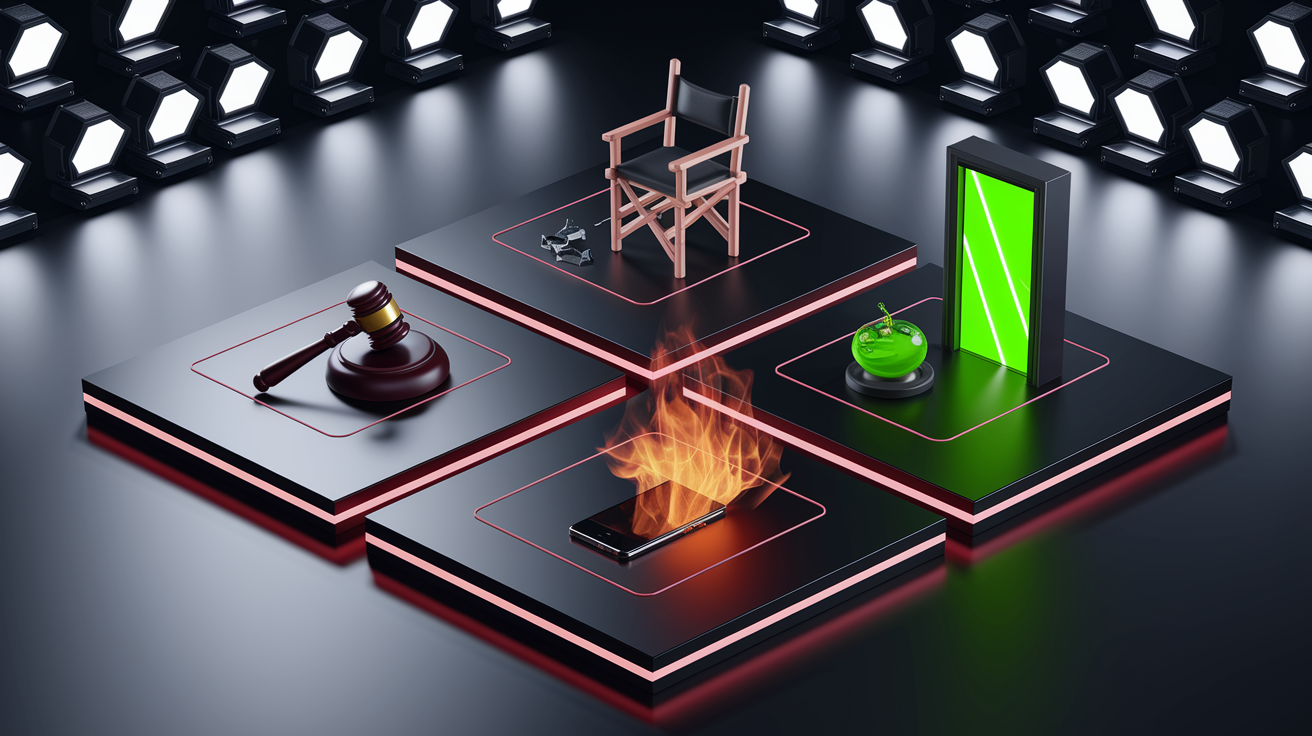
Career-ending scandals fall into four major categories. Criminal cases, sexual misconduct allegations, offensive public behavior, and chronic unprofessional conduct. The details vary, but they all create situations where the industry decides continued association is too risky or too costly.
Criminal scandals like Joe Son’s and Lillo Brancato’s result in legal incarceration and total industry exile. Sexual misconduct cases involving Kevin Spacey or Cas Anvar lead to immediate project removal. Offensive conduct, whether it’s Michael Richards’ onstage meltdown or Gina Carano’s controversial social posts, forces networks and studios to sever ties. Professional toxicity, seen in Katherine Heigl’s public criticism of collaborators or Lea Michele’s reported on-set behavior, gradually erodes opportunities as word spreads.
The six primary scandal categories:
- Violent crime and criminal convictions (incarceration, arrest records, serious charges)
- Sexual misconduct and harassment (credible allegations, multiple accusers, workplace violations)
- Publicly offensive statements or social media controversies (racist remarks, conspiracy theories, inflammatory posts)
- Chronic unprofessional or toxic on-set behavior (bullying, entitlement, damaging collaborators)
- Poor career decisions that damage marketability (cosmetic changes that erase brand identity, turning down major opportunities)
- Workplace affairs and ethical violations (power-imbalance relationships, public betrayal of family-friendly image)
Celebrity Scandals Rooted in Criminal Behavior and Irreversible Damage
When a celebrity commits a serious crime, the consequences are almost always permanent. Legal convictions, violent acts, and criminal charges create public revulsion and industry risk that no amount of talent can overcome. Studios and networks can’t afford the liability of employing someone with an active criminal record or a history of violence. Audiences refuse to separate the art from the artist when the offense is severe enough.
Joe Son’s case represents the most extreme end. Initially arrested for vandalism, DNA evidence later connected him to a prior rape. While incarcerated, he killed a cellmate. He’ll remain in prison until the 2030s. Lillo Brancato’s heroin addiction and involvement in a home-invasion robbery that resulted in an off-duty police officer’s death ended his acting momentum immediately. Charlie Sheen’s trajectory included a shooting incident by 1990 and a later public unraveling that combined substance abuse, erratic behavior, and legal trouble.
These cases show why criminal behavior eliminates any possibility of a mainstream comeback. Legal incarceration removes the ability to work. But even after release, the public record and media coverage create a permanent association with violence. Insurance companies won’t cover productions, co-stars refuse to work alongside convicted criminals, and audiences vocally reject any attempt at rehabilitation.
| Celebrity | Incident Type | Industry Consequence |
|---|---|---|
| Joe Son | Rape (DNA evidence), murder of cellmate | Incarcerated until 2030s; total career elimination |
| Lillo Brancato | Home-invasion robbery, police officer killed | Criminal record and addiction ended acting roles |
| Charlie Sheen | Shooting incident, substance abuse, public meltdown | Lost major TV roles and mainstream credibility |
Sexual Misconduct and Harassment Cases That Ended Careers

Sexual misconduct allegations, especially when backed by multiple accusers or credible evidence, produce some of the fastest career collapses in modern entertainment. The combination of moral outrage, legal liability, and changing cultural standards around consent means studios, networks, and production companies move quickly to sever ties. Once multiple voices come forward, the industry treats continued association as toxic.
Kevin Spacey’s career disintegrated after multiple allegations of sexual misconduct surfaced. Immediate removal from projects. Collapse of his once-celebrated status. Cas Anvar was removed from The Expanse after credible accusations of sexual harassment emerged. The show’s production company made clear his return was impossible. James Franco and Shia LaBeouf have faced allegations that, while not resulting in total exile, significantly diminished their opportunities and mainstream support. The difference between total elimination and partial survival often depends on the severity of the allegations, the number of accusers, and whether legal proceedings result in settlements or convictions.
The MeToo movement fundamentally reshaped how the industry responds to sexual misconduct. Behaviors that were once quietly tolerated or covered up now trigger public investigations and immediate consequences. Workplace power dynamics receive far more scrutiny. The presence of multiple accusers or corroborating witnesses makes denial nearly impossible.
Major patterns in sexual misconduct career-enders:
- Multiple accusers coming forward publicly, creating a pattern the public and industry can’t ignore
- Allegations involving workplace power imbalances (director-actor, producer-assistant) that expose exploitation
- Credible investigations by media outlets or production companies that confirm claims with evidence
- Legal settlements, criminal charges, or civil suits that establish public record of misconduct
Social Media Missteps and Offensive Behavior Leading to Public Downfall

Social media has accelerated the timeline between a public misstep and professional consequences from weeks to hours. A single post, comment, or video can spark viral backlash that forces networks and studios to make immediate decisions. Unlike criminal cases or harassment allegations that require investigation, offensive behavior captured on camera or in writing provides instant, undeniable evidence that audiences and advertisers can rally against.
Gina Carano lost her expected Mandalorian spin-off role after a series of controversial social media posts sparked widespread criticism. Michael Richards’ career never recovered from an onstage meltdown captured on video, where his offensive language became permanently associated with his public image. Mike Richards stepped down from hosting Jeopardy and lost his executive producer role after past offensive comments resurfaced during his public vetting. Digital footprints from years earlier can derail present opportunities.
The speed of viral amplification means damage control becomes nearly impossible once a scandal gains momentum. By the time a publicist drafts a statement, millions of people have already formed opinions and shared the content. Networks and brands monitor social sentiment in real time. When the cost of association outweighs the value of keeping a celebrity employed, termination follows within days. Apologies rarely reverse the fallout because the original offense has already been screenshotted, archived, and turned into memes that outlive any attempt at redemption.
Poor Career Decisions and Self-Sabotage That Destroyed Opportunities

Not every career-ending scandal involves crime or harassment. Some celebrities destroy their own careers through ego, poor judgment, or decisions that permanently damage their marketability. These cases are often more preventable, which makes them particularly instructive. When a star alienates collaborators, rejects major opportunities, or erases the unique traits that made them famous, the industry quietly moves on.
Ja Rule turned down an offer to return for the Fast & Furious franchise after the original film. That decision cost him a multi-decade career arc and hundreds of millions in potential earnings. The role later went to Ludacris, who built a sustained film career around the franchise. Jennifer Grey’s rhinoplasty after Dirty Dancing changed her distinctive look so dramatically that casting directors no longer recognized her. It eliminated the physical brand that had made her a leading lady. Katherine Heigl publicly criticized the writers of Grey’s Anatomy and later disparaged the film Knocked Up. Producers and directors quietly stopped offering her major roles. Lea Michele’s reported on-set behavior, described by multiple co-stars as mean and difficult, cost her opportunities in both television and major film projects as word spread throughout the industry.
These cases show how self-inflicted damage works differently than public scandals. There are no viral videos or criminal charges. Just a slow erosion of opportunities as decision-makers decide the hassle isn’t worth it. The industry is small enough that reputations travel quickly. Once a celebrity becomes known as difficult, entitled, or unreliable, the phone stops ringing.
Five examples of self-sabotage that ended careers:
- Ja Rule declining a franchise role that would’ve sustained his career for decades
- Jennifer Grey undergoing cosmetic surgery that erased her marketable identity
- Katherine Heigl publicly bad-mouthing collaborators and projects
- Lea Michele’s toxic on-set reputation limiting stage and film opportunities
- Crispin Glover’s eccentric public behavior damaging mainstream prospects
How Scandals Ruined Careers Through Lost Brand Partnerships and Public Trust

The financial consequences of a celebrity scandal extend far beyond lost acting roles. Endorsement deals, brand partnerships, and sponsorships represent millions in annual income for high-profile celebrities. These agreements evaporate the moment public trust collapses. Companies move faster than studios to sever ties because their own reputations are directly tied to the celebrities they choose to represent. A scandal that damages a star’s image also damages every brand associated with them.
Tiger Woods lost an estimated hundreds of millions in endorsement deals after his 2009 infidelity scandal. Major brands like Accenture, AT&T, and Gatorador cut ties immediately. The broader economic impact included alleged billions in shareholder value losses across companies that had built marketing campaigns around his image. Robin Thicke’s 2013 song “Blurred Lines” earned roughly $16 million, but the subsequent marital collapse, allegations of drug use and abuse, and legal battles over the song’s copyright decimated his commercial viability. His 2014 album “Paula,” named for his ex-wife, sold approximately 25,000 copies in the U.S. and only four-figure copies in the U.K. Catastrophic commercial failure. Ned Fulmer, co-founder of a major digital creator group, lost his entire brand identity overnight in October 2022 after admitting to a consensual workplace affair. Partners and sponsors immediately distanced themselves.
Networks and production companies also make swift decisions to protect their own brands. When a scandal breaks, the calculation is simple: the cost of defending or retaining a controversial figure versus the cost of replacing them. In almost every case, replacement is cheaper and safer. Amy Robach and T.J. Holmes were taken off the air in December 2022 after photos surfaced showing alleged intimate behavior while both were publicly married. By January 2023, industry insiders confirmed their future on-air roles were uncertain because ABC prioritized protecting the network’s family-friendly image.
| Celebrity | Lost Deal Type | Career Impact |
|---|---|---|
| Tiger Woods | Endorsement deals (Accenture, AT&T, Gatorade) | Hundreds of millions lost; career dip until 2018 comeback |
| Robin Thicke | Album sales collapse, legal battles | “Paula” album sold ~25,000 US copies; commercial failure |
| Ned Fulmer | Digital brand partnerships, creator group removal | Immediate firing and public brand loss in October 2022 |
Why Some Celebrities Fail at Comebacks After Scandal

Attempted comebacks fail when the public and industry decide the offense was too severe, the apology was insufficient, or the pattern of behavior suggests the scandal wasn’t an isolated mistake. Some celebrities successfully rebuild their careers after years of rehabilitation. Others face permanent exile regardless of their efforts. The difference often comes down to the nature of the original scandal, the authenticity of the redemption arc, and whether the celebrity’s talent or marketability still outweighs the risk.
Tiger Woods represents one of the rare successful comebacks. His 80th PGA Tour win in September 2018 signaled public redemption after years of scandal and declining performance. His return was possible because his skill remained elite, golf fans prioritized athletic achievement, and enough time had passed to shift the narrative. Kevin Spacey and Joe Son face irreversible fallout because the severity of their offenses made rehabilitation impossible. Multiple sexual misconduct allegations and violent crime, respectively. Gina Carano’s attempts to pivot to alternative platforms and projects haven’t restored her mainstream career because the controversy that led to her firing remains a defining public association. Jesse James’ 2012 Discovery Channel show “Jesse James: Outlaw Garage” failed to regain his earlier status because the public never forgave the betrayal of Sandra Bullock during her Oscar moment.
Four major factors that block successful comebacks:
- Severity of the original offense (violent crime, multiple accusers, betrayal of public trust)
- Lack of genuine accountability or continued pattern of problematic behavior
- Industry unwillingness to take financial or reputational risk on a controversial figure
- Audience refusal to separate the celebrity from the scandal, making them commercially unviable
How Public Figures Can Avoid Career-Ending Scandals

Most career-ending scandals are preventable. Consistent ethical behavior, awareness of public perception, and proactive management of personal and professional conduct make a difference. Celebrities who understand that their brand extends beyond their talent and that every action carries potential consequences are far less likely to face career collapse. Accountability, transparency, and an understanding of evolving cultural standards create a foundation that can withstand minor controversies without triggering permanent damage.
Five strategies to avoid career-ending scandals:
- Maintain clear professional boundaries, especially in workplace settings where power dynamics exist
- Understand that social media posts, private messages, and off-camera behavior are never truly private
- Seek legal and PR guidance before making public statements on controversial topics
- Recognize that family-friendly or wholesome public images require consistent personal conduct that matches the brand
- Acknowledge mistakes immediately and authentically rather than deflecting, denying, or remaining silent
When to Seek Professional Crisis Management and What Happens Next

The moment a scandal breaks, the window for effective damage control begins to close. Celebrities who wait too long to respond, issue generic apologies, or attempt to manage the fallout without professional guidance almost always make the situation worse. Crisis PR teams, entertainment attorneys, and reputation management specialists exist specifically to navigate the legal, media, and public-relations challenges that arise when a career is at risk. Their job is to assess the severity of the scandal, craft a response strategy, and determine whether rehabilitation is possible or whether the focus should shift to minimizing long-term damage.
What happens next depends on the nature of the scandal and the speed of the response. In cases involving criminal charges or credible harassment allegations, legal counsel takes priority to manage investigations, settlements, and court proceedings. Public statements are carefully timed and vetted to avoid admissions that could be used in legal actions. In cases involving offensive behavior or professional misconduct, the focus shifts to public apologies, evidence of accountability (such as entering counseling or rehab), and demonstrating changed behavior over time. Success varies widely. Some celebrities return to work after completing rehabilitation programs or issuing credible apologies. Others find that no amount of effort can overcome the initial damage.
Final Words
In the middle of the fallout, we mapped how scandals turn into career-ending crises: criminal acts, sexual misconduct, social media missteps, self-sabotage, and lost brand trust.
We dug into real cases, why some comebacks fail, prevention tips, and when to call crisis pros.
If you want the short takeaway on celebrity scandals that ended careers and why explained: severity, repeat harm, legal proof, public outrage, and industry risk-cutting.
The good news: smarter choices and timely PR can limit damage and sometimes rebuild a career.
FAQ
Q: What is the biggest celebrity scandal? What are some famous scandals?
A: The biggest celebrity scandal and other famous scandals are usually tied to criminal acts, sexual misconduct, or major betrayals—think Harvey Weinstein, Kevin Spacey, and Joe Son—because they destroy trust and industry support.
Q: What famous people were fired?
A: Famous people who were fired include Gina Carano, Cas Anvar, Mike Richards, and others removed after misconduct or offensive posts—firings happen when employers cut ties to protect brands and avoid public backlash.
Q: What movies destroyed actors’ careers?
A: Movies that destroyed actors’ careers are usually box-office disasters that coincided with scandal, repeated bad choices, or PR damage—it’s the combo, not just one bad movie, that ends momentum.