
The red carpet doesn’t just mirror fashion, it defines eras.
From 1920s finger waves and kohl to 1980s neon shadow and 2010s contour, hair and makeup signaled social shifts, tech leaps, and shopping frenzies.
This decade-by-decade guide breaks down the looks, the brands, and the exact moments that turned a close-up into a cultural cue.
Read on to see how one lipstick, one liner, or one hair flip rewired beauty for years.
Evolution of Red Carpet Beauty Across Eras
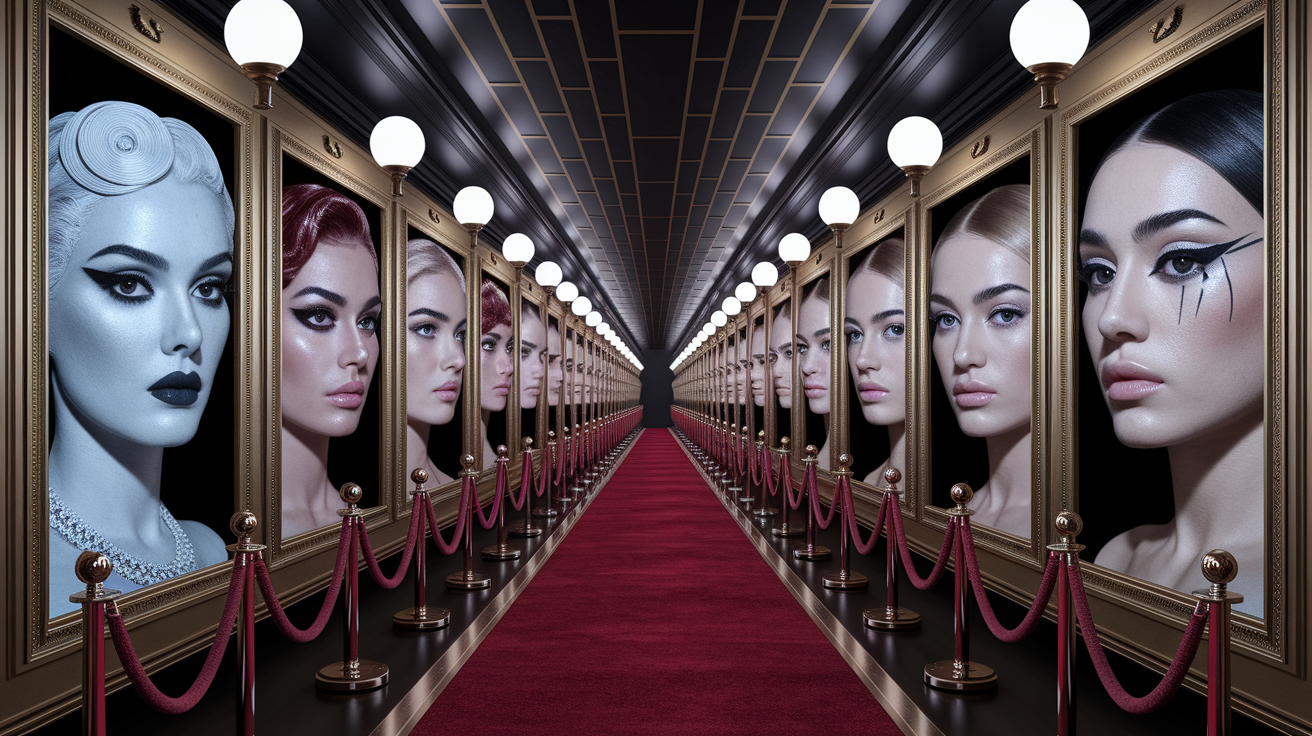
Red carpet moments have been launching trends since Hollywood’s first premieres. Looks that debuted at the Grammys in February would show up again at the Oscars in March, then circle back at the Met Gala in May. It’s been a four-month cycle of visual influence for decades. The 1920s gave us finger waves and kohl-rimmed eyes that felt daringly modern. The 1940s paired victory rolls with bold red lips as an act of defiance during wartime rationing. The 1980s? Sky-high volume and neon shadow that mirrored the era’s unapologetic excess. By the 2010s, contouring was so mainstream that drugstore brands had sculpting palettes on shelves within months of a single viral red carpet tutorial.
Technology compressed everything. In the 1950s, a premiere look might take six months to reach department stores. By 2010, Instagram cut that window to weeks. TikTok shortened it to days. The 2020s brought a new paradox: award-season carpets now showcase extreme minimalism (dewy, barely-there skin and feathered brows) alongside experimental graphic liner or pastel shadow, often on the same night. What hasn’t changed is the red carpet’s role as the original trend incubator. A single close-up can ignite a product sellout, inspire a thousand tutorials, and redefine what “glamour” means for the next generation.
The 1920s: Silent‑Film Drama and Flapper Influence
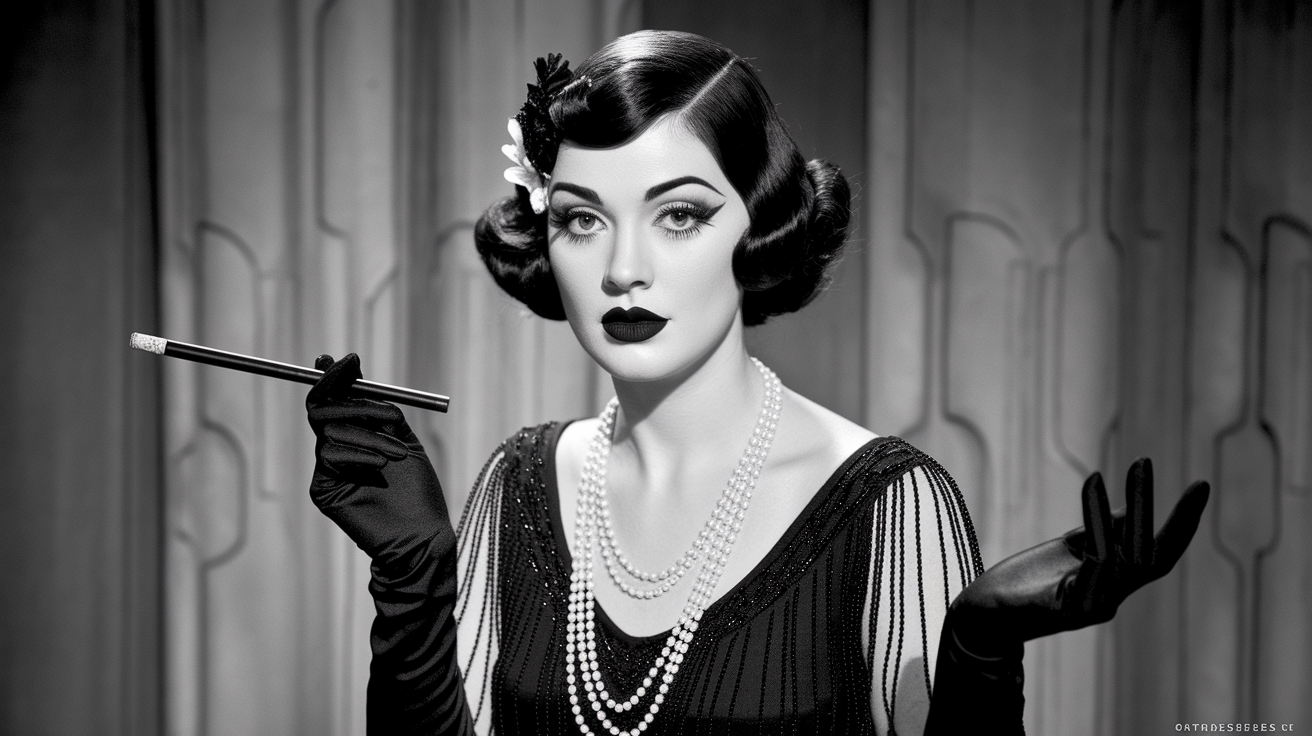
Silent films demanded exaggerated features that could read on grainy black-and-white stock. Actresses arrived at premieres with kohl-smudged eyes, thin penciled brows, and lips painted into sharp cupid bows, often in deep burgundy or oxblood shades that photographed darker than the scarlet hues of later decades. Finger waves hugged the skull in glossy S-curves, secured with setting lotion and metal clips, creating a sculptural silhouette that paired with drop-waist gowns and long cigarette holders. The flapper aesthetic wasn’t just fashion. It was a visual declaration of modernity, rebellion, and the newly won right to vote.
Eyebrows were plucked into near-invisibility and redrawn as thin, arched lines. A look that would haunt red carpets for decades. Skin was kept matte with heavy powder, sometimes layered so thick it cracked under stage lights, but the effect on film was porcelain perfection. Lips were the true focal point: overdrawn at the center to create a bee-stung pout, blotted to a matte finish, and reapplied obsessively throughout the night. Hair was cropped into bobs or shingled cuts, a radical departure from the Edwardian pompadours of the previous generation. The sleekness of each wave was a point of pride. Stylists used actual irons heated on stovetops to press each curve into place.
The 1930s: Soft Glamour and Studio‑System Polish
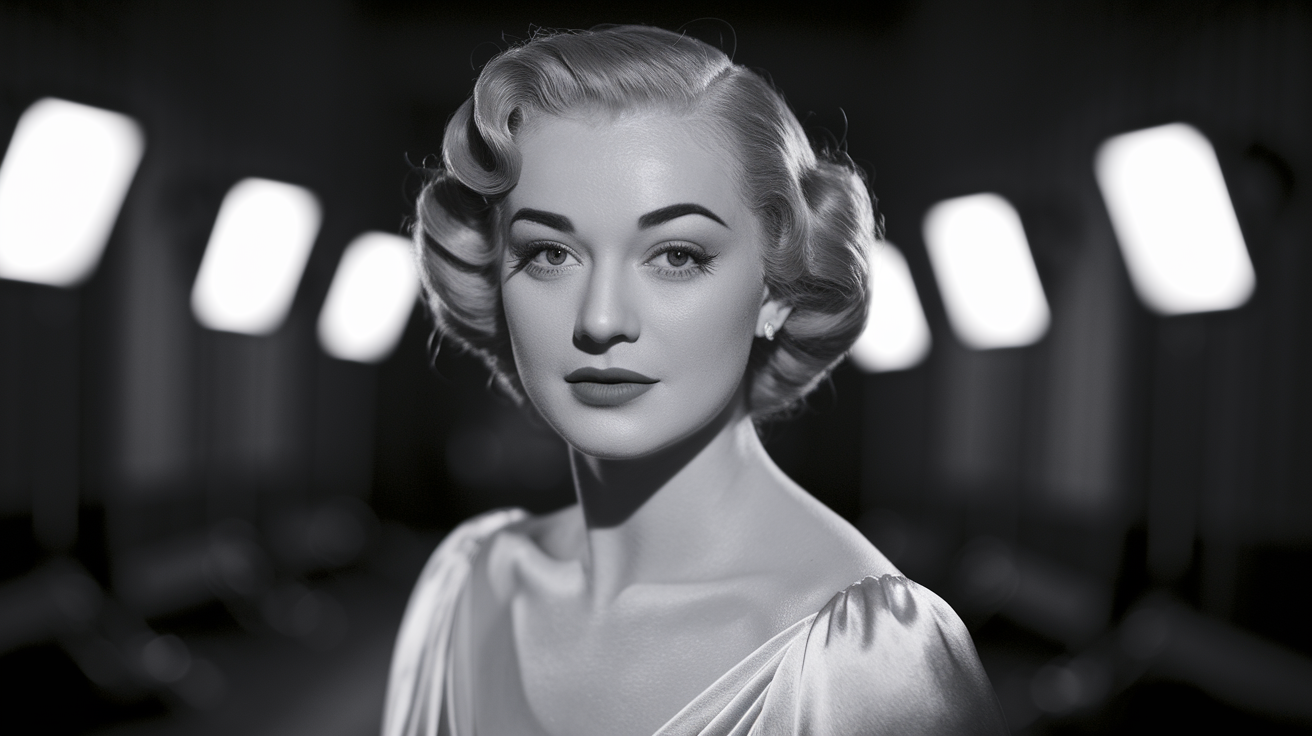
The studio system turned actresses into brand assets. Their red carpet looks reflected that commercial polish. Marcel waves replaced the sharper finger waves of the 1920s, creating softer, more romantic curls that framed the face and photographed beautifully under new tungsten lighting. Brows grew slightly fuller but remained sculpted into high, rounded arches. Lips shifted toward softer pinks and corals, applied with precision brushes and blotted to a satin finish. Skin was still matte but less heavily powdered, as Max Factor’s new Pan-Cake makeup offered a smoother, more camera-friendly base.
Hair took on volume and movement. Shoulder-length curls were pinned into controlled waves or swept into low chignons for evening premieres. The “Greta Garbo brow” became shorthand for Old Hollywood elegance: a gently curved arch that lifted the eye without the severe thinness of the previous decade. Eyeshadow remained subtle, usually a wash of taupe or soft brown in the crease, with the real drama reserved for lashes. Vaseline or castor oil applied to darken and separate each strand. The Great Depression shaped beauty ideals too. Looks had to feel aspirational but achievable, glamorous but not wasteful. That’s why so many 1930s red carpet images show restrained color palettes and meticulous grooming rather than bold experimentation.
The 1940s: War‑Era Practicality Meets Classic Glam
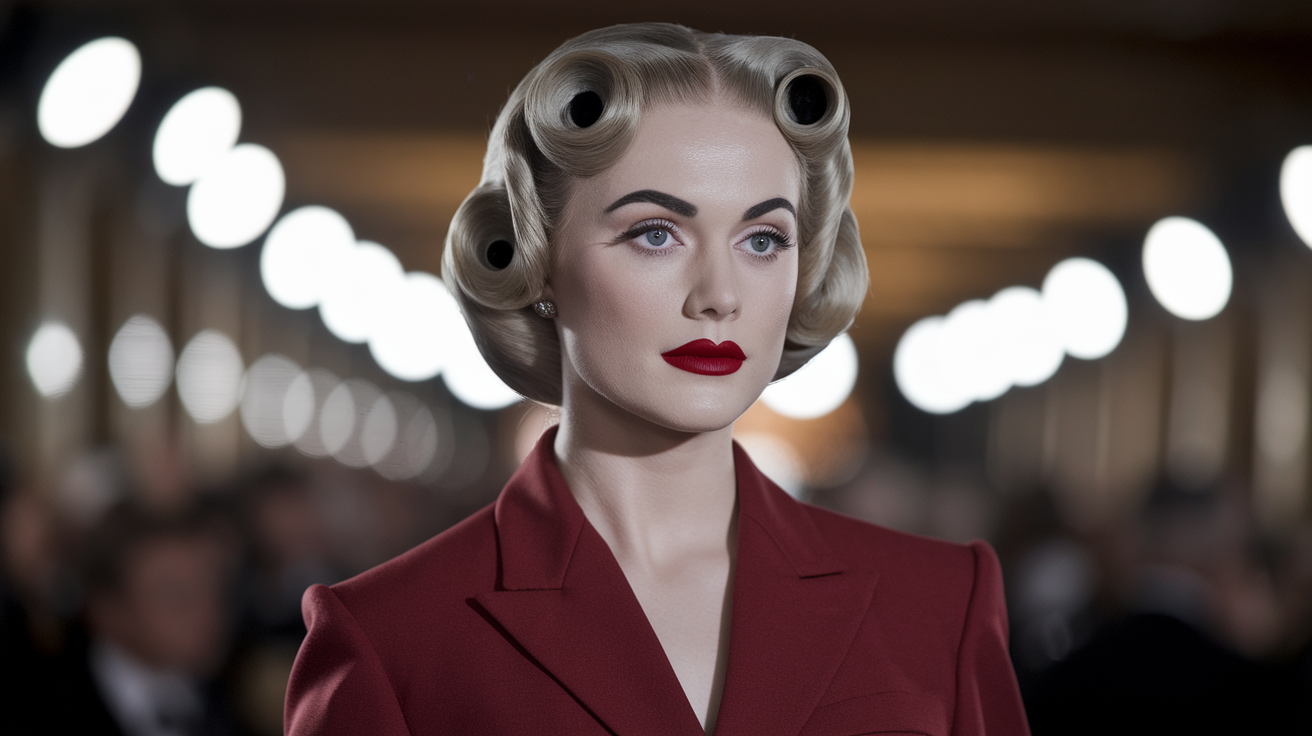
Victory rolls became the defining hairstyle of the decade, inspired by propeller shapes and designed to keep hair secure for women working in factories. But on the red carpet, they were polished into towering, sculptural rolls that signaled both patriotism and feminine pride. Red lipstick took on symbolic weight. It was one of the few beauty products not rationed during World War II, and wearing it became an act of morale, a refusal to let wartime austerity dim personal expression. Brands like Tangee marketed “war paint” shades with names like “Victory Red.” Actresses arriving at premieres in bold scarlet lips were making a statement that transcended vanity.
Makeup otherwise stayed practical. Eyeshadow was neutral (soft beige or taupe) and brows grew bushier, a departure from the over-plucked 1930s. Skin was finished with pressed powder to combat shine under hot lights. Blush was applied sparingly, just enough to lift the cheekbones without reading as excessive. Hair that wasn’t rolled was often pinned into smooth, low chignons or tucked under decorative snoods, accessories that had crossed over from workwear into evening glamour. The overall effect was polished but restrained, a visual balance between the desire to look beautiful and the cultural expectation not to appear frivolous while soldiers were overseas.
The 1950s: Refined Elegance and Hollywood Icons
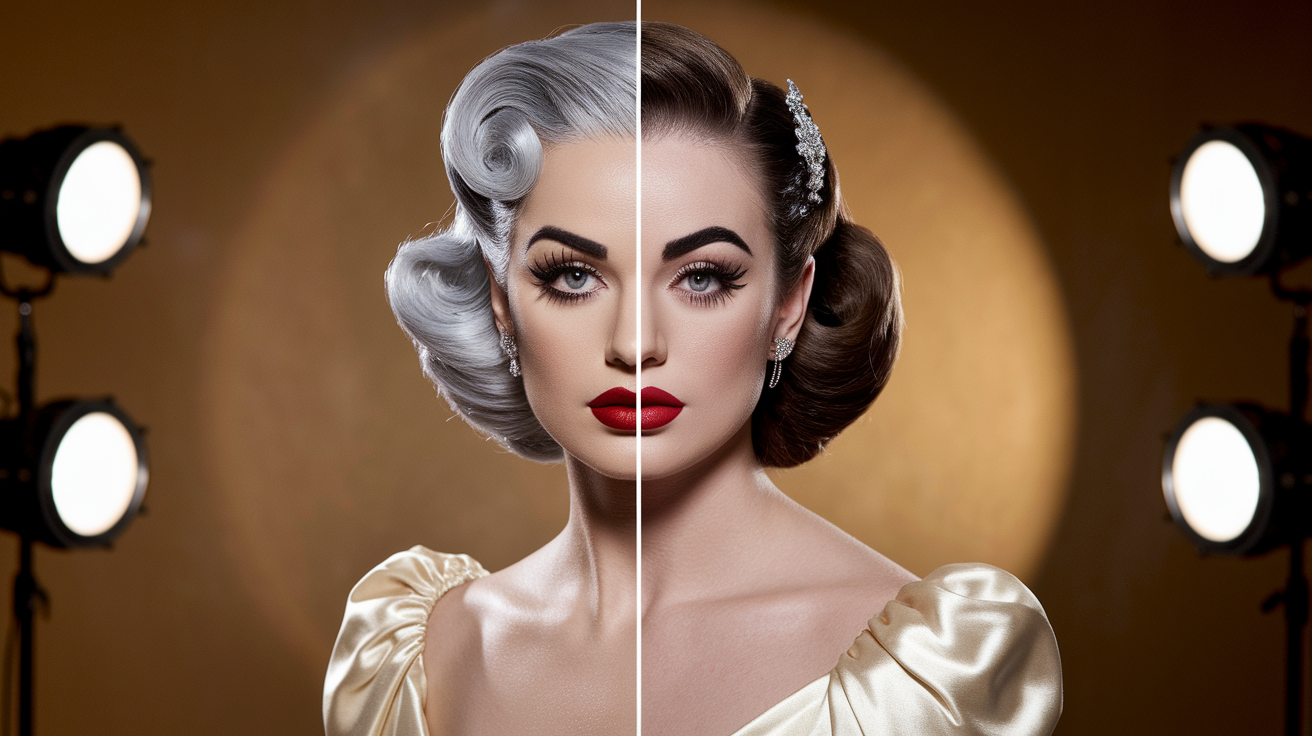
This was the decade of the cat-eye flick and the bombshell curl. Marilyn Monroe’s platinum waves, red lips, and heavily lined eyes set the template for hyper-feminine glamour, while Audrey Hepburn’s doe-eyed liner, feathered brows, and understated lips offered an elegant counterpoint. Red carpets became battlegrounds of competing beauty archetypes: the sultry siren versus the gamine ingénue, both equally polished, both requiring hours of prep. Winged eyeliner was drawn with liquid formulas using fine brushes, extended past the outer corner, and paired with false lashes that added width and drama without the spidery clumping of earlier decades.
Hair was all about structure. Pin curls were set overnight, brushed out into soft waves, then sprayed into submission with high-hold lacquer. Updos were bouffant and voluminous, teased at the crown and smoothed over with a top layer of glossy hair. Lipstick shades ranged from true red to deep berry, always matte or satin, never glossy. Gloss read as too casual for evening events. Foundation was creamy and full-coverage, applied with sponges and set with translucent powder. Contour was subtle, just a hint of shadow under the cheekbone to add dimension without looking sculpted. The postwar consumer boom meant beauty counters were flooded with new products, and red carpet looks became aspirational blueprints for the average woman’s evening routine.
The 1960s: Mod Influence and Bold Statements
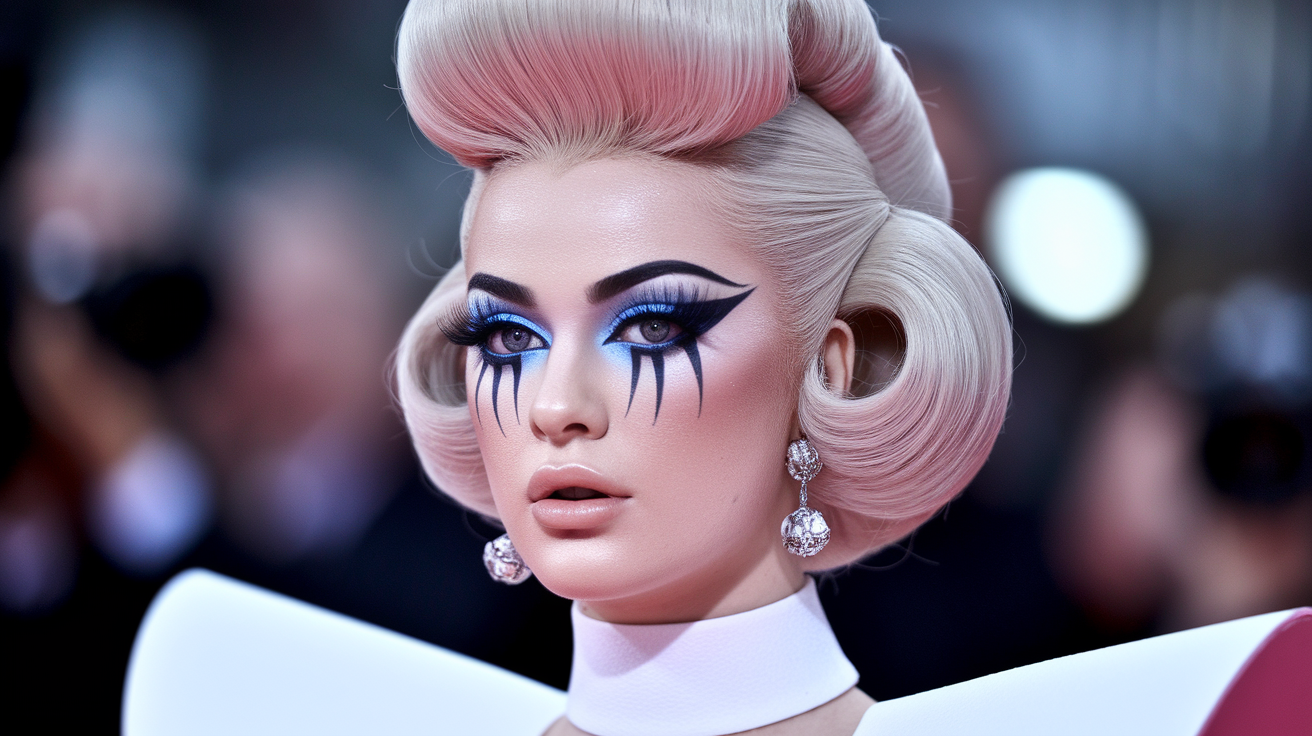
Twiggy’s arrival in 1966 detonated the decade’s beauty norms. Suddenly, eyes were the entire story: thick false lashes stacked on both upper and lower lids, heavy mascara, white or pale blue eyeshadow swept across the entire lid, and a drawn-on lower lash line to widen the eye even further. Lips went pale (soft pink, nude, or white) creating a stark contrast that felt futuristic and youthful. Brows were defined and slightly arched, but the real focus was volume, height, and graphic lines. Red carpets saw actresses in full bouffants and beehives, hair teased to towering proportions and lacquered into place, sometimes requiring wire frameworks underneath for support.
The mod movement brought geometric precision: sharp eyeliner wings, perfectly rounded shadow placement, blush applied high on the apple for a doll-like flush. Skin was kept matte and pale, foundation shades often a touch lighter than natural to emphasize the otherworldly, space-age aesthetic that dominated fashion. Hair color experimentation surged. Platinum blondes, jet blacks, and even early attempts at pastel tints appeared on red carpets, especially at Cannes and London premieres. The shift was generational. This was beauty for the youth culture, a rejection of the refined, adult glamour of the 1950s in favor of something playful, bold, and unapologetically artificial.
The 1970s: Bohemian Texture and Natural Glow
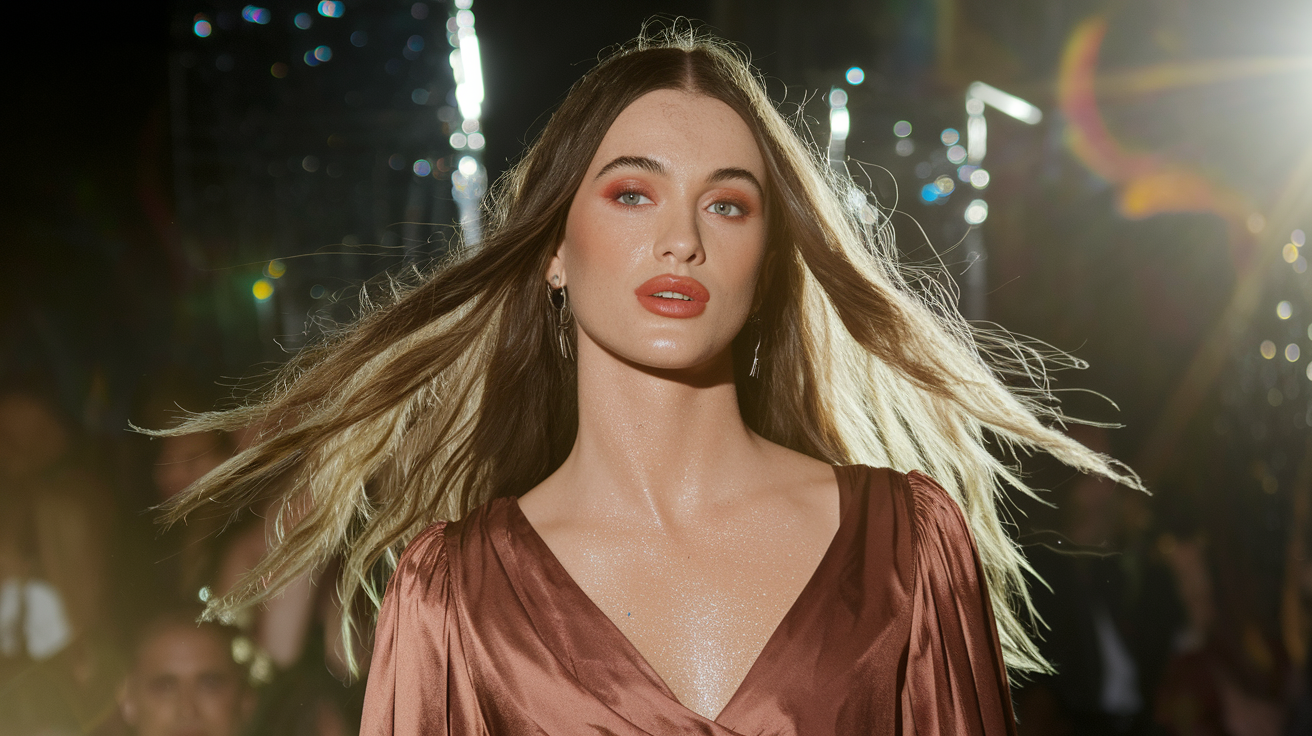
Farrah Fawcett’s feathered layers became the hairstyle of the decade, a windswept cascade that required a blow-dryer, a round brush, and a can of Aqua Net. Red carpets saw a split: daytime and early-evening events leaned into natural texture (long, center-parted hair with soft waves, minimal makeup, sun-kissed skin) while disco-era premieres brought glitter, metallic shadow, and high-shine gloss. The counterculture’s influence meant that overly polished looks started to feel dated. Instead, hair was left loose, textured, and a little undone, even at formal events.
Makeup shifted toward warmth. Bronze and terracotta eyeshadows replaced the cool pastels of the 1960s. Cheeks were dusted with peachy blush. Lips wore sheer tints or deep berry stains. Skin was no longer aggressively matte. Dewy finishes and subtle shimmer suggested health and vitality rather than studio-perfected porcelain. Afros and natural curls appeared on red carpets with increasing frequency, celebrated rather than chemically straightened, marking a significant moment of textural diversity in mainstream beauty. Cher’s long, sleek black hair and dramatic contouring hinted at the boldness to come, but the prevailing mood was relaxed, earthy, and just glamorous enough.
The 1980s: Power Glam and High‑Volume Styles
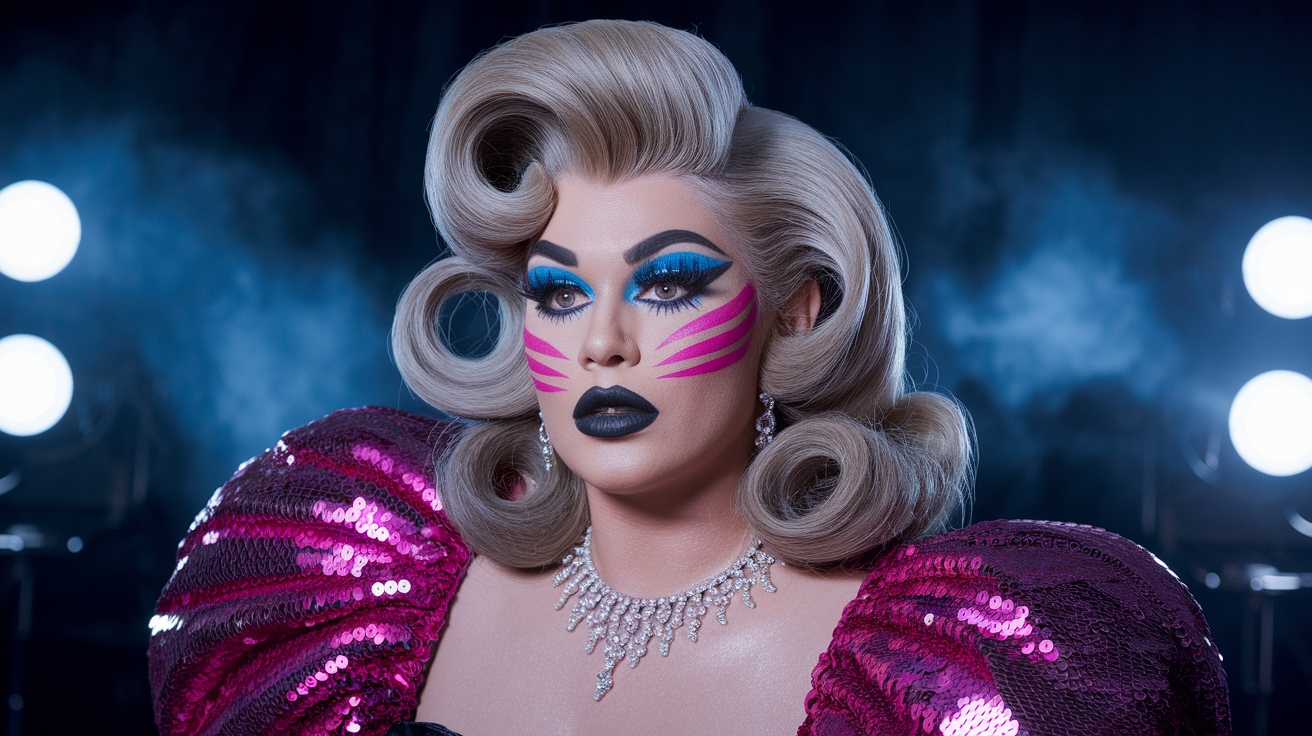
This was the decade of more. More volume, more color, more product, more attitude. Red carpets glittered with neon eyeshadow (electric blue, hot pink, vivid purple) layered without restraint and paired with thick black eyeliner and heavily mascaraed lashes. Blush was applied in bold stripes along the cheekbone, often in shades of fuchsia or coral that wouldn’t look out of place on a Barbie doll. Brows grew thick and brushed-up, a stark reversal from the thin lines of previous decades. Lips were glossy, frosted, or lined with dark pencil and filled with lighter shades for a dimensional pout.
Hair reached for the sky. Perms created tight curls that were then teased, crimped, and sprayed into gravity-defying shapes. Princess Diana’s voluminous, side-swept bangs became a global phenomenon, copied in salons from London to Los Angeles. Celebrities arrived at award shows with hair so big it required strategic camera angles to capture the full silhouette. The rise of MTV meant music stars crossed over into film premieres, bringing rock-and-roll glam and stage makeup intensity to traditionally conservative red carpets. It was loud, it was unapologetic, and it was designed to dominate a room (or a television screen) from across the venue.
The 1990s: Minimalism and Fresh‑Face Beauty
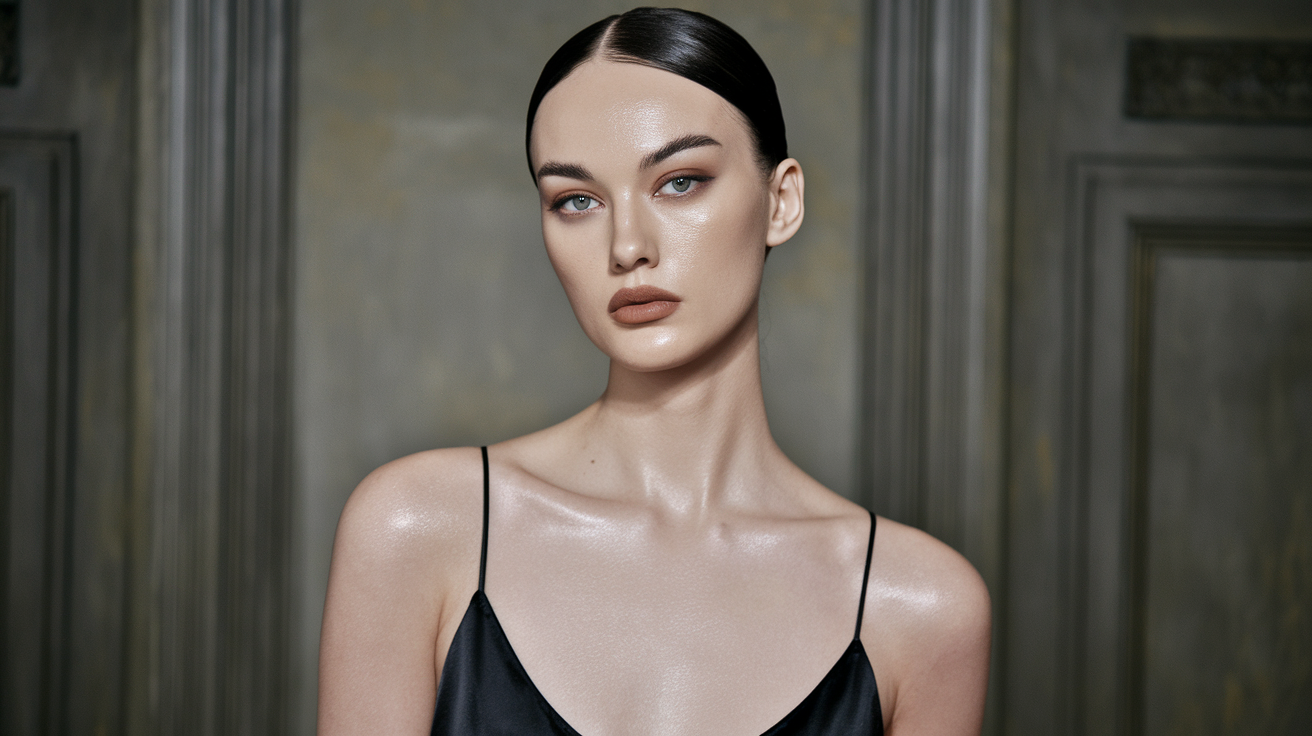
The pendulum swung hard. Suddenly, less was more. Supermodels like Kate Moss and Christy Turlington walked red carpets in barely-there makeup: nude or brown lipstick, a swipe of mascara, maybe a hint of taupe shadow. Skin was matte but natural, foundation sheer, blush subtle. Brows were tweezed into thin, high arches (a decision that would haunt the decade’s veterans for years) and hair was either bone-straight, blown smooth with a paddle brush, or loosely tousled in a way that suggested effort without trying. The “grunge” influence crept into evening looks via smudged kohl liner and deep burgundy lips, but even those moments felt restrained compared to the previous decade’s excess.
Glossy lips made a brief appearance mid-decade, but the prevailing aesthetic was matte and understated. Hair color trended toward natural shades with subtle highlights. The extreme perms and teasing of the 1980s were replaced by sleek, one-length cuts and minimal styling. Red carpets began to feel less like costume showcases and more like refined, adult elegance. A shift driven in part by the rise of indie cinema and a cultural fatigue with over-the-top glamour. The clean-face look was so dominant that a bold red lip felt almost transgressive, reserved for retro-themed events or deliberately nostalgic styling moments.
The 2000s: Glossy Shine and Precision Glam
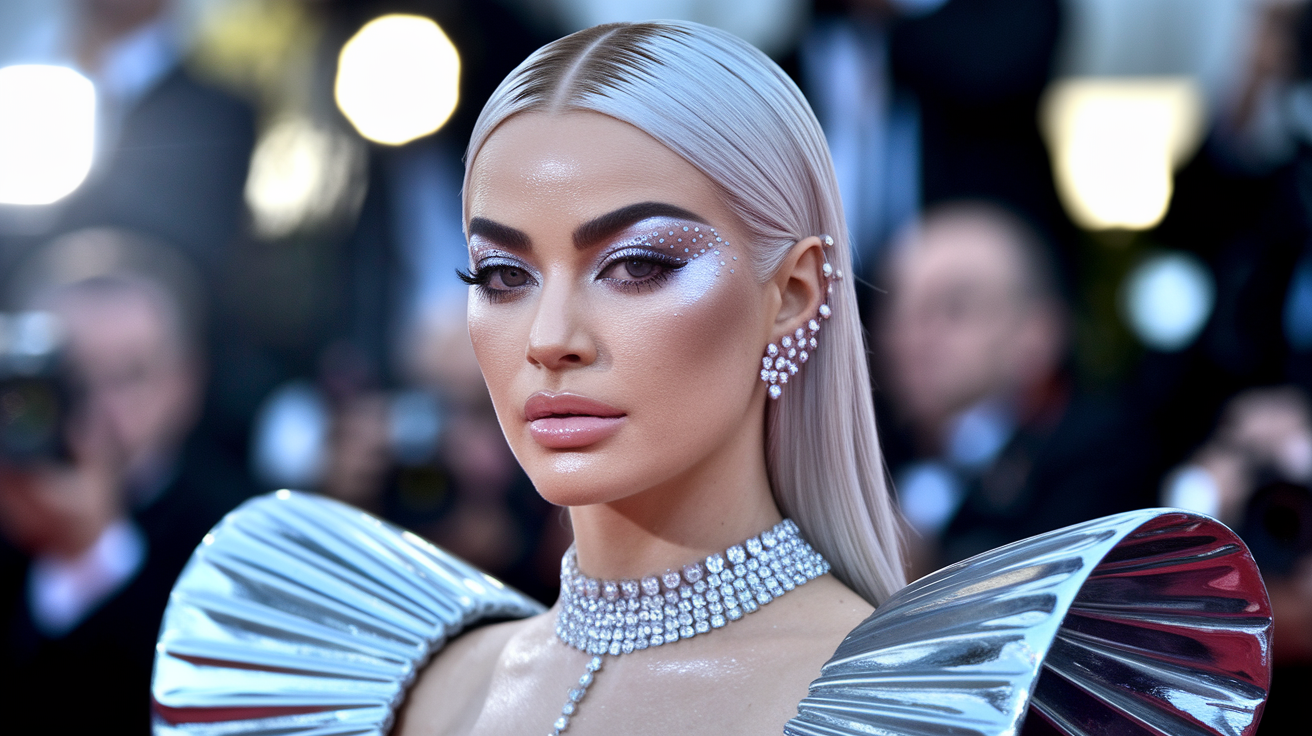
Frosted eyeshadow and lip gloss defined the early 2000s. Silver, icy pink, and pale champagne shades were swept across lids and paired with thin brows and heavily lined eyes. Lips were lacquered to a high shine, often in sheer pink or nude gloss that caught every camera flash. Hair was aggressively straightened. Flat irons became ubiquitous, and red carpets were filled with pin-straight, center-parted hair that fell past the shoulders without a hint of texture or wave. The overall effect was polished but cool, a Y2K aesthetic that favored shine, symmetry, and a slightly robotic perfection.
By the mid-2000s, the smoky eye took over. Deep browns, charcoals, and blacks were blended into the crease and smudged along the lower lash line, paired with nude or soft pink lips to keep the focus on the eyes. Contouring began to appear in early forms (subtle shading under the cheekbone, a hint of highlight on the brow bone) but it hadn’t yet reached the sculpted intensity of the next decade. Hair started to regain some texture by the late 2000s, with loose waves and side-swept bangs offering a softer alternative to the ruler-straight look. Jennifer Lopez’s 2000 Grammys green Versace moment became a cultural flashpoint, proving that red carpet impact extended far beyond beauty into fashion history.
The 2010s: Contouring Era and Hollywood Waves Revival
Contouring went mainstream around 2013. Suddenly every red carpet face was sculpted into sharp cheekbones, slimmed noses, and lifted brows. Kim Kardashian’s makeup artist Mario Dedivanovic became a household name, and tutorials showing multiple shades of cream and powder stacked and blended flooded YouTube. Brows grew thick and feathered, a direct reversal of the 2000s’ thin arcs. The “Instagram brow” (sharp, ombre, and often stenciled) dominated award-season close-ups. Matte liquid lipsticks in deep nudes, berries, and reds replaced gloss, and the finish had to be absolutely budge-proof, leading to a surge in long-wear formulas.
Hollywood waves came back with a vengeance, but this time they were tighter, shinier, and more precisely styled than their 1950s predecessors. Hair was set with hot rollers or wands, brushed out into S-curves, and locked in place with shine spray and light-hold lacquer. Skin was prepped to a high-gloss finish. Strobing and highlighting became standard, with powder highlighters applied to the high points of the face until they practically reflected light. The decade also saw increased experimentation: bold liners, graphic cut-creases, colored mascaras, and editorial-inspired looks that previously would have been deemed too avant-garde for mainstream red carpets. Social media turned every red carpet moment into instant content, and the pressure to deliver a “look” rather than simply appear well-groomed pushed beauty in bolder, more shareable directions.
The 2020s: Inclusive, Minimalist, and Avant‑Garde Red Carpet Beauty
The 2020s opened with a pandemic that reset beauty expectations entirely. Face masks rendered lipstick irrelevant for months. When red carpets resumed, the focus had shifted to skin (dewy, glowing, and treated with serums and oils rather than heavy foundation). “Skinimalism” became the term for barely-there base makeup, feathered brows, and a single coat of mascara. But at the same time, graphic liner returned as a form of expressive artistry: sharp wings, negative-space designs, pastel washes, and colored liners appeared at the Grammys, Met Gala, and Cannes, signaling that beauty could be both minimal and bold depending on the wearer’s intent.
Inclusivity reshaped the red carpet in tangible ways. Natural texture (curls, coils, waves) was celebrated rather than smoothed into submission. A wider range of skin tones, gender presentations, and cultural beauty traditions appeared on carpets, and brands responded with expanded shade ranges and products designed for textured hair. Sustainability became a talking point: refillable compacts, clean-ingredient formulas, and celebrity beauty lines emphasizing ethical sourcing. The red carpet in 2025 and 2026 is a space where Laufey can wear soft purple shadow and tiny crystals on her nails, while another star arrives in a perfectly undone low knot and glassy skin. Both are equally valid expressions of modern glamour. The era’s defining trait isn’t a single look. It’s the permission to choose your own.
Final Words
On the red carpet, we jumped decade to decade, from 1920s finger waves to 2020s clean-skin minimalism. Each era brought a signature mood and its own rulebook.
We broke down defining looks, key icons, and the cultural forces that shaped hair and makeup. Think victory rolls, bouffants, glossy Y2K shine, contouring, and modern inclusive artistry.
That thread, the red carpet hair and makeup trends that define eras, shows beauty is always storytelling. Pick a detail, try it today, and enjoy how the red carpet keeps inspiring real-life style.
FAQ
Q: What are the different eras of makeup trends?
A: The different eras of makeup trends include 1920s flapper drama, 1950s Old Hollywood glamour, 1960s mod eyes, 1980s bold color, 1990s minimalism, 2000s glossy Y2K, 2010s contouring, and 2020s clean, inclusive looks.
Q: What are some common red carpet fashion trends? / What were the fashion trends on the red carpet that year?
A: Common red carpet fashion trends, and that year’s highlights, include slip and column dresses, bold shoulders, sleek tailoring, strategic cutouts, metallics and sequins, vintage revival, and eco-conscious designer choices.
Q: What are the hair and makeup trends for 2026?
A: The hair and makeup trends for 2026 are dewy, glass-skin complexions, graphic or colorful liner, glossy lids, natural textured hair, lived-in waves and bobs, sculptural updos, curtain bangs, and sustainable styling choices.