
Are red carpet heels art now?
Sculptural heels—think offset platforms, lucite lattices, and chrome tripods—are popping up everywhere from Oscars arrivals to festival carpet moments.
Celebrities and stylists are treating shoes as the headline, not the finishing touch, because bold, photo-ready heels get the clicks, tags, and GIFs that run the internet.
The result: an arms race of architectural footwear that blends sculpture, engineering, and couture, fast replacing classic stilettos as the easiest way to own a red carpet moment.
Defining the Rise of Sculptural Heels on Today’s Celebrity Red Carpets
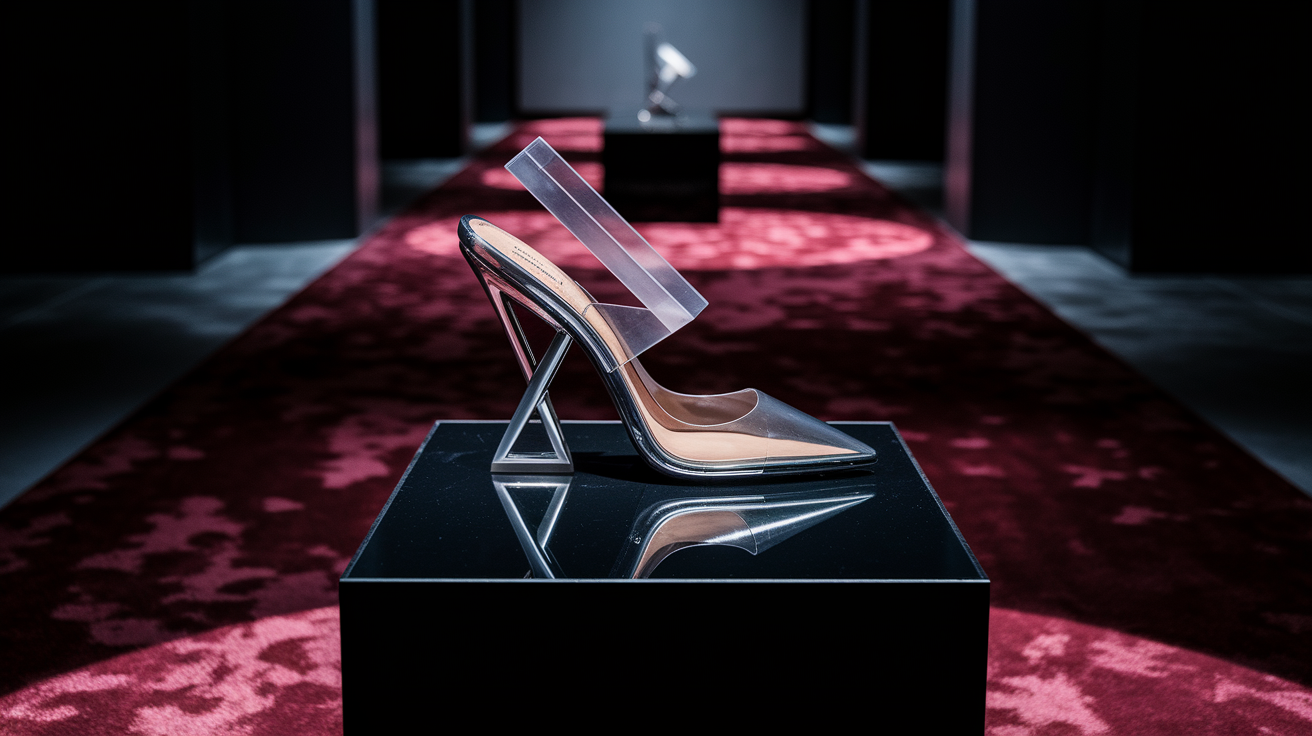
Sculptural heels are exactly what they sound like: shoes built to be admired as three-dimensional works of art. Instead of a simple column or tapered stiletto, the heel itself becomes a statement. Carved into asymmetric shapes, hollowed out with negative space, or cantilevered at unexpected angles. These are the heels that make photographers zoom in and red carpet commentators pause mid-scroll. They’re made from materials that push traditional shoemaking boundaries, like molded acrylic, polished metal, engineered resin, and even 3D-printed polymers. The result is footwear that looks more like a gallery piece than something you slip on to walk.
Right now, sculptural heels are the fastest-rising category of celebrity red carpet footwear. Runway shows from Schiaparelli and Iris van Herpen have spotlighted surrealist silhouettes and digitally fabricated structures, and those experimental shapes are quickly migrating from the catwalk to award season and festival appearances. The shift reflects a larger evolution in red carpet styling: celebrities and their stylists aren’t treating shoes as safe finishing touches anymore. They’re using them as focal points that can define an entire look. Over the past decade, the silhouette preference has moved from classic stilettos to block and platform heels, and now to fully architectural designs that blend art, engineering, and couture craft.
That evolution didn’t start yesterday. The foundation for today’s sculptural heel trend was laid in the 1970s, when designers like Terry de Havilland championed bold platform shoes with chunky, geometric heels. His designs appeared in cultural touchstones like The Rocky Horror Picture Show in 1975, worn by Tim Curry’s Dr. Frank-N-Furter character, cementing platforms as symbols of theatrical glamour. Those block and platform shapes proved that heels could be dramatic without being fragile. Audiences responded to footwear that looked different. Fifty years later, the block heel’s DNA is still visible in contemporary sculptural designs, which trade pure height for visual impact and structural intrigue.
Six defining features that make a heel sculptural:
- Asymmetric or cantilevered heel placement that defies traditional center support
- Negative space carved into the heel structure, creating windows or voids
- Use of non-traditional materials such as lucite, resin, chromed metal, or 3D-printed nylon
- Silhouettes inspired by modern architecture, sculpture, or industrial design
- Visible engineering or exposed support mechanisms that become part of the aesthetic
- Integration of the heel shape with the upper, creating a unified art object rather than separable shoe components
How Sculptural Heels Became a Red Carpet Status Symbol
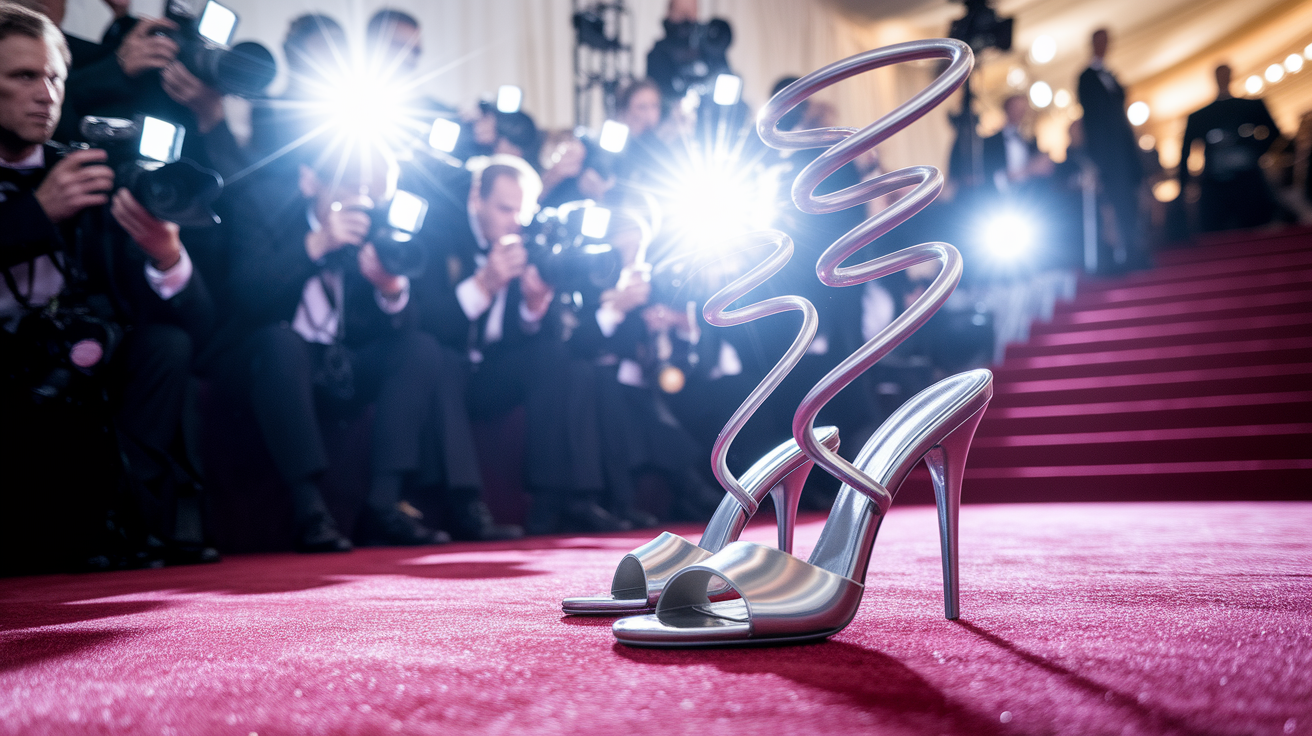
Celebrity red carpets have always been image factories, but the explosion of social media and real-time paparazzi photography turned footwear into a viral category. A decade ago, shoe coverage was an afterthought in red carpet reports. Now, close-up shots of heels rack up hundreds of thousands of engagements on Instagram, TikTok, and Twitter, often outperforming full-outfit posts. Photographers crouch low to capture toe-to-ankle angles. Fashion accounts dedicate entire feeds to celebrity shoe moments. That shift in media behavior gave sculptural heels the stage they needed to become headline-making pieces.
The more unusual the heel shape, the more likely it is to generate press coverage and social conversation. A traditional pump might earn a polite mention in a roundup. A heel shaped like a twisted ribbon or a chrome tripod commands its own story. Red carpet footwear press coverage now includes dedicated shoe galleries, brand tagging, designer interviews, and viral breakdowns of how a shoe was constructed. All of that attention signals to stylists and celebrities that shoes aren’t background details anymore. They’re opportunities to make waves.
| Platform | Type of Coverage | Effect on Trend |
|---|---|---|
| Close-up photos, carousel galleries, shoe tags, designer credit stories | Drives immediate virality and brand discovery | |
| TikTok | Video walk-throughs, slow-motion heel shots, behind-the-scenes fittings | Amplifies unique silhouettes and sparks imitation content |
| Fashion blogs and magazines | Dedicated shoe roundups, “best heels of the night” listicles, trend analysis | Legitimizes sculptural heels as editorial trend and influences retail buyers |
| Paparazzi wire services | High-resolution red carpet arrivals with shoe detail shots | Creates searchable image archives used for mood boards and retail design references |
| Celebrity stylist Instagram | Pre-event teaser posts, designer shout-outs, shoe credit tags | Positions sculptural heels as insider fashion knowledge and status markers |
The feedback loop is self-reinforcing. Once a sculptural heel goes viral, designers pitch similar pieces to stylists for upcoming events, knowing the unusual shape will earn free press. Celebrities who want to own the red carpet conversation now ask their teams for “the shoes everyone will talk about.” The result is a race toward visual novelty. Sculptural heels are inherently photogenic and conversation-starting, so they’ve become the easiest way to win that race. What started as niche couture experimentation is now a red carpet obsession fueled by clicks, shares, and the endless appetite for something new to screenshot.
Designers Leading the Sculptural Heel Movement
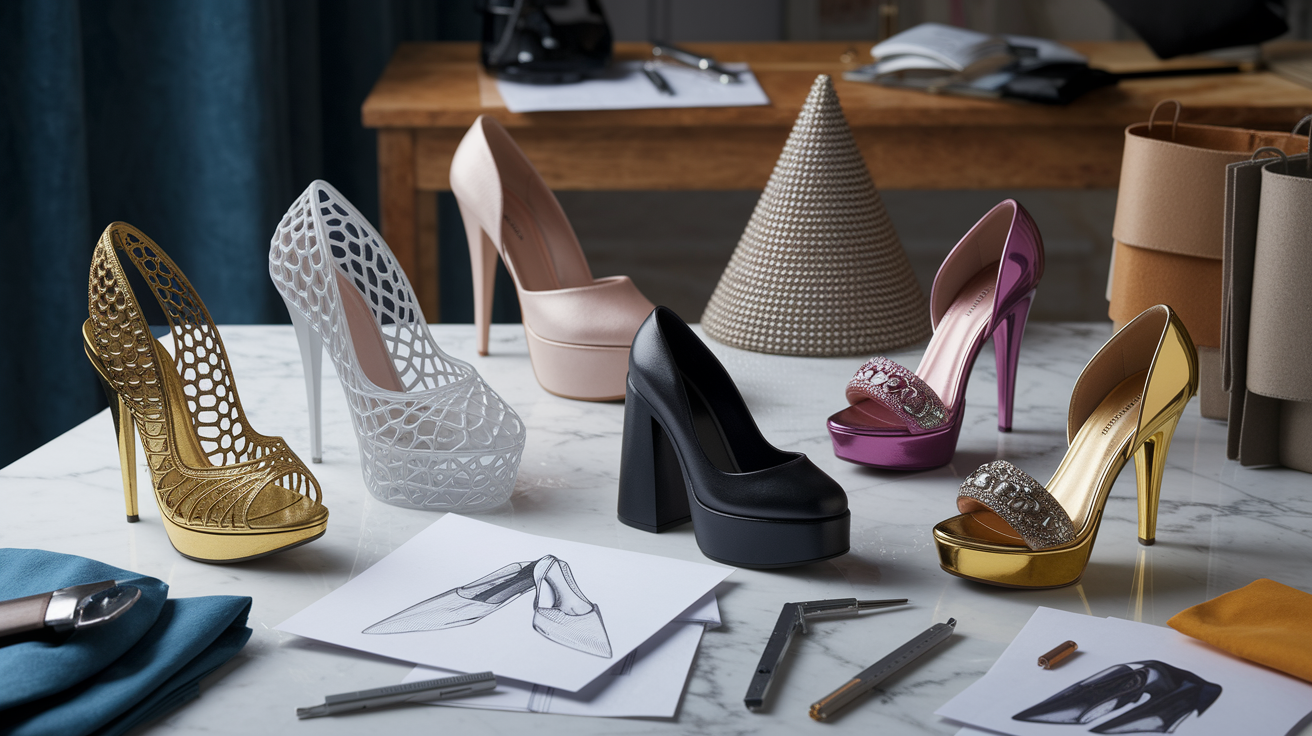
A handful of visionary designers and ateliers are responsible for pushing sculptural heels from experimental concept to red carpet staple. Some come from historic couture houses with deep archives of surrealist design. Others are independent artisans or emerging studios blending fashion with digital fabrication. Together, they’ve redefined what a heel can be, treating the shoe as a canvas for architecture, art, and engineering.
Schiaparelli
Schiaparelli’s creative director Daniel Roseberry has brought surrealist sculpture back to the runway. The house’s heels often feature gilded hardware, trompe-l’oeil effects, and organic forms cast in metal. Recent collections have included heels shaped like bent nails, oversized talons, and anatomical bones. The house leans into shock value and historical reference, channeling Elsa Schiaparelli’s 1930s collaborations with Salvador Dalí. On the red carpet, Schiaparelli heels are instant conversation starters.
Iris van Herpen
Iris van Herpen treats footwear as wearable kinetic sculpture. Her heels are often 3D-printed in translucent nylon or resin, with lattice structures that mimic natural forms like coral, ice crystals, or skeletal frameworks. The brand collaborates with architects and engineers to create heels that appear to defy gravity, using algorithmic design and rapid prototyping. Van Herpen’s sculptural heels are as much about material innovation as they are about silhouette.
Alexander McQueen
Alexander McQueen’s legacy includes some of the most iconic sculptural heels in fashion history, from the armadillo boots that closed the Spring 2010 show to carved wooden wedges and molded resin platforms. Under Sarah Burton’s direction, the house continued to explore unusual heel shapes, often integrating them into the overall narrative of a collection. McQueen heels are known for their dark romanticism and meticulous craft.
Balenciaga
Balenciaga under Demna has embraced industrial materials and exaggerated proportions, producing heels with chunky, abstracted forms that reference brutalist architecture and utilitarian objects. The brand’s sculptural heels often feature oversized platforms, asymmetric wedges, and unexpected material pairings like rubber and satin. Balenciaga’s approach is conceptual and provocative, turning heels into commentary on fashion excess.
Amina Muaddi
Amina Muaddi’s signature flared heel (a pyramid-shaped block that splays outward at the base) has become one of the most recognizable sculptural heel shapes of the past five years. Her designs blend retro glamour with geometric precision, using bright metallics and jewel tones. Muaddi’s heels are red carpet regulars because they combine visual drama with relative stability.
Terry de Havilland
Terry de Havilland has been crafting platform and block heels for over five decades, long before sculptural footwear became a trend. His designs (like the Zia platform, Eva block heel, and Lily Gold Platino) feature chunky geometric heels, metallic finishes, and bold proportions. The brand also offers non-leather options like the Zia Mid Gold Silver Non-Leather, reflecting a modern shift toward sustainable materials. De Havilland’s work laid the foundation for the current sculptural heel movement by proving that heels could be visually commanding without relying on a thin stiletto.
Six signature techniques used to create sculptural heels:
- Digital sculpting and 3D printing to produce complex, organic shapes
- Molding and casting in materials like resin, acrylic, and polished metal
- Asymmetric heel placement and cantilevered supports for dynamic visual tension
- Integration of negative space and voids within the heel structure
- Hand-carving and traditional shoemaking techniques applied to unconventional forms
- Use of industrial finishes and materials, such as chromed steel, brushed aluminum, and translucent polymers
The Timeline: From 1970s Platforms to 2020s Architectural Footwear
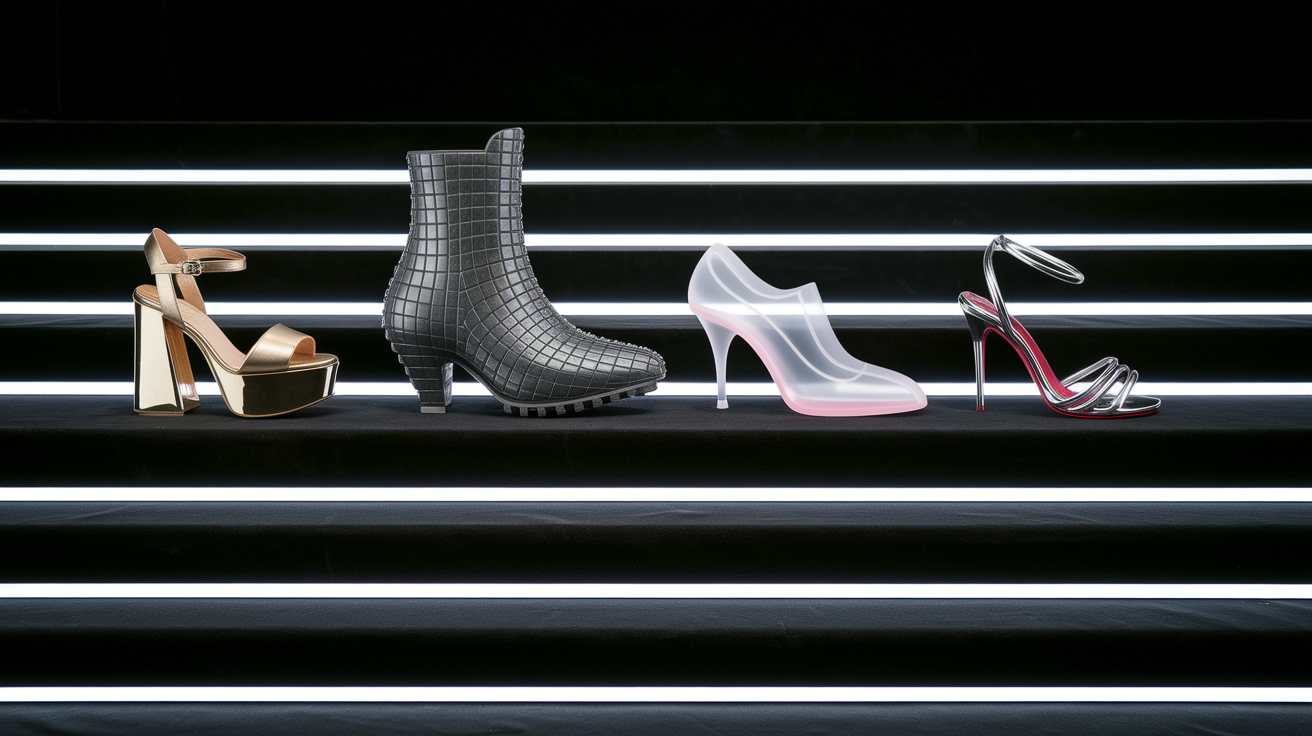
The sculptural heel trend didn’t appear overnight. It’s the result of decades of experimentation, shifting cultural attitudes toward footwear, and the gradual acceptance of shoes as art objects worthy of red carpet attention. Understanding the timeline helps explain why sculptural heels feel both fresh and familiar. They’re rooted in a long history of designers pushing boundaries, even as the current moment accelerates their visibility.
In the 1970s, platform and block heels dominated disco floors and glam rock stages. Designers like Terry de Havilland built towering platforms with chunky, geometric heels that prioritized drama and stability over traditional elegance. The brand’s 50-plus-year history includes a cultural milestone in 1975, when Tim Curry wore de Havilland’s platform shoes as Dr. Frank-N-Furter in The Rocky Horror Picture Show. That moment cemented platforms as symbols of theatrical rebellion and sexual freedom. The aesthetic was bold, unapologetic, and rooted in nightlife culture. By the 1980s and 1990s, the pendulum swung back toward sleek stilettos. Platforms were sidelined as retro relics.
The 2010s brought a platform resurgence, driven partly by nostalgia and partly by a practical backlash against uncomfortable stilettos. Designers began reinterpreting chunky heels with modern materials and updated silhouettes. Around the same time, avant-garde houses started experimenting with heels as sculptural objects. Alexander McQueen’s armadillo boots in 2010 shocked the fashion world and opened the door for more extreme heel shapes. Iris van Herpen began collaborating with architects and engineers to produce 3D-printed heels. By the mid-2010s, sculptural heels were appearing on runways regularly, but they were still considered too experimental for most red carpets.
The shift to mainstream red carpet adoption accelerated in the late 2010s and early 2020s, fueled by social media, celebrity stylists willing to take risks, and high-profile events like the Met Gala and Oscars. Celebrities began requesting statement heels that would photograph well and generate buzz. Designers responded by producing red-carpet-ready versions of their most daring runway heels. Platforms gave way to fully architectural shapes. Heels carved into spirals, tripods, abstract sculptures, and impossible-looking cantilevers. By 2025, sculptural heels had moved from niche experiment to red carpet expectation. Award season coverage now routinely features shoe close-ups, and stylists talk about heel choice with the same seriousness they once reserved for gown selection.
| Era | Dominant Heel Style | Celebrity Example | Influence on Sculptural Trend |
|---|---|---|---|
| 1970s | Chunky platforms and geometric block heels | Tim Curry in The Rocky Horror Picture Show (1975) | Established platforms as symbols of bold, theatrical style |
| 2010–2015 | Return of platforms; early runway experiments with unusual heel shapes | Alexander McQueen armadillo boots (2010) | Proved that extreme heel shapes could generate cultural conversation and editorial coverage |
| 2016–2020 | 3D-printed heels, asymmetric supports, and architect-designed footwear enter high fashion | Iris van Herpen collaborations and Schiaparelli surrealist heels on select red carpets | Normalized sculptural heels as legitimate red carpet choices and expanded material possibilities |
| 2021–2025 | Fully architectural heels, negative-space designs, and metallic finishes dominate award season and film festivals | Met Gala appearances, Cannes Film Festival platforms, Oscars sculptural moments | Cemented sculptural heels as red carpet status symbols and influenced mainstream retail footwear design |
Iconic Sculptural Heel Moments on the Red Carpet
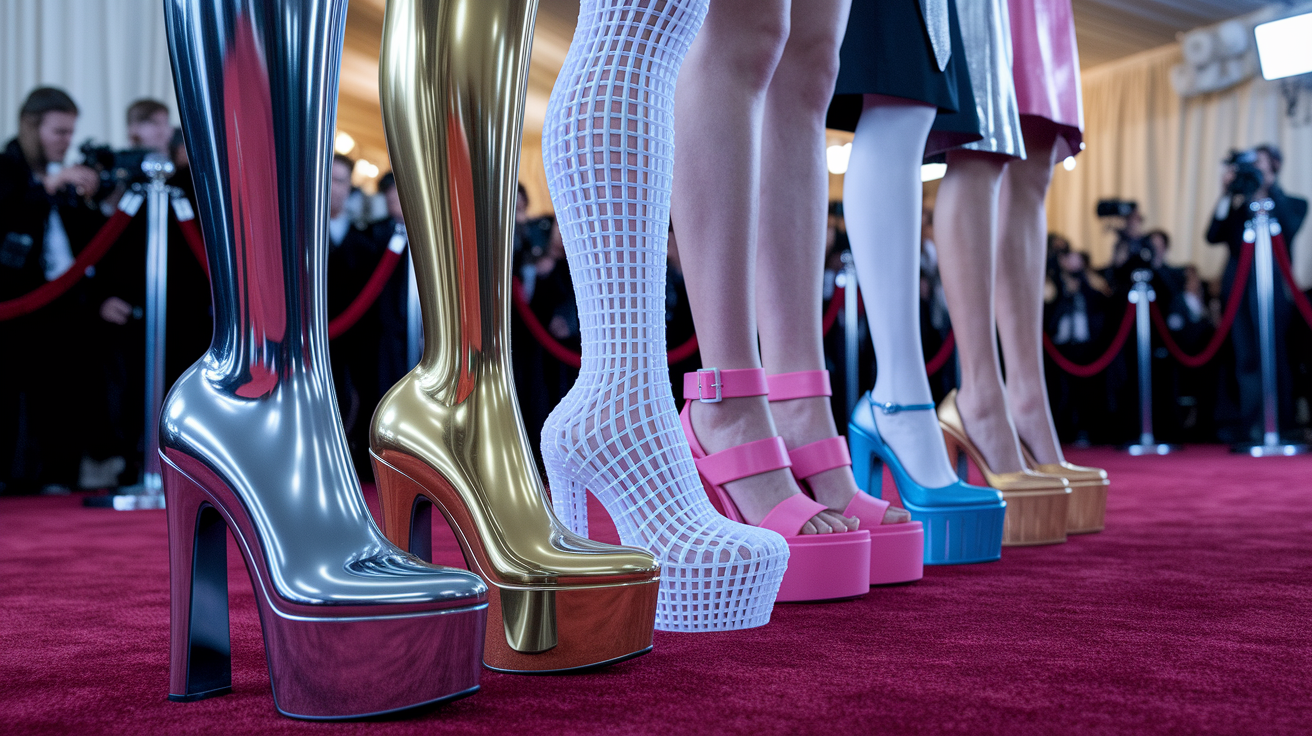
Certain red carpet appearances turn a sculptural heel from a designer experiment into a cultural moment. These are the instances that get screenshotted, memed, and added to mood boards. They’re the shoes that make stylists’ phones ring and send search traffic spiking. Over the past decade, a handful of celebrities have used sculptural heels to own the red carpet narrative and shift the conversation from gown to footwear.
Lady Gaga has long been a champion of statement heels, wearing towering platforms and avant-garde silhouettes that blur the line between fashion and performance art. Her appearances in sculptural heels (often custom-made or pulled from couture archives) helped normalize extreme footwear on mainstream red carpets. Sienna Miller has been photographed in bold platform heels at film premieres, favoring metallic finishes and chunky block shapes that reference 1970s glam. Kate Moss, a long-time muse of Terry de Havilland, has worn the brand’s platform heels at fashion events, lending her effortless-cool credibility to sculptural silhouettes. Sarah Jessica Parker, known for her deep knowledge of shoe design, has appeared in metallic and architectural heels at award ceremonies, often crediting independent designers. Margot Robbie has leaned into playful, sculptural platforms during press tours and premieres, pairing them with vintage-inspired silhouettes.
Beyond those recurring advocates, individual moments have also defined the sculptural heel trend. Zendaya’s red carpet appearances frequently feature custom or limited-edition heels with unusual shapes, chosen to complement high-concept styling. Rihanna’s Met Gala and Oscars looks have included heels with exaggerated platforms and metallic hardware. Lupita Nyong’o has worn sculptural heels at the Cannes Film Festival, selecting designs that balance elegance with architectural intrigue. Each of these appearances generates its own wave of press coverage, social media engagement, and retailer inquiries.
Ten iconic sculptural heel moments on celebrity red carpets:
- Lady Gaga in custom platform heels with chrome detailing at the 2019 Met Gala
- Zendaya in asymmetric sculptural heels at the 2021 Venice Film Festival
- Rihanna in gold metallic platforms at the 2023 Oscars
- Lupita Nyong’o in Iris van Herpen 3D-printed heels at the 2022 Cannes Film Festival
- Margot Robbie in chunky block platforms during the Barbie press tour in 2023
- Sarah Jessica Parker in de Havilland metallic block heels at the 2020 Met Gala (postponed event)
- Sienna Miller in silver platform heels at a London film premiere in 2021
- Kate Moss in vintage-inspired sculptural platforms at a Paris Fashion Week event in 2019
- Tim Curry in Terry de Havilland platform shoes in The Rocky Horror Picture Show (1975, cultural milestone)
- Amina Muaddi’s flared-heel designs worn by multiple celebrities at the 2024 Oscars and Golden Globes
The common thread across these moments is visibility. Each appearance was photographed from multiple angles, shared widely on social media, and discussed in fashion press. That level of attention converts a single red carpet look into a trend signal. When fans and industry insiders see sculptural heels generating buzz, they start asking where to buy similar styles. That demand pushes the trend deeper into the mainstream.
The Craft and Engineering Behind Sculptural Heels

Creating a sculptural heel requires more than traditional shoemaking skill. It demands an understanding of physics, material science, and structural engineering. A stiletto distributes weight through a narrow column, relying on the strength of a steel shank and a small surface area at the tip. A sculptural heel, by contrast, often uses asymmetric supports, cantilevered shapes, or negative space, which means the load distribution is more complex. Designers have to calculate stress points, test balance, and ensure that a heel shaped like a twisted ribbon or a floating tripod can actually support a person’s weight through hours of standing and walking.
Material choice is critical. Traditional leather and wood aren’t always strong enough for unusual shapes, so designers turn to modern alternatives. Molded acrylic and resin allow for transparent or translucent heels with embedded colors or textures. Chromed metal and brushed aluminum provide industrial strength and a futuristic finish. 3D-printed nylon or polymer enables organic, lattice-like structures that would be impossible to carve by hand. Each material comes with its own set of challenges. Acrylic can crack under stress. Metal adds weight. 3D-printed structures require post-processing to smooth surfaces and reinforce joints. Designers often prototype multiple versions, testing different thicknesses, angles, and reinforcement techniques before finalizing a design.
The intersection of art and engineering also means balancing aesthetics with wearability. A heel that looks stunning in a photograph might be uncomfortable or unstable in real life. Designers have to consider heel height, platform depth, arch support, and the angle of the foot. Some sculptural heels incorporate hidden platforms or internal support structures that aren’t visible from the outside. Others rely on wider bases or asymmetric contact points to distribute weight more evenly. The goal is to create a heel that feels like a statement piece but doesn’t compromise the wearer’s ability to walk, stand, or pose for extended periods.
Six engineering challenges and solutions in sculptural heel design:
- Asymmetric weight distribution: Designers use internal steel or carbon-fiber cores to stabilize cantilevered or off-center heels.
- Material brittleness: Acrylic and resin heels are often reinforced with metal inserts or thicker walls at stress points.
- Comfort in extreme heights: Hidden platforms or contoured footbeds help offset steep angles and reduce pressure on the ball of the foot.
- Durability of unconventional materials: Surface coatings, UV-resistant finishes, and impact-tested polymers extend the lifespan of 3D-printed or translucent heels.
- Balance and stability: Wider heel bases, strategically placed voids, and calculated geometry ensure the wearer can walk without tipping.
- Fit and adjustability: Custom lasts, adjustable straps, and padded insoles allow sculptural heels to be tailored to individual foot shapes and event demands.
How Sculptural Heels Are Influencing Mainstream Footwear
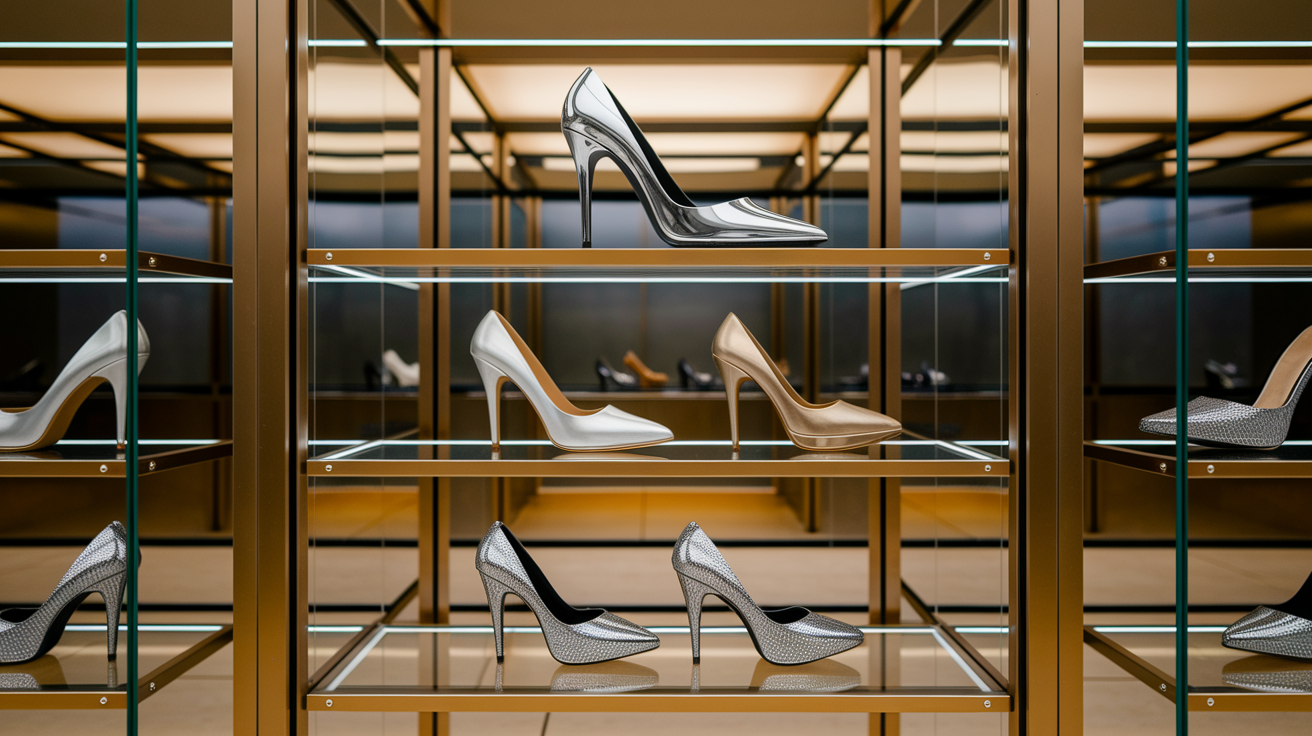
What happens on the red carpet doesn’t stay on the red carpet. Sculptural heels have already begun filtering into ready-to-wear collections, high-street retailers, and mainstream shoe trends. The cycle is familiar: a couture house debuts an extreme heel on the runway, a celebrity wears it to a major event, the look goes viral, and within months, more accessible versions appear at lower price points. The sculptural heel trend is following that same path, with metallic finishes, chunky platforms, and asymmetric shapes showing up in everything from luxury ready-to-wear to fast-fashion knockoffs.
At the highest tier, couture and one-off sculptural heels can cost anywhere from approximately $1,500 to $10,000 or more. These are the pieces worn on red carpets, often custom-made or pulled from limited runway collections. They’re investment pieces, sometimes owned by stylists or borrowed from designer showrooms. One level down, high-end ready-to-wear sculptural heels from brands like Amina Muaddi, Balenciaga, or Schiaparelli typically range from $800 to $3,500. These are produced in larger quantities and sold through luxury retailers, but they’re still out of reach for most consumers. The real influence happens in the next tier: mainstream retail interpretations. High-street brands and contemporary labels now offer sculptural-inspired heels with metallic finishes, chunky blocks, and platform soles for around $100 to $500. These versions simplify the engineering and use more affordable materials, but they capture the visual essence of the trend.
| Category | Typical Price | Examples | Influence on Trend |
|---|---|---|---|
| Couture / One-Off | $1,500–$10,000+ | Custom Schiaparelli heels, Iris van Herpen 3D-printed designs | Sets the creative direction and generates press coverage that defines the trend |
| Luxury Ready-to-Wear | $800–$3,500 | Amina Muaddi flared heels, Balenciaga sculptural platforms, Dolce & Gabbana metallic block heels | Makes the trend accessible to affluent consumers and influences retail buyers |
| Contemporary / Designer Collaborations | $300–$800 | Terry de Havilland Zia platforms, limited-edition collaborations with online retailers | Bridges couture influence with broader market reach |
| High Street / Fast Fashion | $100–$500 | Zara sculptural-inspired heels, ASOS platform boots, Mango metallic block heels | Brings sculptural aesthetics to mass-market consumers and accelerates trend saturation |
| Resale / Vintage | Variable, often $200–$1,500 | Pre-owned designer sculptural heels, vintage de Havilland platforms | Extends the lifespan of high-end pieces and creates secondary market demand |
Consumer demand is also being shaped by the same social media and editorial coverage that elevated sculptural heels on red carpets. When a celebrity wears a pair of metallic platform heels to an event, search traffic for similar styles spikes within hours. Retailers monitor those trends and adjust their inventory accordingly. The result is a feedback loop: celebrity influence drives consumer interest, which signals to brands that sculptural heels are worth producing, which increases availability and normalizes the aesthetic. Over time, what was once considered avant-garde becomes a standard option in seasonal footwear collections.
What to Keep in Mind About Sculptural Heels on Red Carpets
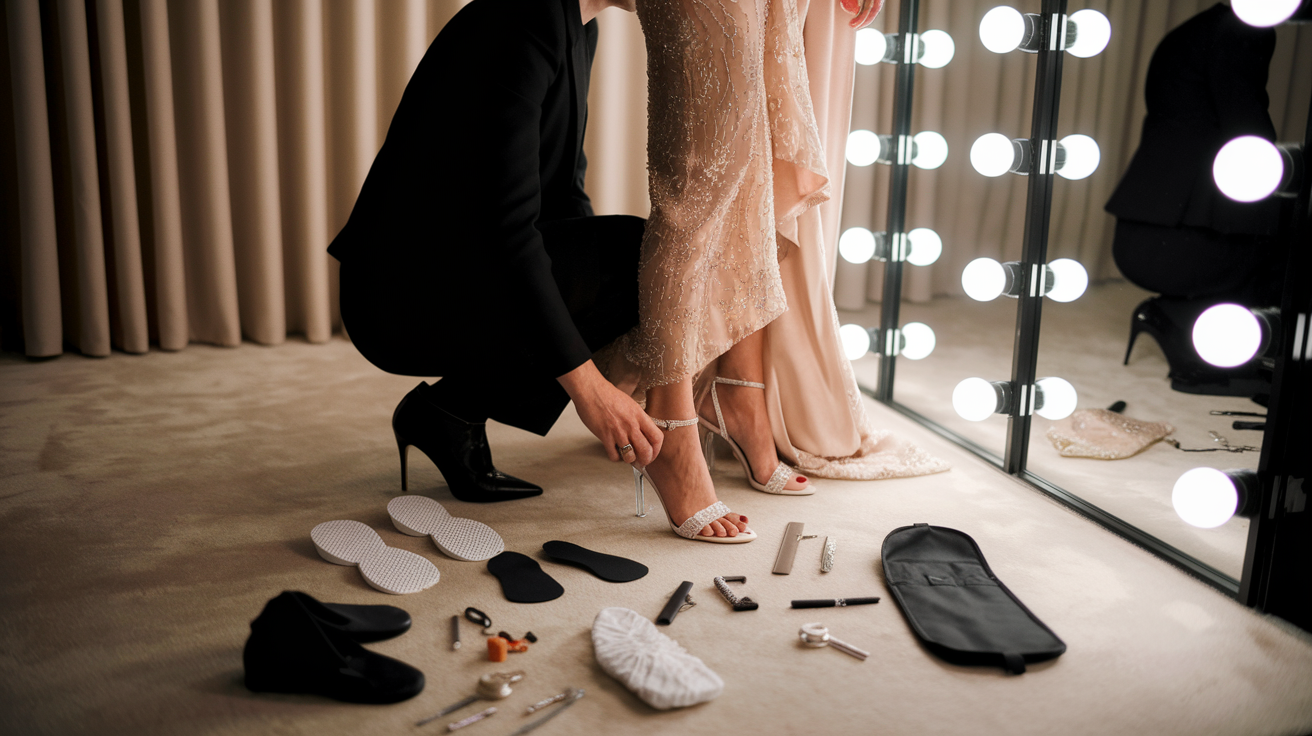
Sculptural heels deliver visual impact, but they come with practical considerations that celebrities and stylists have to navigate. The same architectural shapes that make these heels photogenic can also make them challenging to wear for extended periods. Red carpet events often involve hours of standing, walking, posing, and climbing stairs, all under the scrutiny of cameras. A heel that looks stunning in a close-up shot might cause balance issues or discomfort after the first hour, and there’s no easy way to swap shoes mid-event without breaking the styling narrative.
Balance and stability are the most common concerns. Asymmetric heels, cantilevered supports, and negative-space designs shift weight distribution in ways that can feel unfamiliar. Celebrities often do trial runs before an event, walking in the shoes during fittings to test comfort and adjust straps or insoles if needed. Some sculptural heels include hidden platforms or contoured footbeds to offset steep angles, but others prioritize aesthetics over ergonomics. The trade-off is real. Stylists have to weigh the risk of a stumble or visible discomfort against the reward of a headline-making shoe moment.
Maintenance is another factor. Sculptural heels made from acrylic, resin, or metal require careful handling. Acrylic can scratch or crack if dropped. Metal finishes can tarnish or scuff. 3D-printed materials may need post-event cleaning and inspection for stress fractures. Between events, couture heels are often stored in custom boxes or protective cases to prevent damage. For celebrities who borrow shoes from designer showrooms, returning them in pristine condition is part of the deal, which adds pressure to avoid any mishaps on the red carpet.
Four key reminders about sculptural heel wearability and care:
- Always do a fitting and practice walk before the event to test balance and comfort.
- Bring backup insoles, grip pads, or moleskin to address hot spots or slippage.
- Handle heels with care during transport and storage, especially if they’re made from fragile materials like acrylic or resin.
- Coordinate with the stylist and designer team about any repairs or adjustments needed after the event, particularly for borrowed or custom pieces.
Final Words
On red carpets we saw shoes become the headline. We defined sculptural heels, explained how media turned them into status symbols, and named the designers behind the biggest moments.
We mapped the timeline from 1970s platforms to today, dug into the craft and engineering, and shared practical tips for wear and care.
Whether you call them wearable art or a bold accessory, the rise of sculptural heels on celebrity red carpets feels like a fresh era for footwear, and it’s only getting more exciting.
FAQ
Q: Why did high heels become popular?
A: High heels became popular as status symbols and practical riding shoes, first worn by men for horseback control and status in the 1600s, then adopted by women for height, posture, and glamour.
Q: What shoes are out of style in 2026?
A: Shoes out of style in 2026 are basic ultra-thin stilettos, unimaginative pumps, and mass-market fast-fashion knockoffs; sculptural, chunky, and architectural heels are replacing plain minimalism.
Q: What heels are celebrities wearing?
A: Celebrities are wearing sculptural, architectural heels: metallic platforms, lucite and resin supports, asymmetric silhouettes and 3D-printed details from designers like Schiaparelli, Iris van Herpen, Balenciaga, Amina Muaddi, and Terry de Havilland.
Q: Does Bruno Mars wear elevator shoes?
A: Bruno Mars has been seen wearing shoes with hidden lifts or platforms during performances, so he does sometimes choose elevator-style shoes for extra stage height and a vintage vibe.