
What do you do when a celebrity scandal explodes, lawyer up or call PR?
The immediate choice matters, legal teams aim to shield you from liability, while PR teams try to save your public life.
This piece breaks down the key differences, goals, tone, timing, and risks, and why getting the sequence wrong can ruin either your day in court or your career.
Read on for a clear checklist to tell when legal should lead, when PR should step in, and how both can work together without tripping over each other.
At‑a‑Glance Verdict on Legal vs PR Responses in Celebrity Scandals

When a celebrity scandal breaks, there’s an immediate fork in the road: protect in court or protect in the press. Legal teams step up when the scandal brings civil or criminal exposure (lawsuits, criminal charges, regulatory action, anything that creates a permanent liability record). PR teams take over when the real threat is brand collapse, a social media pile-on, or lost deals, and the legal risk is manageable through insurance or secondary.
Take the case that just made headlines. Five new lawsuits got filed, including an allegation of sexual assault of a 13-year-old at a VMA afterparty. Legal teams moved fast to preserve evidence and dodge admissions. At the same time, implicated celebrities started distancing themselves publicly, telling outlets they always left parties “early.” That dual response shows the core reality: legal strategy protects your freedom and your wallet. PR strategy protects your ability to work and be seen in public.
Here’s what separates the two:
Legal responses limit liability. PR responses limit reputational damage.
Legal teams speak in careful, evidence-preserving language. PR teams speak in empathetic, story-driven language.
Legal moves take weeks or months. PR moves need to happen in hours or days.
Legal counsel often demands silence. PR counsel pushes for transparency and context.
Legal exposure is binary (you’re liable or you’re not). Reputational damage slides on a scale measured in public sentiment.
Legal strategy tolerates short-term reputation loss if it protects the long game. PR strategy will give up some legal flexibility to stop a narrative freefall.
If the scandal involves potential jail time, massive financial exposure, or allegations as serious as those against a minor, legal wins. If it’s a cheating rumor, a bad quote, or a brand conflict, PR wins. Most high-stakes celebrity scandals need both, running parallel but sequenced so one doesn’t wreck the other.
Defining Legal vs PR Response Frameworks in Celebrity Scandals
Legal response frameworks follow one rule: every word you say can get used against you. Lawyers write statements that preserve defenses, avoid fault admissions, and keep privilege intact. The tone is formal, the language narrow, the goal containment. Legal responses lean on phrases like “no comment,” “we deny the allegations,” or factual corrections stripped of emotion (“The event occurred on September 10, not September 7, as reported”).
PR response frameworks follow a different rule: silence reads as guilt. PR teams write statements that sound human, acknowledge concern, and give enough context to stop a narrative spiral. The tone is empathetic, the language accessible, the goal maintaining trust with fans, brands, and the public. PR leans on phrases like “we take these allegations seriously,” “we are cooperating fully,” or “we are committed to transparency.” Language that signals accountability without crossing into admission.
| Dimension | Legal Response | PR Response |
|---|---|---|
| Primary Goal | Protect against liability, preserve defenses | Protect reputation, control narrative |
| Tone | Formal, non-committal, risk-averse | Empathetic, relatable, reassuring |
| Risks | Admitting fault, waiving privilege, creating discoverable evidence | Appearing defensive, losing credibility, worsening sentiment |
| Allowable Language | Denials, corrections, “no comment,” requests for privacy | Apologies without admission, context, expressions of concern |
| Timing | Slow, deliberate, often delayed until facts are confirmed | Fast, responsive, often within hours of breaking news |
The collision happens when PR wants to say something compassionate but it creates legal exposure. Or when legal wants silence that makes the celebrity look cold or guilty.
Timing Tension: Sequencing Legal Action vs Public Messaging

Legal teams want early silence because statements made before facts get confirmed can lock in a story that becomes impossible to walk back. Evidence preservation comes first (phones, emails, texts, calendars). Any public comment before that process wraps can undermine defenses or accidentally admit facts that should stay contested. When five lawsuits drop at once, like in the VMA afterparty case, lawyers move immediately to assess exposure, identify co-defendants, and secure privilege before anyone talks to the press.
PR teams watch the clock differently. Social media moves faster than discovery schedules. A 24-hour silence can turn into a trending hashtag, a canceled brand deal, or a fan exodus. The “say less” principle works strategically, but only if the public reads restraint as discipline rather than evasiveness. In the example case, celebrities who waited too long to address their connection to the scandal saw their silence read as complicity, forcing reactive statements that looked defensive.
The sequencing decision comes down to how fast the narrative is collapsing versus how serious the legal exposure is. Five timing risks teams face:
Issuing statements before facts get verified invites retractions, which destroy trust faster than the original scandal.
Going silent for weeks while legal teams investigate lets false narratives harden into accepted truth.
Releasing a legal boilerplate (“we deny”) without PR context reads as robotic and fuels public anger.
Responding too emotionally or too quickly creates admissions or inconsistencies lawyers can’t undo later.
Coordinating legal filings with public statements takes precision. File a motion to dismiss, then release a PR statement explaining it in plain language within the same news cycle.
Best practice is a two-stage release: legal counsel approves a short, verified holding statement within hours, then PR teams add narrative and context once the legal team confirms what can and can’t be said.
Messaging Constraints: How Legal Language and PR Language Diverge
The language gap between legal and PR responses is where most coordination fails. Legal counsel writes for judges, opposing counsel, future juries. Every word gets vetted to avoid waiving privilege, admitting fault, or creating discoverable material. The result often sounds sterile, evasive, or tone-deaf to public audiences. PR counsel writes for fans, journalists, brand partners. People who want to hear humanity, accountability, and a path forward.
Six phrases that show the split, three from each discipline:
Legal: “We deny the allegations in their entirety and will defend vigorously in court.”
Legal: “Our client has no comment at this time.”
Legal: “The plaintiff’s timeline is factually inaccurate. The event occurred on a different date.”
PR: “We take these allegations seriously and are fully cooperating with the investigation.”
PR: “Our client is deeply committed to transparency and accountability.”
PR: “We ask for privacy as we work through this difficult time with our family.”
The danger is when PR language crosses into admission territory. Saying “we take these allegations seriously” can get interpreted in court as acknowledging the claim’s credibility. Saying “we are committed to doing better” can imply past wrongdoing. Long-form apologies (1,000-word blog posts, hour-long YouTube videos) are especially risky during active crises because they give opposing counsel more material to parse for inconsistencies or admissions. A celebrity who explains their version of events in detail before consulting legal counsel can box themselves into a story that discovery later contradicts, creating impeachment material.
The coordination fix is pre-approval and scripting. Every public statement, caption, interview answer, spokesperson remark goes through legal review before release. PR drafts the tone and framing. Legal redlines anything that creates exposure. The final product is often shorter, less satisfying to the public, more protective than either side wanted alone. But it keeps both the courtroom strategy and the public narrative intact.
Risk Management: Liability Protection vs Reputation Damage Control
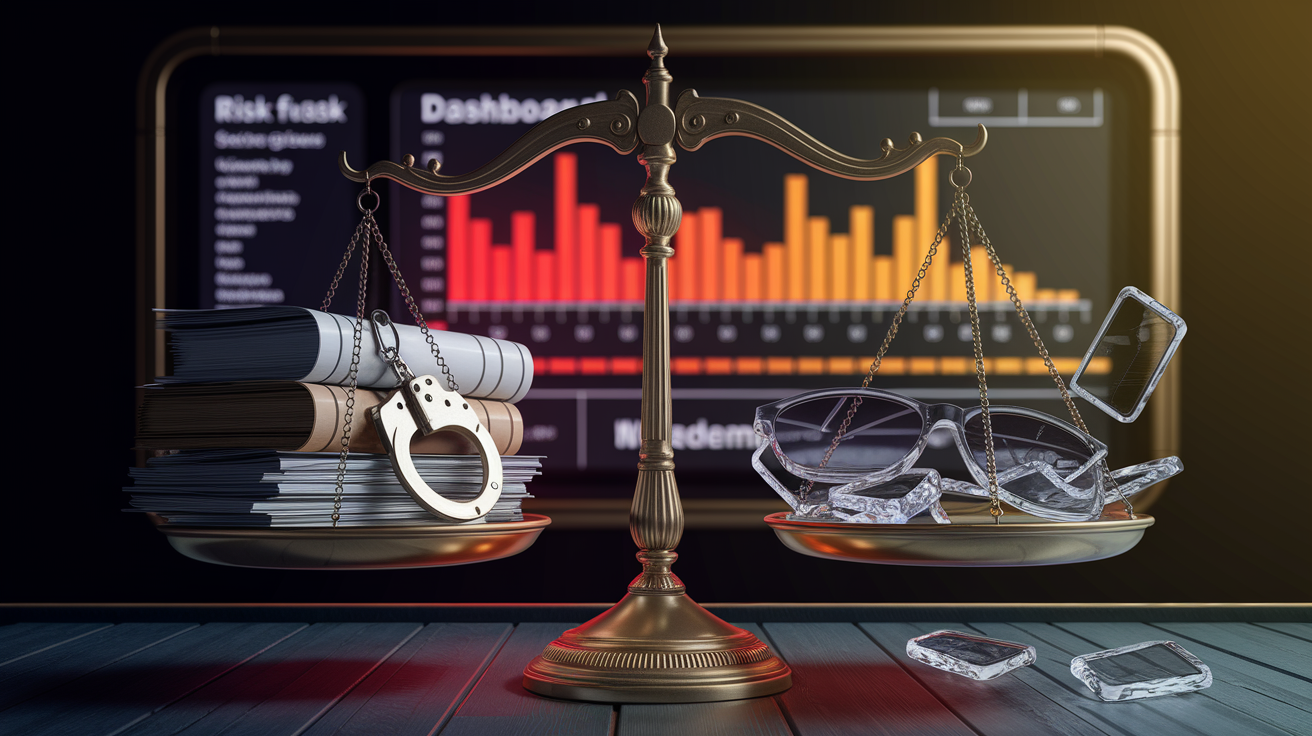
Legal teams measure risk in binary terms: liable or not liable, convicted or acquitted, settlement or trial. The risk assessment is quantitative (potential damages, criminal sentencing guidelines, insurance coverage limits, discovery costs, trial timelines). A lawyer’s job is to reduce the probability of an adverse judgment and minimize financial or criminal exposure, even if that means accepting short-term reputational harm. In a scandal involving allegations as serious as assault of a minor, legal risk is existential and takes absolute priority.
PR teams measure risk on a sliding scale: how fast is sentiment collapsing, how many brand deals are at risk, how long will it take to rebuild credibility, can the celebrity still work after this. PR risk is reputational, financial in a different sense (lost endorsements, canceled projects, social media unfollows, long-term brand toxicity). When the scandal “has the potential to implicate dozens of celebrities,” as reported in the VMA case, PR teams move into triage, distancing clients from co-defendants and reframing associations to stop the contagion from spreading.
The problem starts when legal silence speeds up reputational damage. A “no comment” strategy that protects privilege can look like a guilt admission to the public. On the flip side, a PR strategy that prioritizes transparency and empathy can waive privilege, create admissions, or generate discoverable statements that undermine defenses.
| Risk Type | Legal Risk | PR Risk |
|---|---|---|
| What It Measures | Liability exposure, criminal charges, damages, legal precedent | Reputation damage, brand loss, fan sentiment, career viability |
| What Escalates Risk | Admissions, contradictory statements, waived privilege, discoverable evidence | Silence, defensive tone, contradictory narratives, appearing evasive |
| Mitigation Techniques | Controlled statements, evidence preservation, pre-approved scripts, early legal counsel | Empathetic framing, narrative control, stakeholder outreach, sentiment monitoring |
| Timeline | Months to years (litigation, trial, appeals) | Days to weeks (news cycle, social media reaction, brand decisions) |
The coordination principle is sequencing: legal teams identify what can’t be said, then PR teams build messaging within those constraints. Both sides accept that neither goal (total liability protection or total reputation protection) is achievable at once, so the strategy becomes risk mitigation across both tracks, not elimination of risk on one.
Coordination Challenges Between Lawyers and PR Teams in Scandals

The most common coordination failure happens when PR teams draft a compassionate, transparent statement and legal counsel kills it because it creates exposure. PR sees the legal veto as tone-deaf and reputation-destroying. Legal sees the PR draft as reckless and evidence-generating. The result is internal gridlock while the public narrative spirals. In the VMA afterparty scandal, celebrities who successfully distanced themselves did so through tight coordination. Legal teams approved the framing (“we left early”), and PR teams amplified it across controlled channels without adding detail that could get challenged in discovery.
The second failure is contradictory public statements from different spokespeople. A lawyer says “no comment,” a publicist says “we’re cooperating fully,” and the celebrity posts an emotional Instagram story that contradicts both. Opposing counsel collects all three and uses them to show evasion, inconsistency, or consciousness of guilt. When dozens of celebrities are potentially implicated, like in the case example, the coordination pressure multiplies. Each celebrity’s team must align messaging while avoiding the appearance of coordinated defense, which can create its own legal problems.
Five rules that prevent coordination breakdowns:
Route all public messaging through legal counsel before release, even social media captions and interview talking points.
Assign a single spokesperson with authority to approve statements, usually the crisis manager or lead attorney, not the celebrity directly.
Use a shared messaging document that tracks what’s been said publicly, when, and to whom, so statements stay consistent across platforms and over time.
Schedule daily alignment calls during active crises, so legal and PR teams can adjust strategy in real time as facts develop or sentiment shifts.
Pre-script responses to predictable questions and scenarios, including “no comment” phrasing that sounds human rather than evasive, like “We’re focused on the legal process and can’t comment further right now.”
The tension between transparency and privilege never fully resolves, but the best crisis teams accept that legal risk beats PR optics when both can’t be served, then work to minimize the reputational cost of that choice through controlled, empathetic framing within legal constraints.
Case Study Breakdown: Simultaneous Legal vs PR Moves in a High-Profile Scandal

Five new lawsuits got filed in quick succession, one alleging sexual assault of a 13-year-old at a VMA afterparty. The legal strategy was immediate containment: preserve evidence, assess co-defendant exposure, deny allegations through formal court filings, avoid any public statement that could get used in discovery. The PR strategy ran parallel: celebrities named or associated with the events started issuing carefully scripted statements distancing themselves, emphasizing they attended only briefly and left early, reframing their association as incidental rather than complicit.
The legal track prioritized three moves: filing motions to dismiss where possible, opposing expedited discovery to buy time for investigation, coordinating with co-defendants to avoid contradictory defenses. The PR track prioritized narrative control: monitoring social media sentiment, engaging journalists with background context off the record, deploying statements through controlled channels (official statements to outlets, not social media) to avoid the appearance of panic or over-explanation. The coordinated result was a two-tier response. Legal teams protected liability exposure while PR teams stopped the reputational freefall.
Six observable coordination points in the case:
Legal counsel approved the “left early” framing before PR teams deployed it, making sure it didn’t create a provable timeline that discovery could contradict.
Celebrities avoided long-form explanations or emotional posts, limiting public statements to short, verified claims legal teams had vetted.
PR teams used third-party spokespeople (publicists, managers) rather than direct celebrity statements, preserving the option for the celebrity to claim they were misquoted or taken out of context if needed.
Legal filings and public statements got released in the same news cycle, so journalists covering the story had both the legal position and the PR framing available at once.
Sentiment monitoring let PR teams identify which narratives were gaining traction and adjust messaging in real time without waiting for legal approval on minor phrasing tweaks.
The teams avoided any appearance of coordinated defense by making sure each celebrity’s statement was distinct in tone and detail, even though the core message (distance and disavowal) stayed consistent.
| Stage | Legal Actions | PR Actions |
|---|---|---|
| Immediate (0–48 hours) | Engage counsel, preserve evidence, assess exposure, file protective motions | Monitor sentiment, draft holding statements, brief spokespeople, control leaks |
| Short-term (Week 1–2) | File responsive pleadings, coordinate with co-defendants, oppose expedited discovery | Deploy distancing narratives, engage media off the record, adjust messaging based on sentiment |
| Medium-term (Weeks 3–8) | Discovery phase, deposition prep, settlement negotiations, motion practice | Rebuild reputation through controlled appearances, aligned brand messaging, long-term narrative repair |
| Long-term (Months 3+) | Trial prep or settlement finalization, public court record management | Full reputation recovery campaign, reentry into public work, controlled interviews |
The case shows that simultaneous legal and PR responses aren’t just possible but necessary when the scandal involves both serious liability and immediate reputational threat. The key is sequencing (legal approval first, PR deployment second) and discipline in sticking to vetted, concise messaging rather than improvising under public pressure.
Choosing Legal vs PR Priority: Who Should Choose What

Severity of the underlying allegation is the first decision filter. If the scandal involves criminal exposure, allegations against minors, or potential damages in the tens of millions, legal priority is non-negotiable. The celebrity’s freedom, financial future, and permanent record are at stake, and reputation can rebuild later if the legal outcome is favorable. In the VMA case, the allegation of assault of a 13-year-old immediately triggered legal priority for anyone implicated, because the criminal and civil exposure dwarfed any reputational concern.
PR priority takes over when the scandal is mostly reputational (cheating rumors, brand conflicts, offensive remarks, leaked private behavior) and the legal risk is limited to potential defamation claims that can get managed through retractions or settlements. If the celebrity’s income depends on public perception (endorsements, social media influence, fan-driven projects) and the scandal is collapsing that perception faster than any lawsuit could, PR must move first to stop the bleeding, with legal review as a secondary check.
Five scenarios that show which track should lead:
Criminal charges or allegations involving minors: Legal leads, PR follows legal constraints.
Civil lawsuits with damages under $1 million and low media attention: PR can lead with legal oversight, focusing on settlement and reputation repair.
High-profile defamation or false accusations: Hybrid approach. Legal files counterclaims or motions, PR amplifies the legal defense publicly to shift narrative.
Brand partnership conflicts or moral clauses triggered: PR leads to salvage deals, legal reviews contracts and negotiates exits or amendments.
Social media pile-on with no legal exposure: PR owns the response entirely, focusing on sentiment management and narrative correction without legal gatekeeping.
The decision should get made by the crisis manager in consultation with both legal and PR leads, not by the celebrity alone, because the celebrity’s instinct under pressure is often to prioritize short-term emotional relief (PR) over long-term protection (legal), which can create irreversible exposure.
How Celebrities Can Decide the Right Mix for Their Situation
The decision framework starts with evidence preservation and fact-finding before any public move. Legal teams need to secure phones, communications, calendars, witness statements to assess exposure. PR teams need to understand what the public already knows, what rumors are circulating, what sentiment is dominant. Both processes can run parallel, but neither should shortcut the other. Issuing a public statement before facts get confirmed creates retraction risk, and delaying legal evidence preservation while managing PR can destroy critical defenses.
The second step is risk segmentation: separate what can be said from what can’t, and identify which risks are immediate versus long-term. Legal teams create a “do not say” list (topics, phrases, admissions, timelines that must be avoided in public). PR teams create a “must address” list (narratives, false claims, public questions that will collapse reputation if ignored). The overlap between the two lists is the messaging zone where both legal and PR goals can get met.
The third step is controlled sequencing: legal boilerplate first, narrative layering second. A simple legal statement (“We deny the allegations and will defend ourselves vigorously”) buys time and preserves defenses. Once legal risk is assessed, PR can add context, empathy, narrative (“We are cooperating fully with the investigation and remain committed to transparency”) without crossing into admission. The case studies that work show legal and PR releases happening in the same news cycle, so the public hears both the legal position and the human context together.
Six-item decision checklist for choosing the right mix:
Severity of legal exposure: Criminal or high-dollar civil equals legal priority. Reputational only equals PR priority.
Speed of narrative collapse: If public sentiment is hardening into permanent damage within 48 hours, PR must act within legal constraints even if investigation is incomplete.
Availability of verified facts: No public statement until core facts (timeline, participants, actions) are confirmed, even if it means tolerating short-term negative coverage.
Coordination capacity: Can legal and PR teams align messaging daily, or will siloed decision-making create contradictions? If coordination is weak, default to legal priority and minimal public comment.
Retraction risk: If there’s any chance the statement will need correction later, delay it. Retractions destroy credibility faster than the original scandal.
Long-term goals: If the goal is to return to public work quickly, PR weight increases. If the goal is to avoid jail or bankruptcy, legal weight is absolute.
The best outcome is a disciplined, sequenced response where legal teams set the boundaries, PR teams craft the message within those boundaries, and both sides accept that perfect protection on both fronts is impossible. So the strategy becomes controlled risk across both legal and reputational dimensions, not elimination of either.
Final Words
You saw legal teams move first to lock down evidence while PR races to patch reputations. This guide cut through timing, messaging limits, coordination rules, and a real case study.
Who benefits was clear: legal-first for high-stakes claims and cases involving minors; PR-first when brand deals and public sentiment are collapsing. We also outlined core differences and a simple checklist.
Bottom line: pick the track that matches legal exposure and reputational speed, then coordinate closely. legal vs PR responses in celebrity scandals explained. Use the framework, stay steady, and protect both rights and public image.
FAQ
Q: Do celebrities get off easier when they break the law?
A: Celebrities don’t automatically get off easier when they break the law. Fame can bring tougher scrutiny, bigger investigations, and civil suits, but wealth, legal teams, and PR can affect charges, plea deals, and public consequences.
Q: What is an example of a PR issue?
A: An example of a PR issue is a celebrity’s offensive social media post that sparks public backlash, trending criticism, canceled partnerships, and urgent reputation management to limit long-term brand damage.
Q: Do celebrities have public relations?
A: Celebrities typically have public relations teams or reps who craft messaging, manage interviews, protect brand deals, monitor social sentiment, and coordinate with legal counsel during crises to control narratives.
Q: What is the fallen celebrity syndrome?
A: Fallen celebrity syndrome describes a rapid reputation collapse after scandal. Fame, income, and partnerships fall as fans and brands pull back, often requiring long-term PR and legal work to rebuild trust and opportunities.