
Think the slip dress is just lingerie in disguise? It’s not.
Once an undergarment, it turned into a ’90s icon and now shows up everywhere—from brunch to red carpets.
With 6,000 people searching right now, the bias-cut slip is officially a wardrobe workhorse.
This guide gives quick styling moves and smart shopping options across budget, mid-range, and luxury so you can wear a slip dress to casual days, the office, or evening events without guessing on fit or fabric.
Everything You Need to Know About Slip Dresses Right Now
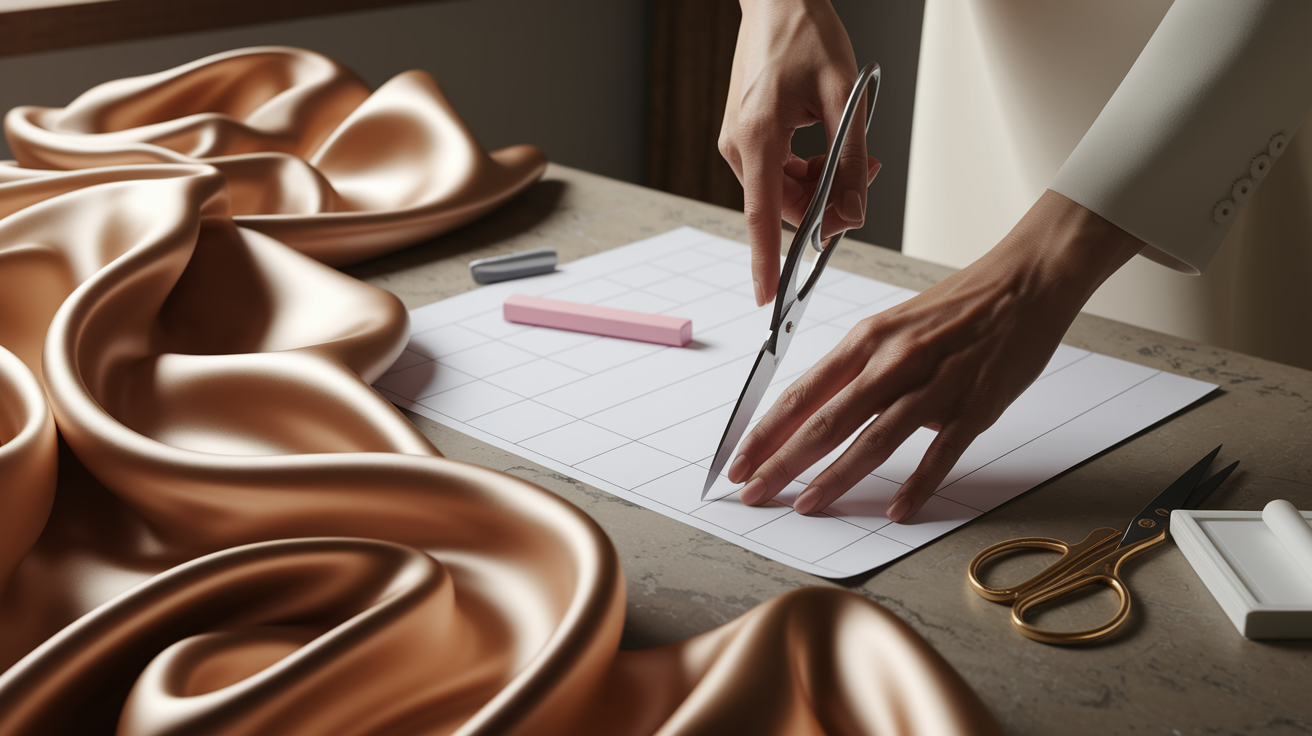
A slip dress is that lightweight, lingerie-inspired piece with thin spaghetti straps, a simple shape, and fabric that just skims your body. It started as an undergarment back in the early 1900s but became a whole thing in the ’90s when supermodels and minimalist designers decided silk slips could stand alone. Now it’s everywhere. The dress usually has a V-neck or scoop neckline, adjustable straps, and very little in the way of seams so the line stays clean. 6k people are searching for this right now, which tells you the slip dress isn’t going anywhere.
What really makes it work is the bias cut. That’s when fabric gets cut diagonally across the grain so it drapes naturally over your body without sticking. The technique got perfected in the 1930s and lets silk and satin flow over curves instead of clinging weird. You’ll find them in silk charmeuse, satin-back crepe, polyester blends, sometimes organza for overlays. Silk breathes and feels soft. Satin gives you that glossy finish without much fuss. Polyester blends are tougher, wrinkle less, travel better, cost less. The bias-cut thing works best when the fabric has weight and movement. Heavier silks hold shape for evening, lighter satins layer during the day.
There are basically three price levels. Budget runs $25 to $75 and you’re getting polyester satin or rayon blends with basic lace and standard straps. Mid-range sits between $75 and $250 with better silk blends, hand-finished seams, nicer lace, refined hardware like covered buttons or satin-wrapped adjusters. Luxury starts at $300 and goes past $1,200 with pure silk charmeuse, bias-cut construction from specialists, hand-applied crystals, intricate lace borders, designer labels you see on red carpets. Each tier reflects fabric quality but also fit, finishing, brand weight.
Slip Dress Shopping Guide Across Budget, Mid-Range, and Luxury Options
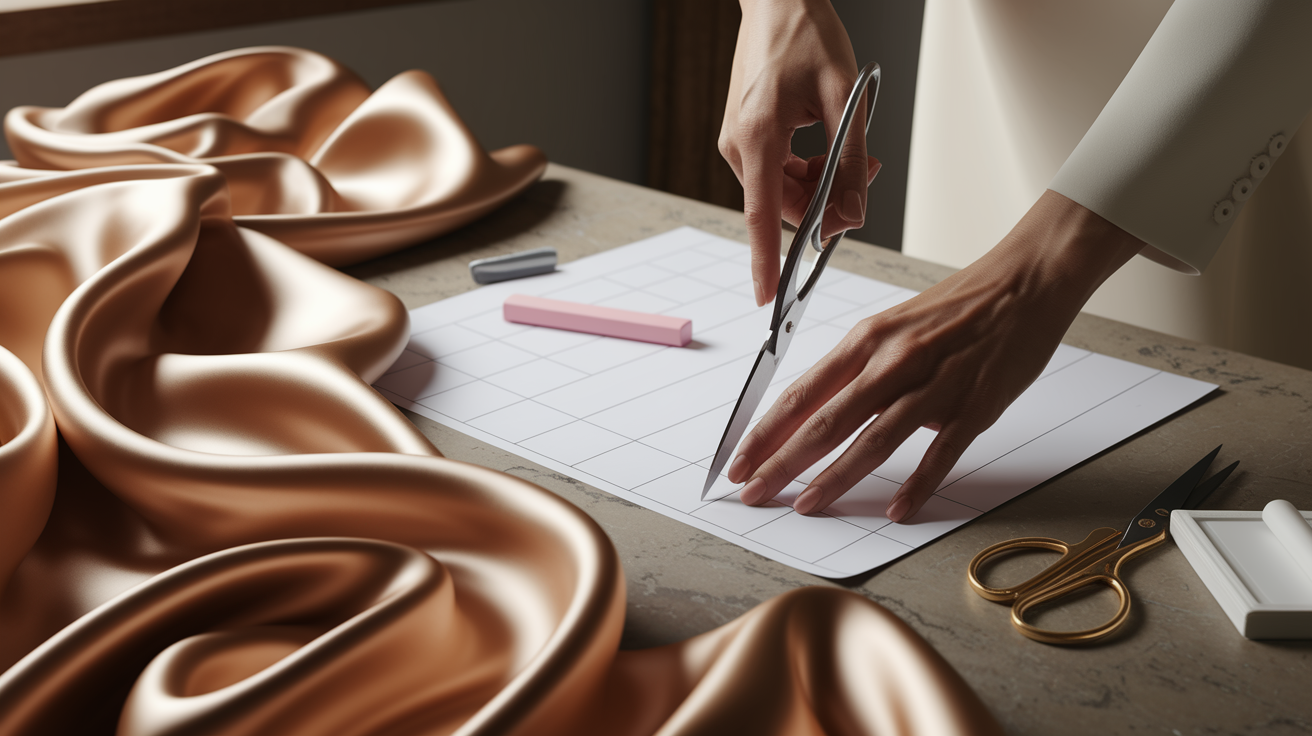
Picking the right slip dress comes down to how you’ll wear it and how much you want to spend on fabric and construction. Most people figure out their main occasion first—casual daytime, work outfits, formal evenings—then match a price point to how often they’ll actually wear it and how much care they’re willing to commit to.
| Tier | Price Range | What to Expect |
|---|---|---|
| Budget | $25–$75 | Polyester satin or rayon blends; basic lace trims; standard adjustable straps; machine-washable in most cases; solid colors and simple silhouettes. |
| Mid-Range | $75–$250 | Silk blends or higher-grade polyester; hand-finished seams; delicate lace appliqués or subtle embellishments; better strap hardware; more refined color palettes and occasional prints. |
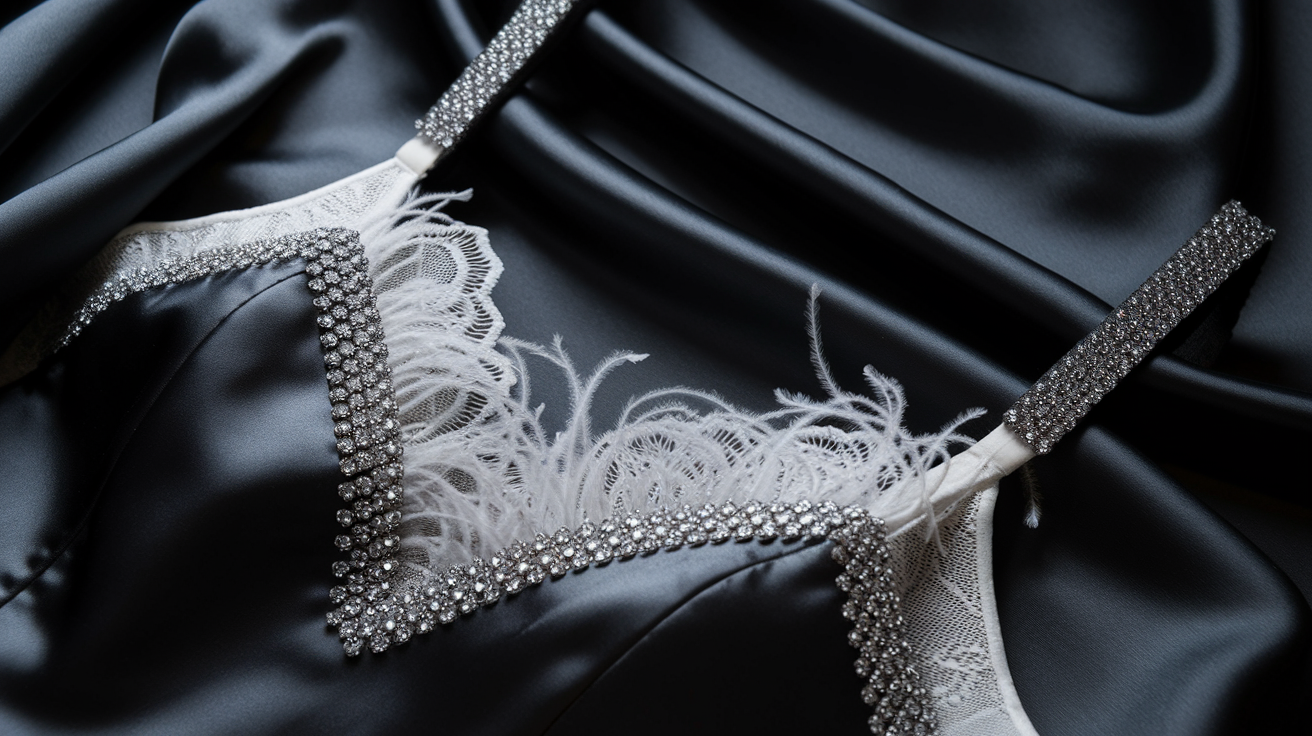
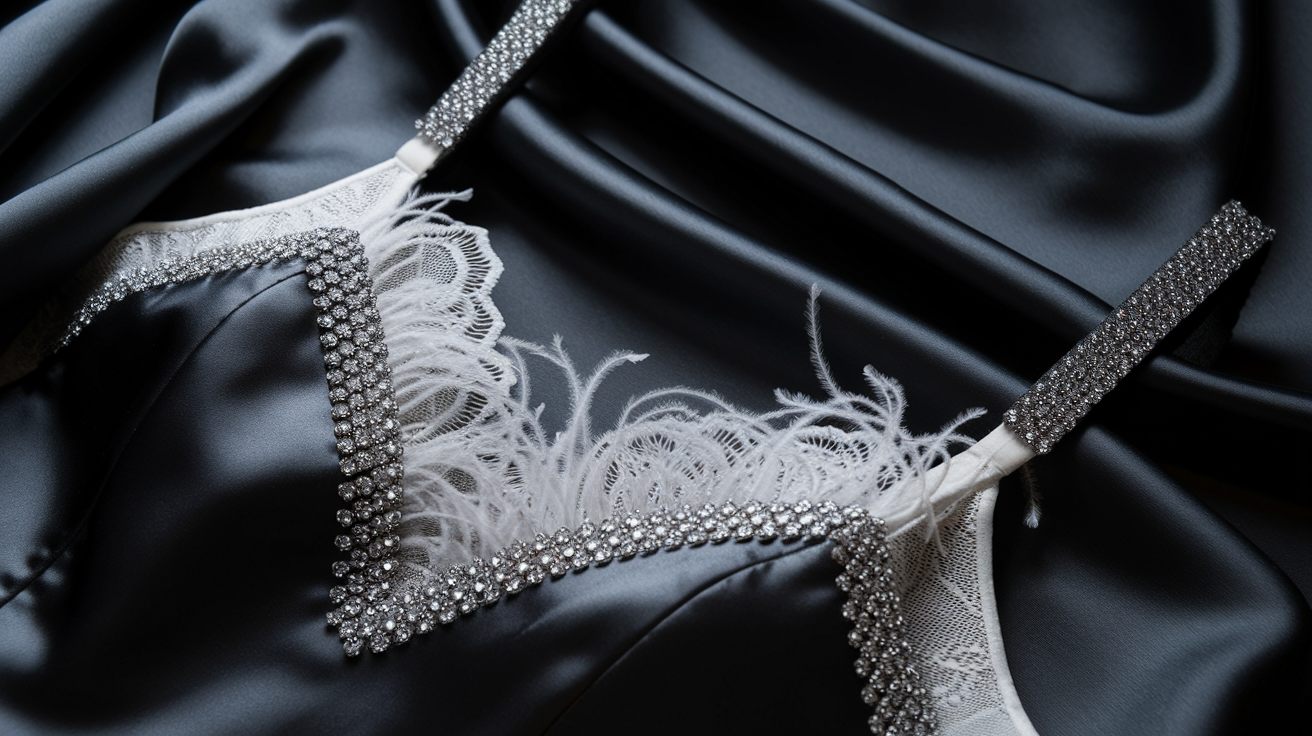
| Luxury | $300–$1,200 | Pure silk charmeuse or satin-back crepe; bias-cut construction by skilled pattern-makers; hand-applied details like crystals, feather hems, or embroidered lace; designer branding; limited-edition prints and exclusive color stories. |
When you’re comparing fabrics across tiers, check the weight and drape in person or read detailed product descriptions closely. Budget polyester can feel stiff or plasticky. Mid-range silk blends balance affordability with natural movement. Luxury silks have superior sheen and feel cooler against your skin. Look at trim details too. Synthetic lace on budget dresses might fray or lose shape after washing, but mid-range and luxury use French or Italian lace with reinforced edges. Strap hardware matters. Covered sliders and metal-free adjusters won’t snag and sit flatter under layers. If you’re planning to wear your slip dress a lot or layer it under tailored pieces, mid-range gives you better longevity and a more polished finish without the luxury price.
Fabric Breakdown for Slip Dresses: Silk, Satin, Polyester & More
Silk charmeuse is the gold standard. It’s got natural sheen, breathability, and regulates body temperature. The tight weave on one side creates that glossy surface while the matte reverse gives you subtle grip so it doesn’t slip against skin or undergarments. Silk charmeuse drapes beautifully on the bias, which is the whole point of a slip dress. It absorbs dye really well so you get deep jewel tones and soft pastels with actual dimension. The downside is care. You’re hand-washing or dry cleaning, and it can water-spot if you’re not careful.
Synthetic satin—usually polyester or rayon—gives you a budget-friendly option that looks similar for way less money. Modern polyester satins mimic silk’s shine and resist wrinkles, which makes them great for travel or wearing constantly. But they don’t breathe. They trap heat and moisture, generate static, and can feel slippery or plasticky in cheaper versions. On the plus side, polyester satin is machine-washable, colorfast, and durable enough to survive repeated laundering without losing shape. Rayon satin falls somewhere between silk and polyester in price and performance. It drapes well and feels softer than polyester but wrinkles easier and needs gentle washing.
Polyester blends affect both durability and price, often mixing polyester with a bit of spandex for stretch or viscose for better drape. These blends work on different body types because the elasticity accommodates movement and stops the dress from riding up. You’ll pay less than pure silk but more than straight polyester. Durability is a big plus: blended fabrics hold up through machine washing, resist fading, and keep their shape longer than natural fibers. When shopping, check the fiber content label. Blends with at least 10 percent natural fiber usually feel softer and breathe better than 100 percent polyester.
Common slip-dress trims and embellishments you’ll see:
Lace trim along necklines and hems, from delicate scalloped edges to bold graphic lace panels. Crystal details hand-applied at straps or along bodice seams for evening sparkle. Feather hems that add texture and movement, which recent runway collections popularized. Asymmetric ruffles placed along one shoulder or cascading down one side for visual interest.
Ten Stylish Ways to Wear a Slip Dress
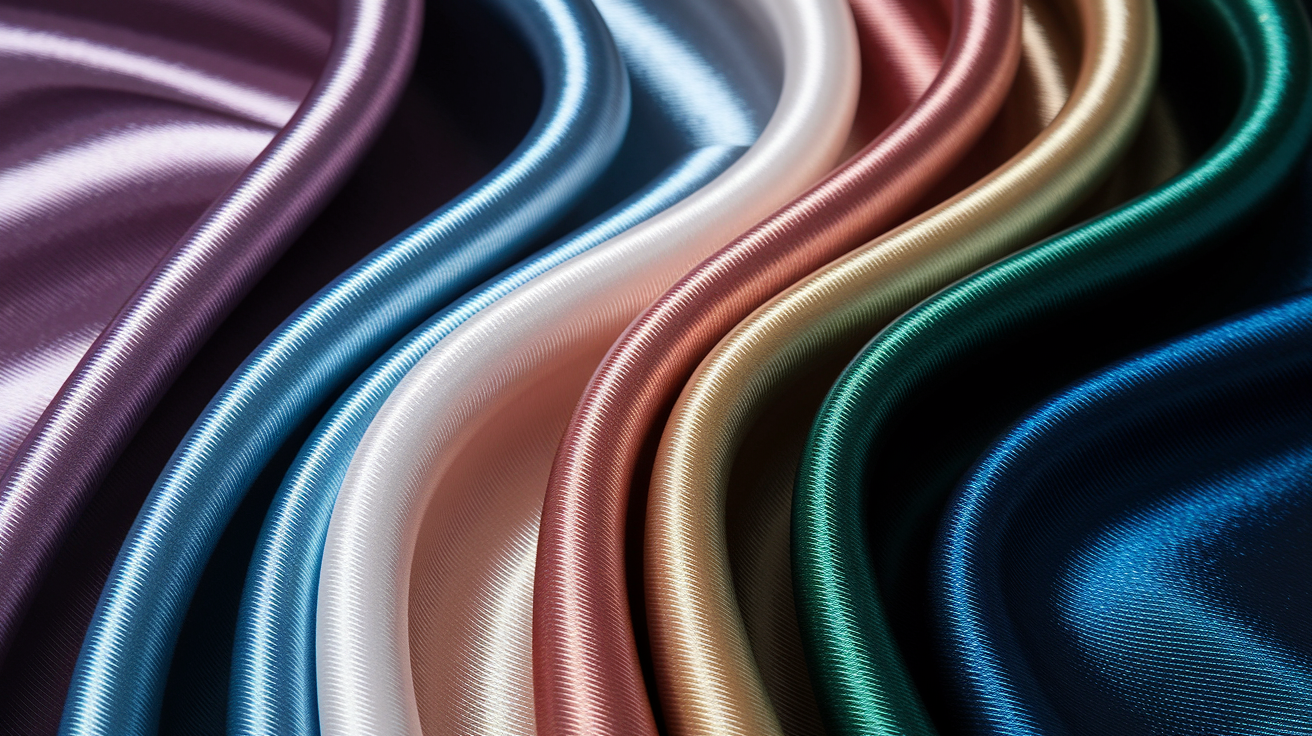
Slip dresses got their versatility reputation by adapting to basically any occasion with a simple swap of accessories or layers. Start with one high-quality piece in a neutral like black, champagne, or dusty pink, then rotate styling tricks to multiply your outfit options without buying more stuff.
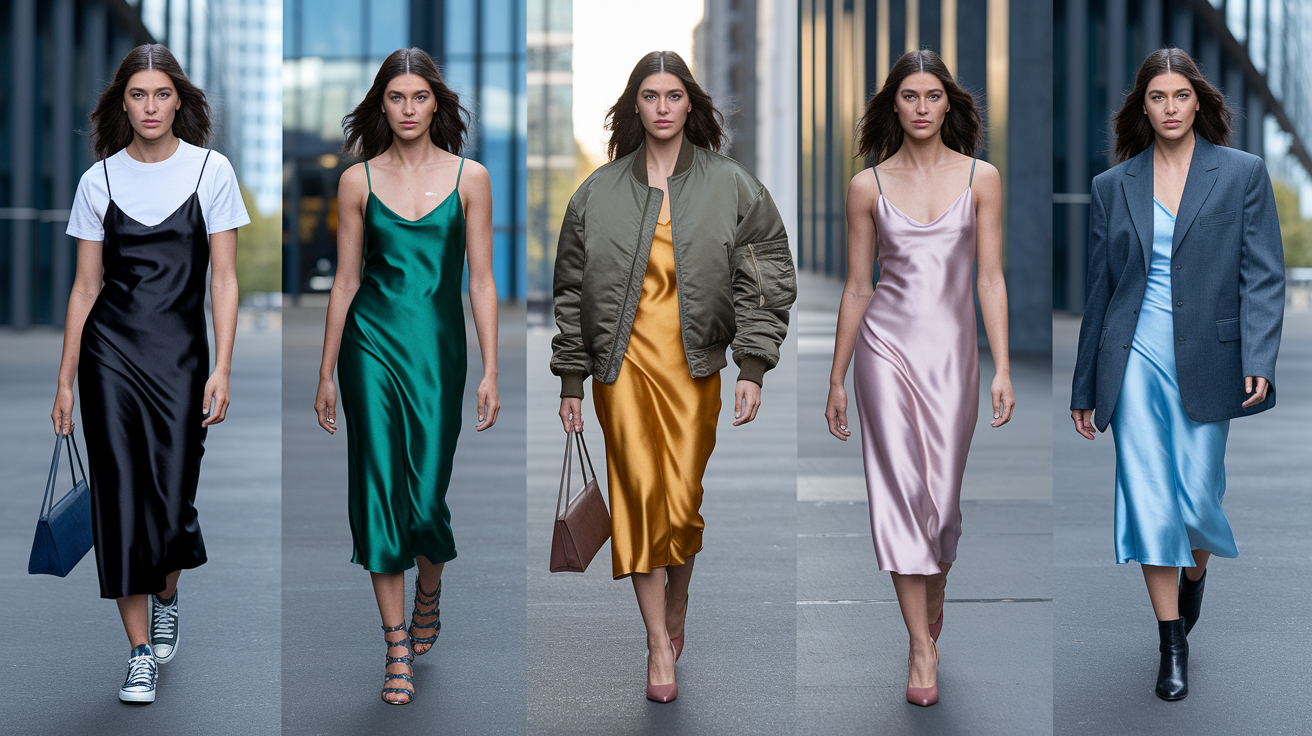
90s revival with a white tee. Layer a fitted white or ribbed crew-neck tee under your slip for that throwback look. Finish with chunky sneakers and a mini shoulder bag.
Date-night jewel-tone satin with strappy heels. Pick a rich burgundy or emerald slip, add delicate gold jewelry, step into barely-there heeled sandals.
Casual slip-as-skirt hack. Tuck the straps inside and wear your slip like a high-waisted midi skirt with a tucked-in tee or cropped sweater.
Minimalist summer outfit. Wear a champagne or beige slip solo with flat leather sandals, a straw tote, oversized sunglasses.
Street-style bomber jacket pairing. Throw an oversized satin or nylon bomber over a mini slip dress, finish with white sneakers and a crossbody bag.
Turtleneck underlayer for fall. Add a fitted black turtleneck under a midi slip, then layer a long cardigan or trench coat on top.
Layered necklaces and mules for brunch. Keep your slip simple and let stacked gold necklaces, hoop earrings, and slip-on mules do the talking.
Denim jacket and ankle boots for transitional weather. Balance a silky slip with the texture of a classic blue denim jacket and lace-up ankle boots.
Belted blazer for work-appropriate polish. Wear a longer slip under a tailored blazer cinched at the waist with a slim leather belt.
Evening elegance with a structured clutch. Style a bias-cut maxi slip in black or navy with statement earrings, a small clutch, classic pointed-toe pumps.
Celebrity street-style inspiration cemented the slip dress as a red-carpet and off-duty favorite. Sienna Miller and Kate Moss pioneered the “undone glamour” approach in the early 2000s, pairing slip dresses with leather jackets and combat boots. More recently, influencers and actors get photographed layering slips over fitted long-sleeve tops or wearing them solo with minimalist accessories, proving the garment’s still relevant across decades and styling philosophies.
Mastering Slip Dress Layering for All Seasons
Layering turns a slip dress from a single-season piece into a year-round thing. The key is balancing the slip’s fluid shape with structured or textured layers that add visual interest without overwhelming the simplicity. Start with lightweight underlayers in spring and summer, then move to heavier knits and outerwear when it gets cold.
Winter layering works best when you pair contrasting textures. The smoothness of satin against chunky cable knit or crisp wool creates dimension and prevents the outfit from feeling flat. Turtlenecks are classic: pick a fitted style in black, cream, or charcoal and wear it under a midi or maxi slip, letting the neckline peek out. Add an oversized cardigan or belted coat to complete the look. The slip-as-skirt hack also extends wearability. Tuck the straps inside and treat your slip like a bias-cut midi skirt, then pair it with tucked blouses, cropped sweaters, or structured button-downs.
Seven ways to layer slip dresses:
Turtleneck under a midi slip. Fitted long-sleeve turtleneck in a neutral tone layered beneath the dress for cold-weather coverage.
Tee or tank under a mini slip. White ribbed tee or fitted tank creates a casual, 90s-inspired look perfect for daytime.
Blazer over shoulders. Tailored blazer worn normally or draped over shoulders adds instant polish and transitions slip dresses into office territory.
Chunky knit over the top. Oversized crewneck sweater layered on top, with the slip’s hem peeking out below, works for fall and winter.
Belt and button-down combination. Sheer or structured button-down worn open over the slip, cinched at the waist with a slim belt for shape.
Slip-as-skirt with a cropped sweater. Tuck straps inside and pair with a cropped knit or fitted sweater for a high-waisted skirt look.
Long cardigan or duster coat. Floor-length cardigan or duster layered over a maxi slip for a bohemian, elongated profile.
Layering also solves the challenge of making a slip dress work-appropriate. A structured blazer in black, navy, or camel instantly elevates the garment, while a sheer button-down or fitted long-sleeve top underneath maintains modesty without killing style. Stick to neutral slip colors like beige, charcoal, or muted pink when styling for the office, and go for longer lengths that hit at or below the knee. Add classic pumps and a structured tote to complete the professional look. The same slip worn solo on a weekend becomes office-ready with a single tailored layer and thoughtful accessories.
Plus-Size and Mature Slip Dress Styling Tips
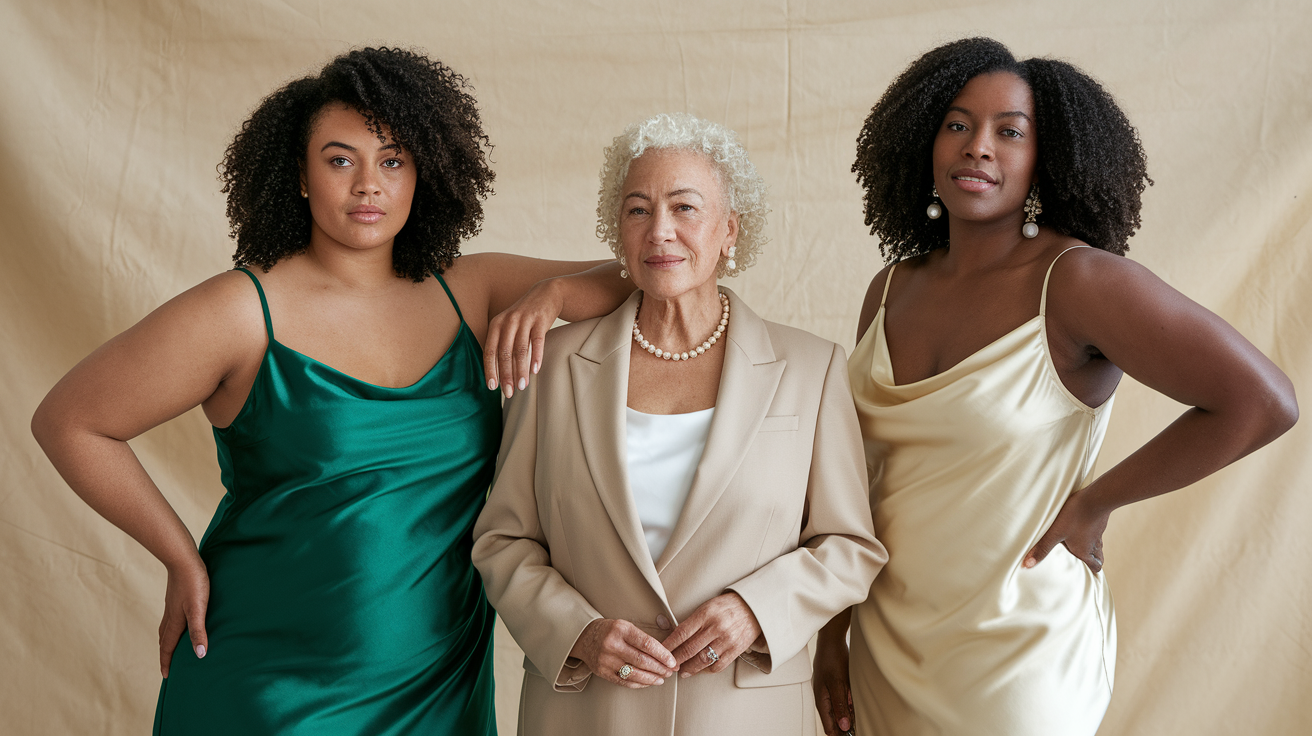
Slip dresses work beautifully across body types when you focus on fit details that improve comfort and mobility. Look for styles with wider strap options or adjustable hardware that lets you customize the fit across shoulders and bust. Bias-cut shapes are particularly flattering for plus-size figures because the diagonal grain naturally skims curves instead of clinging. Skip overly structured or stiff fabrics that can add bulk. Choose fluid materials like silk blends or high-quality polyester satin that drape smoothly and move with your body. Adjustable straps are necessary. They let you fine-tune the dress length and neckline depth to suit your proportions and personal comfort level.
The “8 Aways” approach to plus-size slip dress styling emphasizes inclusive warm-weather options that celebrate the garment’s versatility. Pair a midi slip in a soft pastel with flat sandals and a wide-brim hat for a relaxed summer look. Layer a denim jacket or lightweight kimono over a mini slip and finish with sneakers for casual outings. Style a maxi slip with a cropped linen shirt tied at the waist to define your shape without restriction. Wear a slip as a skirt by tucking the straps and pairing it with a fitted tank or tee. Add a longline cardigan over a slip dress for transitional weather, belt it at the natural waist for shape, or leave it open for a more fluid drape. Accessorize with statement earrings and a crossbody bag to draw the eye upward. Pick darker jewel tones like burgundy or emerald for evening events, and keep footwear simple with block heels or supportive wedges.
The “7-Ways” maturity-focused approach centers on modest layers and supportive foundations that offer coverage without sacrificing style. Start with a well-fitted slip that hits at or below the knee, then add a tailored blazer or structured sheer blouse for professional settings. Invest in quality shapewear or slip shorts that smooth lines and prevent chafing, and select slip dresses with built-in shelf bras or thicker straps for added support. Layer a fitted turtleneck underneath for cooler months, or wear a lightweight cashmere cardigan over your shoulders for elegant coverage. Choose matte or satin finishes in neutral tones like champagne, taupe, charcoal, navy that read sophisticated rather than overly trendy. Go for classic accessories like pearl studs, a structured handbag, and closed-toe pumps to complete the refined look. This approach respects personal style preferences and comfort needs while fully embracing the slip dress’s timeless shape.
Choosing the Right Fit, Length, and Cut for Your Slip Dress

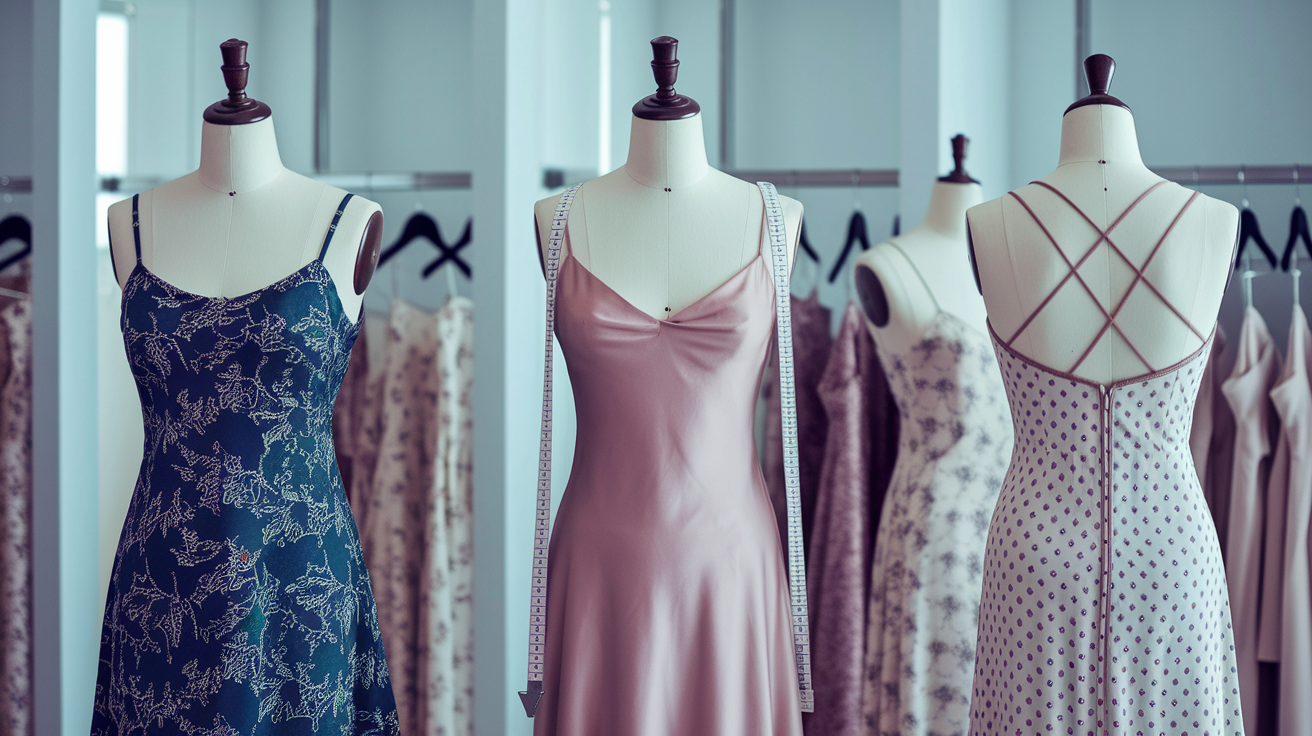
Selecting the ideal slip dress starts with understanding your body proportions and how different lengths interact with your frame. Mini slip dresses typically hit mid-thigh and work well for petite or shorter builds, creating the illusion of longer legs when paired with heels or ankle boots. Midi lengths fall between the knee and mid-calf, offering versatility for both casual and semi-formal occasions. This length is universally flattering and suits most body types. Maxi slip dresses graze the ankle or floor and are best for taller frames or those seeking maximum coverage and elegance. Silhouette variations include mermaid cuts that hug the body through the hips before flaring at the knee, dropped-waist styles that sit below the natural waistline for a relaxed, 1920s-inspired look, and asymmetric ruffles that add visual interest along one side.
Strap style impacts both fit and styling flexibility. Thin spaghetti straps are the classic choice, offering minimal visual interruption and an elegant line across the shoulders. But thin straps can dig in or slip off if the dress is too loose or if the fabric is heavy. Wider straps or convertible styles with multiple adjustment points provide better support and distribute weight more evenly, making them better for larger busts or longer wear periods. Open-back designs with crisscross or lace-up details allow for customizable fit adjustments and add drama to evening looks. When trying on slip dresses, check that the straps sit comfortably without cutting into your shoulders and that the bodice drapes smoothly without gaping or pulling.
Fit should emphasize ease and movement. Slip dresses are meant to skim the body, not cling tightly. If you’re between sizes, size up to preserve the garment’s fluid drape and avoid overstretching the bias-cut fabric. Pay attention to the hemline. A well-fitted slip dress should hang evenly all around without hiking up in the front or back. For petite frames, look for adjustable straps that can shorten the overall length, or plan to have the hem tailored. Taller wearers may need to shop for “tall” or “long” versions to ensure the dress hits at the intended length without riding too high.
Fit Adjustments
Altering a slip dress is straightforward but requires care because of the bias-cut construction. Strap adjustments are the simplest modification. Most slips feature sliding hardware that lets you shorten or lengthen the straps without sewing. If your dress lacks adjustable straps, a tailor can sew in new hardware or shorten the straps by hand-stitching at the attachment point. Hem alterations are trickier. Bias-cut fabrics have natural stretch along the diagonal grain, which means the hemline can wave or ripple if not handled properly. Always allow a bias-cut dress to hang for 24 hours before hemming so the fabric settles into its final drape. A skilled tailor will use a hand-rolled hem or bias-faced finish to maintain the garment’s fluidity. Don’t cut too much length at once. Start conservatively and try the dress on multiple times during the alteration process to make sure the hem falls correctly.
Care, Maintenance & Washing Guidelines for Slip Dresses
Proper care extends the life of your slip dress and preserves its drape, sheen, and color. Silk and satin require gentle handling to prevent water spots, fabric distortion, and color fading. Always check the care label before washing. Some silk blends are labeled as washable, others mandate dry cleaning only.
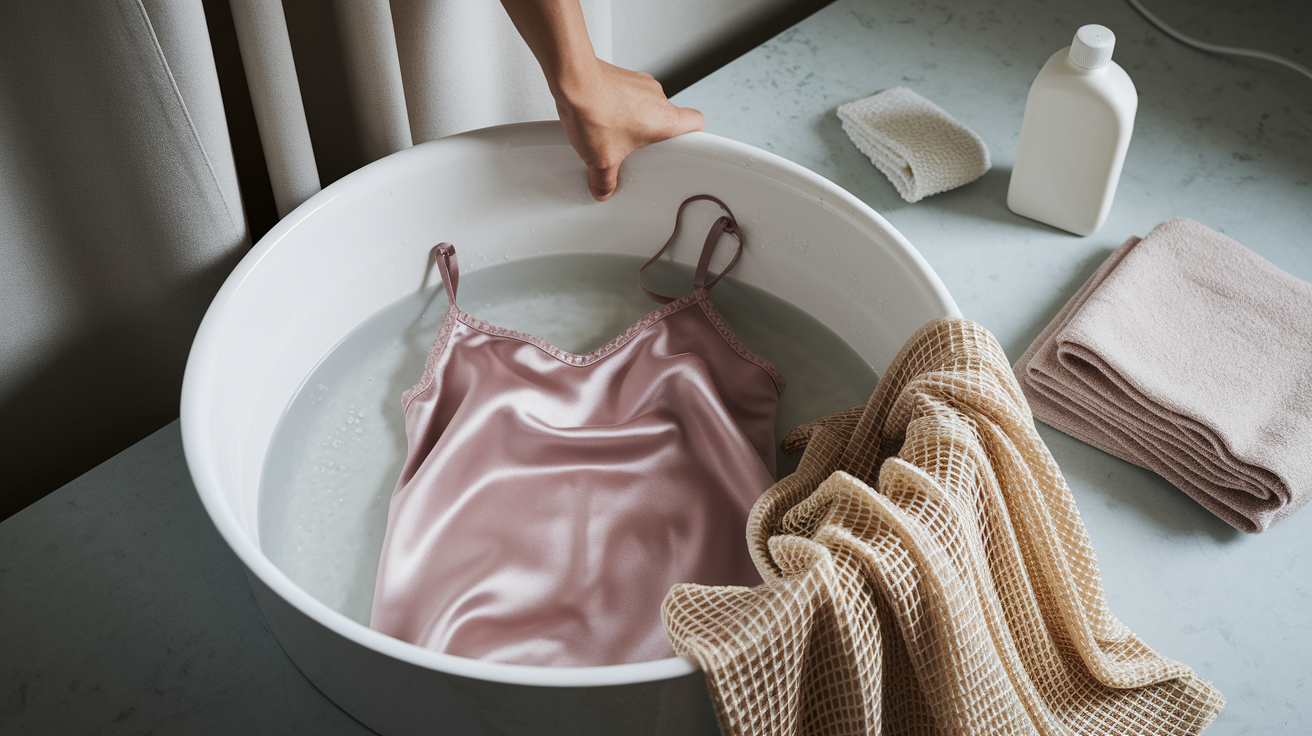
If your slip dress is machine-washable, use a mesh garment bag and select the delicate or hand-wash cycle with cold water. Pick a pH-neutral detergent specifically made for delicate fabrics, avoiding products with enzymes, bleach, or heavy fragrances that can break down silk fibers or dull the fabric’s shine. Never wring or twist the dress after washing. Gently press out excess water by rolling the garment in a clean towel, then lay it flat or hang it on a padded hanger to air-dry away from direct sunlight or heat sources.
Step-by-step hand-wash instructions for slip dresses:
Fill a clean basin or sink with cool to lukewarm water (never hot), adding one teaspoon of delicate-fabric detergent and swirling to dissolve. Submerge the slip dress fully and gently agitate by swishing the fabric through the water for 2 to 3 minutes. Don’t scrub or rub. Drain the soapy water and rinse the dress under cool running water until all detergent is removed and the water runs clear. Press the dress gently against the side of the basin to remove excess water without wringing, then roll it in a clean, dry towel to absorb moisture. Lay the dress flat on a second dry towel or hang it on a padded hanger to air-dry in a well-ventilated area, reshaping the straps and hemline as needed.
Steaming is always better than ironing for slip dresses. A handheld garment steamer gently relaxes wrinkles without direct contact, preserving the fabric’s natural sheen and preventing scorch marks. Hold the steamer wand a few inches away from the fabric and work in vertical passes from top to bottom. If you must iron, turn the dress inside out, set your iron to the lowest silk or delicate setting, and place a clean cotton cloth between the iron and the fabric to protect the surface. Never apply direct heat to embellished areas like lace trims or crystal details. For wrinkle prevention during travel, roll your slip dress loosely with tissue paper between the folds and store it in a breathable garment bag rather than folding it flat.
Accessorizing Your Slip Dress for Any Occasion
The minimalist shape of a slip dress provides the perfect canvas for accessories, letting you shift the look from understated to statement-making with a few choices. Jewelry should complement rather than compete with the dress’s clean lines. For evening wear, pick one standout piece like chandelier earrings, a delicate layered necklace, or a bold cuff bracelet and keep the rest simple. Thin chain necklaces in gold or silver work beautifully with V-neck or scoop necklines, drawing the eye down the center of the body and elongating the torso. Skip heavy, chunky jewelry that disrupts the dress’s fluidity. Go for pieces with movement like drop earrings or fine chain bracelets that echo the garment’s drape.
Footwear and bag selection depend on the occasion and the slip dress length. For evening events, strappy heeled sandals in metallic tones or classic black elongate the leg and maintain the dress’s elegant vibe. Daytime styling benefits from flat leather sandals, white sneakers, or ankle boots that ground the look and add casual texture. When wearing a mini slip, choose shoes with a sleeker profile to avoid overwhelming the short hemline. Pointed-toe mules or kitten heels work well. Maxi slips pair naturally with platform sandals or block heels that provide height without visible bulk. Bags should be proportional. Small clutches or chain-strap evening bags suit formal settings, while crossbody styles or structured totes bring practicality to daytime or work outfits.
Color-palette pairings let you customize the mood of your slip dress. Neutral slips in beige, champagne, or charcoal serve as a blank slate. Add pops of color through accessories like a bright handbag, bold lipstick, or jewel-tone shoes. For slip dresses in rich hues like burgundy, emerald, or navy, keep accessories tonal or metallic to let the dress color shine. Black slip dresses are the most versatile. Pair them with silver jewelry and cool-toned accessories for a modern edge, or warm them up with gold jewelry and cognac leather. Pastel slip dresses in dusty pink, lavender, or mint benefit from soft metallic accents and neutral shoes that enhance rather than overpower the delicate palette. When in doubt, choose accessories in the same color temperature as your dress. Cool tones with silver and cool neutrals, warm tones with gold and warm neutrals to create a cohesive, polished look.
Trend Forecast: The Future of Slip Dresses
Slip dresses continue to evolve on the runway, with designers reimagining the classic shape through unexpected fabrications, embellishments, and styling approaches. Recent collections embraced maximalist details layered onto minimalist bases. Think hand-embroidered florals cascading down bias-cut silk, oversized bows at the back, mixed-media combinations like slip dresses layered over mesh bodysuits. Red-carpet moments increasingly feature slip-inspired gowns in bold jewel tones, metallic finishes, and high-shine satins, signaling that the garment’s formal potential is far from done.
Cultural influences are steering the slip dress toward more inclusive sizing and adaptive design features. Brands are responding to demand for adjustable straps, built-in support, and size ranges that extend beyond traditional offerings. The rise of sustainable fashion has also impacted fabric choices, with designers experimenting with deadstock silk, organic cotton-satin blends, and recycled polyester that mimic the look and feel of traditional slip-dress materials while reducing environmental impact. These shifts reflect broader consumer priorities around longevity, versatility, and ethical production.
| Trend | Key Feature | Example Style |
|---|---|---|
| Micro Mini Revival | Ultra-short hemlines hitting high on the thigh, often with playful details | Feather-hem mini slip dress in brown satin |
| Asymmetric Draping | One-shoulder or asymmetric ruffle placements that add movement and visual interest | Lina Satin Strappy Asymmetric Ruffle Maxi Dress |
| Pastel Palette Expansion | Powdery hues like sky blue, dusty pink, and lavender for a soft, romantic aesthetic | Valerie Satin Lace-Trim Slip Maxi in Dusty-Pink |
| Lace and Crystal Embellishment | Hand-applied lace trims, crystal details at straps or bodice for elevated evening wear | Paola Black Satin V-Neck Crystal-Detail Slip Maxi |
Looking ahead, expect to see more hybrid designs that blend slip-dress DNA with other garment categories. Slip-blazer combos, slip dresses with detachable skirts, convertible styles that transition from day to evening with a single adjustment. The continued popularity of 90s and early-2000s fashion suggests that slip dresses will remain a go-to piece for minimalist wardrobes, street-style experimentation, and red-carpet moments.
Final Words
We dove straight into what makes a slip dress tick, its lingerie-inspired roots, the silky bias-cut drape, and the fabrics you’ll see from silk to polyester.
We also ran through price tiers ($25–$75, $75–$250, $300–$1,200), shopping tips, styling ideas, layering tricks, fit adjustments, and care basics so your pieces last.
Wear it simple, dress it up, or layer it for work — the slip dress is versatile, fun, and totally here to stay.
FAQ
Q: What is a slip dress?
A: The slip dress is a lingerie-inspired dress with thin straps and a bias-cut silhouette, usually in silk, satin, or blends, designed to skim the body like a chemise for sleek, minimalist dressing.
Q: What is another name for a slip dress?
A: Another name for a slip dress is a chemise; people also call it a satin or silk slip, lingerie dress, or bias-cut slip when emphasizing fabric and the draped silhouette.
Q: Are slip dresses still in?
A: Slip dresses are still in, trending thanks to 90s revival and red-carpet looks, with search interest strong (about 6,000 searches), keeping silk and satin slips firmly in rotation.
Q: Why are slip dresses called slip dresses?
A: Slip dresses are called slip dresses because they derive from the lingerie slip or chemise, mirroring that simple, easy-to-slip-on undergarment with thin straps, lightweight fabric, and a body-skimming shape.