
Think mermaid dresses are just showy satin tails? Think again.
These curve-hugging gowns, fitted from bust to knee then flared into a dramatic tail, have ruled red carpets and wedding aisles for a reason.
They sculpt an hourglass, give built-in support, and can read classic, sexy, or bridal depending on fabric and neckline.
This guide shows which mermaid styles actually work for weddings and formal events, how to pick the right flare and fabric for your body, and the key details you need for a confident, comfortable fit.
Key Features and Fast Overview of Mermaid Dresses
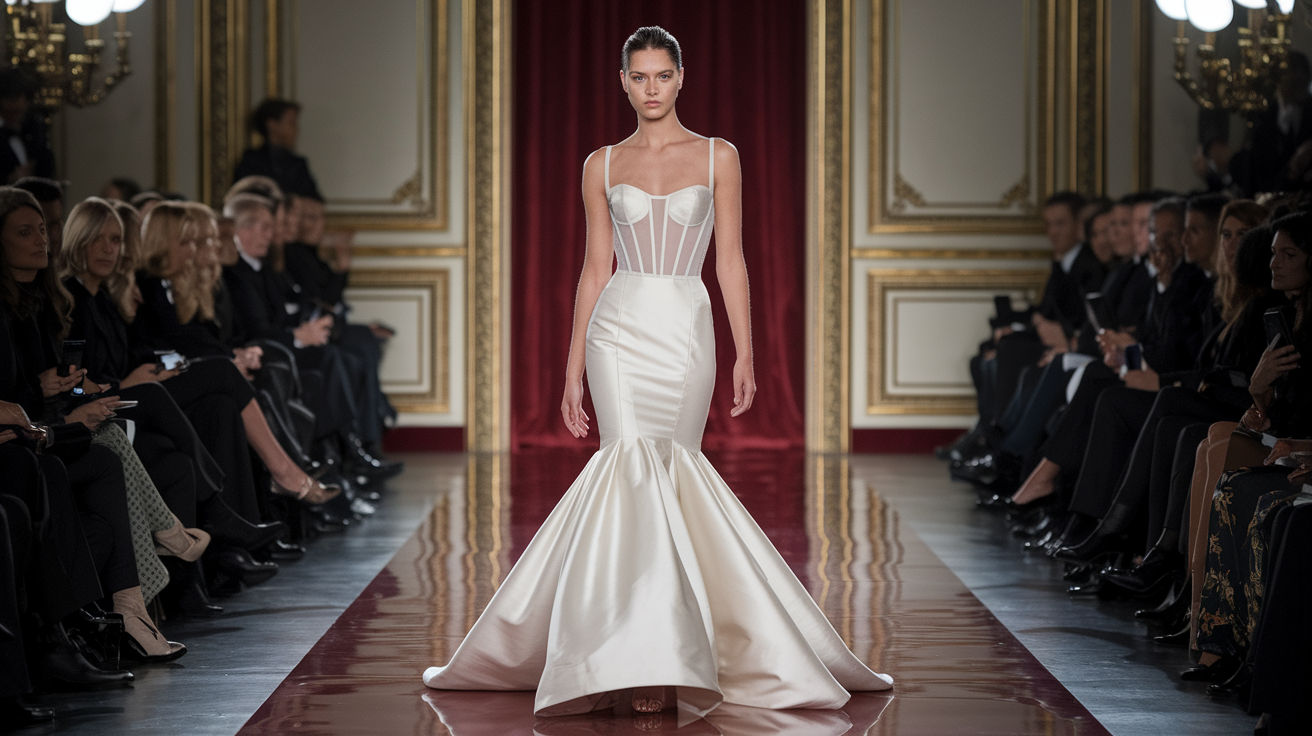
A mermaid dress clings to your body from bust to hips, then kicks out dramatically at or below the knee. It’s that tail-like shape you’ve seen all over red carpets. The fit traces your natural curves before flaring into volume, and the result is instant hourglass. Your waist looks smaller, your hips get balanced out, and the whole thing just works for formal events where you want structure mixed with a little spectacle.
These gowns are built with serious internal support. Boning, reinforced seams, fabrics that hold their shape without sagging. The flare can hit anywhere from mid-thigh down to just above your ankle. Higher flare? More movement. Lower flare? Sleeker, more column-like until the very end. And because everything’s so fitted through your torso and hips, most styles come with a back zipper, corset lacing, or hidden closures to get that smooth fit.
You’ll see mermaid dresses in a few common setups: strapless versions with sweetheart or straight necklines for classic evening vibes, long-sleeve styles in lace or illusion mesh if you’re doing a winter event or want more coverage, sequined or beaded numbers that deliver serious red-carpet sparkle, sleek satin gowns that keep it simple and elegant, and bridal versions in lace, tulle, or mikado silk with train options and delicate appliqué.
Style Variations and Fabric Options
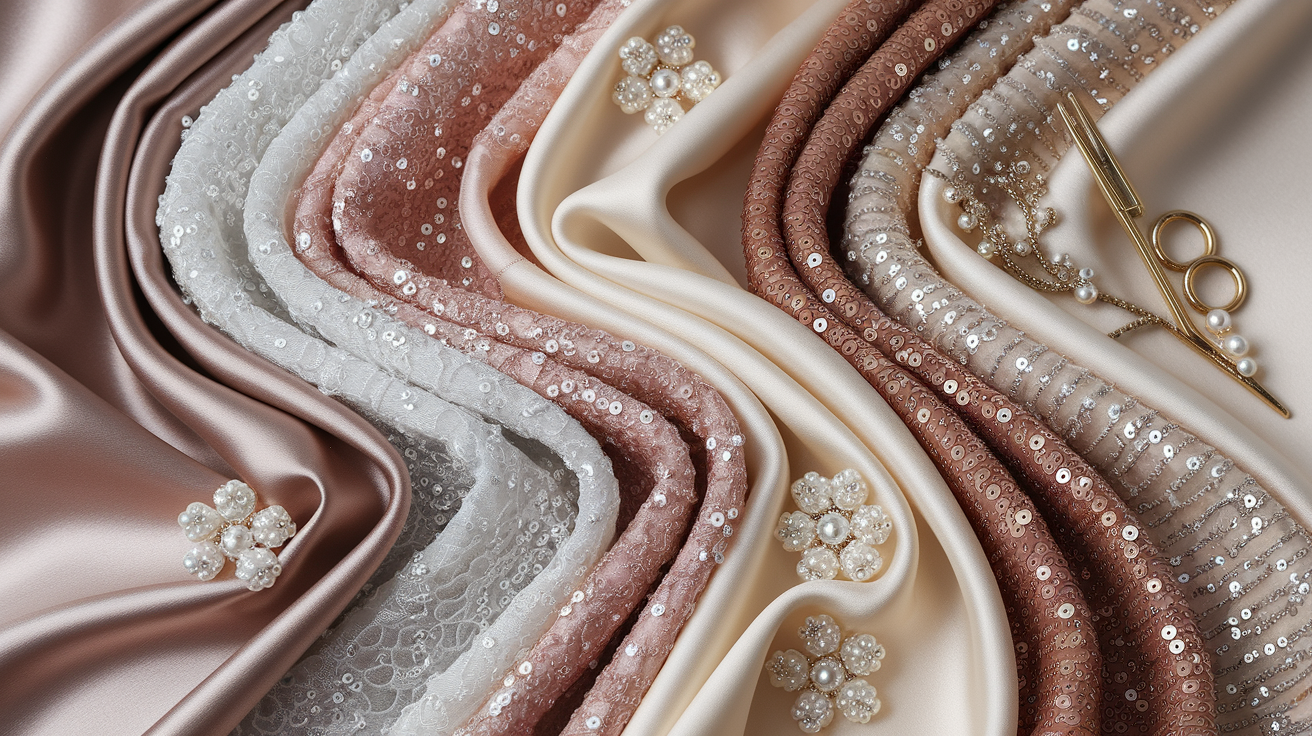
The fabric you pick changes everything about how a mermaid dress looks and feels. Satin gives you that sleek, reflective surface that moves smoothly and photographs well under studio or evening lights. It’s got enough body to support the fitted shape without clinging weird, and it works whether you’re going minimalist or adding beadwork. Lace adds texture and detail. Designers layer lace appliqués over illusion tulle to create dimension across the bodice and down into the flare. Heavier lace holds its own structure, while lighter floral lace usually needs satin or crepe backing.
Sequins and beads deliver maximum sparkle. Standard for prom mermaid dresses and pageant gowns. The sequins can run in lines, scatter randomly, or concentrate on the bodice and fade into the skirt. But all that weight means you need stronger lining and boning so the gown doesn’t pull down. Crepe offers a matte, structured finish with a bit of stretch, which makes it easier to move in than rigid satin. It’s common in modern bridal mermaid dresses when brides want clean lines without too much shine.
Tulle and organza build volume in the flare. Layered tulle creates soft, romantic volume. Crisp organza holds a more architectural shape. Stretch blends like stretch mikado, stretch satin, or jersey add comfort and flex to the fitted sections. You can sit, walk, dance without feeling locked in. Bridal styles often use mikado silk for its structure and subtle sheen, paired with lace overlays or beaded bodices. Prom versions go for shimmer chiffon, glitter tulle, metallic fabrics that catch light on the dance floor.
Quick fabric breakdown: Satin gives you a sleek surface and smooth drape. Lace adds ornate texture and pairs well with illusion panels. Sequins bring high-impact sparkle but need strong lining. Tulle creates soft volume when layered. Crepe offers a structured matte finish with slight stretch. Stretch blends add comfort and reduce pulling at seams.
Choosing the Best Mermaid Dress for Your Body Shape
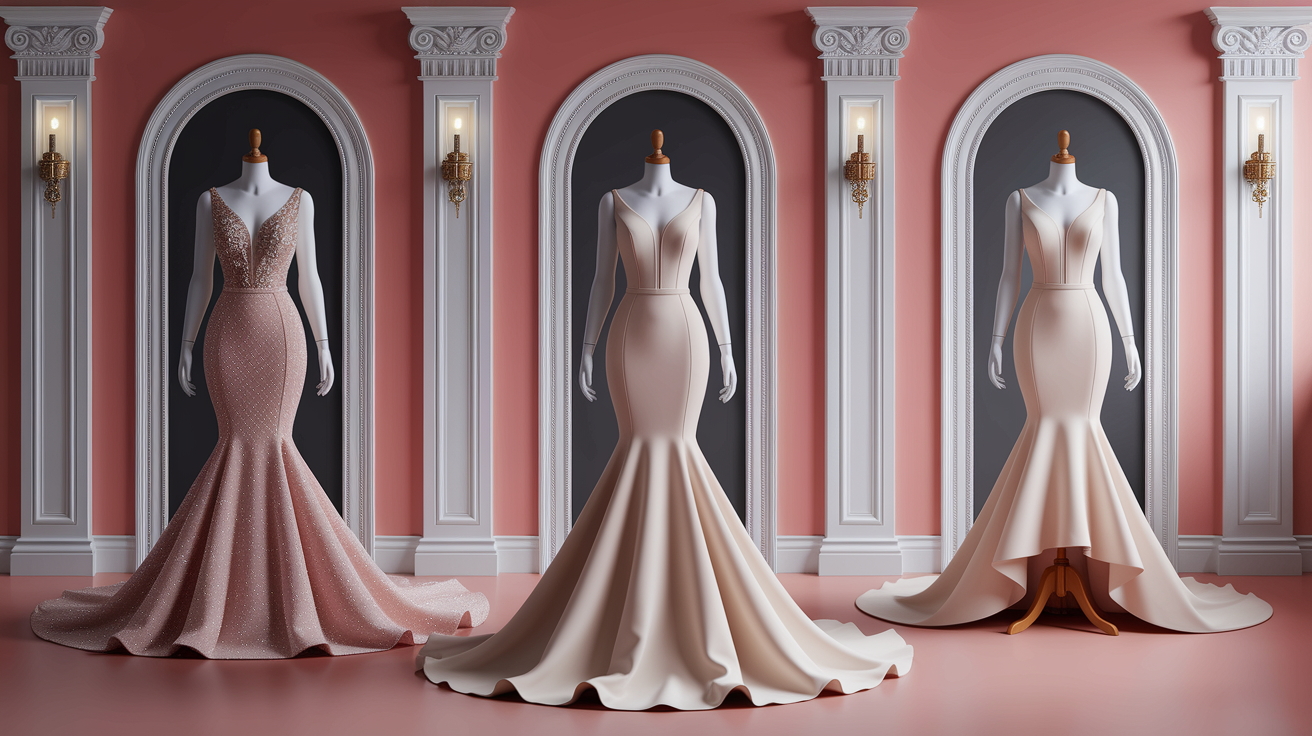
The mermaid shape emphasizes your waist and hip curves, so it works best when those proportions are balanced or enhanced by how the dress is built. If your hips are wider than your bust, go for a structured bodice with padding, ruching, or embellishment across the chest. That adds visual weight on top. A sweetheart or V-neckline draws eyes upward and broadens your shoulder line. If your bust is fuller and your hips are narrower, keep the bodice simpler and go for a fuller, more dramatic flare at the knee. That creates balance by adding volume below.
Where the flare starts matters. A flare that kicks in at mid-thigh shortens your leg line visually and can make the whole thing feel bottom-heavy. A flare closer to your knee or lower calf keeps the line long and sleek, which flatters taller frames or anyone wanting to elongate their legs. If you’re petite, look for a higher flare and skip excessive train length. Taller? You can handle a lower flare and longer train without the proportions looking off.
Fabric rigidity affects how forgiving the fit feels. Rigid satin and mikado hold their shape tightly and show every curve. Great if you want a defined, sculpted look. Not so great if the gown’s even slightly too tight. Stretch satin, crepe, or jersey blends give you a little room for movement and breathing without losing the mermaid shape. If you carry weight around your midsection, look for styles with strategic ruching, a dropped waist seam, or a slightly looser bodice that nips in just above the hips instead of at your natural waist.
Bust support is another thing to think about. Strapless mermaid gowns rely entirely on internal boning and grip tape to stay up, so you need a snug fit across your ribs. Fuller bust? Look for styles with built-in cups, underwire, or thick straps. Off-the-shoulder and illusion-sleeve styles add visual support and make the dress feel more secure. A corset back lets you tighten things custom and works well if your measurements fall between standard sizes.
Sizing, Measurements, and Fit Accuracy
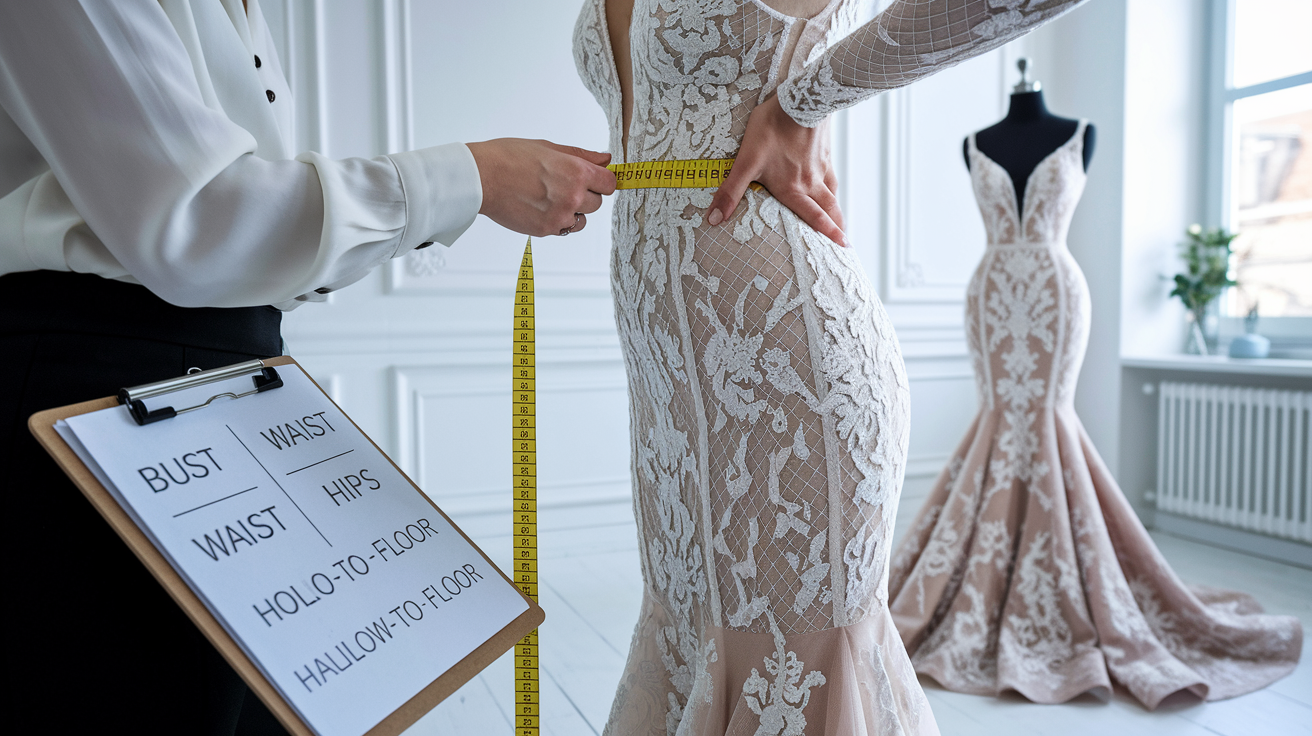
Mermaid dresses need precise measurements because the fitted construction leaves almost no room for error. Standard dress sizes are based on bust, waist, and hip measurements, but mermaid gowns also depend on torso length and the distance from the hollow of your neck to the floor. A gown that fits perfectly in the bust and waist can still be too short or too long if the torso proportion is off. Most retailers provide a size chart with specific measurement ranges for each size. Compare your actual measurements to the chart instead of assuming your usual size will work.
To measure accurately, follow these steps. Bust: wrap the tape measure around the fullest part of your chest, keeping it parallel to the floor and snug but not tight. Waist: measure at the narrowest point of your natural waistline, usually an inch or two above your belly button. Hips: measure around the fullest part of your hips and backside, typically 7 to 9 inches below your waist. Hollow to floor: stand barefoot and measure from the hollow at the base of your neck, straight down the front of your body to the floor. This ensures correct gown length.
| Measurement | Description | Typical Range |
|---|---|---|
| Bust | Fullest part of chest, parallel to floor | 32″–44″ |
| Waist | Narrowest point of natural waistline | 24″–38″ |
| Hips | Fullest part of hips and backside | 34″–48″ |
| Hollow to floor | Neck hollow down front to floor, barefoot | 58″–64″ |
Because mermaid gowns taper at the hem, they almost always need hemming to match your exact height and shoe heel. Order based on your largest measurement and plan for alterations. If your hips measure a size 10 but your bust measures a size 6, order the size 10 and have the bodice taken in. Trying to squeeze into a smaller size will cause pulling, gaping, and discomfort.
Styling Tips and Accessories
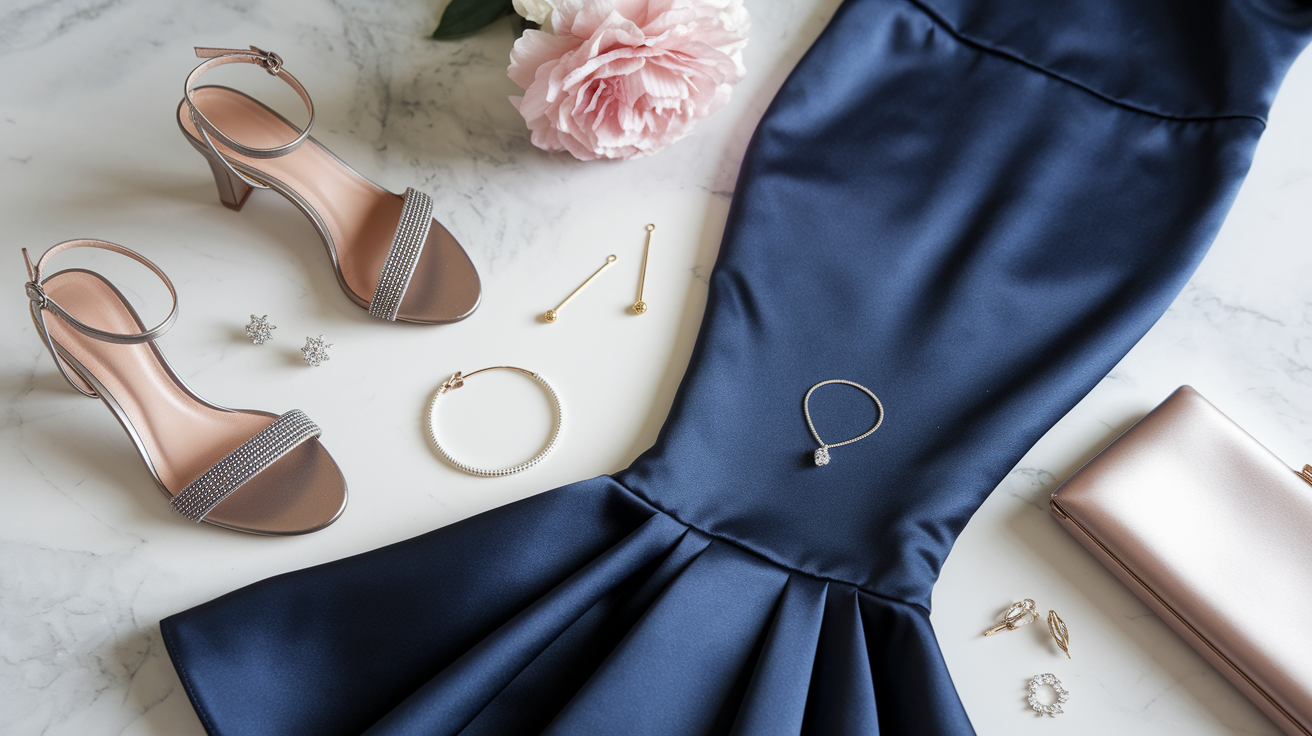
Mermaid gowns create a long, unbroken vertical line, so high heels are pretty much required to keep that elongation going and keep the hem from dragging. A heel height of 3 to 4 inches works for most floor-length styles. Strappy sandals, pointed-toe pumps, or metallic heels in gold, silver, or nude tones keep the focus on the dress. If the gown has heavy embellishment or bold color, neutral shoes prevent things from competing. If the dress is simple satin or crepe, a metallic or jeweled shoe adds a subtle accent.
Keep jewelry minimal. The mermaid silhouette already draws attention to your body, so heavy necklaces or layered chains can clutter the neckline. A strapless or sweetheart gown pairs well with a delicate pendant or simple stud earrings. If the dress has an illusion neckline or high collar, skip the necklace entirely and wear statement earrings or a bracelet instead. For bridal mermaid dresses, a fingertip or cathedral veil adds drama without covering the dress details.
Here’s what you need: high heels (3 to 4 inches) to maintain hem clearance and lengthen your leg line, minimal jewelry like stud earrings, a thin bracelet, or a single pendant, seamless shapewear to smooth lines under fitted fabric without visible panty lines, a sleek updo or soft waves to keep hair off the neckline and show off the bodice structure, and a small structured clutch in a matching or metallic finish to carry essentials without bulk.
Fabric Quality, Construction, and Tailoring Considerations
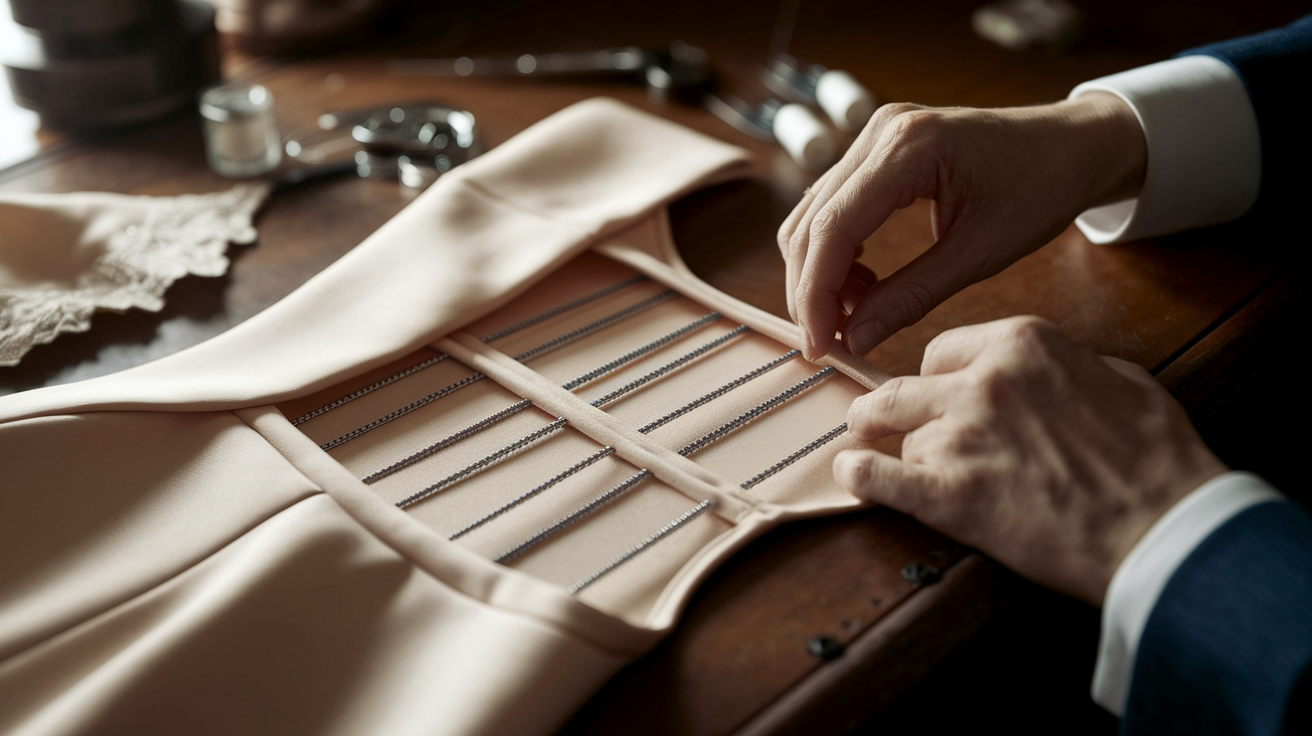
High-quality mermaid dresses are built with internal structure you can’t see but can definitely feel. Boning keeps the bodice smooth and prevents fabric from wrinkling or collapsing. Spiral steel boning is more durable and flexible than plastic and holds its shape through multiple wears. The lining should be smooth and breathable, like silk charmeuse or high-thread-count polyester. Not scratchy netting or stiff taffeta. Seams should be finished with serging or French seams to prevent fraying, and all closures should sit flat without puckering.
Fabric weight affects how the gown moves and photographs. Lightweight fabrics like chiffon or tulle create a soft, flowing flare but may not hold structure in the bodice without added boning. Heavier fabrics like mikado, satin, or beaded lace hold their shape naturally but can feel stiff or restrictive if the fit is too tight. Mid-weight crepe or stretch satin offers a balance. Enough body to look polished, but enough give to move comfortably.
Tailoring a mermaid dress is more complex than tailoring an A-line or sheath gown because every seam affects the overall silhouette. Taking in the waist means adjusting the side seams and potentially the back zipper. Shortening the hem means carefully removing layers of tulle or lace and re-finishing the edge by hand. If the bodice gaps at the bust, a tailor can add darts or take in the side seams, but this may shift where the flare starts. Always bring the shoes and undergarments you plan to wear to your fitting so the tailor can adjust the hem and torso length accurately. Expect to budget an additional 10 to 20 percent of the gown cost for professional alterations.
Reviews, Durability, and Real-User Feedback
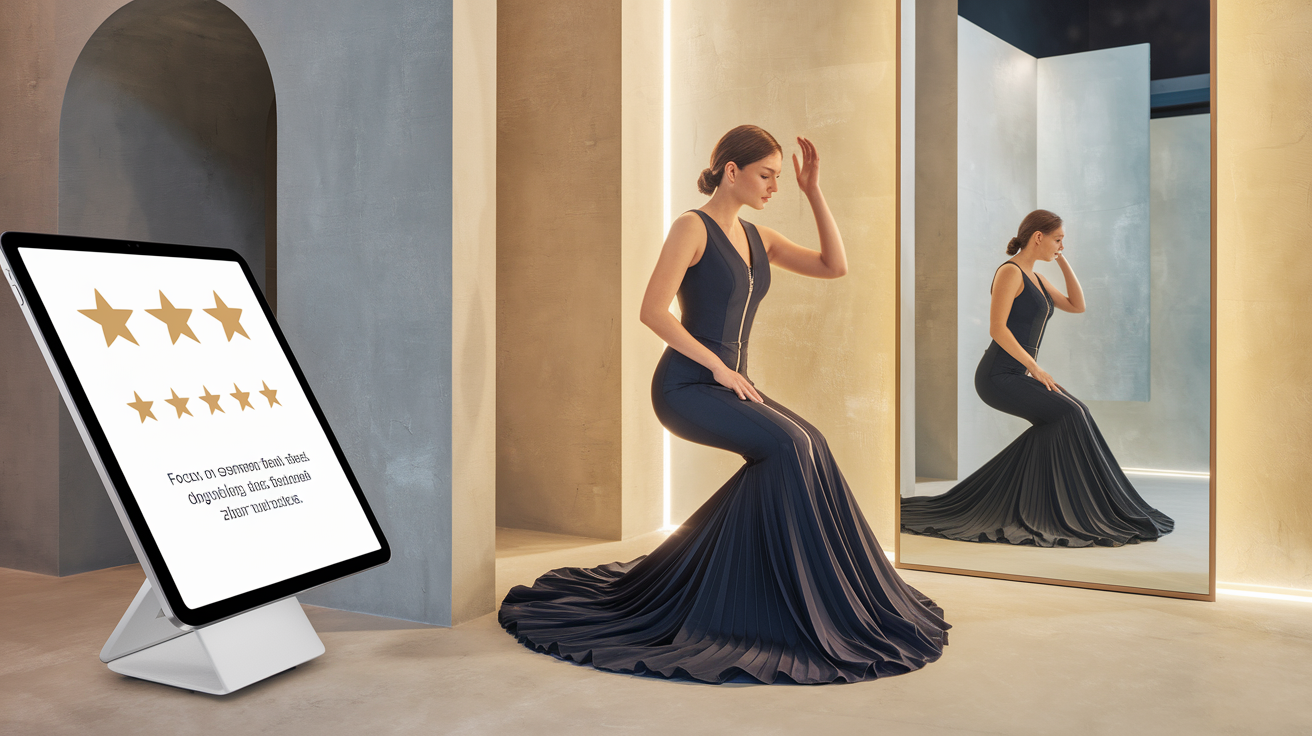
Customers who review mermaid dresses talk about fit accuracy most often. Because the silhouette is so form-fitting, even a half-inch difference in the waist or hips can make the dress feel too tight or too loose. Shoppers mention whether the dress runs true to size, larger, or smaller than the size chart suggests. Many reviews include the buyer’s measurements and the size they ordered, which helps future shoppers compare their own proportions.
Comfort and movement come up a lot too. Mermaid gowns restrict leg movement more than A-line or ball gown styles, so wearers note whether they could sit, dance, or walk up stairs comfortably. Dresses with stretch fabric, a high slit, or a slightly looser fit through the hips get positive comments about ease of movement. Gowns with rigid satin, no stretch, and a very low flare point are often described as beautiful but difficult to move in for long periods.
Common review themes: Does the dress match the measurements listed, or does it run large or small? Can you sit, walk, and dance without the dress feeling restrictive? Does the material feel thick, well-lined, and structured, or thin and flimsy? Is there enough give in the hips and thighs, or does the gown restrict your stride?
Durability feedback usually centers on seam strength and zipper quality. A well-constructed mermaid dress should hold up through a full evening of wear without seams splitting or the zipper pulling apart. Beaded and sequined gowns may shed a few embellishments, but excessive shedding is a sign of poor construction. Buyers also mention whether the dress holds its shape after dry cleaning or whether the flare loses volume or the bodice sags.
Cost, Shipping, and Return Factors

Mermaid dress prices range widely based on fabric complexity, embellishment density, and brand positioning. Simple satin or crepe mermaid gowns with minimal detail typically fall between $70 and $250. Mid-tier dresses with lace overlays, sequins, or beadwork range from $250 to $600. Designer and bridal mermaid gowns made from silk, hand-beaded lace, or couture construction start around $800 and can exceed $2,000. Custom or made-to-order gowns often require full payment upfront and have longer production timelines, typically 8 to 16 weeks.
Shipping costs vary by retailer and delivery speed. Standard shipping for a gown usually runs $10 to $25 and takes 5 to 10 business days. Expedited or overnight shipping can cost $50 to $100 or more. Because mermaid dresses are structured and often heavy, return shipping is more expensive than returning a simple dress. Some retailers offer free returns, but others charge a restocking fee or require you to cover return shipping, which can add $20 to $40 to the total cost if the dress doesn’t fit.
| Price Tier | Typical Fabrics/Details | Expected Range |
|---|---|---|
| Budget | Satin, polyester crepe, minimal embellishment | $70–$250 |
| Mid-Range | Lace overlays, sequins, beadwork, stretch blends | $250–$600 |
| Designer/Bridal | Silk, hand-beaded lace, couture construction | $800–$2,000+ |
| Custom/Made-to-Order | Personalized measurements, premium fabrics, long lead time | $1,000–$3,000+ |
Return policies for formal gowns are often stricter than standard clothing. Many retailers don’t accept returns on altered, worn, or custom-made dresses. If tags are removed or the dress shows signs of wear, the return may be denied. Always review the return window, typically 14 to 30 days from delivery, and inspect the dress immediately when it arrives. If the fit is off or the quality doesn’t match expectations, start the return process right away to avoid missing the deadline.
Final Words
in the action, we covered what makes a mermaid dress stand out, from the fitted bodice and dramatic flare to how fabric and construction change the look and movement.
You got quick, practical tips on fit, measurements, tailoring, styling, pricing, and real user feedback so you know what to expect before you buy.
Try one on with accurate measurements and a trusted tailor — the right mermaid dress can boost confidence and feel built just for you.
FAQ
Q: What are mermaid dresses called? What is a dress that looks like a mermaid?
A: Mermaid dresses are called mermaid gowns or fishtail dresses; they fit snug through the bodice and hips then flare at or below the knee, creating a tail-like silhouette.
Q: What body type is best for mermaid dresses?
A: The mermaid dress flatters hourglass figures most by highlighting waist and hips, but adjusting flare height and fabric can make it work for pear, athletic, and petite shapes too.
Q: How to dress for a mermaid party?
A: To dress for a mermaid party, choose sea-toned colors, iridescent or sequin fabrics, and flowy textures; add shell or pearl accessories, soft beachy waves, and comfortable sandals or heeled mules.