
Think a longer train always guarantees a show-stopping red carpet moment?
Not necessarily.
A six-inch sweep reads very different from a six-foot royal.
Here’s the fast version: sweep, chapel, cathedral, royal, each name tells you how much fabric trails behind and how much help you’ll need.
This guide breaks down exact lengths, who they flatter, and where each works best so you pick the right drama for the venue and your body.
No guessing, just clear rules and quick tips.
Understanding Key Red Carpet Train Types and Their Exact Lengths
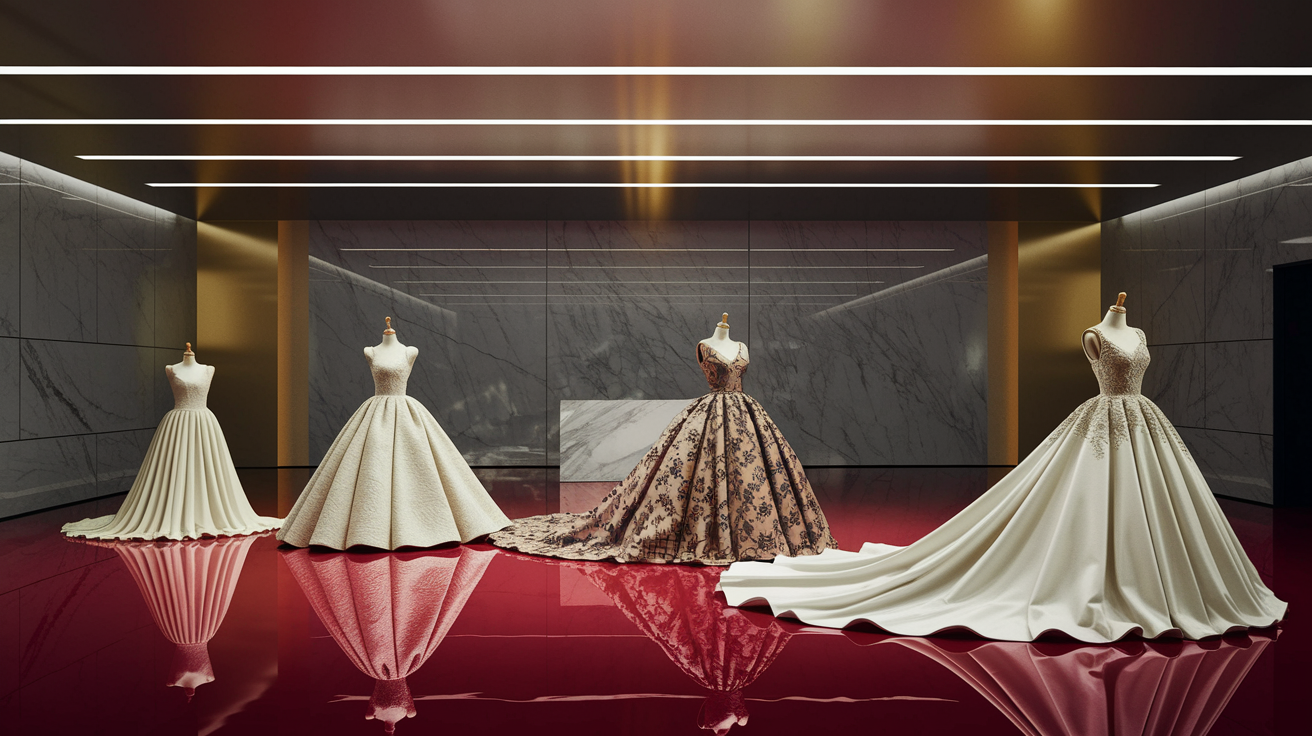
A train is just fabric that stretches past the back of a dress. But on a red carpet, that extra yardage can make you unforgettable or totally forgettable. There are four main types: sweep, chapel, cathedral, and royal. Knowing what each one does helps you pick the right amount of drama.
| Train Type | Typical Length |
|---|---|
| Sweep | 6–12 inches |
| Chapel | 12–24 inches |
| Cathedral | 36–60 inches |
| Royal | 72–120+ inches |
Sweep trains barely touch the ground. They’re the safe choice for outdoor shoots, garden parties, or anything where dragging fabric through grass sounds like a bad idea. Chapel trains are the Goldilocks option. They add formality, work in most venues, and don’t need a team of assistants. Cathedral trains are three to five feet of pure spectacle. You’ll need help managing them, and stairs become a whole production. Royal trains start at six feet and can go past ten. They’re for palace events, major premieres, or moments where you’re willing to choreograph your entrance like it’s opening night.
Body type matters. If you’re under five foot four, stick with sweep or short chapel so the fabric doesn’t swallow you. Tall frames over five foot eight can pull off cathedral or royal without looking out of proportion. Plus-size celebrities usually go chapel or sweep to keep things balanced without extra bulk piling up in back.
Venue matters even more. Beaches, gardens, cobblestones? Sweep or chapel. Long fabric snags on everything and gets filthy fast. Ballrooms and churches with polished floors and long aisles? That’s where cathedral and royal trains look the way they’re supposed to.
Why Red Carpet Train Lengths Vary So Much
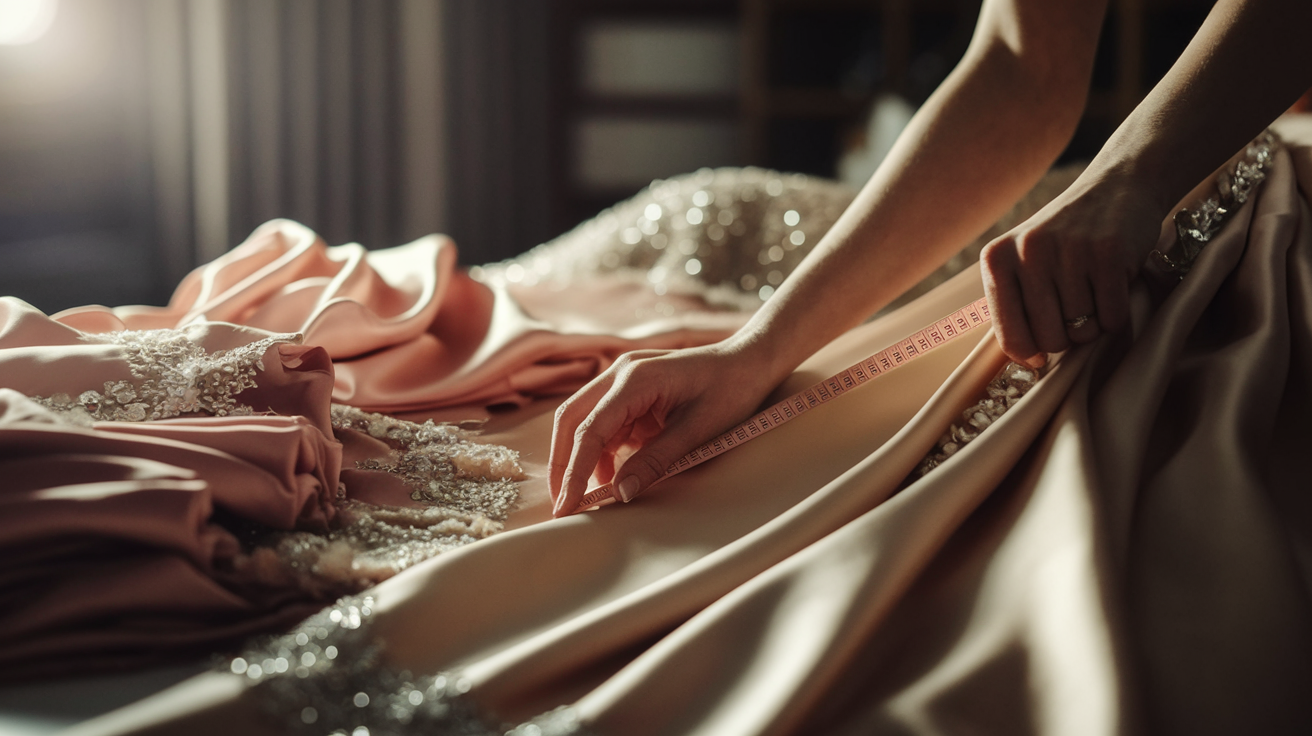
Train length isn’t standardized because designers measure differently. Some measure from the waist down. Others measure from the hem backward along the floor. So a “60-inch train” might mean five feet trailing behind the hem, or five feet measured from the waist with way less actual coverage. Always confirm how they’re measuring before you commit.
Fabric changes everything. Chiffon and organza stay light and manageable even at cathedral or royal lengths. Satin, duchesse silk, lace with beading? That can add two to ten pounds, and suddenly walking becomes a workout. Embellishments look incredible but snag on stairs, carpet seams, and other people’s shoes. Venue traditions play a role too. Church ceremonies and state events lean cathedral or royal. Fashion forward street style carpets and modern premieres tend toward sweep or chapel so you can actually move.
Five things that affect train length and whether you can wear it without losing your mind:
- Where the measurement starts (waist versus hem) completely changes the length
- Fabric weight and stiffness decide how hard it is to walk and what kind of bustle you’ll need
- Venue surface (marble, carpet, grass, sand) determines how dirty the train gets and how fast
- Dress shape (A-line, mermaid, ball gown) affects whether the train adds to the look or overwhelms it
- How long you’re wearing it (ceremony only versus full reception) tells you if you need a detachable train or a permanent bustle
Sweep Train Explanation and Best Red Carpet Use Cases
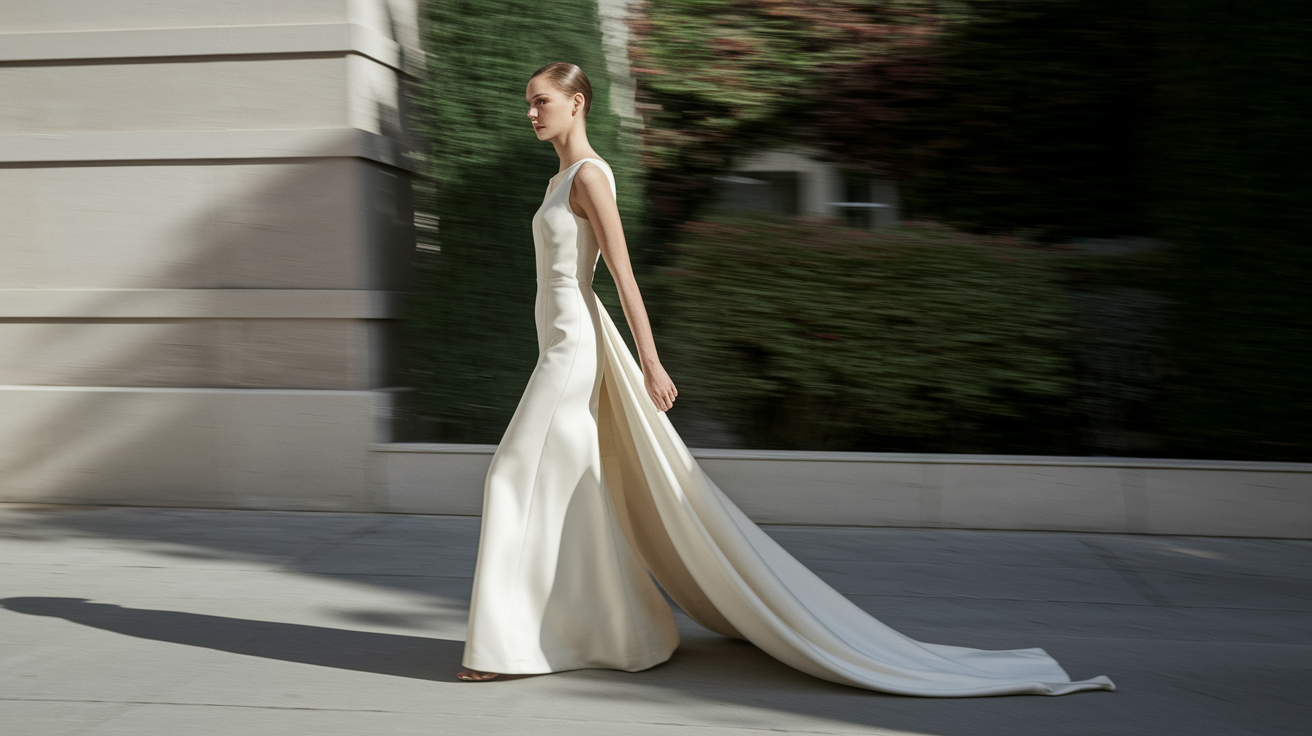
Sweep trains go six to twelve inches past the hem. They barely brush the floor. Some people call them brush trains because that’s all they do. You can walk normally, turn fast, and dance without anyone holding fabric or pinning anything up. Because the train stays so close, it photographs well in motion. Think candid walking shots on city streets or spontaneous twirls at an outdoor premiere.
This length works for minimalist gowns, sleek column shapes, and dresses where clean lines matter more than volume. Celebrities pick sweep trains for daytime events, garden parties, and beach ceremonies where dragging more fabric would be a mess. Courthouse moments and small venues also benefit because there’s less space to work with and you don’t want to manage fabric the whole time. Petite frames look especially polished because the short extension makes legs look longer without adding weight or bulk.
Sweep Train vs. No Train
Deciding between a sweep train and no train at all comes down to whether you want that tiny extra moment in photos. A no-train gown ends right at the floor. Clean vertical line, maximum ease. A sweep train adds just enough fabric to create a soft shadow behind you, giving photographers a hint of something special without needing a bustle or help. If your event is casual or moves fast, skip it. If you want one detail that elevates the look without turning into a logistics problem, sweep is the answer.
Four shapes that work best with sweep trains:
- Sleek column or sheath dresses that go all in on height and simplicity
- Modern A-line gowns where the train is a finishing touch instead of a competing element
- Minimalist crepe or satin pieces that let fabric quality do the talking
- Fitted mermaid cuts where a short train balances the flare at the knees
Chapel Train Breakdown: The Most Popular Red Carpet Length
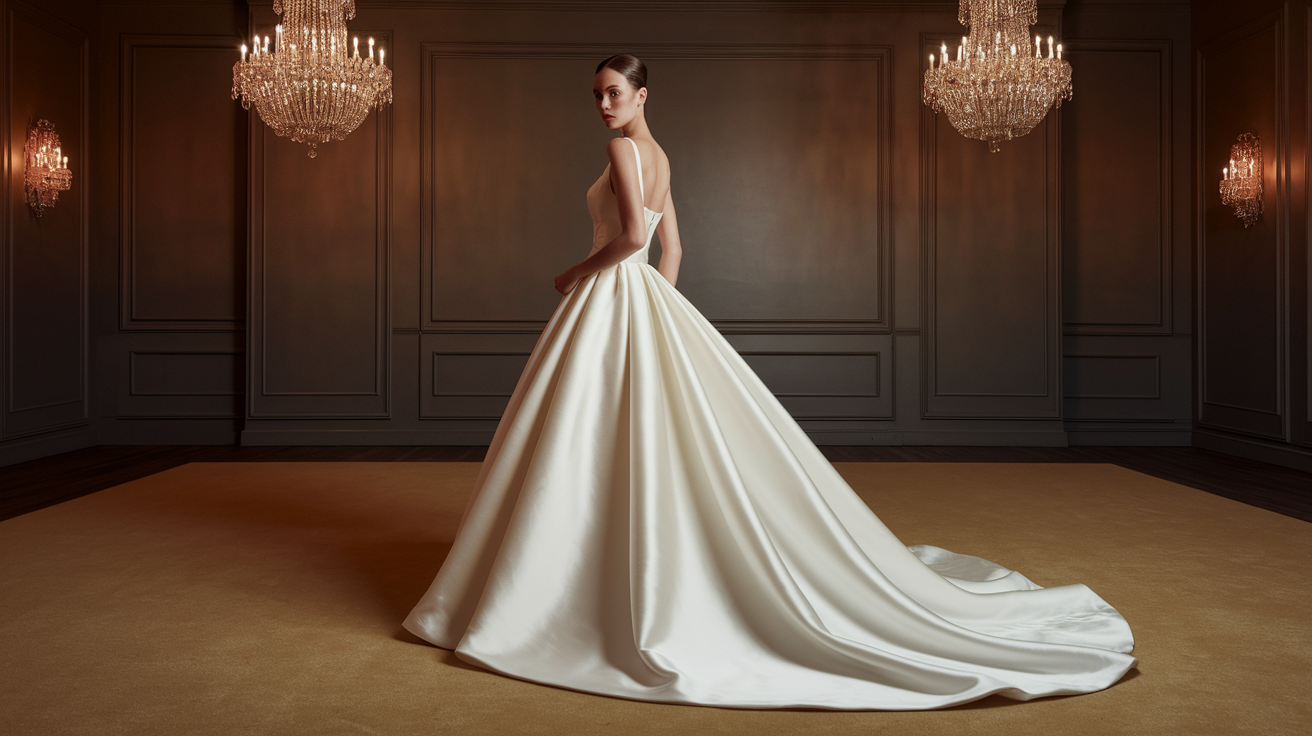
Chapel trains go twelve to twenty-four inches past the hem. That puts them right in the middle: noticeable but not a logistical nightmare. This is the default for traditional ceremonies, classic ballrooms, and red carpets where you want elegance without needing a team. The train gives you a trailing moment during your entrance and in photos, but it’s short enough that one person can bustle it fast for dancing or mingling later.
Chapel length flatters most body types and works with A-line, ball gown, and fitted shapes. It signals that the event matters and you styled carefully, but you don’t need attendants to carry fabric or plan out every turn. You’ll take slightly shorter steps and be careful when pivoting, but the adjustment is minor compared to longer options. Most stylists say bustle a chapel train if you’re wearing the dress through a full reception or after party, because even this moderate length gets annoying on a crowded dance floor.
Chapel vs. Cathedral Visual Impact
Chapel trains photograph beautifully from the side and back. They extend your silhouette without taking over the frame. Cathedral trains steal the scene. They spread across the floor and need careful styling so the focus stays balanced between you and the fabric. If you want a classic, timeless look that’s formal but not theatrical, go chapel. If you want the dress to be the headline and you’re okay managing extra weight and movement limits, cathedral gives you more drama. Chapel trains also bustle easier because there’s less fabric to secure and less weight pulling on loops or buttons.
Three things to think about when bustling a chapel train:
- You’ll need three to six loops or buttons depending on weight and fullness. Heavier satin or beaded hems need reinforced stitching.
- Budget seventy-five to one hundred fifty dollars for a standard chapel bustle. Complex designs or heavy embellishments cost more.
- Plan five to ten minutes on event day for someone to secure the bustle. Practice once during fittings so you know it’s quick and reliable.
Cathedral Train Guide for Dramatic Red Carpet Entrances
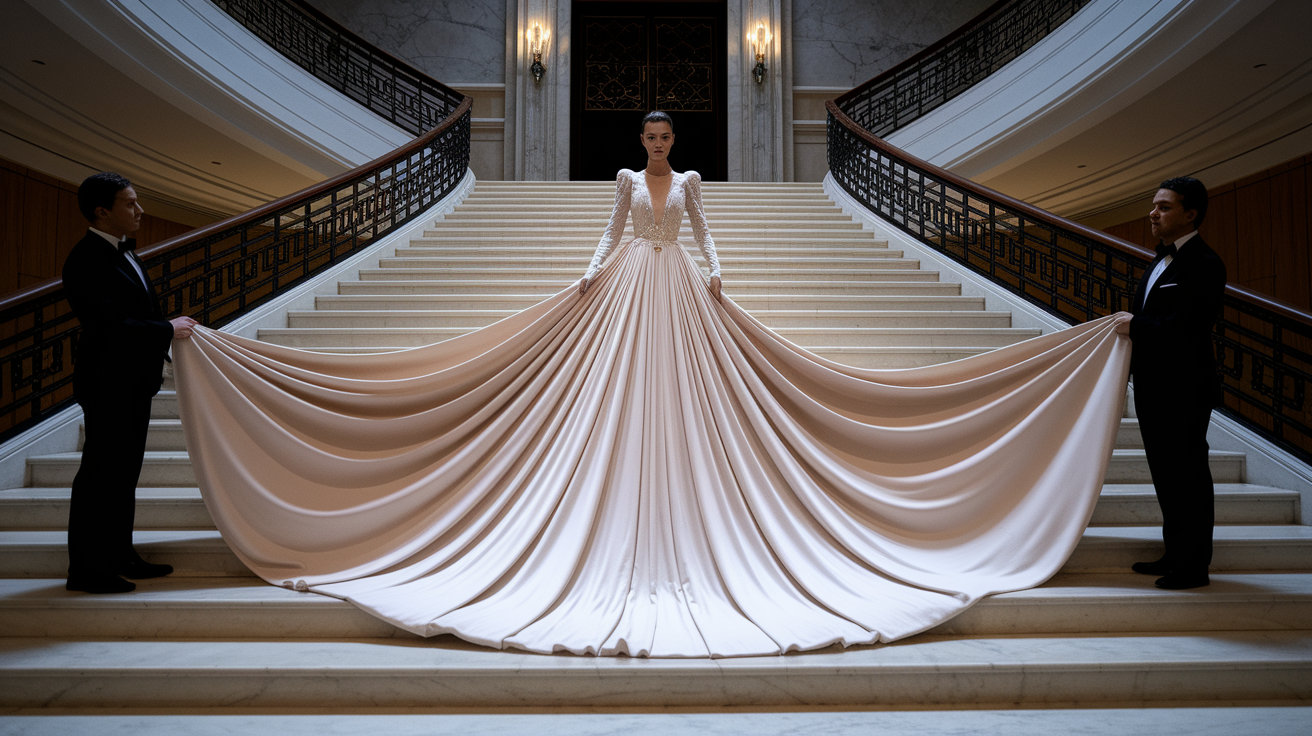
Cathedral trains stretch thirty-six to sixty inches behind the dress. This is high drama. It’s designed for grand venues: big churches with long aisles, luxury ballrooms with high ceilings, formal premieres where the entrance is a key moment. The train becomes part of the performance. It spreads across the floor and needs one or two assistants to carry, arrange, or smooth fabric as you walk. When it’s styled right, a cathedral train delivers photos you can’t forget, especially during processional shots, staircase moments, and full length portraits where the camera captures the entire sweep.
The cost is mobility. Cathedral trains limit your stride, make pivoting tricky to avoid stepping on the hem, and feel heavy, especially in satin, lace, or anything with serious beading. Designers add boning or structure to help the train hold shape, but that also adds weight. Practice your walk two or three times before the event, ideally on the actual venue surface. Stairs, carpet seams, and narrow aisles all become obstacles with this much fabric, so knowing how to lift the train slightly or signal your assistants to adjust it keeps you from tripping or tearing.
Three ways cathedral trains help in photos:
- Entrance and aisle shots become cinematic because the train fills the frame and creates grandeur and forward motion
- Posed portraits benefit from the train fanning out behind you, adding dimension and making the composition more dynamic
- Detail close-ups of lace, beading, or appliqué on the train give you additional visual content and show off craftsmanship
Mobility and Rehearsal Tips for Cathedral Trains
Walking in a cathedral train means shortening your stride and taking deliberate steps. Practice walking forward, turning in wider arcs, and backing up slowly so you can feel where the fabric sits compared to your feet. Assign one or two people (bridesmaids, assistants, venue staff) to manage the train during key moments like entering, going down stairs, or posing for group photos. Rehearse these transitions so everyone knows when to lift, spread, or gather fabric. On event day, make sure the train is arranged neatly before you start walking. A bunched or twisted train photographs badly and increases tripping risk.
If your event includes dancing or long stretches of socializing, plan to bustle the train after the ceremony or entrance. Cathedral trains are hard to bustle because of length and weight, so make sure your seamstress added enough reinforcement loops and tested the system during fittings. Some dresses offer detachable cathedral trains that remove completely for the reception, giving you drama for the entrance without the hassle of bustling heavy fabric.
Royal Train Length Explained for Maximum Red Carpet Drama
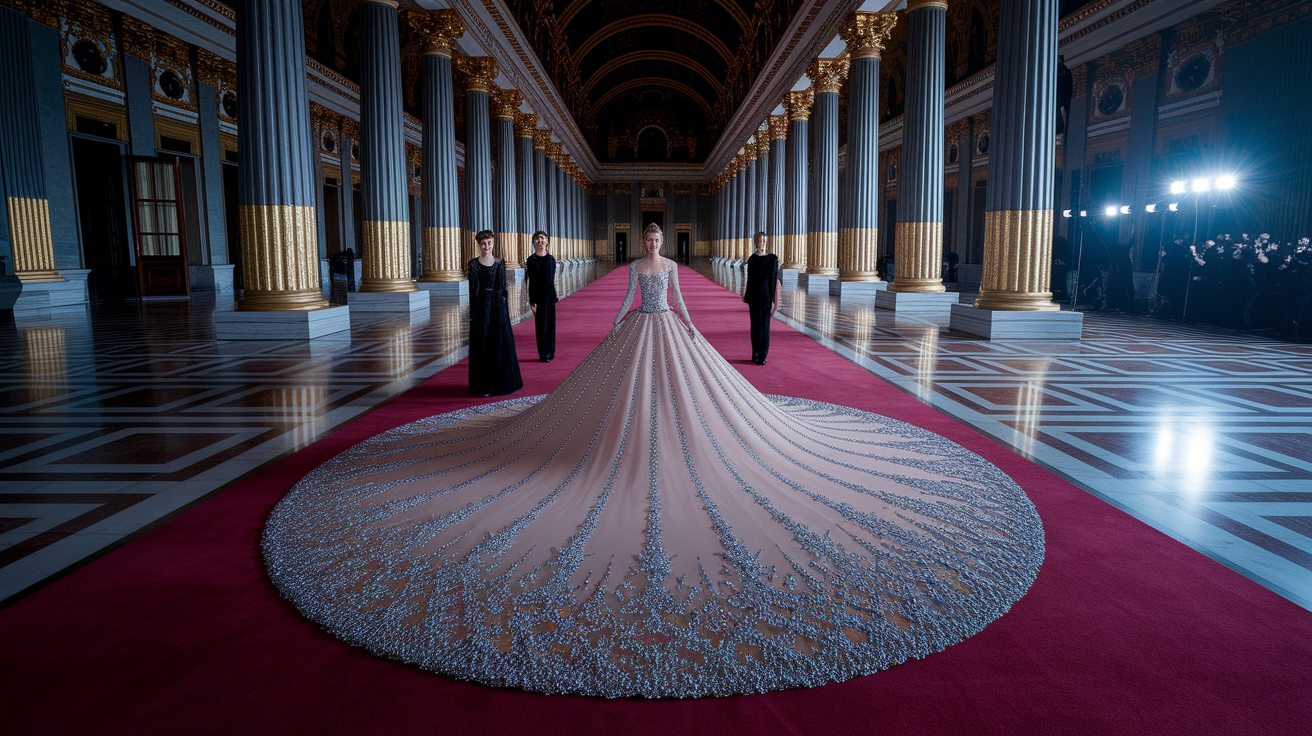
Royal trains start at seventy-two inches (six feet) and can go to ten feet or longer. This is ultra formal, reserved for palace ceremonies, state events, and high profile premieres where spectacle is the whole point. You’ll need two to four attendants to carry and manage the fabric, and you have to rehearse every movement, from walking down an aisle to turning for photos. The train often weighs several pounds, especially in heavy satin or when covered in crystals, pearls, or elaborate lace. Outdoor venues don’t work for royal trains because uneven ground, wind, and dirt make the fabric impossible to control and keep clean.
Royal trains mostly show up in historical royal weddings. Diana Spencer’s twenty-five-foot train and Meghan Markle’s sixteen-foot veil and train combo are iconic examples. On red carpets, celebrities occasionally pick royal inspired trains for major premieres, award shows, or fashion events where the goal is creating a viral moment and owning the headlines. The train becomes the story, so it only makes sense if you’re confident you can carry it and you have the logistical support to manage it all night.
Four situations where a royal train actually fits:
- Palace or cathedral weddings with long aisles and formal processional traditions
- High profile red carpet premieres where creating a memorable visual moment is the main goal
- Couture fashion shows or editorial shoots where the train is part of the artistic concept and will be styled, lit, and shot by a pro team
- Cultural or state ceremonies where historical precedent and formality demand maximum grandeur
Why Celebrities Use Royal Inspired Trains for Major Premieres
A royal length train guarantees attention. It fills the frame in wide angle photos, creates dramatic movement in video clips, and signals that the event is significant enough to justify the effort. Celebrities working with top stylists often choose detachable royal trains that attach at the waist or shoulders, so they can create the entrance moment and then remove the train for interviews, mingling, or after parties. That gives you the visual impact without wearing it all night.
The risk is overwhelming the wearer if the proportions are off. Stylists balance train length with dress shape, veil or accessory choices, and the celebrity’s height and frame. A ten foot train on a petite frame can look costume-like unless the overall styling is cohesive and the fabric is arranged carefully. When it works, a royal train becomes an iconic red carpet moment that defines the event and generates long term media coverage.
Choosing the Best Red Carpet Train for Your Venue and Silhouette
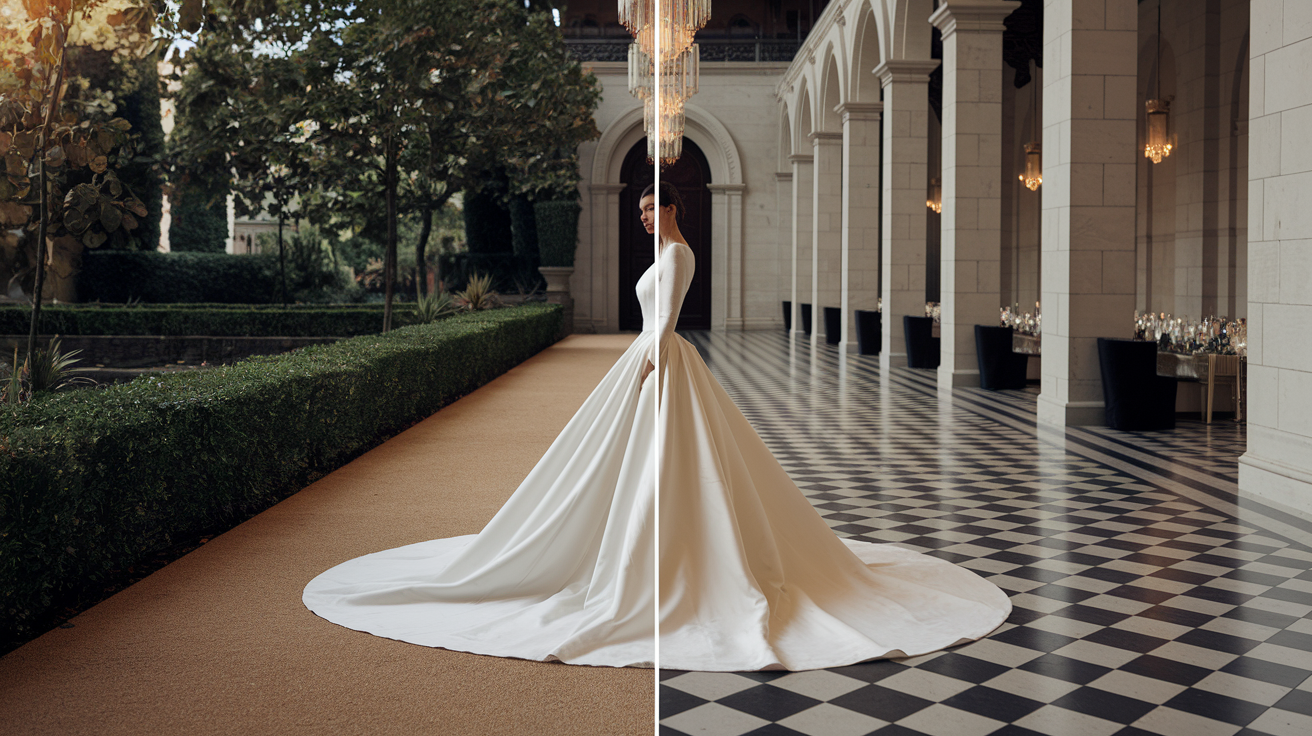
Train length should match your venue and body type so you get a balanced, flattering look that photographs well and feels comfortable. Start with venue. Outdoor settings (beaches, gardens, courtyards, rooftops) need shorter trains because uneven surfaces, wind, and dirt make longer fabrics impractical. Sweep or short chapel (twelve to eighteen inches) works best outdoors. Indoor venues give you more options. Small spaces like intimate chapels, modern lofts, or boutique ballrooms suit chapel trains because they add formality without overwhelming the room. Large churches with long aisles and grand ballrooms with high ceilings can handle cathedral or even royal trains, especially if the venue has polished floors and enough space for the train to spread during entrances.
| Venue | Best Train Type |
|---|---|
| Outdoor (beach, garden, courtyard) | Sweep or short chapel (12–18 inches) |
| Small indoor (loft, boutique ballroom, courthouse) | Chapel (12–24 inches) |
| Large church or formal ballroom | Cathedral (36–60 inches) or short royal |
| Palace, state ceremony, or major premiere | Royal (72–120+ inches) |
Venue Based Train Picks
Match train length to aisle length and floor type. If the aisle is short (less than twenty feet), a cathedral or royal train will bunch and drag awkwardly. If the aisle is long and the venue is formal, a sweep or short chapel might look understated in wide angle shots. Walk the venue ahead of time or look at photos to estimate how much space you have for the train to trail behind you. Polished marble or hardwood lets trains glide smoothly. Carpet, grass, or uneven stone snags fabric and creates friction that makes movement harder.
Body Type Train Picks
Petite frames (under five foot four) look most proportional in sweep or chapel trains. Longer cathedral or royal trains can overwhelm a smaller silhouette unless the dress is tailored carefully and the train is narrow instead of voluminous. Tall frames (over five foot eight) can carry cathedral and royal trains more easily because the extra height balances the fabric length. Plus size bodies often look best in chapel or sweep trains because these lengths add elegance without excessive bulk in back. A-line shapes with chapel trains help balance pear shaped figures by drawing attention to the overall look instead of concentrating volume at the hips. Hourglass figures can wear any train length successfully, so the choice comes down to venue, formality, and whether you want drama or easy movement.
Bustle Options for Red Carpet and Wedding Trains
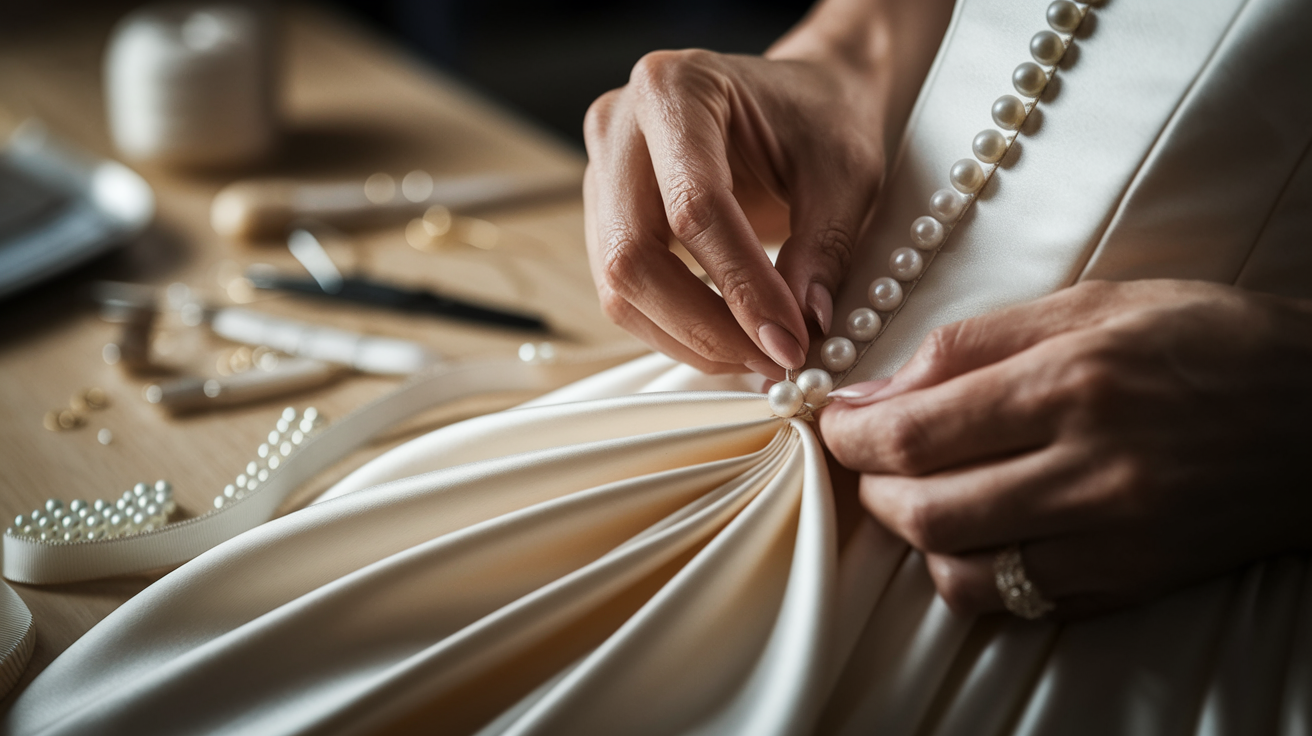
Bustling a train means securing it to the dress skirt so the fabric doesn’t trail on the floor anymore, turning a formal entrance look into a floor length silhouette that lets you dance and move freely. The three most common bustle types are the American overbustle, the French underbustle, and the reinforced strap bustle. Each method uses loops, buttons, hooks, or ribbons sewn into the dress during alterations. Complexity depends on train length, fabric weight, and how much volume needs securing.
An American bustle (also called a ballroom bustle) lifts the train and secures it on the outside of the skirt using buttons or hooks. Loops are sewn into the underside of the train, and the matching buttons go on the back of the skirt at hip or waist level. This works for most fabrics and creates a gathered, slightly puffed effect at the back. A French bustle tucks the train underneath the skirt, creating a cleaner, more streamlined look. The fabric is folded under and secured with loops or ties, making it nearly invisible from the outside. French bustles work especially well for fuller ball gown skirts where the volume can hide the tucked fabric. Reinforced strap bustles are for very heavy trains, particularly cathedral and royal lengths with beading or lace. These add extra straps or internal support to distribute weight evenly and prevent loops or buttons from tearing under pressure.
Three main bustle types:
- American (overbustle): folds train up and secures on the outside with buttons. Quick to arrange, works for most fabrics. Visible but classic.
- French (underbustle): tucks train underneath the skirt for a seamless look. Ideal for ball gowns with volume to hide the fabric. Takes slightly longer to secure.
- Reinforced strap: adds internal straps and extra support for heavy trains. Necessary for cathedral and royal lengths with beading or embellishment.
Bustle Cost and Alteration Time
Bustling a dress during alterations typically costs seventy-five to three hundred dollars, depending on train length, fabric weight, and the number of loops or buttons required. A simple chapel train with lightweight fabric might need only three or four loops and cost around seventy-five to one hundred dollars. A cathedral train with heavy satin or extensive beading might require six to eight loops and reinforced stitching, pushing the cost to two hundred dollars or more. Royal trains, particularly those with significant embellishment, can exceed three hundred dollars for bustle work because of the complexity and time required to reinforce seams.
Bustling the train on event day takes anywhere from five to twenty minutes, depending on bustle type and whether the person helping has practiced. Assign one trusted person (usually a bridesmaid, assistant, or stylist) to handle the bustle, and rehearse at least once during fittings so they know which loops attach to which buttons and in what order. A poorly done bustle can create uneven fabric bunching, pull the dress off balance, or fail entirely if loops tear or buttons pop off under the train’s weight.
Preventing Train Issues on the Red Carpet
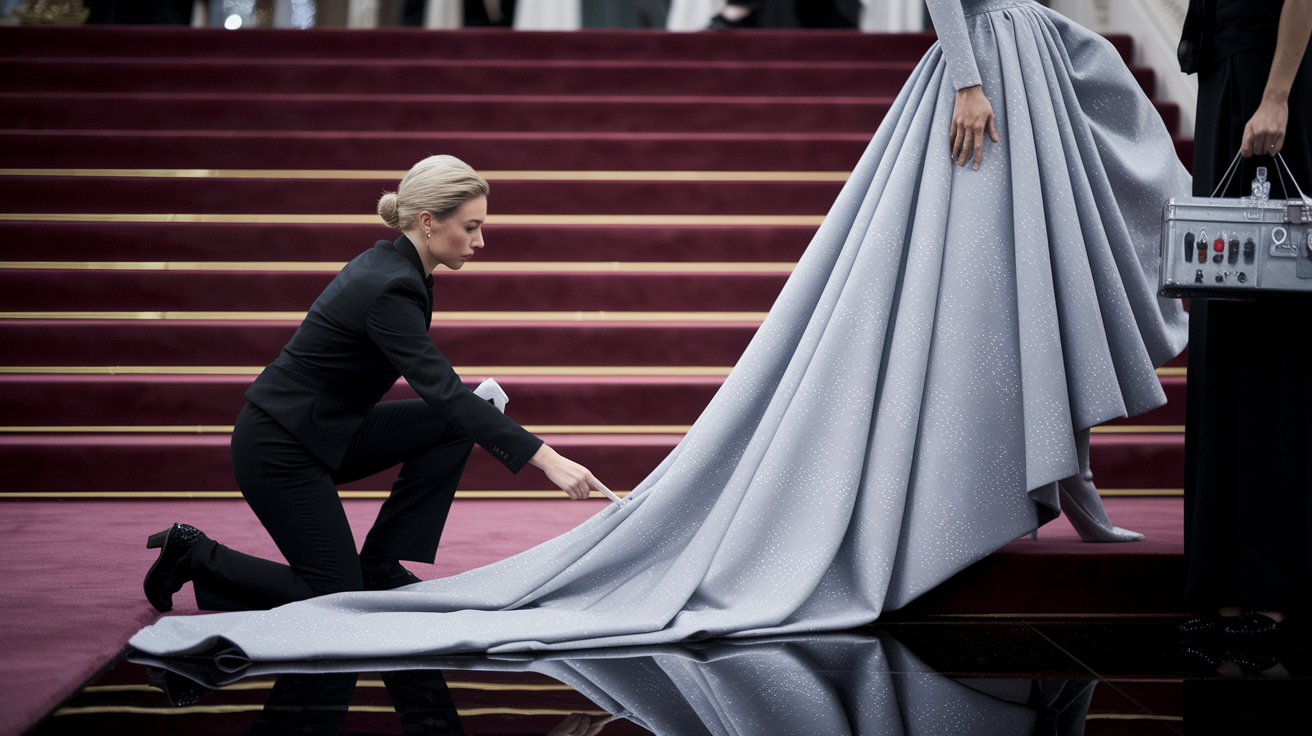
Train problems on red carpets usually fall into three categories: tripping, dirt or damage, and bustle failures. Prevention starts with assigning the right number of attendants. Sweep trains need zero because they barely touch the ground. Chapel trains need zero to one assistant, mainly to help with the bustle or to hold the train during posed photos. Cathedral trains require one to two attendants to carry fabric during the entrance and arrange it for photos. Royal trains demand two to four attendants to manage length and weight, and you should rehearse the processional at least two or three times so everyone knows when to lift, spread, or adjust the train.
Outdoor events add risk because grass, dirt, sand, and uneven surfaces can snag fabric, stain hems, or cause tripping. If you have to wear a long train outdoors, choose a venue with paved walkways or a rolled carpet for the entrance. Assign someone to spot clean the train hem with a damp cloth or baby wipes if it picks up dirt, and avoid dragging the train through damp grass or muddy areas. Emergency kits should include safety pins, extra buttons or loops, fabric tape, and a small sewing kit in case a seam tears or a bustle loop detaches.
Five prevention strategies:
- Assign attendants based on train length and rehearse key moments like entering, turning, and going down stairs
- Pick shorter trains (sweep or chapel) for outdoor venues to minimize dirt and snagging
- Make sure bustle loops and buttons are reinforced during fittings, especially for heavy fabrics or cathedral/royal lengths
- Walk through the venue ahead of time to spot stairs, narrow passages, or uneven flooring that could trip you or catch the train
- Pack an emergency kit with pins, loops, fabric tape, and a small sewing kit. Assign one person to carry it throughout the event.
Staircase and Aisle Safety Tips
Stairs are the highest risk moment for long trains. Before going down, pause at the top and signal your attendants to gather or lift the train so it doesn’t drag behind you and create a tripping hazard. Step slowly and deliberately, placing your full foot on each stair before moving to the next. If you’re going up stairs, lift the front hem of the dress slightly with one hand and let attendants manage the train behind you. Practice this during rehearsals so you feel confident and know how much fabric to lift.
On aisles, make sure the train is spread evenly behind you before you start walking. A twisted or bunched train photographs badly and can cause tripping if fabric wraps around your ankles. Walk at a steady, measured pace, and avoid sudden turns or backward steps without checking where the train sits. If the aisle is narrow, ask attendants to fold the train slightly inward so it doesn’t brush against chairs, guests, or decorations.
When to Consult a Stylist or Seamstress for Train Decisions
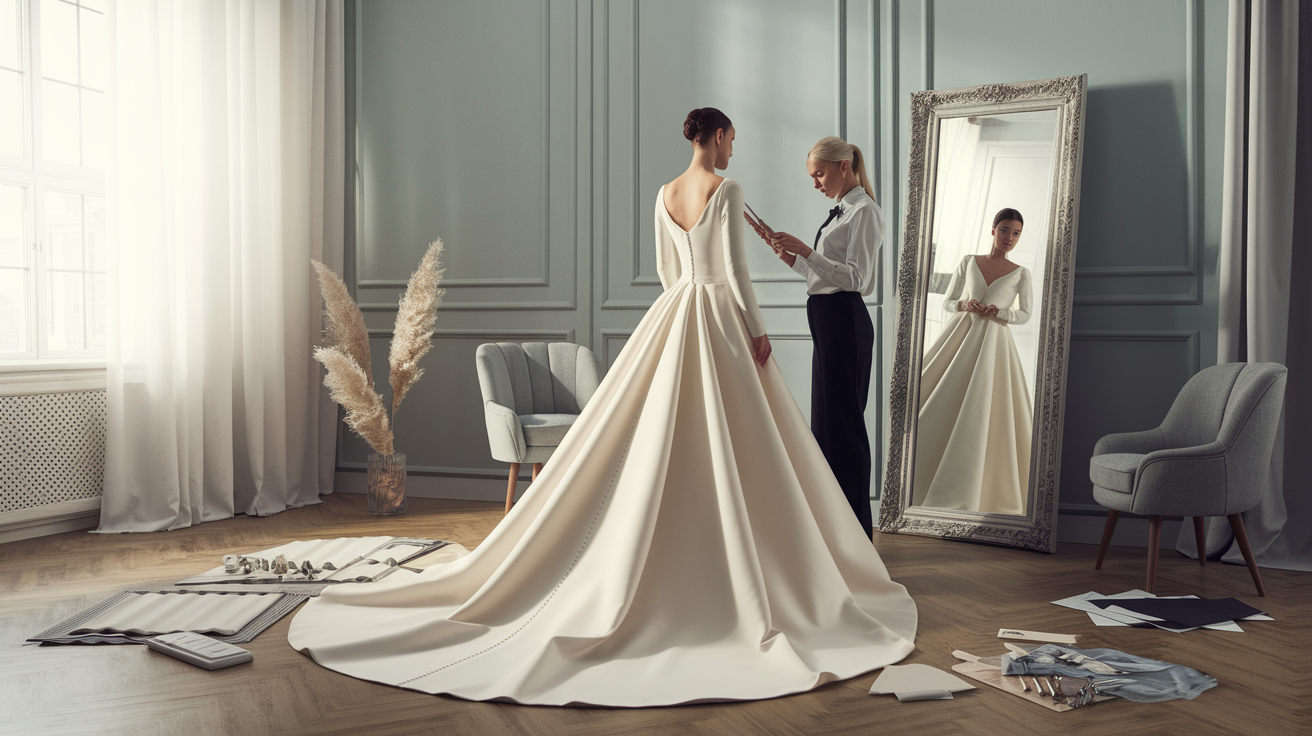
You need professional input when you’re unsure about train length, when alterations are required, or when the train is heavy or complex enough that bustle planning needs expert assessment. A stylist can help you visualize how different train lengths will photograph in your venue and advise on proportion relative to your height and dress shape. A seamstress handles the technical work: hemming, adding or shortening trains, installing bustle systems, and reinforcing seams for heavy fabrics.
Altering train length is possible but requires cutting and re-hemming the dress, which can cost one hundred to three hundred dollars or more depending on fabric and embellishment. If you want to shorten a cathedral train to chapel length, a seamstress can remove the excess fabric and finish the new hem, but this is permanent. Detachable trains offer more flexibility. They attach at the waist or shoulders with hooks, snaps, or a fabric belt, letting you add or remove length without altering the dress itself. Many designers now offer detachable cathedral or royal trains as an option, and these can range from a few hundred to several thousand dollars depending on fabric and embellishment.
Three red flags that mean you need professional support:
- The train is longer than chapel length and you’re unsure how to bustle it or whether the fabric weight will require reinforced loops
- You want to change the train length after buying the dress, either by shortening a long train or adding a detachable extension
- The dress has heavy beading, lace appliqué, or multiple fabric layers, and you’re concerned about walking, turning, or managing the train safely throughout the event
Final Words
You now know which train does what: sweep ≈ 6–12 inches, chapel ≈ 12–24 inches, cathedral ≈ 36–60 inches, and royal ≈ 72–120+ inches, plus how fabric, venue, and body type shape the pick.
We covered venue matches, bustle options, mobility tips, prevention tricks, and when to call a seamstress.
Use this quick cheat — red carpet train types explained chapel cathedral sweep royal — to choose the right drama level, rehearse with attendants if needed, and enjoy your moment on the carpet. Go shine.
FAQ
Q: What is the difference between a cathedral train and a chapel train?
A: The difference between a cathedral train and a chapel train is length and impact: a chapel train is about 12–24 inches for moderate formality, while a cathedral train is about 36–60 inches for dramatic, grand-venue entrances and usually needs attendants.
Q: What is the difference between a court train and a sweep train?
A: The difference between a court train and a sweep train is formality and scale: a court (royal) train is ultra-long—roughly 72–120+ inches—for palace-level ceremony; a sweep train is about 6–12 inches, minimal and very easy to move in.
Q: What is a sweep bridal train?
A: A sweep bridal train is a short train about 6–12 inches that barely brushes the floor, offering easy movement, minimal bustle needs, and ideal use for outdoor, casual, or motion-focused red carpet moments.
Q: How has the meaning of a wedding train changed in Royal weddings?
A: The meaning of a wedding train in royal weddings shifted from strictly signaling status to ceremonial pageantry—modern royals use extra-long trains for tradition, dramatic photos, and heightened formality at major palace events.