
Is a sheer red carpet gown a bold fashion moment or a public fight over who gets to decide what bodies show?
When Florence Pugh’s hot-pink Valentino in 2023 went viral for visible nipples, the debate blew up faster than any stylist could step in.
The point: outrage is less about fabric than control, as cultural taboos, camera angles, and social feeds turn a look into a scandal.
Brands and festivals respond fast with PR statements, dress-code clarifications, campaign pivots, and legal positioning to protect image and sales.
Core Reasons Sheer Red Carpet Gowns Spark Backlash
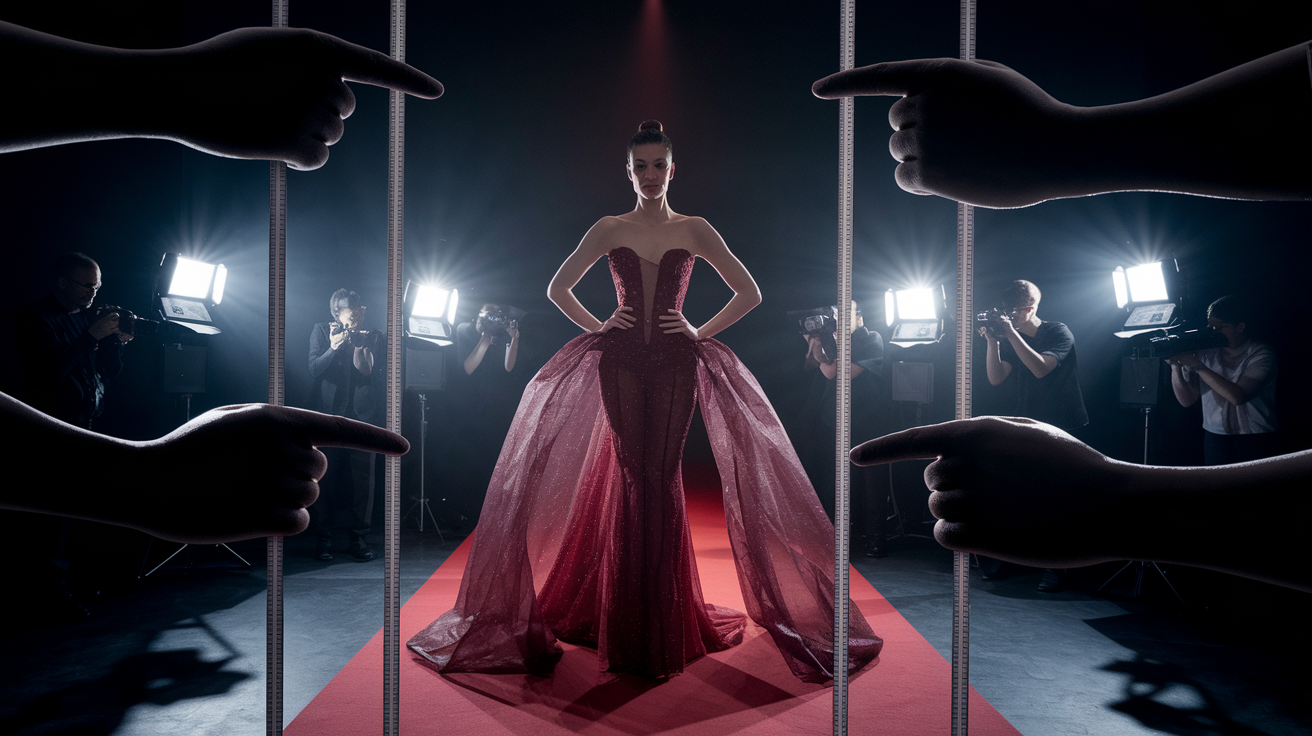
Sheer red carpet gowns trigger backlash because they crash straight into cultural taboos around the female body and what counts as “appropriate” in public. When Florence Pugh wore that hot-pink Valentino gown in July 2023, the internet lost it. Not over the color. Not the cut. Over her visible nipples through the fabric. The look went viral instantly, splitting people into camps: celebration versus moral outrage. But here’s the thing. The controversy wasn’t really about the dress. It was about how much of her body people felt they could police.
The discomfort goes deeper than fashion. Society still treats visible nipples, cellulite, or any hint of an unedited female body as inherently sexual or threatening. Pugh said it herself later on: the backlash showed “society is terrified of the human body,” especially when a woman displays confidence instead of shame. Gendered body policing cranks up every transparent thread. Critics call sheer gowns attention-seeking or indecent, while men in fitted or open shirts barely register the same energy. The double standard? It’s loud.
Here’s what consistently triggers public backlash to sheer red carpet gowns:
- Visible nipples or genitalia through fabric, seen as crossing from fashion into explicit sexuality
- Dress code conflicts at formal events with stated decency rules or black-tie standards
- Viral social media amplification, where provocative images spread faster than context or designer intent
- Cultural taboos around nudity, which vary wildly across regions and audiences
- Gendered criticism that frames women’s bodies as objects requiring moderation, especially when confidence is visible
- Moral panic narratives linking sheer clothing to declining values or inappropriate behavior
The Mechanisms Behind Red Carpet Controversies Over Sheer Looks

Backlash to sheer gowns doesn’t just happen. It gets engineered through a predictable sequence: capture, amplification, moral framing. The second a celebrity steps onto a red carpet in transparent fabric, dozens of photographers start shouting for angles. Florence Pugh described early red carpet experiences as “50 men all shouting, ‘Picture, over here!'” That environment creates hundreds of high-resolution images, shot from every conceivable angle. Many of them emphasize exposure. The most provocative frames get selected, cropped, published within minutes, often stripped of the artistic or couture context that shaped the look originally.
Once those images hit social platforms, algorithmic amplification takes over. Posts that generate strong emotional reactions get prioritized in feeds and recommended content. Shock, outrage, admiration, disgust. The Met Gala alone generated 5.3 billion social impressions over four weeks. That kind of digital visibility magnifies every controversial hemline into a global debate. Live broadcasts and paparazzi footage add another layer, capturing movement, fabric transparency under flash, candid moments that weren’t part of the styled presentation. Within hours, the look becomes divorced from its original setting. It turns into a stand-alone symbol of scandal.
Here’s how the controversy cycle escalates so fast:
- Algorithm prioritization pushes provocative visuals to the top of feeds, maximizing reach and emotional engagement
- Paparazzi angle selection isolates the most revealing frames, often shot from below or with harsh lighting that increases transparency
- Live broadcast and video clips capture unplanned movement, fabric shifts, or angles the stylist never intended
- 24-hour discourse loops keep the story alive through hot takes, response videos, think pieces, and celebrity statements, stretching a single outfit into days of content
Types of Backlash Targeting Sheer Gowns on the Red Carpet

Backlash to sheer red carpet gowns falls into distinct categories. Each rooted in different cultural anxieties and value systems. Understanding the type of criticism helps decode what’s really being debated. And it’s rarely just about the dress.
Moral and Decency-Based Critiques
This is the oldest and loudest form of backlash. Critics frame sheer gowns as violations of public decency, invoking modesty standards that date back decades. In 1952, the National Association of Radio and Television Broadcasters adopted a censorship code specifically addressing revealing clothing and suggestive camera angles. A year later, the Academy hired costume designer Edith Head and equipped backstage staff with tulle kits to fix outfits deemed too revealing in real time. When Barbra Streisand’s Scaasi outfit turned see-through in 1969, the Academy sent warnings against “freaky, far-out, unusual fashion.” These institutional reactions reveal a persistent belief that certain bodies, especially women’s, require regulation in public spaces. Moral critics today use similar language. Calling sheer gowns “inappropriate,” “indecent,” or “setting a bad example.” Even when the garments are haute couture pieces shown in controlled runway settings first.
Cultural and Global Reception Differences
What reads as daring in one cultural context can register as offensive in another. A sheer gown at the Met Gala in New York might generate buzz and brand visibility. But the same look at Cannes triggered institutional rule changes. In 2024, Cannes reaffirmed its black-tie dress code and added an explicit ban on nudity “for decency reasons,” citing French Criminal Code Article 222-32, which classifies public exposure of private parts as a sexual offense punishable by up to one year in prison. Bella Hadid’s sheer pantyhose dress and Leila Depina’s barely-there pearl outfit in prior years pushed the festival to formalize restrictions. The backlash in these cases isn’t just moral. It’s legal and logistical, tied to local norms and the event’s identity as a film festival rather than a fashion spectacle.
Feminist and Agency-Centered Objections
Not all criticism comes from conservative corners. Some feminist voices question whether sheer gowns represent empowerment or exploitation, especially when styling decisions are shaped by male designers, brand partnerships, and the male gaze embedded in red carpet photography. Florence Pugh countered this by reframing her Valentino look as body acceptance. “Not trying to hide the cellulite” and embracing her “small breasts.” She argued that backlash stemmed from discomfort with visible confidence, not the fabric itself. But others worry that celebrating transparency as liberation ignores the industry pressures pushing women toward increasingly revealing looks for attention and engagement metrics. The debate hinges on agency: who decides, who benefits, and whether the choice is truly free when brand deals, stylist influence, and algorithmic visibility are all in play.
Here are the most common feminist critiques of sheer red carpet styling:
- Male gaze theory applied to celebrity attire. Sheer gowns framed as catering to objectifying camera angles and viewer consumption rather than personal expression
- Empowerment versus exploitation debate. Questions whether transparency reflects agency or industry pressure to generate viral moments
- Body-shaming concerns. Transparent clothing invites scrutiny of every physical detail, amplifying criticism and unrealistic beauty standards
- Cultural appropriation and revealing outfits. Some designers borrow from cultures with specific modesty traditions while stripping those garments down to sheer, Western-facing versions
Real-World Examples of Sheer Red Carpet Gown Flashpoints

Florence Pugh’s hot-pink Valentino gown at the Valentino Haute Couture Fall/Winter 2023 show in July 2023 became the defining sheer-gown controversy of the decade. The look left her nipples visible through the fabric. Viral backlash erupted immediately. Pugh had already addressed the controversy in a September 2022 cover story, noting that outrage stemmed from her visible confidence and small breasts. A double bind where women get criticized both for having “too much” and “not enough.” She kept wearing sheer pieces as a signature, reframing the choice as body acceptance and a rejection of cultural fear around the human form.
Bella Hadid’s 2024 Cannes appearance in a sheer pantyhose dress pushed the festival to formalize its nudity ban. The look generated intense online debate. Some praised the boundary-pushing design. Others called it inappropriate for a film festival. Cannes responded by updating its dress code to explicitly prohibit nudity “for decency reasons,” citing French law and the event’s identity. Leila Depina’s 2023 barely-there pearl outfit at the same festival had already signaled that sheer looks were becoming a friction point. Both incidents show how repeated provocations can force institutions to codify previously informal standards.
Historical examples prove this tension is decades old. In 1991, Madonna wore Jean Paul Gaultier lingerie on the red carpet. A deliberate provocation blurring the line between underwear and eveningwear. In 1988, La Cicciolina appeared topless. In 1946, Michelle Morgan wore a bikini. Both moments sparked outrage and institutional response. Barbra Streisand’s 1969 see-through Scaasi outfit prompted the Academy to send formal warnings against “unusual fashion.” The 1953 hiring of Edith Head as a backstage fashion consultant was a direct response to recurring transparency scandals.
| Year | Celebrity | Look Type | Type of Backlash |
|---|---|---|---|
| 1946 | Michelle Morgan | Bikini on red carpet | Moral outrage, decency concerns |
| 1969 | Barbra Streisand | See-through Scaasi outfit | Academy warnings against “freaky, unusual fashion” |
| 1988 | La Cicciolina | Topless appearance | Scandal, institutional response |
| 1991 | Madonna | Jean Paul Gaultier lingerie | Debate over underwear as outerwear |
| 2023 | Leila Depina | Barely-there pearl outfit | Cannes controversy, nudity debate |
| 2024 | Bella Hadid | Sheer pantyhose dress | Led to Cannes nudity ban, legal citations |
How Fashion Brands and Designers Respond to Sheer-Gown Backlash

When backlash hits, brands rarely apologize. Instead, they reframe the narrative. Artistic intent, couture craftsmanship, creative expression. After Florence Pugh’s Valentino moment went viral, the brand leaned into the conversation by highlighting the gown’s construction, the runway context, the designer’s vision. Valentino didn’t issue a formal statement addressing the controversy. It didn’t need to. The attention had already boosted brand visibility. The house maintained its position as a purveyor of daring, boundary-pushing design. This is the typical playbook: stay quiet, let the celebrity carry the narrative, and allow the controversy to function as free publicity.
Other brands take a more tactical approach, especially when controversy threatens retail relationships or mainstream consumer sentiment. Designers may release modified versions of provocative runway looks. Adding linings, strategic coverage, or adjustable elements that allow buyers to choose their level of transparency. This hedges the risk. The brand gets credit for the bold runway moment while offering a wearable, less controversial version for customers. PR teams monitor social metrics, influencer sentiment, and press volume in real time, deciding whether to amplify the story, pivot messaging, or let it quietly fade. Crisis monitoring becomes essential when backlash threatens to spill into boycotts, lost partnerships, or damaged relationships with retailers who fear alienating conservative customers.
Historically, institutions have managed sheer-gown scandals with on-site interventions. In 1953, the Academy hired Edith Head and equipped backstage staff with tulle kits to fix revealing outfits before celebrities reached the stage. That kind of real-time moderation is rare now. But modern equivalents exist. Stylists carry backup pieces, brands pre-approve looks with event organizers, legal teams review garments for compliance with venue rules. The goal is always the same. Control the narrative before it controls you.
Here are the most common brand responses to sheer-gown backlash:
- Reframe messaging around body positivity, inclusivity, or fashion as art, shifting focus from scandal to values
- Emphasize couture craftsmanship and runway context, positioning the look as high fashion rather than provocation
- Release modified retail versions with added linings or coverage, allowing consumers to engage with the design without controversy
- Issue neutral or limited statements, avoiding formal apologies while maintaining relationships with talent and press
- Monitor social sentiment and press volume, using crisis metrics to decide whether to amplify, pivot, or quiet the story
How Celebrities and Stylists Strategically Navigate Blowback From Sheer Looks
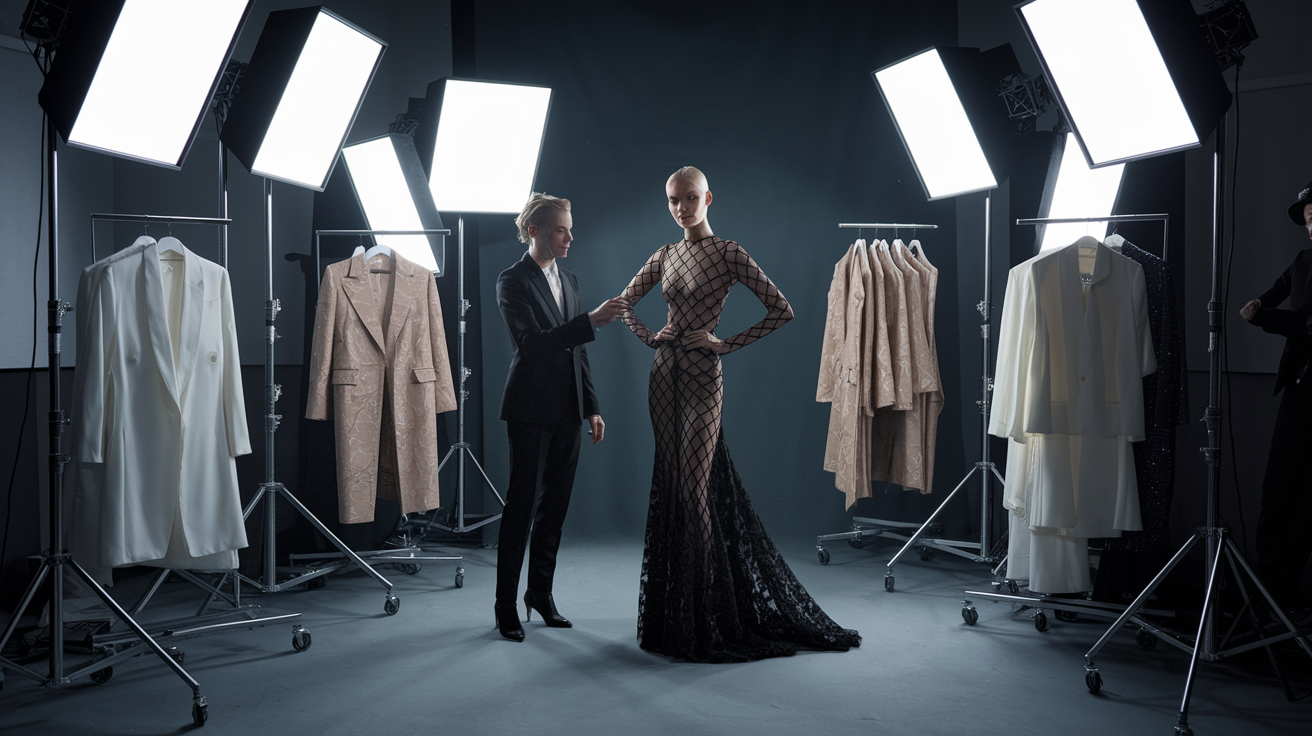
Florence Pugh’s response to backlash over her Valentino gown set a template: double down, reframe, refuse to apologize. She publicly stated that the outrage reflected society’s fear of the human body and gendered policing of confidence. Instead of retreating, she made sheer pieces a signature. Continuing to wear transparent garments and framing them as body acceptance rather than provocation. Her strategy worked because it flipped the narrative. Critics were no longer debating the dress but defending outdated norms. This tactic requires confidence and a strong personal brand. But it’s increasingly common among celebrities who see backlash as an opportunity to signal values and build loyalty with fans who share those values.
Stylists often take a different route, especially when their professional reputations are on the line. After Cannes formalized its nudity ban, several stylists publicly criticized the rules as “archaic” and restrictive, framing the controversy as institutional overreach rather than a wardrobe misstep. By shifting blame to event organizers, stylists protect their creative credibility while signaling to future clients that they’ll advocate for bold choices. Some celebrities use symbolic gestures to redirect the conversation entirely. Sarah Paulson wore a $1 bill as a blindfold at the Met Gala, a pointed commentary on wealth and sponsorship that overshadowed any potential outfit controversy. The tactic works when the symbol is clear and the message aligns with broader cultural debates.
Behind the scenes, stylist-brand collaboration contracts often include contingency clauses for backlash scenarios. Brands may agree to support talent publicly if controversy erupts. Or stylists may negotiate the right to replace a look if venue rules change. Pre-event vetting has become standard. Looks are reviewed by legal teams, tested under different lighting, photographed from multiple angles to anticipate how they’ll read in paparazzi shots. The goal is to control as many variables as possible before the red carpet even unrolls.
Here are the most common strategies celebrities and stylists use to manage backlash:
- Reframe transparency as empowerment or artistic choice, shifting the narrative from scandal to personal agency
- Publicly criticize restrictive event rules, positioning the controversy as institutional conservatism rather than poor judgment
- Use symbolic gestures or statements to redirect attention, turning the outfit into a platform for broader commentary
- Rely on pre-negotiated brand support and legal review, ensuring contracts and compliance are in place before controversy hits
Institutional and Event-Level Responses to Sheer Gowns
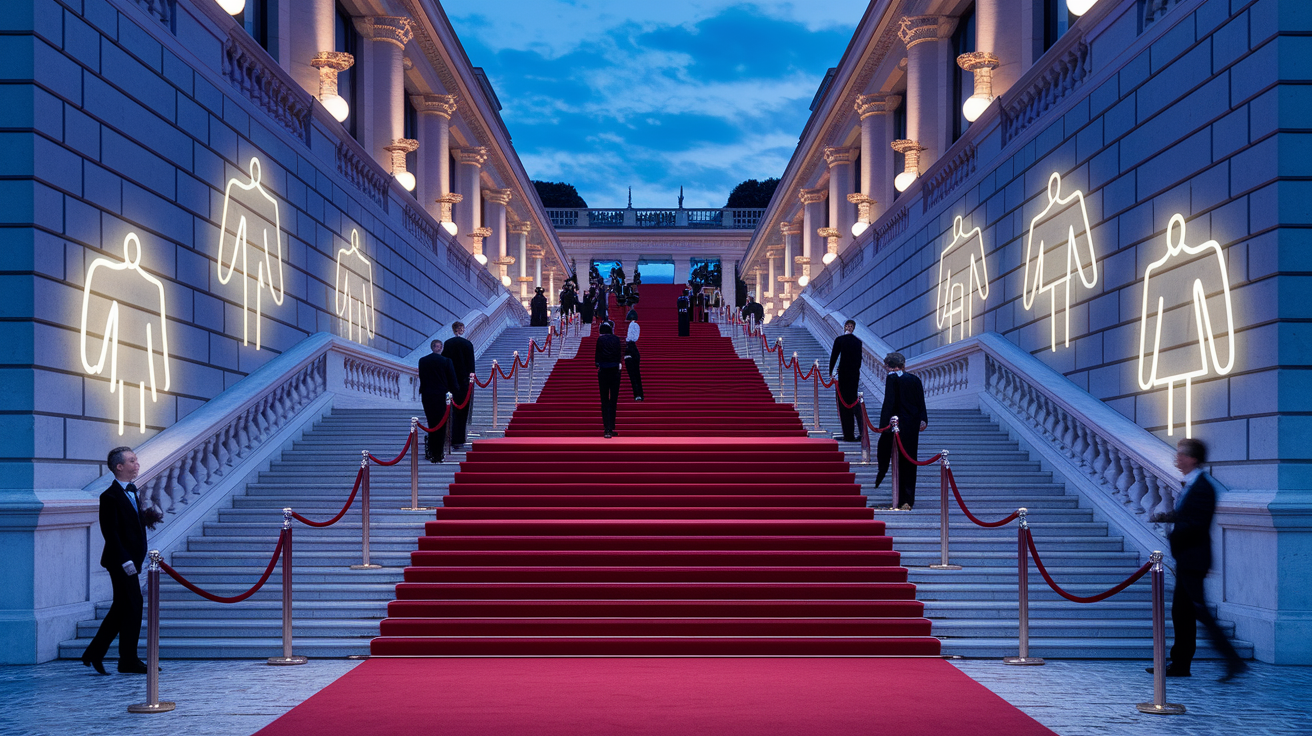
Cannes’ 2024 dress code update made explicit what had been informal for decades: the festival expects “long dresses and tuxedos” and now bans nudity “for decency reasons.” The update came after years of increasingly transparent looks. Bella Hadid’s sheer pantyhose dress and Leila Depina’s pearl outfit both sparked intense debate. The festival cited French Criminal Code Article 222-32, which classifies public exposure of private parts as a sexual offense punishable by up to one year in prison and a fine. Cannes operates as a public event. Organizers made clear they needed to comply with local law. But the rule also reflects the festival’s identity as a film event, not a fashion spectacle. Screening schedules, crowd movement, and seating logistics all factor into what’s acceptable on the red carpet.
Oversized and voluminous gowns were also restricted. A practical measure acknowledging how Cannes’ red carpet functions as the primary access route for thousands of attendees. Unlike the Met Gala, where photo ops and staging are the priority, Cannes needs people to move quickly and take their seats without delay. Cardi B’s 2024 Met Gala gown was cited as an example of the kind of look that could obstruct movement and impede others. The restrictions aren’t just about decency. They’re about logistics, safety, and the festival’s programming priorities.
Historical precedents show how events have tried to control provocative fashion for decades. In 1968, after a mini skirt incident, the Academy sent a letter reminding attendees that black-tie, preferably floor-length, was expected. In 1969, Barbra Streisand’s see-through Scaasi outfit prompted warnings against “freaky, far-out, unusual fashion.” The Academy’s 1953 decision to hire Edith Head as a fashion consultant, with backstage tulle kits for on-site fixes, illustrates how institutions have long managed transparency through real-time moderation. After the Academy eliminated the consultant role in the 1970s, more provocative looks from Cher and Edy Williams became prominent, showing how enforcement directly shapes what appears on the red carpet.
Here’s how major events regulate and respond to sheer red carpet gowns:
- Formalize dress codes with explicit bans on nudity and transparency, often citing legal compliance or venue standards
- Restrict voluminous or oversized garments for logistical reasons, prioritizing crowd movement and event schedules
- Cite local laws and public decency statutes, framing restrictions as legal necessity rather than moral judgment
- Hire consultants or backstage staff to moderate looks in real time, providing on-site fixes for garments that violate standards
- Issue pre-event reminders and stylist briefings, ensuring talent and teams understand rules before arrivals
Brand Reputation, Sales Impact, and Long-Term Effects of Sheer-Gown Controversies

Viral controversies can boost short-term brand visibility while risking long-term reputation damage. Depends on how audiences interpret the look and the brand’s response. The Met Gala’s 5.3 billion social impressions over four weeks prove how attention-grabbing moments translate into massive reach. For a brand like Valentino, Florence Pugh’s sheer gown controversy delivered global exposure, reinforced the house’s identity as daring and modern, generated millions of dollars in earned media. The backlash became a net positive because the brand’s core audience values boundary-pushing design. The controversy signaled cultural relevance.
But not all brands can afford that trade-off. For labels with mainstream retail partnerships or conservative consumer bases, a sheer-gown scandal can trigger boycotts, lost shelf space, damaged relationships with department stores wary of alienating customers. Some designers reposition after negative cycles. Emphasizing modesty, craftsmanship, or sustainability to rebuild trust. Others double down, using controversy as a filter. Welcoming criticism because it attracts the exact audience they want and repels the one they don’t. The long-term effect depends on the brand’s positioning, the severity of backlash, and whether the controversy aligns with or contradicts the brand’s stated values.
Cancel culture dynamics add another layer. When backlash shifts from the garment to the designer’s character, intent, or past behavior, the reputational risk escalates. Social media can extend a controversy indefinitely, resurfacing old incidents and linking them to new ones. Brands that weather these storms typically do so by demonstrating consistency. If a label has always been provocative, audiences are less likely to view a sheer gown as a betrayal. If a brand suddenly pivots to transparency for attention, skepticism and backlash intensify.
Here’s how sheer-gown controversies affect brands over time:
- Short-term visibility boost from viral social media reach, press coverage, and influencer engagement, often worth millions in earned media
- Reputational risk if backlash contradicts brand values, alienates core customers, or triggers boycotts and lost retail partnerships
- Long-term repositioning required for brands that misjudge their audience, often involving shifts toward modesty, sustainability, or craftsmanship messaging
- Cancel culture amplification, where backlash extends beyond the garment to the designer’s intent, character, or past behavior, making recovery harder
Practical Guidance: How Readers Can Understand and Interpret Backlash to Sheer Red Carpet Gowns

When a sheer gown sparks outrage, the real story is rarely just about fabric. Backlash reflects cultural anxieties around bodies, visibility, and power. Who gets to be seen, how much, and on whose terms. Social media amplification makes these debates immediate and intense. But the underlying tensions are decades old. Understanding backlash means asking what’s actually being policed: the garment, the body, the confidence, or the cultural shift it represents.
Global cultural norms shape how sheer looks are received. A gown that generates buzz in New York might violate decency laws in France or offend audiences in regions with stricter modesty standards. Cannes’ nudity ban and citation of French Criminal Code Article 222-32 illustrate how local legal frameworks collide with global fashion trends. Readers encountering backlash should consider the event context, the local norms, and the specific elements triggering criticism. Visible nipples, perceived overexposure, or symbolic gestures like Sarah Paulson’s $1 blindfold that turn outfits into political commentary.
Here’s how to interpret backlash to sheer red carpet gowns in context:
- Identify the type of criticism. Is it moral panic, cultural discomfort, feminist debate, or logistical concern?
- Consider the event and venue rules. Festivals like Cannes have legal and logistical constraints that differ from spectacle-focused events like the Met Gala
- Look at who benefits from the controversy. Brands, celebrities, and media outlets all gain from viral moments, even negative ones
- Assess the cultural and regional context. What reads as empowerment in one place may register as offense in another
- Track the response strategy. How the celebrity, stylist, and brand handle backlash reveals their values, audience priorities, and long-term positioning
Final Words
Florence Pugh’s viral Valentino moment and other headline-making gowns prove how a single photo can spark a frenzy.
This piece mapped the why: cultural discomfort, gendered body policing, and algorithm-fueled outrage. We broke down how photographers, platforms, events, and brands feed the cycle, and shared examples, brand playbooks, and tips for reading the noise.
Bottom line: fashion will keep testing limits, and smart responses matter. This wraps up why sheer red carpet gowns trigger backlash and how brands respond — and why conversation helps style evolve.
FAQ
Q: What is the 3-3-3 rule in fashion?
A: The 3-3-3 rule in fashion is a simple styling guideline that suggests balancing three groups of elements, like colors, textures, or accessories, to keep looks cohesive, camera-ready, and not overdone.
Q: Who wore the most inappropriate dress on the red carpet?
A: The most inappropriate dress on the red carpet is subjective; moments like Florence Pugh’s Valentino with visible nipples, Bella Hadid’s Cannes pantyhose dress, and Madonna’s 1991 Gaultier lingerie are often cited.
Q: What does Vanna White do with all of her dresses?
A: Vanna White stores many gowns for appearances, keeps favorites, and often donates or auctions others to charity; some pieces are archived or loaned for TV events and museum displays.
Q: What is the psychology behind wearing revealing clothes?
A: The psychology behind wearing revealing clothes includes signaling confidence and attractiveness, seeking attention or approval, reclaiming control over one’s body, and following cultural or trend-driven norms.