
Think you need couture to turn heads at a gala? Think again.
Most red carpet looks come down to three things: a clean silhouette, one bold moment, and a polished finish.
You can hit all three without blowing your budget by renting or thrifting, using drugstore makeup with pro techniques, and adding one smart accessory or shapewear piece.
This post breaks down six fast, budget-friendly moves, what to buy, where to shop, and simple DIY hair and beauty tricks that photograph beautifully.
Skip the sticker shock and steal the details that actually make an outfit feel red carpet ready.
Fast Budget-Friendly Ways to Recreate Red Carpet Details
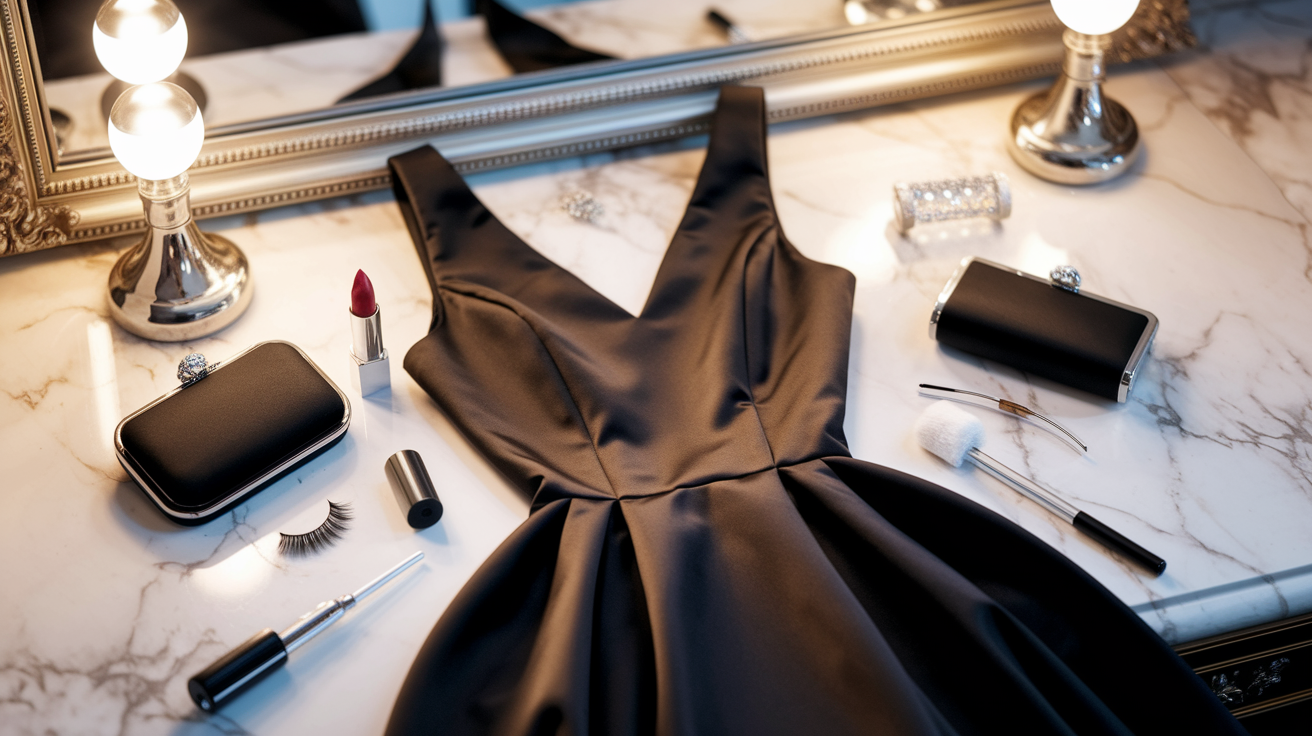
Most red carpet looks come down to three things: clean lines, one bold moment, and a polished finish. You don’t need a couture budget for any of that. Pull off serious glam by nailing the silhouette first, then add a few strategic touches that photograph well. Monochrome outfits, minimal jewelry, one standout beauty choice. A sleek bun or classic red lip.
Six fast moves to get that red carpet effect without the price tag:
- Pick one standout piece and keep the rest simple. Metallic midi dress or structured blazer becomes the star. Plain heels, small studs.
- Rent or thrift your outfit. Formal pieces at consignment shops run $20–$80. Designer gowns rent for $50–$150.
- Use drugstore makeup with pro techniques. A $10 contour stick and $8 red lipstick deliver the same camera impact as luxury brands if you apply them right.
- Add one cheap accessory upgrade. $25 rhinestone ear cuff or $15 sleek clutch elevates a plain dress instantly.
- Invest $20–$40 in shapewear or a stick-on bra. Proper undergarments create smooth, confident lines that look tailored.
- DIY your hair with a $30 tool. Basic flat iron or curling wand recreates sleek ponytails, soft waves, polished buns in under 30 minutes.
Grab a few budget beauty staples that celebrities actually use backstage. Drugstore false lashes cost $5–$12 and add serious drama. A $15 high-shine finishing spray mimics the glow you see in red carpet close-ups. Basic clip-in hair extensions run $30–$70 and give instant volume for updos. Shapewear smooths lines under fitted gowns for $20–$40. Simple lint roller and double-sided fashion tape handle last-minute wrinkles and neckline adjustments, both under $10 total. These small additions bridge the gap between off-the-rack and red carpet ready.
How to Choose a Celebrity Look That Fits Your Budget
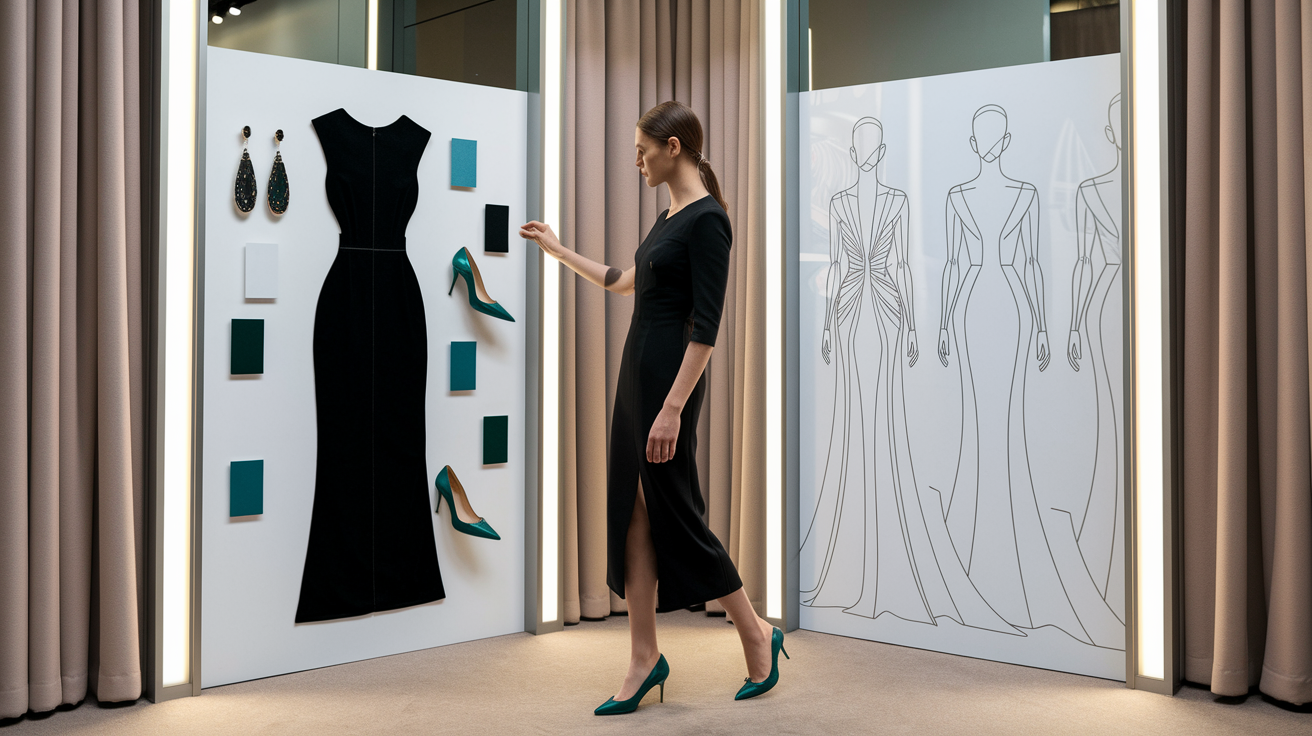
Not every red carpet moment translates to an affordable recreation. Study the silhouette and fabric first. Simple, structured shapes are easier and cheaper to copy than heavily beaded couture or architectural draping. Column gowns, slip dresses, tailored blazers, wide-leg jumpsuits. A sleek black satin dress reads just as elegant as custom Versace when the fit’s right, and you can find that silhouette at fast fashion retailers for $60–$120. Skip looks with intricate hand-beading, complex cutouts, or couture construction unless you’re willing to invest serious tailoring hours or a higher rental fee.
Zoom in on the details you can actually recreate. Look for celebrities wearing recognizable accessories. Simple drop earrings, a single statement necklace, classic pumps. Not custom jewelry or one-of-a-kind shoes. If the star’s makeup is a bold red lip and clean skin, that’s a $20 drugstore duplication. If it’s airbrushed ombré eyeshadow with custom lashes, that’s trickier without pro help. Same goes for hair. A sleek low bun or soft waves can be done at home with a $30 tool and 20 minutes. An intricate braided updo might need a stylist. Pick moments where the magic comes from simplicity.
Stick to neutral or jewel-tone color palettes that are easy to match affordably. Black, navy, emerald, burgundy, champagne shades are widely available across price points. They photograph beautifully under event lighting. Pastels and neons can be harder to find in budget formalwear and often require precise fabric quality to avoid looking cheap. If you love a pastel celebrity look, plan to rent or hunt consignment rather than relying on fast fashion, where those shades can read flat or costume-like without the right material.
Affordable Ways to Source Event-Ready Outfits
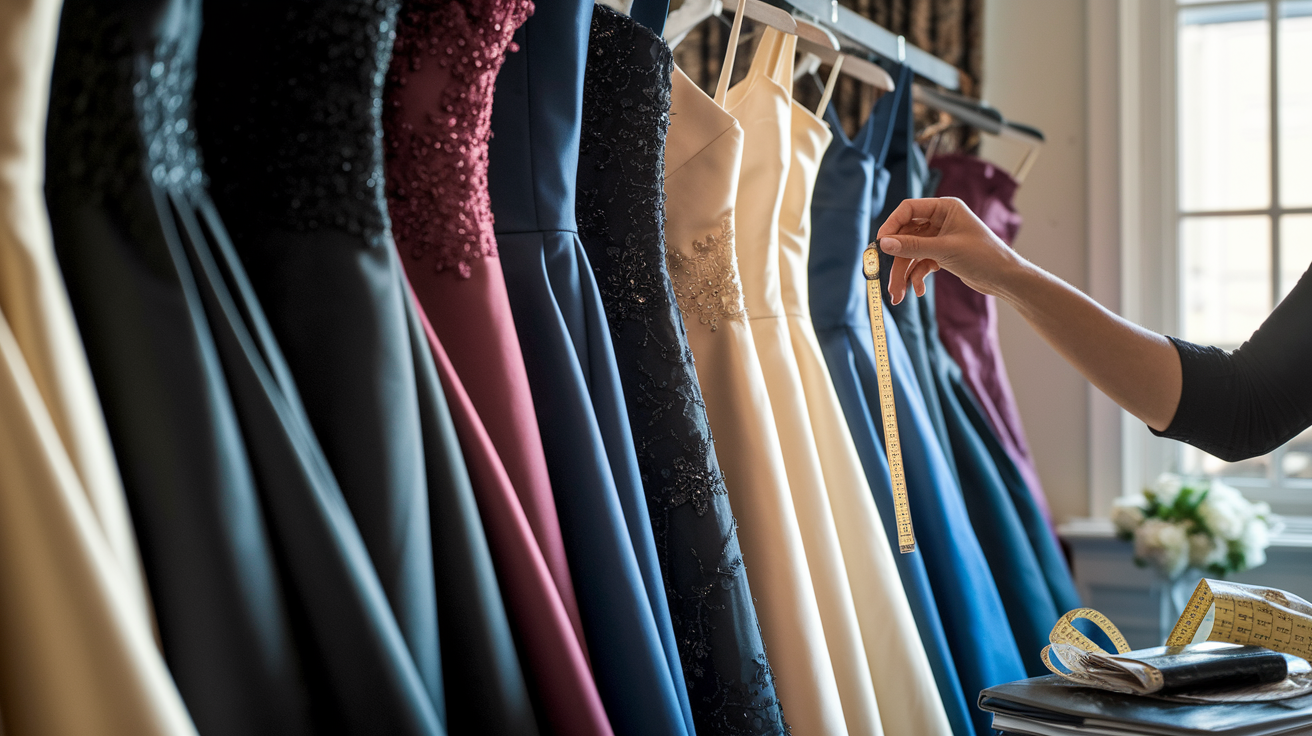
Finding a formal outfit on a budget means knowing where to look and how to evaluate quality fast. Thrift stores, consignment platforms, rental companies are your best starting points. Local thrift shops often carry gently used formal pieces for $20–$80, especially in the weeks after prom and wedding season. Online consignment sites let you filter by size, color, price. Evening gowns typically listed between $40–$150. Rental platforms charge $50–$180 per event and give you access to designer labels you’d never buy outright. Book rentals two to three weeks ahead to allow time for shipping and backup options if the fit isn’t perfect.
When you’re browsing, check fabric composition first. Natural fibers (silk, wool, cotton blends) and high-quality synthetics like polyester satin or rayon crepe drape better and photograph richer than stiff, shiny poly-blends. Hold the garment up to light. If you can see through it easily or the seams are puckered, pass. Look at hems, zippers, seam finishes. Clean stitching signals a piece that’ll hold up through a full event. Avoid anything with visible pulls, stains near the neckline or underarms, or broken hardware unless you’re prepared to repair it yourself.
Five practical shopping strategies that keep costs low:
- Shop clearance racks at department stores during off-season months (January, July, September). Formal sections get marked down 50–70%. You can snag gowns for $60–$120.
- Use consignment apps with price-drop alerts. Set notifications for your size and style preferences, then wait for sellers to reduce prices after a few weeks.
- Check bridesmaid dress retailers. Many carry evening-appropriate styles in solid colors for $80–$160. The fit’s often more consistent than fast fashion.
- Browse Facebook Marketplace and local resale groups. People sell barely worn formal pieces after single events, often for $30–$100.
- Buy plain dresses on sale, then add embellishments. A $50 simple sheath becomes custom when you sew on a $15 rhinestone appliqué or a detachable $20 belt.
Once you have your base outfit, invest in one or two small tailoring upgrades to make it look custom. Hemming a gown to the perfect length costs $15–$25 and eliminates the “rented” or “off-the-rack” look. Taking in the waist or adjusting straps runs $20–$40 and transforms fit completely. If the neckline gapes or the bodice feels loose, ask a tailor to add interior bra loops or a small stay for $10–$20. These tweaks are cheaper than buying a higher-priced dress and deliver a bigger visual payoff than any accessory upgrade.
DIY Red Carpet Hair Techniques
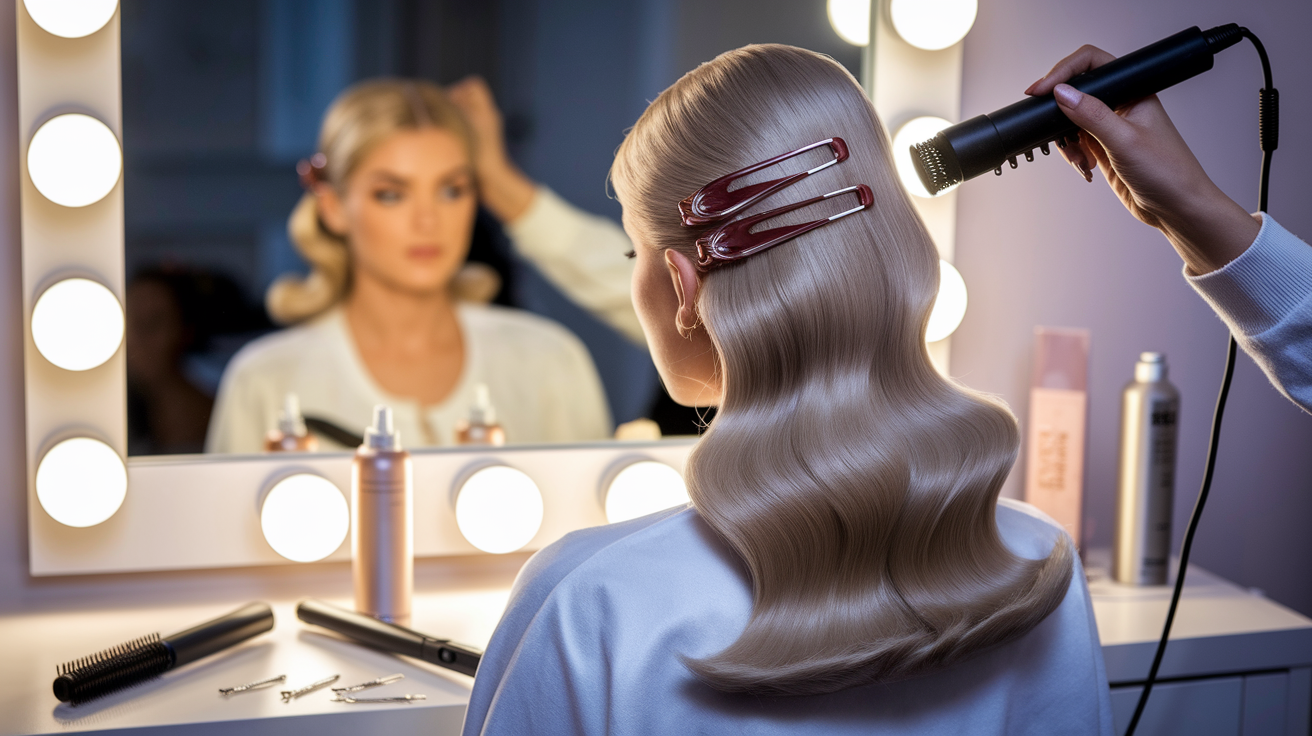
Celebrities cycle through three core red carpet hairstyles. Sleek low buns, voluminous waves, polished high ponytails. All three can be done at home with a flat iron or curling wand, a paddle brush, a few styling products. Work in small sections and use the right heat setting: 300–350°F for fine or color-treated hair, 350–400°F for thicker or coarser textures. Prep with a heat protectant spray, then decide which look matches your outfit’s neckline. Strapless or off-the-shoulder styles look best with hair pulled back to show the shoulders. High necklines or statement earrings pair well with soft waves worn to one side.
For a sleek low bun, start with straight, smooth hair. Flat-iron small sections from root to tip, then gather everything into a low ponytail at the nape of your neck. Twist the ponytail length into a tight coil and wrap it around the base, securing with four to six bobby pins in an X-pattern. Spray the surface with medium-hold hairspray, then use a soft-bristle toothbrush or edge brush dipped in light gel to smooth any flyaways along the hairline. This takes 15–20 minutes and mimics the polished buns you see on minimalist red carpet looks. Want extra volume? Tease the crown lightly before pulling hair back, or clip in a small bun extension for $20–$40 to create a fuller shape without the length.
To create soft, camera-ready waves, section dry hair into 1- to 1.5-inch pieces. Wrap each section around a 1-inch curling iron or wand for 8–12 seconds, curling away from your face. Let the curls cool completely for about 10 minutes. This sets the shape. Once cool, gently brush through with a paddle brush to break up the curls into smooth waves. Pin one side behind your ear with a small bobby pin or jeweled clip, then finish with a light-hold hairspray. The whole process takes 25–35 minutes. For a high, sleek ponytail, flat-iron hair straight, gather it at the crown, secure tightly. Wrap a small section of hair around the elastic to hide it, pinning underneath. Spray the length lightly and run a flat iron down the ponytail once more for extra shine and smoothness.
Affordable Makeup Techniques Used on the Red Carpet
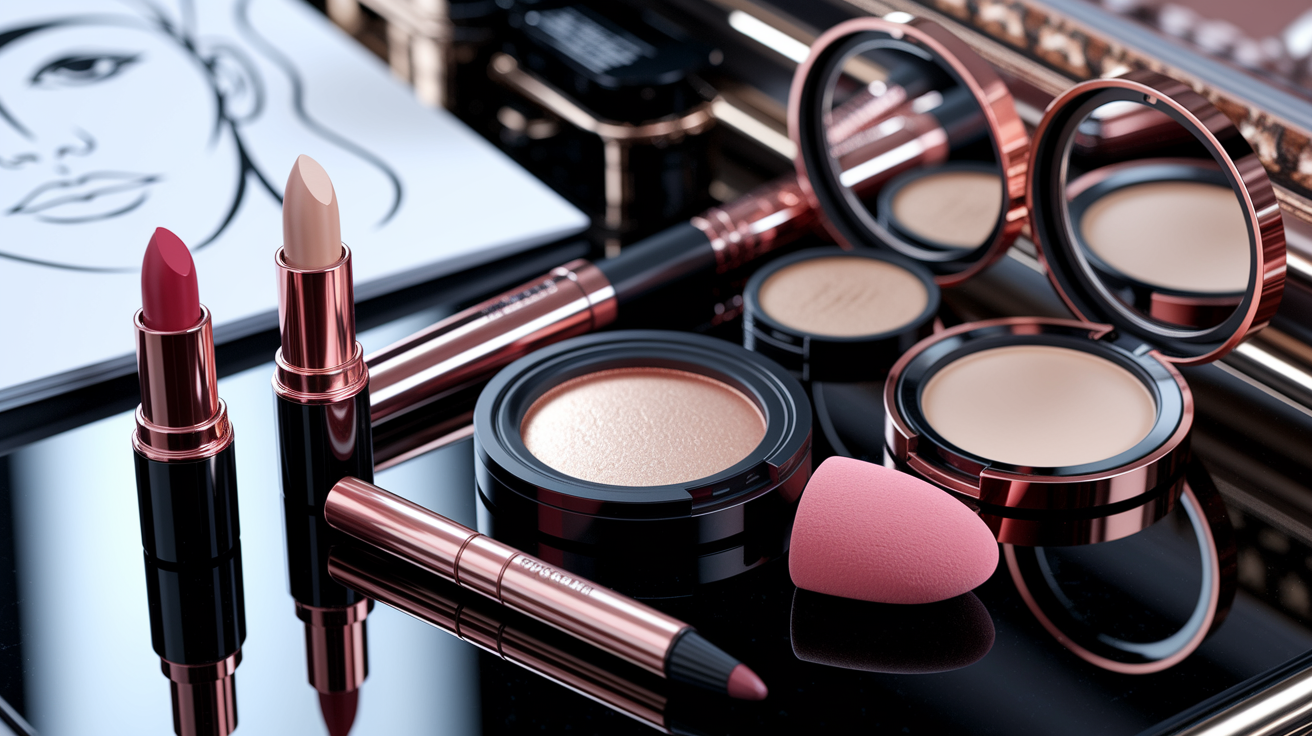
Red carpet makeup’s designed to look flawless under bright lights and camera flashes. It relies on a few key techniques: a smooth, even base, one standout feature, strategic highlighting. Drugstore brands now offer long-wear formulas that perform as well as prestige products for a fraction of the cost. You can recreate a full glam look with $40–$80 worth of products if you know which steps matter most.
Start with a luminous base that won’t look flat in photos. Use a hydrating primer to smooth texture, then apply a medium-to-full-coverage foundation with a damp beauty sponge for an airbrushed finish. Conceal under-eyes and any redness with a creamy concealer one shade lighter than your skin tone, blending in a triangle shape under the eyes to lift and brighten. Set the center of your face (forehead, under-eyes, chin) with a light dusting of translucent powder, but leave the outer edges slightly dewy so you don’t look matte and flat. This base work ensures your makeup reads polished from every angle.
Five essential steps to finish a red carpet makeup look:
- Contour lightly. Use a cool-toned contour stick or powder in the hollows of your cheeks, along your jawline, on the sides of your nose. Blend thoroughly so there are no harsh lines. Subtlety reads better in person and on camera.
- Pick one bold feature. Go with either a classic red lip or a smoky eye. Never both. If you choose a red lip, keep eyes neutral with soft brown shadow and mascara. If you go smoky, use a nude or soft pink lip.
- Add glow strategically. Apply liquid or powder highlighter to the tops of your cheekbones, the bridge of your nose, your brow bone, the inner corners of your eyes. This catches light and creates dimension.
- Define your brows. Fill in sparse areas with a brow pencil or powder, then set with a clear or tinted brow gel. Groomed, bold brows frame your face and make the whole look feel finished.
- Set everything. Finish with a long-wear setting spray, holding the bottle 8–10 inches from your face and misting in an X-pattern. This locks makeup in place and eliminates any powdery texture.
Events often have mixed lighting. Dim interiors, bright flash photography, sometimes outdoor sunset arrivals. To adapt, apply slightly more contour and blush than you think you need. Both can disappear under harsh flash. Use a matte or satin-finish foundation rather than full-dewy, which can create shine in photos. If the event’s outdoors or includes a cocktail hour in natural light, skip heavy powder and let your skin retain a bit of natural glow. Always do a quick test photo with your phone’s flash before you leave to make sure nothing looks washed out or overly shiny, and adjust highlighter or powder as needed.
Styling Hacks That Mimic Designer-Level Details
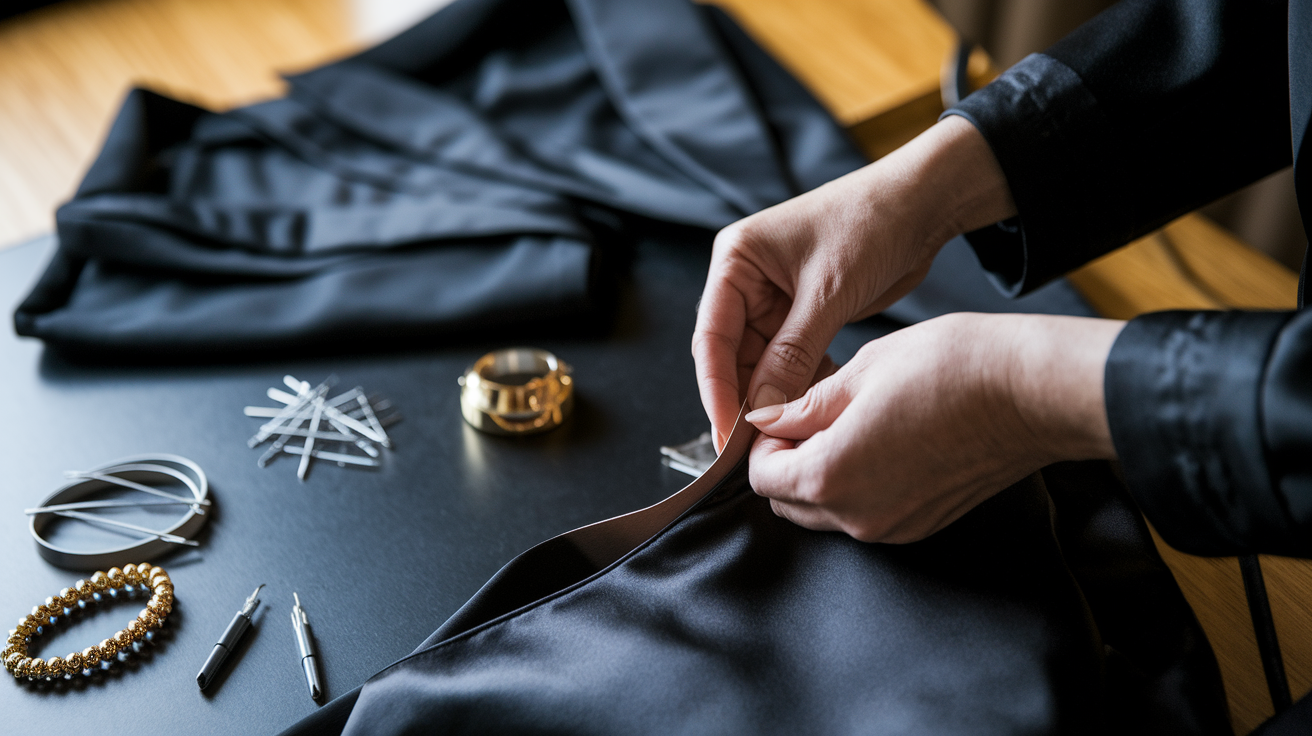
Stylists use a handful of behind-the-scenes tricks to make simple outfits look expensive and camera-ready. These hacks are fast, cheap, completely invisible in photos. But they transform how a garment sits on your body and how polished the overall look appears. Most cost under $10 and take less than five minutes.
Double-sided fashion tape is the single most useful tool in any stylist’s kit. Use it to secure necklines so they don’t gape, to keep spaghetti straps in place, to anchor a plunging neckline for modesty, to smooth any fabric bunching along seams. A roll costs $5–$8 and handles a dozen styling emergencies. Pair it with a stick-on bra or silicone cups ($10–$25) to create structure and lift under backless or strapless styles without visible bra lines. If your dress has a built-in shelf bra that doesn’t provide enough support, layer shapewear underneath or add small bra pads inside for a smoother, more tailored fit. These underlayer upgrades make off-the-rack pieces look custom-fitted.
Four essential hacks that elevate any formal outfit:
- Add a thin belt or sash at the natural waist. Even a $15 ribbon belt in a complementary metallic or satin finish can define your silhouette and make a shapeless dress look tailored.
- Use strategic safety pins to adjust fit on the fly. Pin excess fabric inside the bodice or take in a too-loose waistband temporarily. Always test your range of motion after pinning to avoid wardrobe malfunctions.
- Layer one metallic accessory. A slim gold cuff, a small silver clutch, a pair of rose-gold earrings adds a high-end touch that catches light and draws the eye up toward your face.
- Drape a shawl, wrap, or structured blazer over your shoulders for arrival photos, then remove it inside. This adds dimension and sophistication to simple dresses and hides any fit issues in the shoulders or arms.
Price Comparison: Celebrity Look vs. Budget Recreation
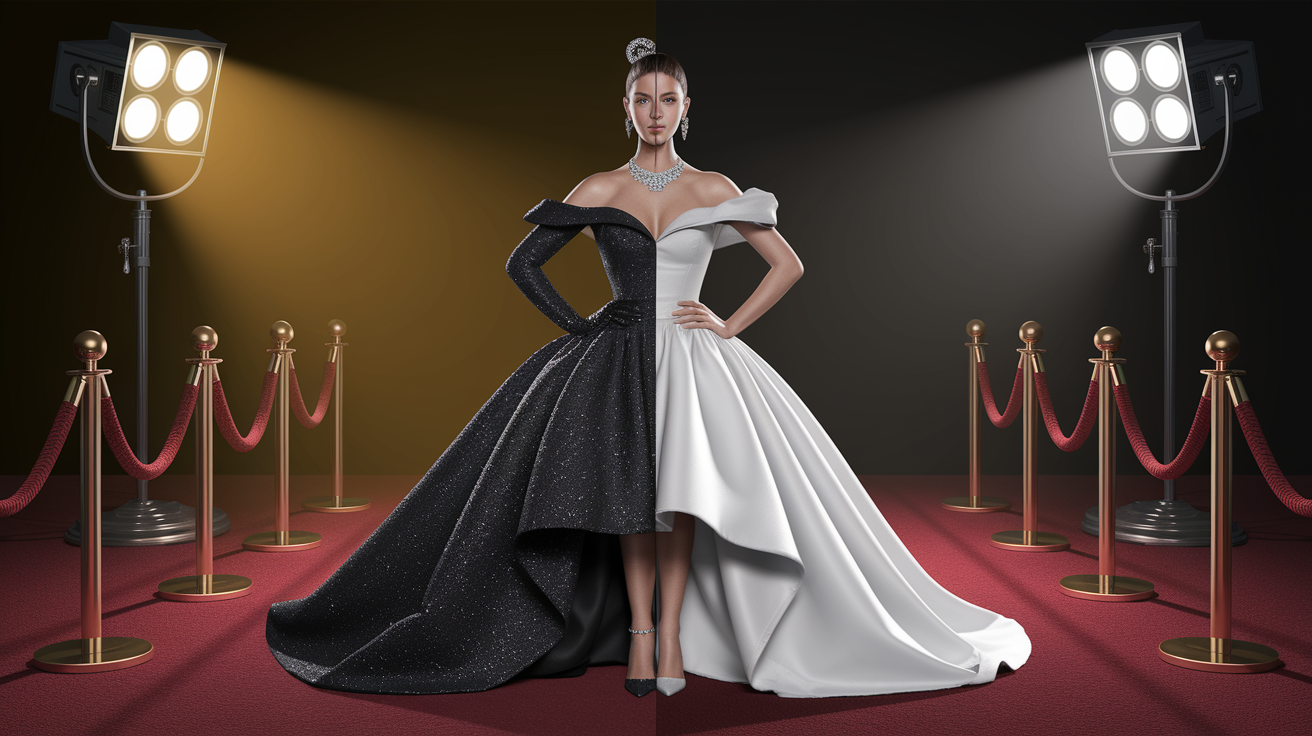
Designer red carpet looks often carry price tags in the thousands, but the core elements (silhouette, color, accessories, beauty details) can be recreated affordably by swapping materials and choosing accessible brands. Here’s a direct cost comparison showing how a full formal look breaks down at both levels:
| Item | Designer Cost | Budget Cost | Savings |
|---|---|---|---|
| Column gown or sleek dress | $2,000–$8,000 | $60–$180 (purchase or rental) | $1,840–$7,920 |
| Statement earrings or necklace | $500–$3,000 | $20–$60 (cubic zirconia or costume) | $480–$2,940 |
| Heels or formal shoes | $600–$1,200 | $35–$90 | $565–$1,110 |
| Professional hair and makeup | $300–$800 | $40–$80 (DIY products) | $260–$720 |
When you adapt these comparisons for different aesthetic preferences, focus on where you want to allocate your budget. Love bold jewelry? Spend $50–$80 on one standout piece and keep the dress simple and inexpensive. If the dress is your priority, rent a designer gown for $100–$200 and use minimal costume jewelry. The total budget for a full red carpet recreation typically lands between $150–$400, compared to $3,400–$13,000 for authentic designer pieces. A savings of roughly 90–95%. Choose which element gets the spotlight and build the rest of the look around that anchor piece.
Final Words
Step onto the event floor with a statement silhouette, sleek hair, and smart accessories, the quick wins we covered. You got easy styling formulas, sourcing hacks, and DIY beauty steps to make thrifted pieces feel polished.
We also walked through tailoring tips, camera-ready makeup steps, and stylist tricks like tape and layering that lift any outfit.
Pick one focal detail, build the rest around it, and use the checklist. Now grab the best red carpet details to recreate for formal events on a budget and go shine.
FAQ
Q: What is the red carpet rule?
A: The red carpet rule is a set of etiquette: arrive on time, follow the marked path, pause for photos, face cameras, wear event-appropriate attire, avoid phones and smoking, and follow PR or security instructions.
Q: How to make your own red carpet?
A: To make your own red carpet, roll out red carpet or fabric on a measured path, add underlay for cushion, secure edges with gaffer tape, add ropes or stanchions, and finish with lighting and a backdrop.
Q: How to dress classy but cheap?
A: To dress classy but cheap, choose classic silhouettes and neutral colors, shop thrift or rental, tailor inexpensive finds, invest in one good pair of shoes, and use subtle accessories to polish the look.
Q: How to plan a red carpet event?
A: To plan a red carpet event, set goals and budget, pick a venue with a clear entrance, arrange carpet, backdrop, lighting, hire photographers and security, create a run sheet, and confirm staffing and contingency plans.